










Rosemary Aromatherapy Soy Candle: The Ultimate Guide to Focus, Clarity, and Mindful Living
The Ancient Power of Rosemary: A Herb Steeped in History
Rosemary has been quietly earning its reputation for thousands of years — long before it ever showed up in a wellness shop or aromatherapy guide. Ancient Greek students used to tuck sprigs of it into their hair during exams, convinced it gave their memory a boost. Archaeologists have found rosemary tucked inside Egyptian tombs, suggesting people believed it could bridge something between the living world and whatever came next. There’s clearly always been something about this plant that humans found hard to ignore.
During the Middle Ages, people burned rosemary in their homes and churches to clean the air and fend off sickness. Monks copying manuscripts by candlelight would burn bundles of it at their desks, trusting that the smell would keep their minds sharp through hours of painstaking work. It’s a detail that feels surprisingly relatable — and as it turns out, modern neuroscience is starting to back them up. The compounds rosemary releases actually do have measurable effects on brain chemistry.
The name itself comes from the Latin ros marinus, meaning “dew of the sea,” which makes sense given its origins along sunny Mediterranean coastlines. It’s a name that captures something real about the herb: that fresh, breezy, almost electric quality it has. A good rosemary aromatherapy soy candle bottles that same energy and brings it into your everyday space. When you light one, you’re taking part in something people have been doing, in one form or another, for a very long time.
Understanding the Science Behind Rosemary Aromatherapy
The benefits of rosemary aromatherapy aren’t just folklore — researchers have been taking a serious look at what’s actually happening in the brain when we breathe it in. The main compound driving the cognitive effects is something called 1,8-cineole, or eucalyptol. Once inhaled, it crosses the blood-brain barrier and slows down the breakdown of acetylcholine, a neurotransmitter that plays a key role in memory, attention, and learning. A 2012 study in the journal Therapeutic Advances in Psychopharmacology found that people working in a room diffused with rosemary essential oil scored noticeably better on cognitive tests than those who weren’t.
But 1,8-cineole is just one piece of the picture. Rosemary essential oil is actually a complex mix of active compounds — camphor, alpha-pinene, rosmarinic acid, and more — that each contribute something to the overall effect. Alpha-pinene, for instance, has shown anti-anxiety properties in several studies, which helps explain why rosemary feels both calming and energizing at the same time. The camphor gives it that sharp, clarifying bite at the top of the scent, which seems to signal the brain almost immediately to wake up and pay attention.
Researchers at Northumbria University in the UK took things a step further by measuring blood plasma levels of 1,8-cineole in participants who had been exposed to rosemary aroma — and found a direct correlation between those levels and how well people performed on mental arithmetic tasks. The more of the compound in their bloodstream, the better they did. That’s a meaningful finding, because it suggests the benefits aren’t just placebo. If you depend on mental sharpness for your work or creative life, that’s worth knowing.
Why Soy Wax Makes All the Difference
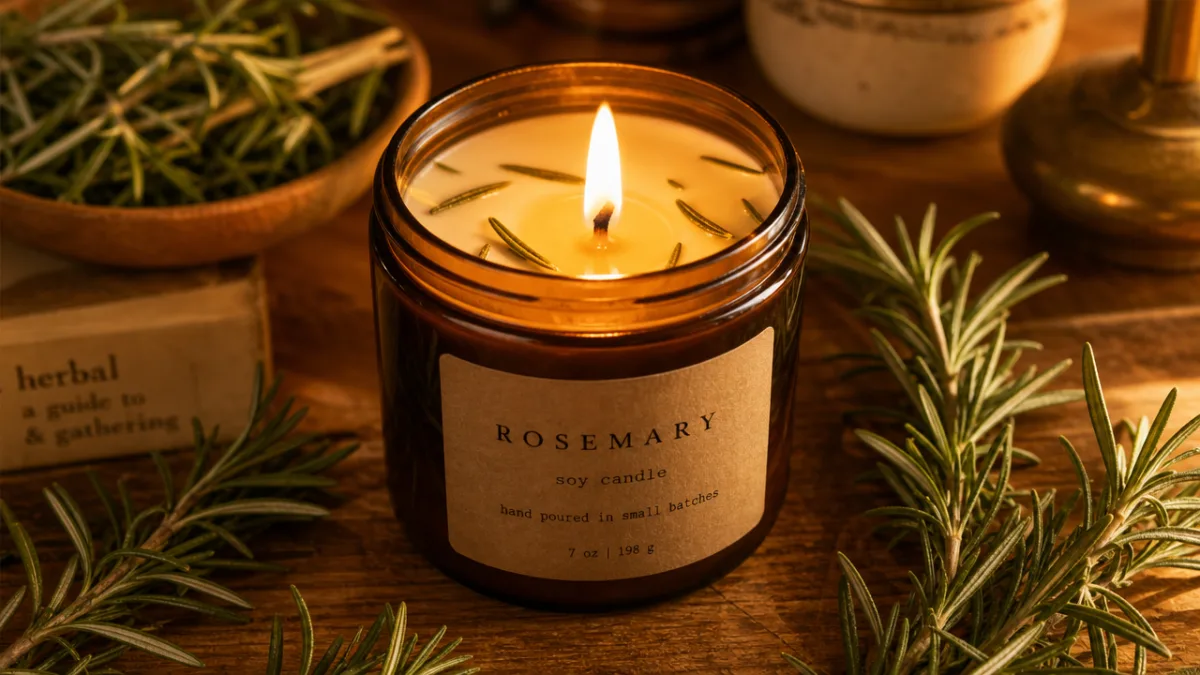
The decision to use soy wax in an aromatherapy candle isn’t just a marketing choice — it actually matters quite a bit for how the candle performs and what it puts into the air around you. Soy wax comes from hydrogenated soybean oil, which means it’s renewable, biodegradable, and largely grown domestically in the US. Paraffin, the most common candle wax, is a petroleum byproduct that can release compounds like benzene and toluene when burned. If you’re lighting a candle specifically to create a cleaner, clearer environment, burning paraffin is a bit counterproductive.
There’s also a practical upside to soy wax that tends to get overlooked: it has a lower melting point, which means it burns cooler and slower. A 7.5-ounce soy candle will last significantly longer than a paraffin candle of the same size. More importantly for aromatherapy, the lower burn temperature means the essential oils blended into the wax are released gently over time rather than being incinerated right away. You get the full therapeutic benefit of the rosemary oil instead of just a faint ghost of it.
Soy wax also holds fragrance exceptionally well. It bonds with essential oils more readily than many other waxes, which means more rosemary can be packed in per candle, and the scent throw when it burns is rich and full without being overwhelming. And if you ever knock one over, soy wax cleans up with warm soapy water — a small thing, but a nice one. On top of that, it’s vegan-friendly and supports agricultural production in a way that petrochemical wax simply doesn’t. Choosing a soy-based candle is one of those decisions that manages to be good for your health, better for the planet, and genuinely better for your nose all at once.
The Art of Crafting an Effective Focus and Clarity Gift
A rosemary aromatherapy soy candle occupies a really special place in the world of gift-giving. It’s not something that sits on a shelf collecting dust — it’s actually useful in someone’s day-to-day life. That makes it a great fit for all sorts of people: a recent grad stepping into a demanding new role, an entrepreneur pushing through long nights, a student facing exam season, or a creative who needs a reliable way to get into the zone. Giving someone a candle like this says something thoughtful — that you notice how hard they work and you want to support them in it.
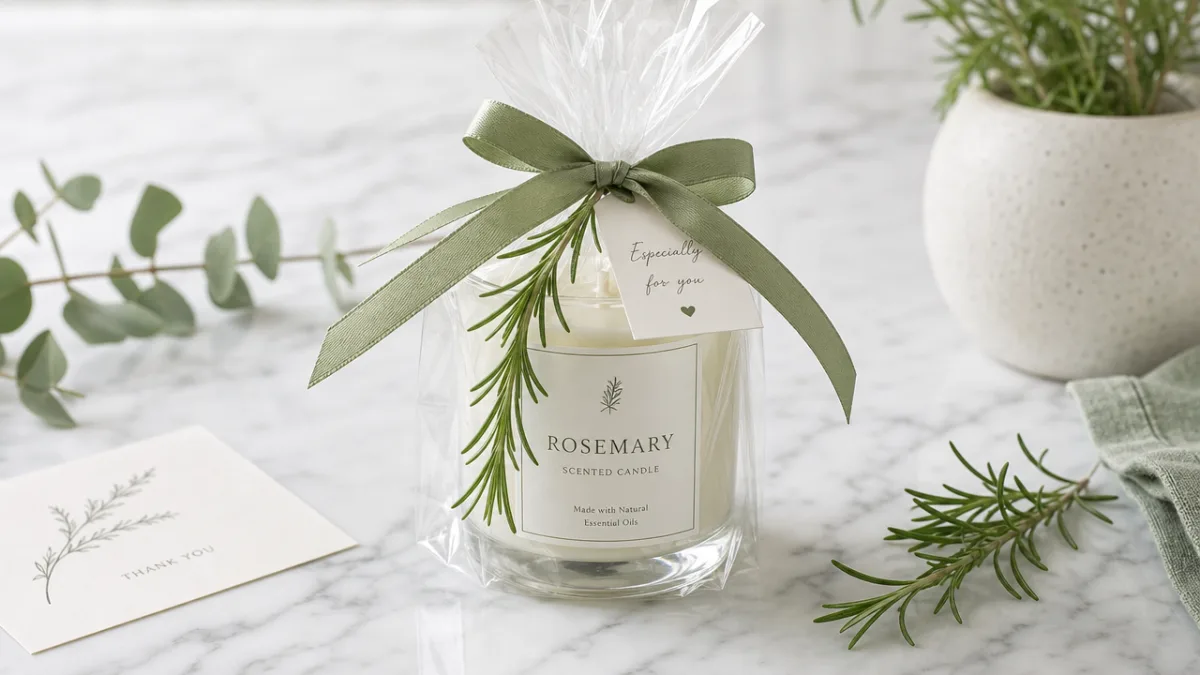
Presentation matters more than people often give it credit for. A 7.5-ounce candle hits a sweet spot — it’s generous enough to feel like a real gift and will last for many burns, but it’s still compact and elegant enough to sit comfortably on a desk, a shelf, or a nightstand. Good packaging that reflects the natural, artisanal quality of the product turns the whole unboxing into a small moment of pleasure. Including information about the essential oils, how to use the candle, and how to care for it takes it from being just a nice object to being something the recipient can actually get the most out of.
When you’re shopping for a rosemary candle as a gift, a few things are worth looking for to separate the genuinely good ones from the rest:
- Pure essential oil formulation: The candle should use real rosemary essential oil, not synthetic fragrance oils. Synthetic scents might smell similar, but they don’t carry any of the therapeutic compounds that make rosemary aromatherapy actually work.
- 100% soy wax base: Some candles blend soy with paraffin to cut costs. That undermines both the clean-burn quality and the environmental benefits you’re paying for.
- Cotton or wood wick: Natural wicks burn more cleanly and give you a nicer flame than wicks with zinc or lead cores.
- Appropriate essential oil concentration: A well-made candle typically contains somewhere between six and ten percent essential oil by weight — enough to actually do something, not just smell faintly pleasant.
- Clear, informative labeling: Good products are upfront about what’s in them and how they’re made. If a candle’s label is vague about ingredients, that usually tells you something.
Incorporating Your Rosemary Candle Into a Daily Wellness Ritual
The real payoff from a rosemary candle comes with regular use, not the occasional lighting. When you make it part of a consistent routine, something interesting starts to happen: your brain begins to associate the scent with focus and productive work. This is a well-understood principle in behavioral psychology — pairing a sensory cue with a particular mental state, repeatedly, until the cue starts to trigger the state on its own. The olfactory system is actually the most direct neurological route to memory and emotion of any of our senses, which makes scent an unusually powerful tool for this kind of conditioning.
One way to build this into your mornings: clear your workspace, light the candle, and take three slow, deliberate breaths before you dive into your most demanding work of the day. The whole thing takes maybe two minutes, but it creates a clear mental on-ramp. After a few weeks of doing this consistently, you may find the smell of rosemary alone is enough to pull you into a focused headspace, even on days when you’re not feeling especially motivated.
This works just as well for study sessions, creative writing, detailed craft projects, financial planning, or anything else that requires sustained concentration. A few practices help maximize the therapeutic effect:
- Burn the candle in a moderately sized, enclosed room so the scent can build to an effective concentration instead of immediately dissipating.
- Give it at least thirty minutes before you start demanding work — the aromatic compounds need some time to reach meaningful levels in the air.
- A little air circulation helps spread the scent evenly, but avoid burning it in a very drafty space or near an open window.
- Keep individual burn sessions to three or four hours to extend the candle’s life and avoid olfactory fatigue, where your nose essentially stops noticing a smell it’s been exposed to for too long.
- Keep the lid on when the candle isn’t in use to protect the essential oils and keep dust off the wax surface.
There’s also something worth saying about what the ritual itself does for you, independent of the rosemary. In a world of constant notifications and fractured attention, the simple act of pausing to light a candle before you begin something — deliberately marking the start of a focused period — is a small but real form of mindfulness. It’s a way of saying to yourself that how you work matters, not just how much. These small ceremonies don’t take anything away from your productivity. If anything, they tend to protect it.

Caring for Your Soy Candle: Maximizing Longevity and Performance
A quality rosemary soy candle is worth taking care of, and the good news is that it doesn’t take much effort to do it right. The single most important habit is trimming the wick before every burn — aim for about a quarter inch, using wick trimmers or small scissors. A wick that’s too long produces a big, wobbly flame that runs too hot, burns through the wax faster than it should, builds up carbon deposits, and generates more soot than you want floating around in a space you’re trying to breathe deeply in.
The very first burn matters more than most people realize. Soy wax has a tendency to “tunnel” — meaning it burns straight down the middle while leaving a thick ring of untouched wax around the edges. Once tunneling sets in, it’s nearly impossible to fix, and it can cut your total burn time down significantly. The fix is simple: on that first use, let the candle burn long enough for the entire surface of the wax to melt into a full, even pool all the way to the edges of the container. For a 7.5-ounce candle, plan on two to three hours the first time.
Beyond that, storage and placement make a real difference too. Soy wax is softer than paraffin and doesn’t love temperature extremes, so keep your candle away from direct sunlight, radiators, and drafty spots. UV light can yellow the wax and degrade the essential oils over time, which dulls both how it looks and how effective it is. Always burn on a stable, heat-resistant surface, keep it away from anything flammable, and don’t leave it burning when you’re not in the room. None of this is complicated — and if you follow these basics, your candle will stay beautiful and effective for every last hour of its burn life.
Rosemary and the Broader World of Botanical Wellness
A rosemary aromatherapy soy candle is part of something bigger — a genuine shift in how people are thinking about their everyday health. Botanical wellness, which draws on the properties of plants to support how we think, feel, and function, sits at an interesting crossroads of ancient tradition and modern science. As more people look for alternatives to pharmaceutical solutions for everyday challenges like mental fatigue, difficulty concentrating, or low-grade stress, plant-based approaches that actually have evidence behind them are getting a lot of well-deserved attention.
Rosemary has a particularly strong position in this space because its benefits are so well-documented and so widely applicable. A lot of herbs have fairly specific uses, but rosemary touches on a whole cluster of things most adults are dealing with — focus, memory, mental energy, mood. That versatility, combined with a scent that most people genuinely enjoy, makes it one of the friendliest entry points into aromatherapy for someone who’s curious but not sure where to start.
If you want to go deeper, there’s plenty of room to layer in complementary practices. Brewing rosemary tea before a work session adds an internal dimension to what you’re doing externally with the candle. Running a diffuser with peppermint or lemon alongside it can create a more complex, synergistic aromatic environment. And if you’re interested in supporting cognitive performance from the inside out, adaptogenic supplements like lion’s mane mushroom or bacopa monnieri are worth exploring alongside your aromatherapy routine. The candle, in that sense, is as much an invitation as it is a product — a starting point for a more intentional relationship with what the plant world has to offer.








What do you think?
It is nice to know your opinion. Leave a comment.