










Lemon Tablescape: The Ultimate Guide to a Citrus-Inspired Table Setting with Outdoor Candles
The Timeless Appeal of a Citrus-Inspired Tablescape
There is something undeniably cheerful and sophisticated about a lemon-themed table setting. The bright yellow tones, the fresh fragrance, and the organic texture of real citrus fruit bring an energy to a dining table that no artificial decoration can replicate. Whether you are hosting a garden brunch, a summer dinner party, or a casual afternoon gathering with friends, a lemon tablescape immediately sets a mood that feels both elegant and effortlessly relaxed. It is a style that transcends seasonal trends and speaks to a universal love of nature, warmth, and good taste.
The history of using citrus in decorative settings stretches back centuries. In Renaissance Italy, wealthy households used lemons and oranges as status symbols, displaying them prominently at feasts and banquets to signal prosperity. Today, this tradition lives on in a far more accessible and democratic form. Anyone with a trip to the local market and a creative eye can assemble a stunning citrus table setting that rivals the most curated tablescapes on social media. The lemon, in particular, has become a design icon — its simple shape, vibrant color, and universally recognized form make it a natural anchor for any table styling project.
What makes the lemon tablescape especially versatile is its ability to work across a wide range of aesthetic styles. It fits comfortably within a Provençal farmhouse setting, a sleek Mediterranean-modern aesthetic, a rustic garden party vibe, or even a minimalist Scandinavian-inspired spread. The key is in how you layer the elements — the linens, the dishware, the florals, and of course, the candles — around the central citrus motif. This guide will walk you through every component of creating a lemon tablescape that feels cohesive, intentional, and genuinely beautiful.
Choosing Your Color Palette and Foundational Linens
Every great tablescape begins with a strong foundation, and for a lemon-themed setting, that foundation is your color palette and linens. The obvious starting point is yellow, but resist the temptation to go too bold or too uniform. The most refined lemon tablescapes work within a layered palette that uses yellow as an accent rather than a dominant force. Think crisp white or soft ivory as your base — white linen tablecloths or natural linen runners provide a clean canvas that allows the yellow of real lemons and citrus-patterned elements to pop without competing with each other.
From there, consider introducing complementary tones that enhance the freshness of the citrus theme. Soft sage green is perhaps the most natural companion to lemon yellow, evoking the leaves and stems of a citrus tree. Dusty terracotta or warm blush can add a Mediterranean warmth that feels sun-soaked and inviting. Navy blue is a bolder contrast choice that creates a more graphic, summery aesthetic reminiscent of Italian coastal style. The goal is to build a palette of two to four colors that feel harmonious together and all seem as though they belong in a sun-drenched garden or a breezy outdoor dining space.
When selecting your linens, texture matters as much as color. Linen fabric, with its natural slubby weave and relaxed drape, is the quintessential choice for an outdoor citrus tablescape. It communicates ease and authenticity without appearing careless. You can layer a white linen tablecloth with a sage green or yellow runner positioned down the center of the table, then add individual linen napkins in a complementary color at each place setting. Napkins can be loosely folded or gathered with a simple twine ring and tucked with a fresh sprig of eucalyptus or a small lemon slice for a polished but unfussy finishing touch.
Working with Real Lemons and Fresh Citrus as Décor
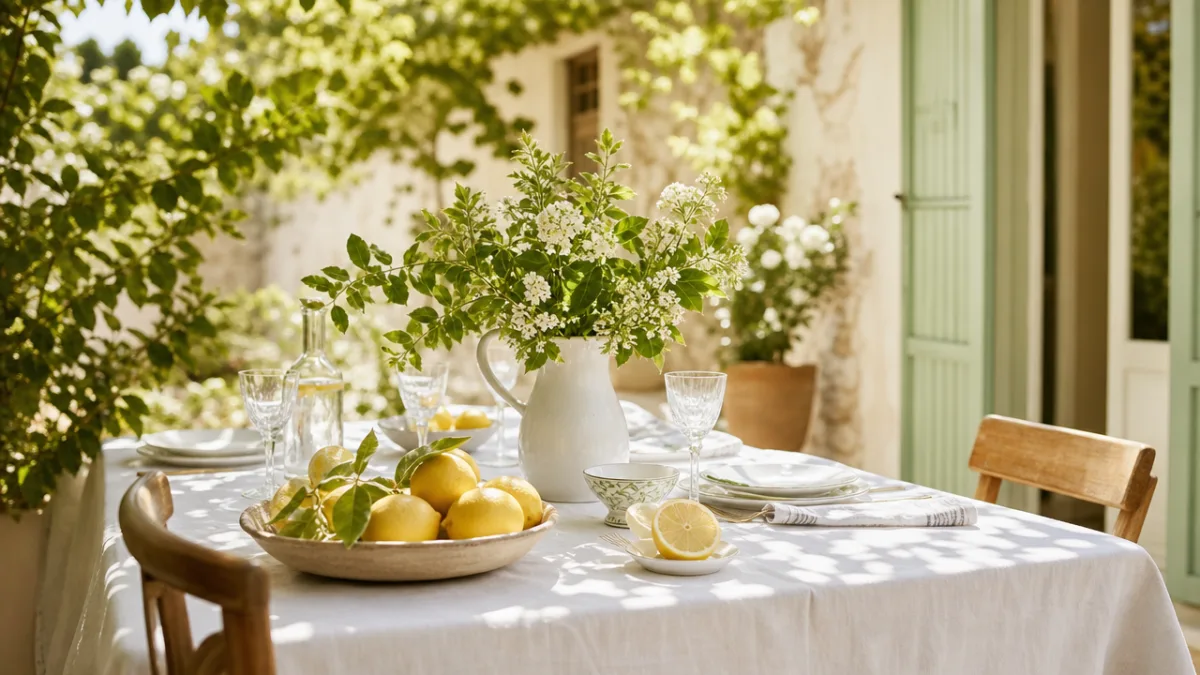
The heart of any lemon tablescape is, naturally, real lemons. There is simply no substitute for the genuine article — the vibrant, waxy skin, the imperfect organic shape, and the subtle fragrance that wafts gently across the table are things that printed fabric or ceramic replicas can gesture toward but never fully achieve. The good news is that lemons are inexpensive, widely available year-round, and extraordinarily versatile as a decorative element. You can use them whole, sliced, halved, or nestled into arrangements with other greenery and fruit to create a layered, abundant look.
One of the most popular approaches is to create a central runner of loose citrus. Simply arrange whole lemons of varying sizes down the center of the table, interspersed with other citrus varieties like small mandarins, blood oranges, or limes for depth and color variation. Tuck fresh greenery — lemon leaf branches, eucalyptus, or even fresh herbs like rosemary and thyme — between the fruit to soften the arrangement and add a garden-fresh quality. This kind of organic, unfussy centerpiece is incredibly effective and takes very little time to assemble, yet it photographs beautifully and creates a strong visual impact from every angle of the table.
Beyond the central arrangement, lemons can be incorporated into every layer of the place setting. A single lemon or small cluster of kumquats placed on top of a folded napkin serves as both a decorative accent and a subtle guest favor. Sliced lemons floated in a water pitcher or glass beverage dispenser add a refreshing visual element that bridges the decorative and the functional. You can even hollow out lemon halves and use them as tiny vessels for olive oil, salt, or individual condiments — a charming detail that delights guests and makes practical use of the fruit that anchors your entire design scheme.
The Role of Outdoor Candles in a Citrus Tablescape
Outdoor candles are an essential element of any al fresco table setting, and in a lemon tablescape, they do double duty as both functional lighting and decorative objects. The warm, flickering glow of candlelight has a transformative effect on any outdoor dining experience, softening the transition from day to evening and creating an intimate, magical atmosphere that electric lighting simply cannot replicate. For a citrus-themed setting, the choice of candle style, height, and placement is an important design decision that deserves careful thought.
Pillar candles in white or ivory are the classic choice for outdoor dining tables, and they integrate beautifully into a lemon tablescape when grouped with the fresh fruit arrangement. Consider varying the heights dramatically — a cluster of three or five pillar candles of different heights creates a much more dynamic visual than a single uniform candle. Place them directly on the table or on simple glass or ceramic risers surrounded by lemons and greenery so that the candles appear to emerge organically from the arrangement. This approach creates a centerpiece that feels lush and intentional without requiring expensive floral materials.
For a more whimsical and uniquely citrus-inspired candle element, consider making lemon candle vessels. Simply hollow out large lemons, remove the inner flesh carefully, and fill the shell with melted wax or a small tea light. These natural lemon candle holders are a charming and surprisingly effective option that adds fragrance as the candle warms the citrus rind. Lanterns are another excellent outdoor candle option, particularly for tables in areas where breezes might extinguish open flames. Choose lanterns in matte black, aged brass, or whitewashed wood finishes that complement the organic, garden-party aesthetic of the overall citrus tablescape.
Safety and practicality should also inform your outdoor candle choices. Always use candles that are specifically designed for outdoor use, as they are formulated with harder wax and longer wicks that resist wind better than standard indoor candles. Hurricane glass shades placed over pillar candles offer both wind protection and an elegant visual element. Battery-operated flameless candles have improved dramatically in quality and realism, and they are a responsible choice for tablescapes in areas with fire restrictions or near dry vegetation. Whatever you choose, the warm glow of candlelight at dusk will elevate your lemon tablescape from charming to genuinely breathtaking.

Selecting Dishware, Glassware, and Tabletop Accents
The dishware and glassware you select for a lemon tablescape should reinforce the aesthetic story you are telling without overwhelming the natural beauty of the citrus and candlelight at the center of the design. There are two broad approaches worth considering: the first is to choose dishware with a citrus-printed pattern, leaning into the theme with illustrated lemons, oranges, or botanical motifs on the plate surface; the second is to choose simple, undecorated dishware in complementary colors that allows the real fruit and other natural elements to carry the visual weight of the theme.
For a more playful and pattern-forward tablescape, seek out plates with hand-painted or printed citrus designs. Italian ceramics from regions like Deruta and Positano have a long tradition of painted lemon motifs, and authentic or reproduction pieces in this style create an incredibly festive and sun-soaked atmosphere. Pair these with simple white or ivory pasta bowls and soup bowls to avoid visual overload — not every piece needs to carry the pattern. For glassware, clear glass is always the right choice for an outdoor citrus tablescape, as it catches the candlelight beautifully and allows the color of drinks — from lemonade to prosecco — to become part of the visual palette.
The small accents and tabletop accessories that complete the place setting are where your personal creativity can shine most freely. Consider the following elements as you build out the full setting:
- Napkin rings: Twisted twine, small brass rings, or rings made from dried lemon slices all work beautifully and reinforce the citrus theme with minimal effort or expense.
- Place cards: Write guest names on small cards tucked into a lemon half, or use a thin slice of dried lemon as the card itself with writing in gold or dark ink.
- Salt and pepper vessels: Small terracotta pinch pots, ceramic ramekins in sage green or yellow, or even hollowed lemon shells as described above all make charming condiment vessels.
- Floral accents: Small bud vases with single stems of white ranunculus, chamomile, or small white roses add a delicate floral element without competing with the dominant citrus theme.
- Serving pieces: A large wooden board or marble slab used as a serving platter for cheese, bread, or antipasti adds a rustic, artisanal quality that fits perfectly within the outdoor, garden-party spirit of the lemon tablescape.
Bringing It All Together: Practical Tips for Setting the Perfect Lemon Table
Assembling a beautiful tablescape requires not just good taste in individual elements, but a thoughtful understanding of how those elements work together as a complete composition. Before you begin placing anything on the table, take a moment to stand back and plan the layout. Identify the visual center of the table — typically the midpoint along the length — and build your central arrangement of fruit, greenery, and candles from that point outward. This ensures that the tablescape has a clear focal point and that the decorative weight is distributed symmetrically and harmoniously across the full length of the table.
Layering is the technique that separates a truly polished tablescape from a flat, one-dimensional arrangement. Think in terms of height, texture, and depth. Your tallest candles or lanterns should be positioned at the center or in clusters along the runner, with the lowest elements — individual lemons, herb sprigs, flower heads — placed closest to the place settings at the table’s edges. This creates a natural visual flow that draws the eye from the perimeter of the table toward the center and back again. Varying the surface materials — combining linen with glass, ceramic with wood, and organic fruit with polished metal — adds the textural richness that makes a tablescape feel genuinely curated rather than merely coordinated.
Timing is also an important practical consideration. Real lemons and fresh herbs have a limited decorative lifespan, particularly outdoors in summer heat. Assemble your citrus arrangement no more than a few hours before guests arrive to ensure that the fruit looks vibrant and fresh. If you are setting up the table the evening before, keep cut or halved lemons in the refrigerator overnight and place them on the table shortly before the event. Protect your candles from wind and consider the angle of the sun if you are hosting during the late afternoon — glare and heat can affect both the aesthetic and the comfort of your guests. With thoughtful planning and attention to these practical details, your lemon tablescape will be as functional as it is beautiful.
Finally, remember that the most memorable tablescapes always carry a personal signature — some detail that reflects the host’s individual taste and makes the setting feel genuinely unique rather than copied from a catalog or a Pinterest board. Perhaps it is a small handwritten menu card at each place, a custom lemon-infused oil made at home and presented as a guest gift, or a playlist of Italian jazz drifting softly from a nearby speaker. The lemon tablescape is a framework, not a formula, and the warmth and personality you bring to it will always be its most important ingredient.








What do you think?
It is nice to know your opinion. Leave a comment.