










Handmade Lavender Pressed Flower Candles: A Complete Guide to Crafting Beautiful Botanical Creations
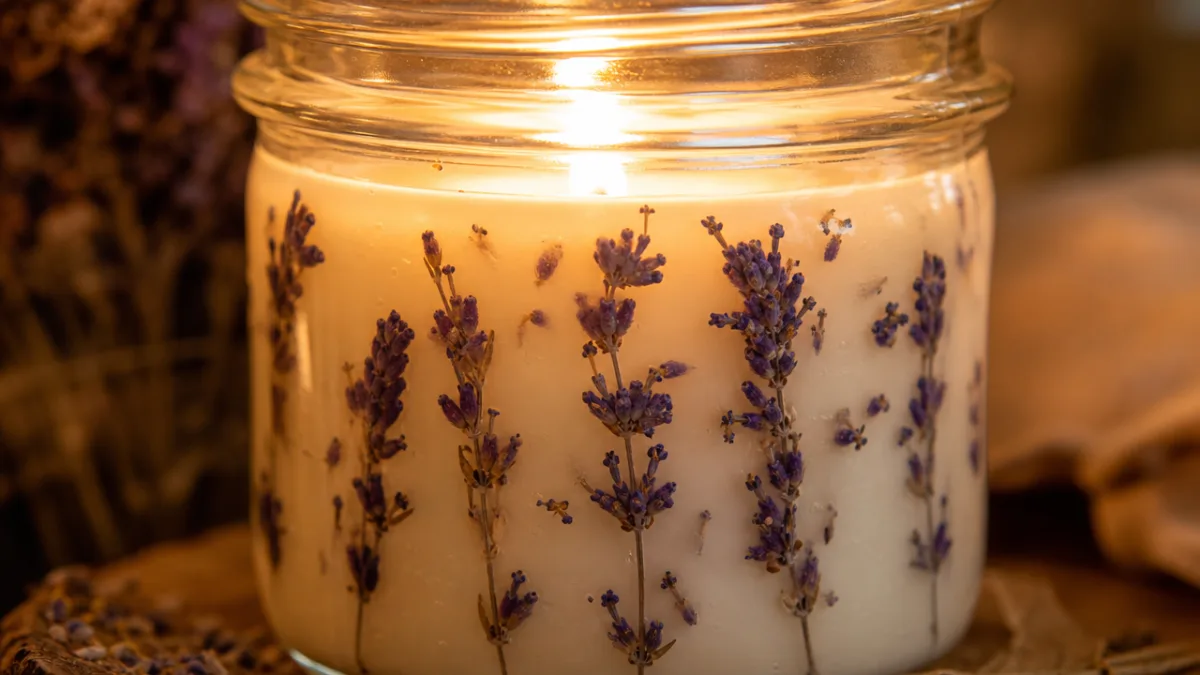
There is something deeply satisfying about creating a candle by hand, especially when that candle carries the soft, calming scent of lavender and the delicate beauty of pressed botanical flowers preserved beneath a smooth layer of wax. Handmade lavender pressed flower candles have become one of the most beloved DIY crafts in recent years, blending aromatherapy, botanical art, and candlemaking into a single meditative practice. Whether you are a seasoned crafter or picking up a creative hobby for the very first time, this guide will walk you through everything you need to know to create stunning candles that look like they belong in a high-end boutique.
These candles make exceptional gifts for birthdays, weddings, baby showers, and holidays, and they are equally wonderful as a personal treat for your own home. The combination of real pressed flowers and lavender fragrance creates an object that engages multiple senses at once, offering visual beauty and an aromatic experience that promotes relaxation and calm. Unlike store-bought candles, handmade versions allow you to control the quality of every ingredient, from the type of wax you choose to the specific flowers you press and the fragrance oils you select.
Beyond their aesthetic appeal, making these candles is itself a form of self-care. The process of pressing flowers, melting wax, and carefully arranging botanical elements requires patience and mindfulness. Many crafters find that the act of making them is just as therapeutic as burning the finished product. Throughout this article, you will discover the history behind botanical candles, the tools and materials required, step-by-step instructions, decorating techniques, and tips for gifting and selling your creations.
The Art and History of Botanical Candles
Candlemaking is one of humanity’s oldest crafts, with evidence of early candles dating back thousands of years to ancient Egypt and Rome. For most of history, candles were purely functional objects made from animal fat or beeswax, designed simply to produce light. It was not until the decorative arts movement of the nineteenth century that candles began to be treated as objects of beauty in their own right. Crafters and artisans began embedding flowers, herbs, and natural materials into wax, transforming utility into art and giving birth to what we now recognize as botanical candlemaking.
The pressed flower technique specifically draws from the Victorian tradition of flower pressing, a popular pastime among women of the era who preserved flowers from gardens and correspondence in journals and frames. When these two traditions merged in the hands of modern crafters, the botanical candle was born. Contemporary makers have elevated the craft further by experimenting with different wax types, natural dyes, and intricate floral arrangements that turn each candle into a miniature work of art. Social media platforms, particularly Pinterest and Instagram, have driven a massive revival of interest in this craft over the past decade.
Lavender holds a special place in the world of botanical crafts. Native to the Mediterranean, lavender has been used for over two thousand years for its medicinal, aromatic, and spiritual properties. Ancient Romans added lavender to their baths, and the plant’s name is believed to derive from the Latin word lavare, meaning to wash. In candlemaking, lavender brings its instantly recognizable floral and herbaceous fragrance, and its purple blossoms are among the most beautiful flowers to press and preserve. The combination of lavender scent and pressed lavender flowers creates a deeply cohesive sensory experience that few other botanicals can match.
Gathering Your Materials and Tools
Before you begin crafting your lavender pressed flower candle, it is essential to gather all of your materials and prepare your workspace properly. Having everything within reach before you start will help you work efficiently, especially during the stages where timing matters, such as when you are applying flowers to warm wax. A well-organized workspace also reduces the risk of accidents and makes the entire process more enjoyable. Designate a flat, heat-resistant surface for your candlemaking, and protect it with newspaper or a silicone mat to catch any wax drips.
For the wax, soy wax is highly recommended for pressed flower candles because it has a lower melting point than paraffin, which makes it more forgiving when you are working with delicate pressed botanicals. Soy wax also tends to hold fragrance well and burns more cleanly, making it a popular choice among environmentally conscious crafters. Beeswax is another excellent option; it has a natural honey-like scent that complements lavender beautifully and it has excellent adhesive properties that help pressed flowers stay in place. Paraffin wax can also be used but requires more precise temperature control to avoid scorching your botanicals.
Here is a comprehensive list of the materials you will need to get started:
- Soy wax flakes or beeswax pellets (approximately 1 pound per large candle)
- Lavender essential oil or fragrance oil (1 ounce per pound of wax is a standard starting point)
- Cotton wicks pre-tabbed to the appropriate size for your container
- Glass jars or containers of your choice
- A double boiler or a heat-safe pouring pitcher and a pot
- A thermometer, ideally a digital candy or candle thermometer
- Pressed dried lavender flowers and any additional botanicals
- Wick centering tools or clothespins to hold wicks in place
- A heat gun or hair dryer for finishing touches
- Scissors, tweezers, and a silicone spatula
Pressing your own lavender flowers is a deeply rewarding part of the process. Cut fresh lavender stems when the flowers are about three quarters open, as this is when their color and structure are at their peak. Place the stems between two sheets of absorbent paper, such as parchment or blotting paper, and press them inside a heavy book or a dedicated flower press. Leave them undisturbed for two to three weeks until they are completely dry and flat. If you are short on time, a microwave flower press can dry botanicals in as little as a few minutes, though the results may vary slightly in color and texture.
Step-by-Step Instructions for Making Your Candle
Once your materials are gathered and your pressed lavender flowers are fully dried, you are ready to begin the candlemaking process. Start by preparing your containers. Clean your glass jars thoroughly with warm soapy water and dry them completely before use. Any moisture left inside can cause the wax to crack or bubble as it sets. Secure your pre-tabbed wick to the center bottom of each jar using a small dab of hot glue or a purpose-made wick sticker. Thread the top of the wick through a wick centering bar or use two clothespins balanced across the rim of the jar to keep the wick perfectly upright and centered.
Measure your wax flakes by weight rather than volume for accuracy. A general rule of thumb is to use approximately twice the volume of wax flakes as the capacity of your container, since wax reduces significantly when melted. Place the wax in your double boiler or pouring pitcher set over a pot of simmering water and heat it gently, stirring occasionally, until it is fully melted and reaches a temperature of around 170 to 180 degrees Fahrenheit for soy wax. Never leave melting wax unattended, and always use a thermometer to monitor the temperature throughout the process.
Once your wax has melted fully, remove it from the heat and allow it to cool to around 140 to 150 degrees Fahrenheit before adding your lavender fragrance oil. Adding fragrance at too high a temperature can cause the scent molecules to break down, resulting in a weaker-smelling candle. Stir your fragrance oil into the wax slowly and thoroughly for at least two minutes to ensure it is fully incorporated. At this stage you can also add a small amount of natural purple or violet candle dye if you would like your wax to have a lavender hue, though many crafters prefer the clean ivory or cream color of undyed soy wax to allow the pressed flowers to stand out against a neutral background.
Allow the wax to cool further to approximately 120 to 130 degrees Fahrenheit before carefully pouring it into your prepared jars. Pour slowly and steadily to avoid introducing air bubbles. Fill each jar to about half an inch below the rim. As the wax begins to set and turns slightly opaque around the edges, this is your window for applying the pressed flowers. Working quickly but gently, use a pair of tweezers to position your pressed lavender flowers against the inside wall of the jar, pressing them lightly against the semi-set wax so they adhere in place. Arrange them as artistically or as naturally as you like, layering different sizes and adding any additional botanical elements such as small chamomile flowers, rosebuds, or eucalyptus leaves.
Once you are happy with your floral arrangement, allow the candle to cure at room temperature for at least 24 to 48 hours before burning. Resist the temptation to move or disturb the candles during this time, as the wax needs to set completely and evenly for the best burn performance. If you notice any sinkholes forming around the wick as the wax cools, this is normal and can be remedied with a second pour of a small amount of reserved melted wax to top off the candle. Trim your wick to about a quarter of an inch before the first burn for the cleanest, safest flame.
Decorating and Personalizing Your Botanical Candle
The beauty of handmade pressed flower candles lies in the endless potential for customization and artistic expression. Once you have mastered the basic technique, you can begin experimenting with different floral arrangements, color combinations, and design styles that reflect your personal aesthetic. Some makers prefer a minimalist approach, placing just two or three carefully chosen blooms at one side of the jar for an asymmetrical, Japanese-inspired look. Others fill every inch of the glass surface with a lush tapestry of overlapping petals and leaves that resembles a vintage botanical illustration.
Beyond the flowers themselves, there are many other ways to personalize your candles. The choice of container has a significant impact on the finished look. Clear glass jars allow the maximum visibility of the pressed flowers and are the most popular choice, but amber glass gives a warm, apothecary-like quality that suits dried herb aesthetics particularly well. Square or rectangular containers offer a modern, geometric look, while vintage teacups or small Mason jars lend a rustic, cottagecore charm. Consider the overall aesthetic you are going for before selecting your vessel, and think about how the container will complement the botanical elements inside.
Finishing touches can elevate a homemade candle from charming to truly professional-looking. Some popular options include:
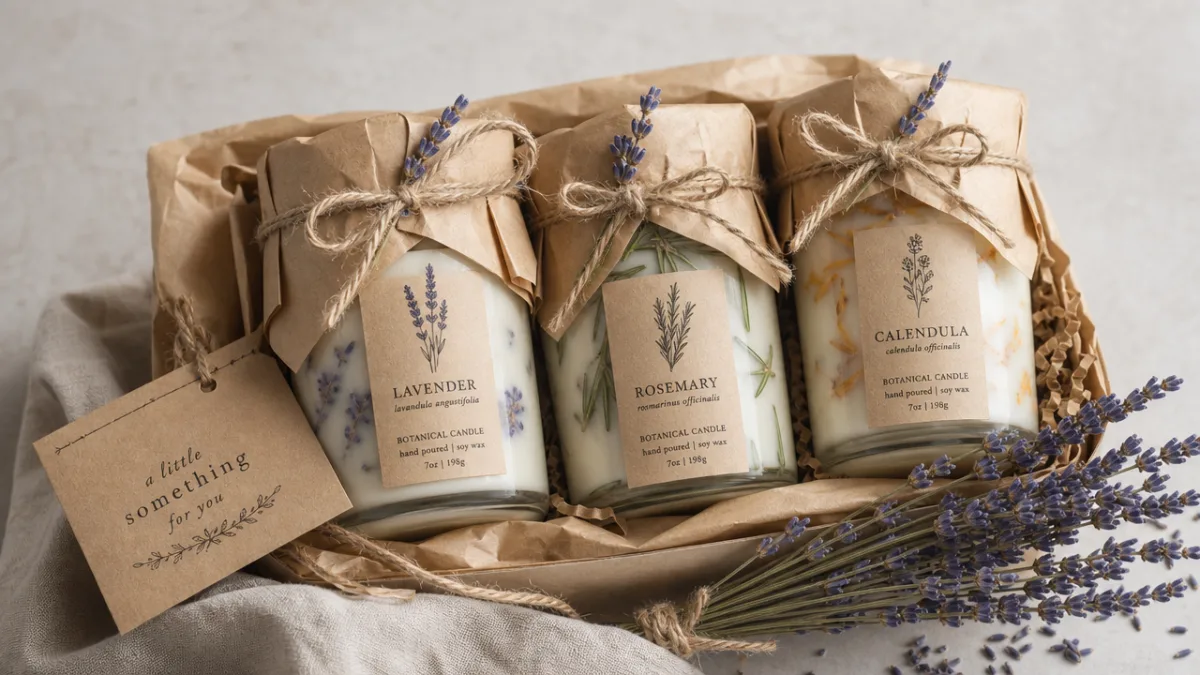
- Tying a sprig of fresh or dried lavender to the outside of the jar with a piece of natural twine or satin ribbon
- Attaching a hand-lettered or printed label with the candle’s scent, burn time, and any personal message
- Dipping the top of the finished candle in a thin layer of clear melted wax to seal the pressed flowers and give the surface a smooth, polished finish
- Adding dried citrus slices, star anise, or cinnamon sticks alongside the lavender for a layered aromatic and visual effect
- Using a heat gun to gently melt the very surface of the set candle and press additional flowers into the warm top layer for a decorative finish visible from above
Color is another powerful tool for customization. If you choose to tint your wax, consider using colors that complement the purple and green tones of lavender rather than competing with them. Soft lilac, dusty sage, warm cream, and pale blush are all beautiful background colors for lavender botanical candles. Natural candle dyes made from plant pigments are available from craft suppliers and are preferable to synthetic dyes if you are aiming for a fully natural product. Keep in mind that pressed flowers may fade slightly over time, especially if the candle is kept in direct sunlight, so placing them in a spot with indirect light will help preserve their color for longer.
Safety Tips and Best Practices for Candlemaking
Candlemaking is a wonderfully accessible craft, but it does involve working with open flames, high temperatures, and flammable materials, so understanding and practicing proper safety measures is absolutely essential. Always work in a well-ventilated area, as melting wax and fragrance oils can produce fumes that should not be inhaled in large quantities over extended periods. Keep a fire extinguisher or a box of baking soda nearby as a precaution, and never use water to extinguish a wax fire, as this can cause the burning wax to splatter dangerously.
Temperature control is one of the most critical safety factors in candlemaking. Wax that is overheated can become a fire hazard, and different waxes have different flash points, which is the temperature at which they can ignite. Soy wax generally has a flash point above 400 degrees Fahrenheit, but you should still monitor your wax carefully and never allow it to exceed 200 degrees Fahrenheit during the melting process. A dedicated candle thermometer is a small investment that pays for itself many times over in both safety and candle quality. Never leave melting wax unattended on the stove, not even briefly.
When it comes to burning your finished candles, there are important guidelines to share with yourself and with anyone who receives your candles as a gift. Pressed flower candles carry a particular consideration because the botanical material embedded in the wax can potentially catch fire if it comes into contact with the flame as the candle burns down. For this reason, it is best practice to never leave a burning botanical candle completely unattended, and to extinguish it before the flame reaches within half an inch of any flower material that is close to the center of the candle. Including a small care card with your candles is a thoughtful and responsible touch that recipients will genuinely appreciate.
Gifting, Packaging, and Selling Your Handmade Candles
Handmade lavender pressed flower candles are among the most warmly received gifts across virtually every occasion and demographic. Their combination of visual artistry, natural materials, and therapeutic fragrance makes them feel both thoughtful and luxurious, yet they are accessible enough to create in multiples without a prohibitive time or materials investment. When preparing candles as gifts, the packaging you choose can significantly enhance the perceived value and make the unwrapping experience feel special. Even a simple clear cellophane bag tied with a lavender sprig and ribbon can transform a jar candle into something that feels boutique-quality.
If you are considering selling your candles at craft fairs, through an online shop, or on platforms like Etsy, there are a few additional considerations to keep in mind. Pricing handmade candles fairly means accounting for all of your material costs, the time you spend making them, packaging materials, platform fees, and a reasonable profit margin. Many new sellers undercharge significantly because they feel uncomfortable pricing their work at its true value, but remember that buyers at craft markets and artisan shops are specifically seeking out handmade goods and understand that they carry a premium over mass-produced alternatives. A beautifully made eight-ounce lavender botanical candle can reasonably retail for anywhere between fifteen and thirty-five dollars depending on your market and the quality of your ingredients.
Building a recognizable brand identity around your candles will help you stand out in an increasingly crowded handmade market. Consider developing a consistent visual language across your labels, packaging, and social media presence, including a cohesive color palette, a signature font, and a brand name that reflects the natural, botanical spirit of your products. High-quality photographs taken in natural light are essential for online selling, as customers cannot smell or touch your candles through a screen, so your images need to communicate the beauty and quality of the product as compellingly as possible. Lifestyle shots showing your candles styled in a cozy home setting tend to perform particularly well on platforms like Pinterest and Instagram.
Caring for your customers beyond the sale is another hallmark of a successful small candle business. Consider including care instructions with every candle, explaining how to trim the wick, how long to burn the candle on its first use to achieve a full melt pool, and any specific guidance related to the pressed flower elements. Offering seasonal collections tied to different botanicals and scents throughout the year keeps your existing customers engaged and gives them a reason to return. Spring might feature cherry blossom and lemon verbena candles, while autumn could bring in chrysanthemum and amber scent profiles alongside your year-round lavender classics.
The Therapeutic Benefits of Lavender and Botanical Crafting
One of the most compelling reasons to embrace the craft of making lavender pressed flower candles is the profound therapeutic benefit that the entire process offers, from the initial gathering and pressing of flowers all the way through to the final moment of lighting the finished candle in your own home. Aromatherapy research has consistently demonstrated that lavender fragrance has measurable calming effects on the nervous system, reducing cortisol levels, lowering heart rate, and promoting a state of relaxed alertness that is conducive to sleep, meditation, and stress recovery. Burning a lavender candle you have made yourself adds an additional layer of satisfaction and comfort to these well-documented benefits.
The craft of flower pressing itself is increasingly recognized by therapists and wellness practitioners as a valuable mindfulness activity. The careful observation required to select and arrange flowers, the patience demanded by the pressing and drying process, and the gentle focus of applying delicate petals to warm wax all engage the kind of slow, deliberate attention that is the hallmark of meditative practice. Studies in occupational therapy and psychology have found that engaging in creative crafts reduces anxiety, improves mood, and fosters a sense of accomplishment and self-efficacy. In a world where so much of our time is spent looking at screens and processing information at high speed, the analog, tactile nature of botanical candlemaking offers a genuinely restorative counterpoint.
Building a regular practice around making botanical candles can also deepen your connection to the natural world and to the rhythms of the seasons. Pressing flowers that you have grown or foraged yourself connects you to the cycle of growth, bloom, and dormancy in a way that purchasing dried flowers from a supplier simply cannot replicate. Many botanical candle makers maintain small gardens specifically for their craft, growing lavender, chamomile, rose, and other flowers that double as both garden beauty and raw material. This integration of gardening, craft, and self-care creates a holistic lifestyle practice that nourishes creativity, wellbeing, and a sense of place in the natural world, making the humble pressed flower candle far more than just a decorative object.








What do you think?
It is nice to know your opinion. Leave a comment.