










“`html
The Art of the Elevated Garden Party: A Complete Guide to Hosting Alfresco in Style
Setting the Scene: Choosing Your Garden Space and Layout
A truly elevated garden party doesn’t start the day your guests arrive — it starts with you standing in your outdoor space, really looking at it. Whether you’re working with a sweeping lawn, a cozy backyard, or a narrow terrace, the shift in mindset is the same: stop thinking of your garden as a backdrop and start treating it as the venue. Where does the afternoon light land? Which spots are shaded when you need them to be? Where does the eye naturally wander when you first step outside? These are the questions that give your event its bones — that quality of feeling intentional without looking like you tried too hard.
Once you’ve figured out your best spots, think in zones. The most memorable garden parties aren’t one-dimensional — there’s somewhere to dine, somewhere to linger over a drink, and maybe a little dessert station tucked under a flowering arch that guests stumble upon with delight. This layered approach gets people moving and exploring, turning a simple get-together into something that feels genuinely curated. It’s the difference between a party and an experience.
Don’t skip the unglamorous practical stuff, either — it’s where most parties quietly fall apart. Uneven grass makes chairs wobble, so slide flat boards or a garden rug under furniture legs. Figure out where your nearest power source is before you commit to string lights or a speaker. Think about wind: a stunning floral centerpiece can turn into a liability on a breezy evening. The best parties feel effortless because the host sorted out every one of these headaches beforehand, out of sight, before a single guest walked through the gate.
The Aesthetic Framework: Color Palettes, Textures, and Visual Themes
Every garden party worth remembering is built on a visual language that holds everything together. The most elevated ones borrow their palette straight from nature — dusty sage, warm terracotta, blush and ivory, or deeper burgundy and forest green if you’re hosting in the evening. Rather than clashing with whatever’s blooming in your garden, work with it. When your color choices harmonize with your surroundings, the whole thing feels organic, like the party grew from the landscape rather than being set down on top of it. That quality reads as deeply sophisticated, and it doesn’t cost a fortune to achieve.
Texture is probably the most underrated tool in the whole design toolkit. When everything sits at the same visual register — all smooth, all flat — even expensive things look ordinary. But layer in a rough linen cloth under fine china, pair rattan charger plates with crystal glasses, or tie a velvet ribbon around a terracotta pot, and suddenly there’s richness happening. It photographs beautifully and it feels luxurious in real life too. Think about how texture plays with light, specifically: matte surfaces drink in that gorgeous late afternoon sun, while glass and metallic elements scatter it back out, which is exactly how you get that luminous, almost-magical quality you see at the parties everyone talks about afterward.
A clear visual theme — even a loose one — is your best decision-making tool. Whether you’re going for a Provençal country feast, a classic English tea party, a Moroccan-inspired boho gathering, or something sleek and contemporary, your theme answers questions before you even have to ask them. It tells you which flowers make sense, what music to queue up, how to dress the table, and what to serve. Think of it less as a strict brief and more as a guiding sensibility — something to keep all your choices pointing in the same beautiful direction.

Table Design and Centerpieces: Creating a Tablescape Worth Remembering
The dining table is the heart of the whole party, and at an elevated event, it deserves to be treated like a work of art. Start with your base layer — a tablecloth or runner sets the tone the moment guests see it. For something romantic and relaxed, slightly rumpled French linen in a neutral tone is hard to beat. For more drama, a deep jewel-toned cloth against white ceramic and brass cutlery makes a real statement. Think of this base layer the way a painter thinks of a canvas: the choices you make here shape everything that goes on top.
Centerpieces should feel lush and generous without becoming a wall that guests have to shout over. Long, low arrangements work beautifully — especially when you mix structural stems with soft blooms and some trailing foliage for movement. And don’t feel locked into the traditional vase. Clustering small bud vases at varying heights, filling vintage compote dishes with fruit and flowers, or running a loose, continuous ribbon of blooms down the center of the table interspersed with pillar candles — these approaches look effortlessly abundant and often cost less than one large formal arrangement.
The individual place setting is where you make guests feel truly seen. A handwritten place card tucked into a sprig of rosemary, a single bloom laid across a folded napkin, a small favor like a jar of homemade jam or a packet of wildflower seeds — these details communicate that real thought went into every seat at the table. They’re the reason guests describe a party to friends for years afterward. Not “it was beautiful,” but “you should have seen what she put at each place.” That’s the difference between an event and a memory.
One practical thing worth doing: set the entire table the day before and actually put some stand-in objects where the food will go. Many gorgeous tablescapes completely fall apart once serving platters, a bread basket, a butter dish, and a water pitcher enter the picture. Testing this in advance means you can adjust before it matters, so that when the meal is actually being served, everything still looks the way you intended and nothing feels like a frantic, crowded scramble.
Food and Drink: A Menu That Matches the Elegance of the Setting
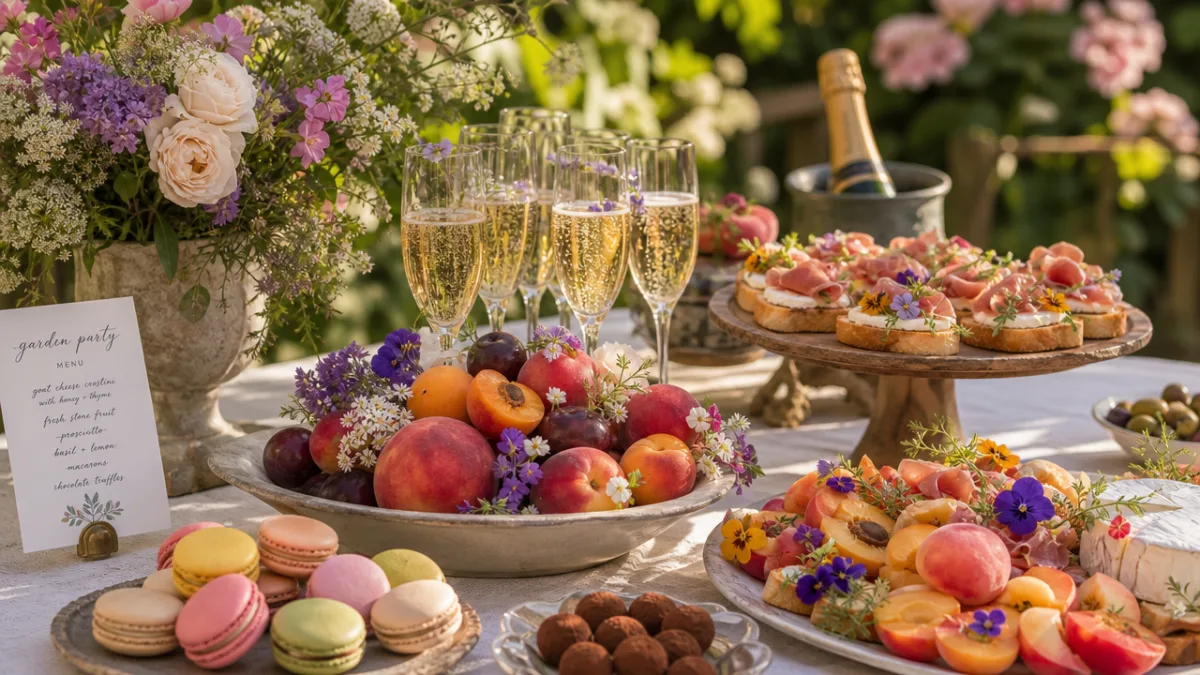
The food at an elevated garden party needs to be three things at once: beautiful, seasonal, and actually practical to eat outside. The best alfresco menus are built around whatever is at peak ripeness right now, because seasonal ingredients taste better and bring an authenticity to the whole event that you simply can’t fake. In summer, that means heirloom tomato salads with good olive oil and flaky salt, stone fruit on boards with aged cheese and honeycomb, cold poached salmon with cucumber ribbons and herbed crème fraîche, pea and ricotta crostini scattered with mint flowers. These dishes are show-stopping, genuinely delicious, and mercifully low-effort for the host on the day itself.
The drinks deserve just as much thought as the food. A signature cocktail — maybe an elderflower spritz with cucumber and fresh mint, or a rosé sangria with white peaches and lemon verbena — gives the party its own identity and makes guests feel like they’re part of something specific to this afternoon, this garden, this occasion. Serve it in a large, beautiful glass pitcher or dispenser so people can pour for themselves, which frees you up enormously. Non-alcoholic options should be just as considered and just as lovely: a hibiscus agua fresca, a cucumber and basil sparkling water, or a cold-brewed herbal tea over ice with edible flowers floating on top.
Presentation is what turns food into décor. Choose your serving vessels as carefully as you choose your flowers: a marble board for cheeses, a scalloped ceramic platter for the main, a footed cake stand for dessert. Garnish generously with fresh herbs, edible flowers, and sliced citrus — they’re inexpensive and the visual payoff is enormous. Tuck linen napkins into bread baskets. Rest a small sprig of lavender or thyme next to the cheese knives. Guests may not consciously clock these details, but they’ll feel the cumulative effect of someone who genuinely cared about every inch of the table.
- Seasonal starters: Chilled soups in small cups, bruschetta with heirloom tomatoes, smoked salmon blinis, and prosciutto-wrapped melon are elegant, easy to circulate, and always go fast.
- Main course options: Cold roasted chicken with herb sauce, whole baked salmon, or a beautifully composed grain salad with roasted vegetables all hold up brilliantly at ambient temperature.
- Dessert station: A self-service table with miniature pavlovas, a macaron tower, fruit tarts, and petit fours lets guests graze at their own pace and creates a genuine visual moment all on its own.
- Drink station essentials: A generous ice bucket, sliced citrus, fresh herbs for garnishing, and both alcoholic and non-alcoholic options — all presented with equal care and equal beauty.
Florals and Greenery: Working with Nature as Your Co-Designer
Flowers might be the single most powerful design element at any garden party, and at an elevated one, they need to feel abundant, intentional, and genuinely connected to the outdoor setting. The arrangements that work best for alfresco entertaining aren’t the stiff, formal compositions you might find at a corporate event — they’re loose and wildly beautiful, as though someone just walked through the garden with a basket and gathered everything at its peak. That effect comes from mixing: garden roses with ranunculus, sweet peas with trailing jasmine, zinnias with feathery cosmos, all cut at different heights and placed with confident looseness in vessels that have some character of their own.
Greenery is every bit as important as the flowers themselves, and it tends to get overlooked. Eucalyptus branches, olive stems, smilax garlands, trailing ivy — these add length, movement, and a sense of depth that flowers alone can’t provide. A table smothered in blooms but short on greenery can start to feel overworked and heavy. Greenery gives arrangements visual breathing room and ties everything back to the living landscape surrounding the table. Try draping eucalyptus down the center beneath your bud vases, or weaving a jasmine garland through a pergola overhead so guests are actually sitting beneath a canopy of scent and beauty.
Think beyond the table, too. Flowers at the entrance — a wreath on a gate, a pair of tall urns flanking a doorway — create an arrival moment that tells guests immediately that something special is happening here. Small bud vases tucked onto the bar cart, the dessert table, even the bathroom if it’s accessible from the garden show that the host’s attention went everywhere, not just to the centerpiece. These unexpected pockets of beauty are what people mean when they say a party felt effortless. Nothing was left to chance, but nothing felt forced.
Ambiance and Atmosphere: Light, Sound, and Sensory Details
Once the sun starts to drop, lighting becomes your most powerful tool. String lights draped between trees or along a pergola create an instant warmth that nothing else quite replicates — it’s like flipping a switch from “lovely afternoon party” to “the evening no one wants to leave.” Add candles in hurricane lanterns, on brass holders, floating in shallow bowls of water, and you layer in intimacy and movement. Warm Edison string lights overhead and flickering candlelight at eye level together create that layered glow under which everyone feels a little more beautiful, a little more relaxed, and far more inclined to stay for one more glass.
Music is the invisible architecture of the whole event. At an elevated garden party, it should be present enough to fill silence and set a mood, but never so loud it competes with conversation. A thoughtfully sequenced playlist — bossa nova and acoustic folk as people arrive, something with more energy during the meal, classic soul and jazz as the evening settles in — shapes the emotional arc of the party without anyone consciously noticing the transitions. Do test your volume outdoors in advance: what sounds perfectly calibrated at noon in an empty garden can feel either overwhelming or mysteriously absent once the space fills with people and laughter.
The sensory experience goes well beyond what guests can see and hear. Scent is one of the most evocative and underused elements in event design. Fragrant flowers — gardenia, tuberose, lavender, sweet peas — positioned near seating release their perfume in the warmth of the day. Bundles of rosemary, thyme, and basil bruised gently and placed near the food station add an aromatic complexity that is entirely natural and entirely delightful. Even a lit beeswax candle contributes its own quiet fragrance to the mix. These scents become the olfactory memory of your party — the thing guests catch a whiff of weeks later and think, that was such a beautiful afternoon.
- Early afternoon: Diffused natural light is perfect for photography and shows off the colors of your tablescape and florals at their most vivid and true.
- Golden hour: The hour before sunset transforms the garden into something almost impossibly lovely. Save the main toast and the best photographs for exactly this moment.
- Twilight: As daylight fades, transition to candlelight and string lights. The atmosphere shifts completely — and just as beautifully — for the rest of the evening.
- Night: Lanterns on the ground, pillar candles on surfaces, and the warm glow of string lights overhead bring the event to a close with a deeply intimate, lingering quality.
Last but not least: think about your guests’ physical comfort as an act of genuine hospitality. On warm evenings, a few discreetly placed fans around the perimeter can make an enormous difference. On cooler nights, cashmere throws draped over chair backs or a chiminea burning in the corner of the garden let people stay long after they might otherwise have headed inside for a cardigan. Even a pretty basket near the entrance stocked with insect repellent and sunscreen — dressed with a small handwritten note — says something about a host who thought of everything. The most elevated parties aren’t the ones with the biggest budgets. They’re the ones where no guest ever feels uncomfortable, forgotten, or anything other than genuinely, warmly welcome.
“`








What do you think?
It is nice to know your opinion. Leave a comment.