










Handmade Brass Spiral Candle Holders – The Sculptural Gold-Tone Set That Transforms Any Space
The Art of Handcrafted Brass: A Timeless Tradition
There’s something about a handmade object that just pulls you in. When a craftsperson bends and coaxes brass into a flowing spiral, they’re joining a tradition that goes back thousands of years — one built on patience, material knowledge, and an appreciation for the kind of beauty that only comes from slight imperfection. Marleth’s handmade brass spiral candle holders are exactly that kind of object. They’re not just candle holders; they’re little works of art, each one carrying the quiet evidence of the hands that shaped it and the heat that hardened it.
Brass has a remarkable history as a material. It’s an alloy of copper and zinc, and ancient civilizations in Egypt, Rome, and China were already using it for decorative and ceremonial purposes — drawn to its warm golden color and impressive staying power. Unlike a lot of materials that break down or corrode over time, brass actually gets more interesting with age. It develops a rich patina that deepens its character in a way that’s genuinely hard to fake. So when you buy a set of handmade brass candle holders, you’re not just buying something pretty for right now — you’re buying something that will grow more beautiful over time, shaped by the specific environment and care it receives.
The spiral shape itself carries meaning that goes way beyond aesthetics. You’ll find it in Celtic knotwork, in nautilus shells, in the golden ratio — it’s basically nature’s favorite form, one that speaks to growth, continuity, and the way things cycle and evolve. When Marleth’s artisans made the spiral their central design motif, they were tapping into a visual language that resonates across cultures and time periods without even needing an explanation. The result feels both ancient and fresh — rooted in something timeless while looking completely at home in a modern space.
Design Details That Elevate Everyday Living
What makes a decorative object truly exceptional rather than just pretty is usually found in the details, and these holders have details worth paying attention to. The base is solid and stable without looking heavy or clunky. From there, the brass moves upward in a smooth, rhythmic spiral that does something a plain candlestick simply can’t — it catches light and redirects it, creating depth and dimension that shift depending on where you’re standing. The proportions are carefully balanced so the holders frame the candles rather than compete with them, keeping the actual flame right where it belongs: as the star of the show.
That gold tone deserves a closer look, too. Brass has a warm, yellow-gold color that sits in its own lane — it’s not the cool detachment of chrome or silver, and it’s more nuanced than high-shine gold plate. When it’s polished, it radiates a kind of inviting warmth that plays beautifully in both natural and artificial light. In morning sunlight, the holders glow with a soft amber quality. By candlelight, they seem almost alive, bouncing the flame’s warmth around the room. This is what good brass does, and it’s exactly why interior designers keep coming back to it decade after decade regardless of what style is trending.
Being sold as a set also reflects some genuinely smart thinking about how objects work together in a space. Grouping pieces at varying heights creates movement and draws the eye upward in a way that feels natural and dynamic. The beauty of a well-designed set like this is that even if you’ve never thought much about interior styling, the visual logic is already built in — just put the pieces together and they do the work. Whether you cluster them tightly for a bold statement or spread them along a mantle for something more relaxed, they hold together as a cohesive collection.
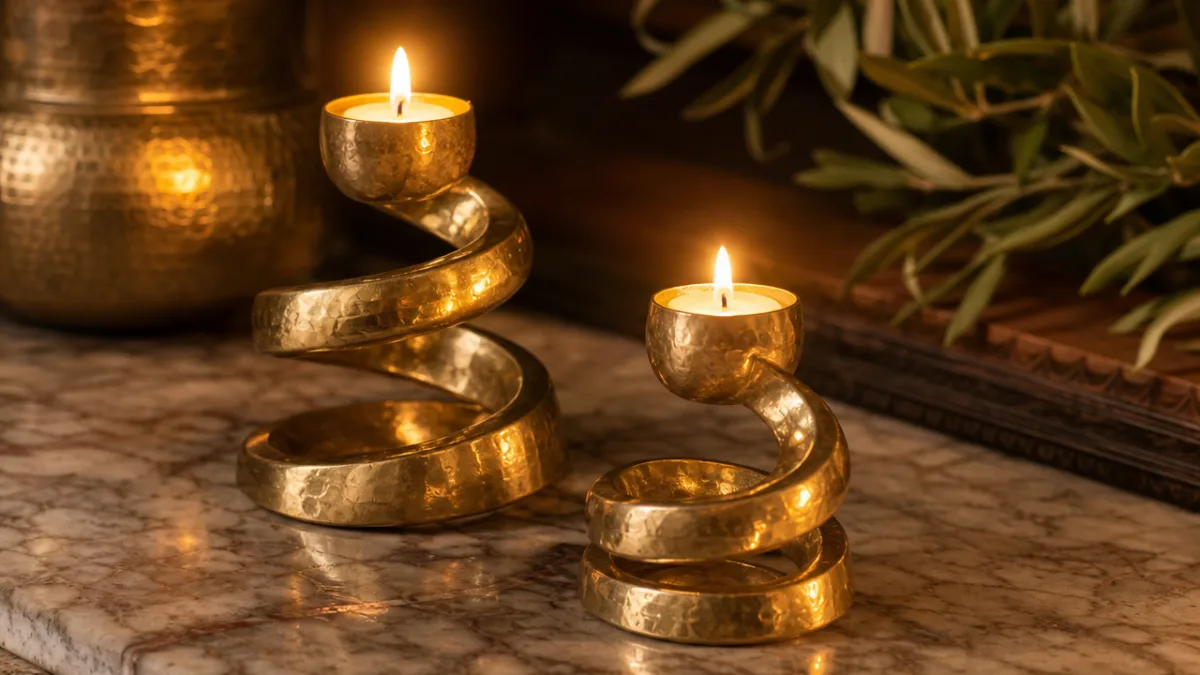
Styling the Marleth Brass Set in Your Home
One of the best things about this set is how well it travels across different decorating styles. These aren’t pieces that only work in one specific kind of room — they’re genuinely versatile. In a Scandinavian-influenced space with clean lines, pale wood, and a restrained color palette, the warm gold of the brass brings exactly the kind of grounding heat those rooms can need to feel lived-in rather than sterile. The sculptural form adds visual interest without cluttering things up.
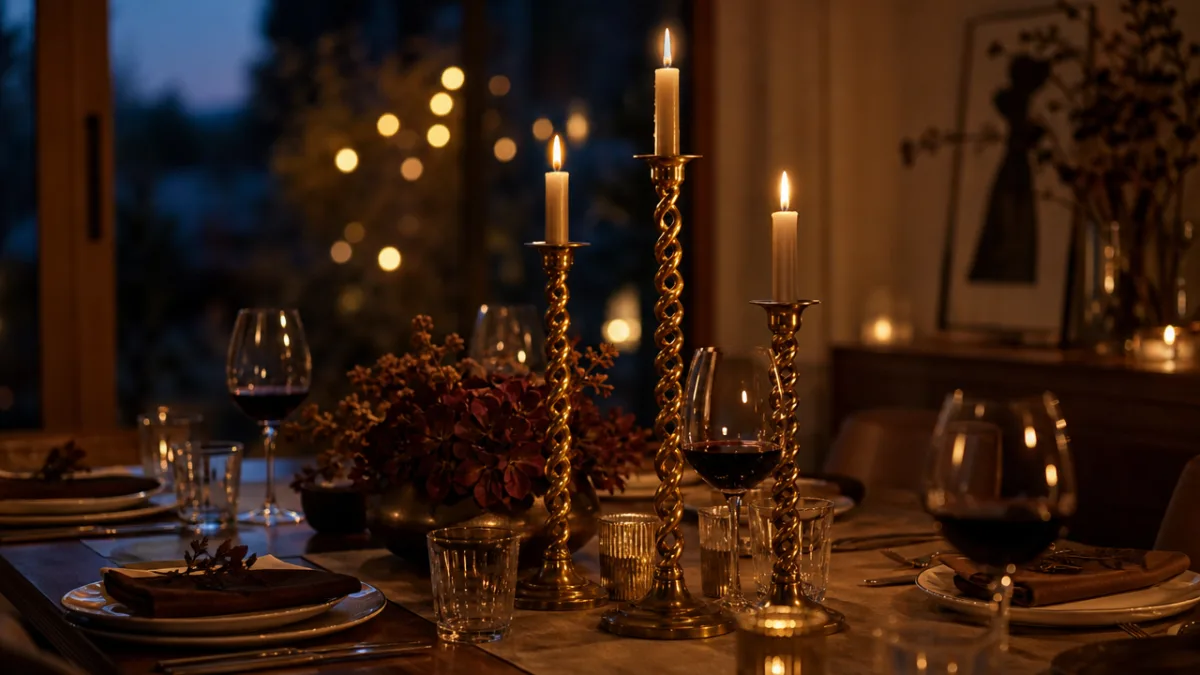
In more traditionally decorated rooms — English country, French provincial, classic American Colonial — the holders fit right in alongside antique wood, layered textiles, and collected objects. Handmade brass just makes sense in those contexts because traditional decorating has always been about craft, authenticity, and objects made with care. Set them on a sideboard next to leather-bound books, or arrange them on a dining table with linen napkins and heirloom china, and they communicate exactly the kind of unhurried, intentional living that sensibility is all about.
For contemporary or transitional spaces that blend old and new, these holders make ideal bridge pieces — substantial enough to feel grounded and real, but abstract enough in their sculptural form that they never read as too period-specific or costume-y. Here are a few placement ideas worth trying:
- Cluster all the pieces together at the center of a dining table, surrounded by scattered flower petals or eucalyptus sprigs for a tablescape that feels genuinely celebratory.
- Line them along a fireplace mantle spaced evenly, mixed in with small framed photos or botanical prints for a collected, curated feel.
- Style them on a vanity or dressing table alongside a perfume tray and hand mirror for something a little glamorous and personal.
- Bring them into the bathroom — beside a freestanding tub or on a wide window ledge — to turn a functional space into something that actually feels like a sanctuary.
- Take them outside for evening entertaining and let the candlelight flicker naturally in the open air for an atmosphere that’s genuinely hard to manufacture any other way.
The through-line in all of these suggestions is giving the holders room to be seen. These aren’t background objects — they’re conversation starters. People will lean in to look at them more closely. Positioning them at seated eye level, whether on a coffee table, dining table, or low shelf, makes that craftsmanship accessible to everyone in the room. Pair them with candles in natural, complementary tones — ivory, cream, beeswax yellow — and the brass gets to carry the color story without any competition.
The Craft Process Behind Every Spiral
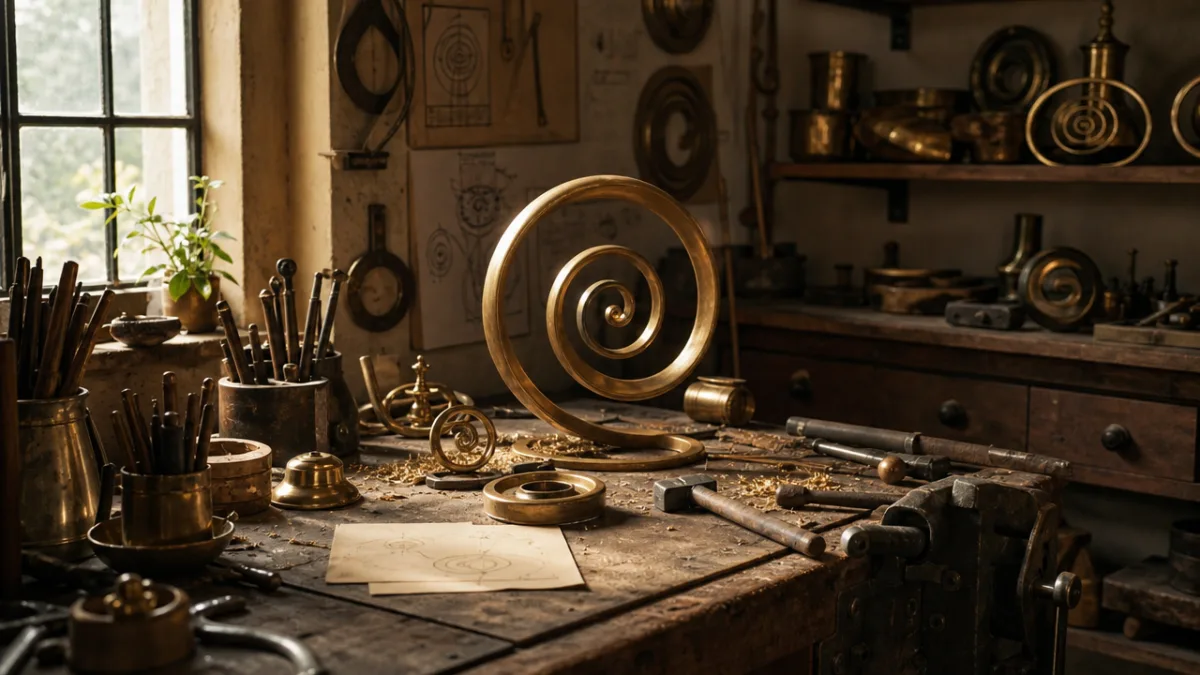
Knowing how handmade brass objects are actually made changes the way you look at the finished piece. It starts with sheet or rod material that the artisan works by hand — hammering, bending, and annealing, which is a process of controlled heating and cooling that keeps the metal workable without making it brittle. There’s no single mechanical action that stamps the form into existence. Instead, it builds up through dozens of small, deliberate moves, each one guided by the craftsperson’s hands, eyes, and a deep familiarity with how the material behaves.
The spiral form is a particularly demanding thing to pull off well. Keeping the spacing and rhythm consistent throughout the coil takes a steady hand and a refined sense of proportion that only develops through genuine practice. Every twist needs to relate naturally to the ones before and after it, creating something that feels like flow rather than repetition. The tightness of the spiral, the angle of the coil, the way the surface is finished — all of these small decisions shape the final character of the piece. And because they’re made by hand, no two are exactly alike. Mass-produced versions can approximate the shape, but they can’t reproduce what it feels like to hold something that was actually made by a person.
The finishing stage is where the piece finds its final personality. Brass can be treated in a lot of different ways — a high mirror polish creates brilliant reflectivity that suits formal, glamorous spaces; a brushed or satin finish is softer and more contemporary; an intentional patina can make a piece look genuinely antique. Marleth’s gold-tone finish sits nicely in the middle ground — luminous enough to catch light beautifully, but warm rather than flashy. It works in a lot of different environments without demanding that the room adapt to it.
Caring for Your Brass Candle Holders
Brass is durable and will reward a little attention with decades of beauty. The main thing to understand is that brass is a reactive material — it responds to its environment. It develops a deeper patina in humid conditions, stays brighter in dry ones, darkens if left alone, and gleams when polished regularly. None of that is a problem; it’s actually part of what makes brass interesting. You just need to decide what look you want and maintain the pieces accordingly. Both paths are valid, and the right choice really just depends on your personal taste and the feel of your space.
If you want to keep that warm, bright gold tone, light and regular cleaning is your friend. After each use, wipe the holders down with a soft dry cloth to pick up any wax drips, dust, or fingerprints before they have a chance to settle in. For a more thorough clean, warm water with a small amount of mild dish soap and a soft cloth works well without risking any surface damage. Stay away from abrasive cleaners, steel wool, or harsh chemical solvents — they’ll scratch or chemically alter the metal. Once you’ve washed them, dry them thoroughly right away rather than letting them air dry, since water left sitting on brass can leave spots and cause uneven tarnishing.
For a deeper polish when the metal needs it, a commercial brass polish or a homemade paste made from equal parts flour, salt, and white vinegar will bring back the shine effectively. Work in small circular motions with a soft cloth, section by section, and buff to a finish with a clean cloth. Some people follow up with a thin coat of paste wax to slow future tarnishing — entirely optional, but a good trick if you’d rather polish less often. In general, handling the holders with clean, dry hands when you can will make a real difference over time, since the oils and salts from skin are the main culprits behind tarnishing and patina buildup.
Why Handmade Objects Matter in a Mass-Produced World
In an age of instant manufacturing and algorithmically optimized products, choosing something handmade is a small but meaningful act of resistance. It’s a choice that says how something is made matters — that the relationship between a maker and their material is worth preserving, and that the person receiving the finished object deserves something more than the most efficient possible version of a thing. Handmade brass pieces like the Marleth spiral holders make that argument in the most tangible way: in every slight variation of form, every hammer mark softened in finishing, every spiral that shows the evidence of a human hand guiding it into shape.
There’s also a genuine sustainability case for investing in well-made handmade objects instead of cheap alternatives that won’t last. A set of Marleth brass candle holders, cared for properly, can last not just years but generations. Brass is infinitely recyclable — even at the very end of its useful life, the material holds value and can re-enter the material cycle without waste. Compare that to the environmental footprint of disposable decorative objects that end up in landfills after a season or two and the argument becomes pretty hard to dismiss. Choosing handmade often means choosing less overall — less consumption, less waste, less of the relentless churn of trend-driven buying.
But maybe the most meaningful thing about handmade objects is something harder to quantify: they carry human presence. When you set a Marleth spiral candle holder on your table and light the candle inside it, you’re completing a chain of care and attention that started with an artisan choosing their material and ends in the warm light filling your room. That chain is invisible, but it’s real, and it gives an ordinary domestic moment a little more weight. In a world that so often feels rushed and impersonal, an object like this offers something genuinely rare — a connection to slowness, to skill, and to the very human impulse to make things that are beautiful.
Gifting the Marleth Brass Spiral Set
Beyond being a wonderful addition to your own home, this set is one of the better gift options out there for a wide range of occasions and people. For weddings and housewarmings in particular, handmade brass hits a sweet spot that’s hard to find elsewhere — it feels genuinely celebratory without being over the top, it’s practical enough to actually get used, and it’s beautiful enough to become one of those pieces the recipient pulls out for every special occasion and eventually can’t imagine the house without. It communicates thoughtfulness in a way that a more conventional gift rarely does.
For milestone birthdays, anniversaries, or retirements, the lasting quality of handmade brass carries its own symbolic resonance. Giving someone an object that will outlast trends, stay beautiful for decades, and potentially get passed down is a way of saying that their milestone deserves something with real permanence to it. The sculptural, art-adjacent quality of the Marleth set also makes it a natural fit for design-forward friends and family — people who’d genuinely rather have one beautiful, considered thing than a collection of items they’ll forget about. You can take the gift even further by pairing the holders with a selection of quality taper or pillar candles in natural tones, so the whole package is ready to enjoy right away.
The presentation is worth thinking about, too. Consider wrapping the set in materials that echo the spirit of the pieces themselves — unbleached kraft paper, linen secured with twine, or a simple wooden box lined with dried botanicals. A handwritten note explaining where the set comes from, the tradition it belongs to, or simply why you chose it for this particular person transforms a beautiful object into something that carries a memory. In that way, giving a handmade gift becomes its own kind of craft — something made with intention and care for the person on the receiving end.








What do you think?
It is nice to know your opinion. Leave a comment.