










Floating Petals and Flame: The Ancient Art of Combining Flowers and Candlelight
The Timeless Marriage of Fire and Flora
For thousands of years, human beings have instinctively reached for two things when they wanted to create an atmosphere of beauty, reverence, or celebration: flowers and flame. These two elements share a remarkable symbolic kinship that crosses cultural boundaries and spans centuries of human tradition. Both are ephemeral, both are radiant, and both carry an almost mystical capacity to transform an ordinary space into something that feels sacred or deeply meaningful. The practice of combining floating petals with the warm glow of candlelight is not merely decorative — it is an act rooted in our oldest emotional and spiritual impulses.
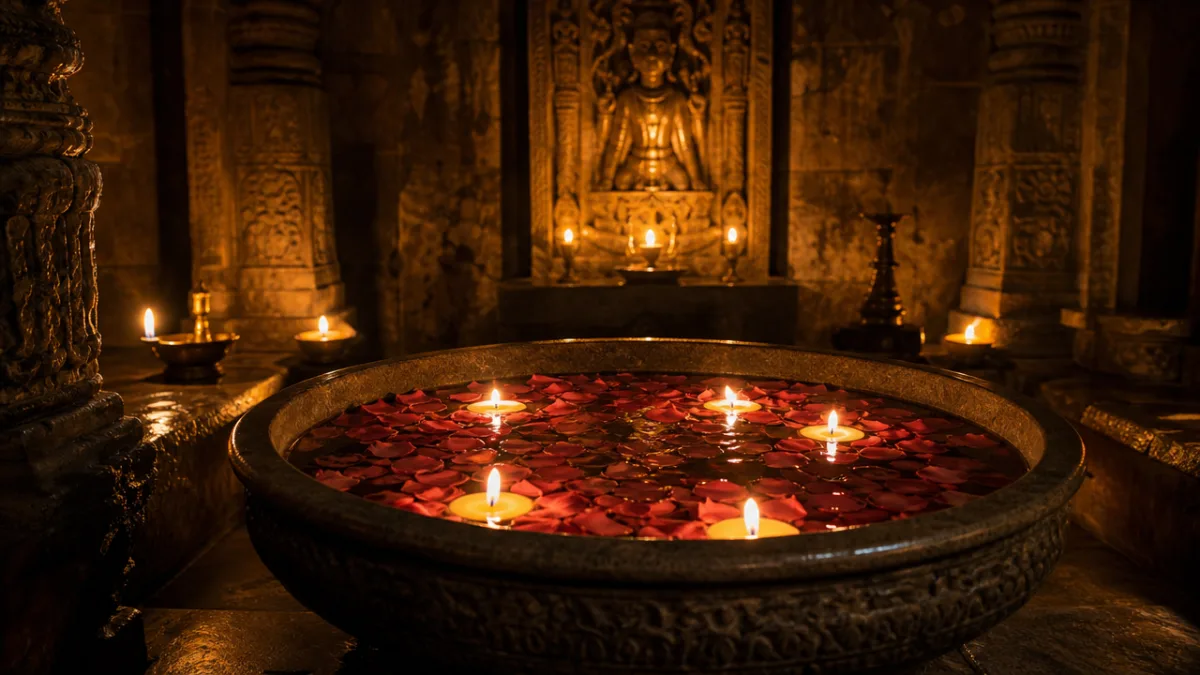
The visual dynamic between soft, organic petals and the dancing light of a flame creates a sensory experience that is difficult to replicate by any other means. As candlelight flickers across the surface of water scattered with petals, the reflections multiply and shift, giving the arrangement a living quality that static décor simply cannot achieve. The petals themselves take on a luminous quality, their colors deepened and warmed by the amber tones of the flame, as though the flowers are blushing in the presence of the light. This interplay is one of the reasons that floating floral centerpieces with candles have remained a staple of weddings, spiritual ceremonies, and intimate dinner settings across cultures worldwide.
Understanding why this combination works so powerfully requires us to think about how human perception responds to natural stimuli. Our eyes are drawn involuntarily to light and to organic shapes, two categories that flame and flowers represent in their purest forms. When you place both in the same scene, you engage multiple layers of visual attention simultaneously. The flame demands focus with its movement, while the petals invite the gaze to drift and wander. Together they create a visual rhythm that is both stimulating and deeply calming, a balance that designers and artists have long recognized as the hallmark of truly beautiful composition.
Cultural and Historical Roots of Petal and Flame Rituals
The tradition of floating flowers alongside fire has roots in virtually every major civilization that developed alongside water. In ancient India, the practice of releasing diyas — small clay lamps — alongside marigold petals onto rivers and lakes gave rise to what we now know as the festival of Diwali and similar water-based ceremonies. These offerings were made to the gods, particularly to Lakshmi, the goddess of wealth and beauty, and to the spirits of ancestors. The floating petals represented the impermanence of earthly life, while the flame symbolized the enduring power of the divine. This pairing was not accidental; it was theologically intentional.
In Japan, the ceremony of tōrō nagashi, or floating lanterns, is performed during the Obon festival to guide the spirits of the dead back to the world beyond. These lanterns are often adorned with flowers, and the combination of light on water surrounded by natural beauty is considered the most spiritually potent form of offering one can make. Similarly, in Thai culture, the Loy Krathong festival sees millions of people releasing small banana-leaf boats decorated with candles, incense, and flowers onto waterways, in a practice that dates back to the Sukhothai kingdom of the 13th century. These are not isolated coincidences but rather parallel discoveries of the same universal truth: light and petals together speak a language that transcends words.
In Western traditions, the Catholic and broader Christian practice of floating candles in baptismal fonts, paired with rose petals during certain feast days, draws from similar symbolic instincts. The rose has long been associated with the Virgin Mary, and candlelight with the presence of Christ as the “light of the world.” When these symbols are combined in a single ritual space, the effect is one of layered devotion that speaks simultaneously to the senses and to the spirit. Even secular European court traditions from the Renaissance onward incorporated elaborate floating garden tableaux in palace fountains during royal celebrations, demonstrating that the appeal of petals and flame was never confined to the religious sphere alone.
Designing a Floating Petal and Candle Arrangement
Creating a floating petal and candle display that achieves the kind of ethereal beauty associated with this art form requires thoughtful attention to materials, proportion, and the behavior of both water and flame. The vessel you choose is your foundation, and it sets the entire visual tone of the arrangement. Wide, shallow bowls allow petals to spread naturally and give candles room to reflect on a broad water surface. Deep, cylindrical vases create a more dramatic, jewel-like effect, with petals clustered near the surface while the candle floats above them like a crown. Each approach tells a different story, and the best designers begin by asking what mood they want to evoke before selecting their container.
Flower selection is equally important, and not every bloom is suited to floating. The best choices share certain physical characteristics: they are either naturally buoyant, have petals that detach cleanly and hold their shape when wet, or possess a broad, flat profile that rests elegantly on the water’s surface. Among the most popular options are the following:
- Rose petals — Classic, versatile, and available in a vast range of colors; they float naturally and hold their shape for many hours.
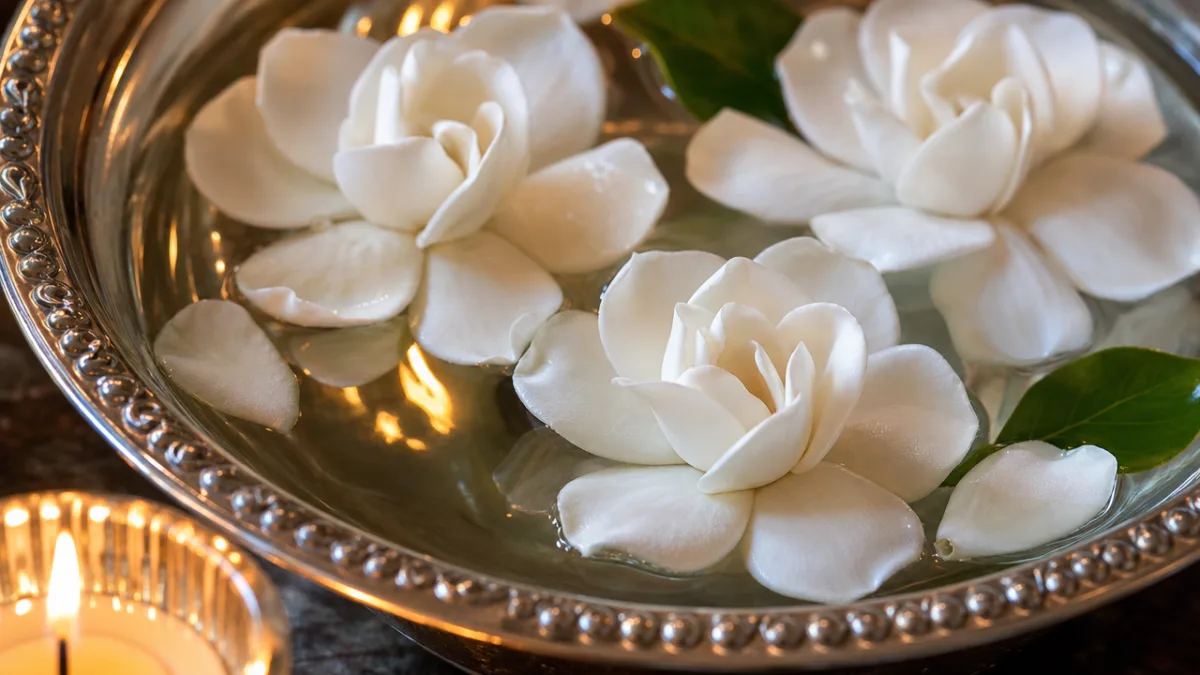
- Gardenias — Their wide, waxy blooms sit perfectly flat on the water surface and release a gentle fragrance that enhances the sensory experience.
- Orchid heads — Exotic and architectural, single orchid blooms create a high-contrast visual statement, particularly against dark water.
- Marigolds — Dense, globe-shaped flowers with vibrant color that is intensified under candlelight; traditionally used in South Asian and Mexican ceremonial displays.
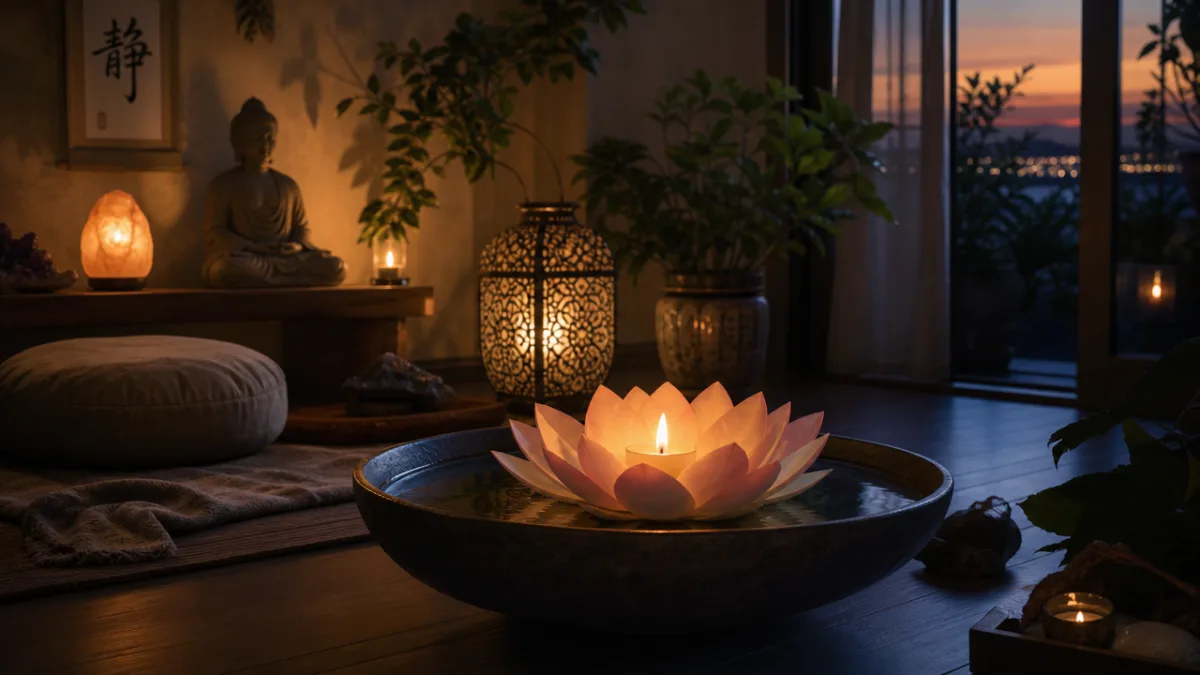
- Lotus blossoms — Perhaps the most iconic floating flower of all, with a natural buoyancy and a form that seems designed by nature specifically for this purpose.
- Camellias — Smooth, symmetrical, and available in white, pink, and red; they float with a serene stillness that complements quiet candlelight beautifully.
Candle selection deserves equal care. Floating candles specifically designed for water use are widely available and come in disc shapes, sphere shapes, and decorative molded forms. They are engineered to remain stable on water, resist tilting, and burn for extended periods without flooding their wick. For a more elevated aesthetic, tea lights placed inside small glass holders can be set among the petals, creating pockets of contained warmth rather than open flame on the water. The height of your candles relative to the depth of your petals will determine how much light filters through the arrangement, so experimenting with different combinations before your final display is always a worthwhile step.
Color Theory and the Language of Blooms in Candlelight
Color is where many floating petal arrangements either soar to extraordinary beauty or fall flat into visual noise, and understanding how candlelight interacts with different colors is one of the most valuable skills any floral designer can develop. Candlelight sits in the warm spectrum — it casts amber, gold, and soft orange tones across everything it touches. This means that warm-colored flowers are amplified dramatically under its influence, while cool colors can be muted, shifted, or transformed in ways that may surprise the uninitiated. A pale lavender orchid, for instance, can appear almost white by candlelight, while a deep crimson rose can take on an almost velvety burgundy richness that no daylight photograph could capture.
White and cream flowers are perhaps the most universally successful choice for candlelit floating arrangements, and there is a clear optical reason for this. White petals act as reflectors, catching the warm light of the flame and glowing with a soft internal luminosity that makes them appear almost backlit. Cream gardenias floating in a shallow silver bowl with a single pillar candle at the center is one of the most simply elegant arrangements possible, requiring almost no additional decoration to achieve a profound visual impact. For occasions that call for drama rather than serenity, deep jewel-toned petals — burgundy, deep violet, saturated magenta — create a sumptuous contrast against the gold of the flame that feels opulent and romantic.
The relationship between color and meaning also deserves consideration when designing with intentionality. In the Language of Flowers — the Victorian practice of floriography — every bloom carried a specific message, and many of those meanings have persisted into contemporary consciousness. Red roses communicate passionate love, white lilies suggest purity and remembrance, yellow marigolds carry associations with both celebration and mourning depending on cultural context, and pink peonies speak of prosperity and good fortune. When designing floating arrangements for specific occasions, layering these symbolic meanings into your color choices adds a depth of intention that guests may not consciously register but will nonetheless feel in the overall emotional quality of the space.
Setting the Scene: Environments and Occasions That Call for Petals and Flame
The floating petal and candle aesthetic is remarkably adaptable, capable of scaling from an intimate single bowl on a bedside table to an elaborate installation covering the entire surface of a wedding reception venue’s decorative pool. Understanding how to calibrate the scale and style of your arrangement to its environment is what separates a merely pretty display from one that feels perfectly, inevitably right. An outdoor garden wedding in summer calls for arrangements that can hold their own against natural light and open space, which typically means more volume — more petals, more candles, larger vessels. An indoor dinner for two calls for restraint and intimacy, where a single small bowl of floating roses and one slim taper candle can carry all the emotional weight the moment requires.
There are certain occasions and environments for which this style of decoration has become nearly synonymous with the experience itself:
- Wedding receptions — Floating petal centerpieces have become one of the most requested wedding décor elements worldwide, particularly for ceremonies held near water or in venues with natural stone and wood interiors.
- Spa and wellness environments — The sensory combination of floral fragrance, reflected candlelight, and the quiet sound of water creates exactly the atmosphere of restorative calm that defines a premium spa experience.
- Diwali and festival celebrations — Marigold and rose petal arrangements with floating diyas or tea lights are central to the domestic and communal celebration of this festival across South Asian communities globally.
- Memorial and remembrance ceremonies — The symbolic resonance of petals and flame is particularly powerful in contexts of grief and tribute, where the transient beauty of both elements speaks eloquently to the nature of life and loss.
- Romantic dinners and anniversary celebrations — Few gestures communicate care and romantic intention as clearly as a carefully arranged floating petal display, which requires time, thought, and attention to detail.
Outdoor installations involving petals and flame require additional practical consideration, particularly with regard to wind. Even a gentle breeze can push floating candles to the edge of a vessel, tilt them dangerously, or scatter petals in ways that are aesthetically disruptive. Sheltering your arrangements within garden walls, beneath pergolas, or inside lantern structures can solve this problem elegantly, while also framing the display and directing the viewer’s attention toward it. Water temperature also affects how long petals retain their freshness; cool water slows the wilting process significantly, giving arrangements a longer useful life during extended evening events.
The Meditative Dimension: Petals, Flame, and Mindful Practice
Beyond decoration and ceremony, the combination of floating petals and candlelight has found a deeply personal role in contemporary mindfulness and meditation practice. There is growing recognition among wellness practitioners and researchers alike that the visual engagement of watching candlelight flicker across water and petals induces a particular quality of relaxed attention — a state sometimes called soft fascination — that is both restorative and conducive to reflective thought. Unlike the hard fascination of screens or demanding tasks, soft fascination allows the mind to wander productively, processing emotions and experiences at a pace that feels natural rather than forced.
Many meditation traditions have long used fire as a focus object for concentration practices, a technique known in Sanskrit as trataka or steady gazing. The addition of floating petals to this practice introduces an element of impermanence and natural beauty that enriches the meditative quality of the experience. Watching a petal drift slowly across a still water surface, drawn by the faintest air current, can become a meditation on letting go — of control, of attachment, of the relentless forward pressure of daily life. The fragrance of the flowers, meanwhile, engages the olfactory system in ways that bypass conscious thought and access emotional memory directly, sometimes surfacing feelings or images of unexpected depth and clarity.
Creating a personal floating petal and candle practice at home is simpler than many people imagine, and its benefits can be genuinely significant for those who struggle with anxiety, overstimulation, or the difficulty of transitioning from the demands of work into personal time. The ritual of preparation itself — selecting flowers, arranging petals, filling a bowl with water, lighting the candle — functions as a mindful activity that signals to the nervous system that a shift in mode is occurring. This kind of intentional sensory ritual is increasingly recommended by therapists and wellness coaches as a complement to formal meditation, particularly for individuals who find sitting in silence difficult without a focal point to anchor their attention. The floating petal arrangement, in this sense, becomes not just a beautiful object but a practical tool for psychological wellbeing.
Sustainability and Conscious Practice in Floral Decoration
As the popularity of elaborate floral displays has grown, so too has awareness of the environmental impact associated with cut flower production and single-use decorative materials. The conventional cut flower industry carries a significant ecological footprint, involving intensive pesticide use, refrigerated long-distance shipping, and the generation of substantial organic waste from short-lived arrangements. For those who wish to practice the art of floating petals and flame with genuine environmental consciousness, there are meaningful choices to be made at every stage of the process, from sourcing to disposal, that can substantially reduce this impact without sacrificing any of the beauty the practice offers.
The most sustainable approach begins with sourcing. Locally grown flowers, purchased from farmers’ markets or small regional growers, dramatically reduce the carbon cost of transportation and are far more likely to have been produced without the heavy pesticide loads associated with export-grade cut flower farming. In many regions, it is possible to grow your own cutting flowers in a garden or even in containers on a balcony — roses, marigolds, and camellias are all relatively accessible to home growers in temperate climates. Foraging petals from flowers already in your garden that have naturally begun to drop their blooms is perhaps the most sustainable option of all, giving fallen petals a second moment of beauty before they decompose.
After an arrangement has served its purpose, the organic materials involved can nearly always be composted rather than discarded, returning nutrients to the soil and completing a natural cycle. Beeswax candles, which are biodegradable and produced through a process that supports rather than harms bee populations, are preferable to paraffin candles derived from petroleum. Soy wax candles offer another sustainable alternative, though the ethics of soy sourcing are complex and worth researching. The vessels used for floating arrangements — ceramic bowls, glass containers, vintage crystal — are by their nature reusable, and selecting beautiful, durable containers is itself an act of sustainability. When we approach even the most ephemeral forms of beauty with this kind of conscious intentionality, the practice becomes not only aesthetically rewarding but genuinely aligned with our responsibility to the living world that provides us with its petals and its flame.








What do you think?
It is nice to know your opinion. Leave a comment.