










Easy DIY Centerpiece Ideas for Romantic Table Settings
The Magic of a Thoughtfully Crafted Centerpiece
There’s something really special about sitting down at a table that someone clearly put thought into. A romantic table setting doesn’t need a florist, an event planner, or a big budget. What it needs is a centerpiece that catches the eye, creates a warm atmosphere, and quietly tells the person across from you that this moment matters. DIY centerpieces give you total creative freedom while keeping costs low — and honestly, making them can become part of the occasion itself.
When we picture romance, we tend to think big gestures — but the details that actually stick with people are usually the small, intentional ones. A candle placed just right, a sprig of fresh rosemary tucked beside a bloom, a cluster of mismatched vintage bottles holding wildflowers — these things communicate warmth and care more powerfully than anything you could pick up off a shelf. The centerpiece anchors the whole table, setting the mood before anyone says a word or takes a single bite.
What makes a DIY centerpiece so meaningful is that it’s genuinely personal. You can use flowers from your own garden, candles in a scent that means something to you both, or materials that nod to a shared memory or trip you took together. This guide walks you through everything — from picking your materials to putting it all together with confidence — so your table feels as special as the evening you’re planning.
Choosing Your Materials: The Foundation of Romance
Before you start assembling anything, it’s worth thinking about the mood you’re going for. Romantic tables tend to fall into a few different vibes: soft and dreamy with blush tones and candlelight, dramatic and moody with deep jewel colors and dark greenery, or rustic and cozy with warm wood, dried botanicals, and amber light. Your materials will define which direction you head in, so take a few minutes to picture the finished table before you hit the craft store or garden center.
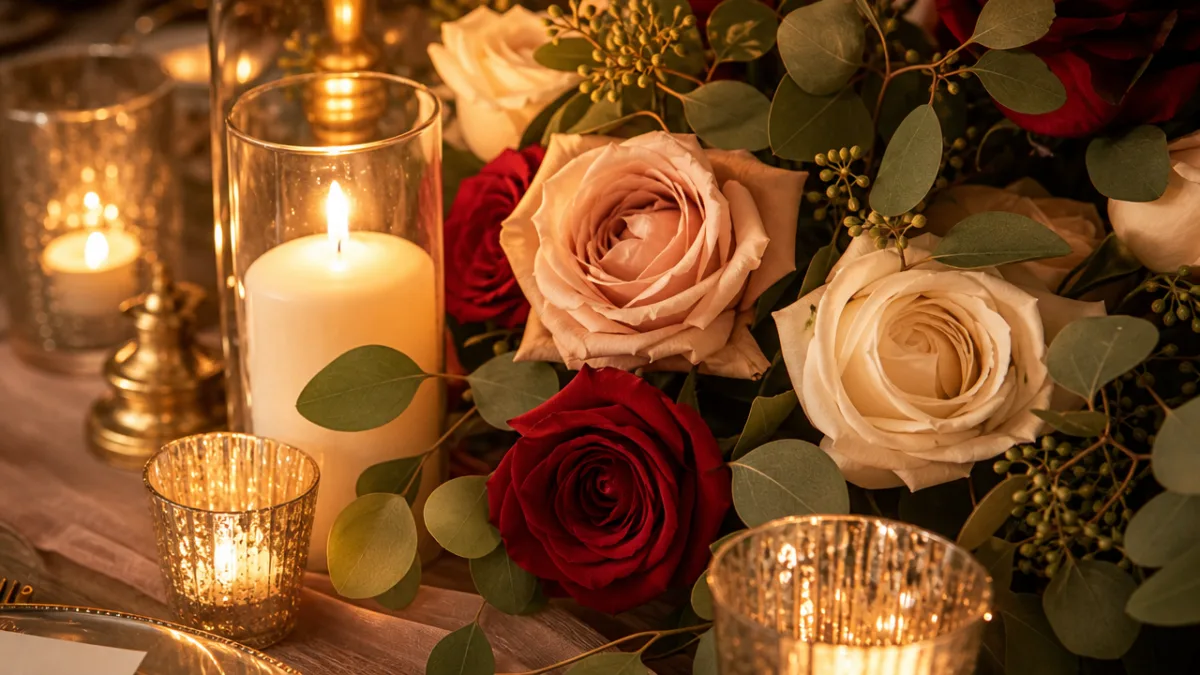
Candles are honestly the most powerful tool you have for creating a romantic atmosphere. Tall tapered candles in brass or iron holders bring elegance and height to the table. Pillar candles grouped in threes feel a bit ceremonial in the best way. Tea lights nestled inside small glass votives or mason jars scatter light beautifully and cost almost nothing. If you’re pairing fresh flowers with candles, just be mindful of how close they are to each other, and never leave them burning unattended — but when it’s all safely arranged, living blooms and flickering flame together is pretty hard to beat.
Flowers are the other go-to for most romantic centerpieces, and you really don’t need a fancy florist arrangement to pull it off. A handful of grocery store roses, some eucalyptus from a craft shop, and a few stems of baby’s breath tucked into a simple vase can look completely polished. Peonies, ranunculus, garden roses, lavender, and soft ferns are all excellent choices. For a more unexpected and budget-friendly twist, try mixing in herbs like rosemary and thyme — they add fragrance and texture at the same time.
Beyond candles and flowers, a few secondary elements can add real depth and personality to your arrangement. Some good options to consider:
- Scattered rose petals or dried botanicals across the tablecloth
- Small framed photos or handwritten notes tucked among the blooms
- Vintage or mismatched glassware used as vases
- Crystals, stones, or small mirrored surfaces to catch and reflect the candlelight
- Trailing ivy or greenery to give the whole thing a more organic, flowing feel
- Ribbon or twine in complementary colors to tie bouquets or wrap around votives
Step-by-Step: Building Your DIY Centerpiece
Start by choosing your vessel or vessels. A single focal point works really well for smaller tables — a low bowl, a mercury glass vase, or even a cleaned-out tin can with the label removed and a bit of twine wrapped around it. For longer tables, a runner of several smaller elements tends to work better than one large arrangement, since it keeps sightlines open across the table. Whatever you go with, think about height: very tall centerpieces only work if they’re narrow enough to see around, or placed off to one side.
Once you’ve got your vessel sorted, fill it about two-thirds with water for fresh flowers, or with a little sand or pebbles if you’re anchoring candles or dried stems. Start with your largest, most structured elements — your focal flower or your pillar candle — and build outward from there. Add medium-sized blooms next, then fill in the gaps with softer, smaller materials like baby’s breath, herb sprigs, or trailing greenery. Odd numbers almost always look more natural than even ones, so keep that in mind as you go.
Step back and look at the arrangement from the angle it’ll actually be seen — which is usually seated eye level. Adjust anything that looks too crowded or too bare, and rotate the vase to check all sides if people will be sitting around it. If you’re going with a candle-focused centerpiece instead of a floral one, arrange your candles at varying heights using candlestick holders or small wooden platforms, and soften the base with loose greenery, dried flowers, or scattered petals. Playing with height is what makes simple arrangements feel luxurious.
Here’s a straightforward framework to follow from start to finish:
- Select and prepare your vessel — clean it, fill it, and make sure it sits stably on the table
- Establish your anchor element — the tallest candle or largest bloom goes in first
- Add medium-height secondary elements in a loose circle around the anchor
- Fill in with texture using greenery, herbs, or smaller florals
- Scatter or trail accent materials across the table surface around the base
- Step back, check everything from seated height, and make your final tweaks
Budget-Friendly Romantic Centerpiece Ideas Anyone Can Make
You really don’t need to spend much to make something beautiful. One of the most striking and inexpensive options is a collection of glass bottles and jars in different heights, each holding one or two stems of a single flower type. Dig through your recycling bin for wine bottles, sauce jars, small pickle jars — remove the labels, give them a wash, and cluster them loosely down the center of the table. Tuck a single rose or a few ranunculus stems into each one, light some tea lights alongside them, and the result is effortlessly romantic.
Another incredibly easy and affordable idea is a floating candle bowl. Fill a wide, shallow bowl or a glass salad bowl with water, drop in a few floating candles, and scatter rose petals or small flower heads across the surface. A handful of smooth stones on the bottom adds weight and a little visual interest. This one takes maybe five minutes to put together, costs very little, and creates a shimmery, reflective focal point that looks genuinely stunning in a dimly lit room — and it’s stable and safe, which is a bonus.
Terracotta pots are a wonderful option if you’re going for a warm, earthy romantic feel. Small pots can be spray-painted in metallic gold or soft blush, filled with fresh soil, and planted with a single succulent, a small herb, or a miniature blooming rose. Grouped together on a wooden board or a square of burlap, they make a charming, low-maintenance centerpiece — and your guest can even take one home as a little keepsake from the evening.
Dried flower arrangements have become really popular lately, and it’s easy to see why. They last forever, need no water, and have a beautiful, slightly antique quality that suits romantic settings perfectly. Dried pampas grass, preserved eucalyptus, lavender bundles, and pressed fern fronds can be put together into loose, airy arrangements that feel organic and wonderfully textured. You can make these weeks ahead of time and they’ll stay looking great for months — a great investment if you like to host.
Setting the Full Table Around Your Centerpiece
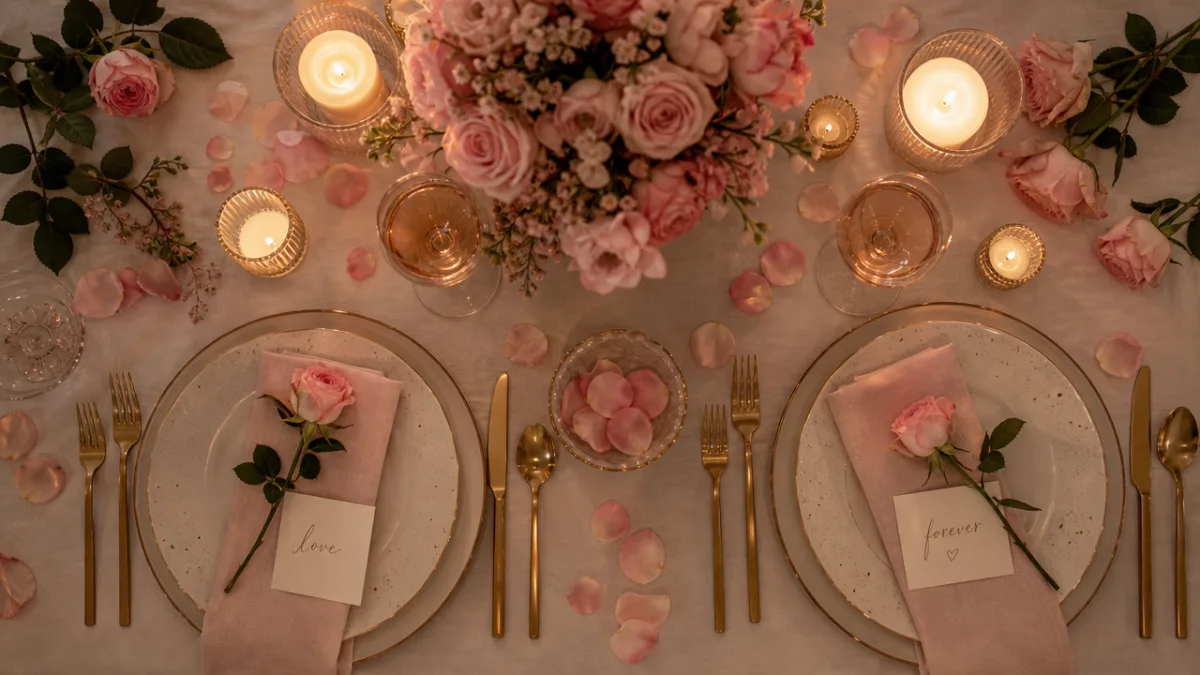
A beautiful centerpiece deserves a table setting that’s just as thoughtfully put together. Your linens will have a bigger impact on the mood than you might expect. A crisp white tablecloth is the classic go-to for romantic dining — it reflects candlelight beautifully and lets the centerpiece and tableware take center stage. For something warmer and a bit more intimate, try a linen cloth in a soft shade like sage green, dusty rose, or warm ivory. Layering a table runner on top adds dimension and gives you another way to bring in color or texture.
Napkins are a surprisingly powerful styling element that often gets overlooked. A linen napkin folded simply on the plate is quietly elegant. Tie one with a sprig of rosemary or a small dried flower and the whole place setting suddenly feels genuinely special. You can also tuck a small handwritten note underneath — a quote, a memory, a reason you’re grateful — and suddenly the table becomes something more than just decorative. It becomes emotionally meaningful.
Your glassware and tableware should complement the centerpiece, not compete with it. Simple, clean-lined pieces in clear glass let the centerpiece remain the visual star of the table. If your centerpiece is more understated or minimal, you have more room to play with patterned plates or colored glassware. The key is balance — an elaborate centerpiece pairs best with simple tableware, while a minimal candle arrangement can hold its own next to more expressive place settings. Give all your glassware a polish before setting the table so everything catches the light the way it should.
Lighting beyond the centerpiece is worth thinking about too. Dim your overhead lights as low as they’ll go during the meal. If you can, string lights hung loosely around the dining area add a magical, fairy-light quality that’s flattering on everyone and deeply romantic. Fairy lights tucked inside a large glass vase or lantern alongside your centerpiece layer in another level of glow that makes the whole table feel warmer. The goal with romantic lighting is to create a space that feels set apart from the ordinary — softer, quieter, more focused.
Seasonal Variations and Occasions to Inspire You
One of the best things about making your own centerpieces is being able to work with whatever the season is offering. In spring, lean into fresh pastel blooms — tulips, hyacinths, peonies arranged loosely in simple ceramic vases. Cherry blossom or apple blossom branches bring a fleeting, delicate beauty that feels totally of the moment. Pair them with pale linen, simple white tableware, and thin taper candles in soft tones for a table that really does feel like springtime.
Summer opens everything up — garden roses, lavender, sunflowers, zinnias in warm, saturated colors. A summer romantic centerpiece can afford to be a little more relaxed and abundant: flowers tumbling out of a low bowl, greenery trailing loosely across a white tablecloth, candles at different heights surrounded by scattered petals. Summer also lends itself to eating outside, where you can bring in natural elements like smooth river stones, shells, or a piece of driftwood alongside the florals.
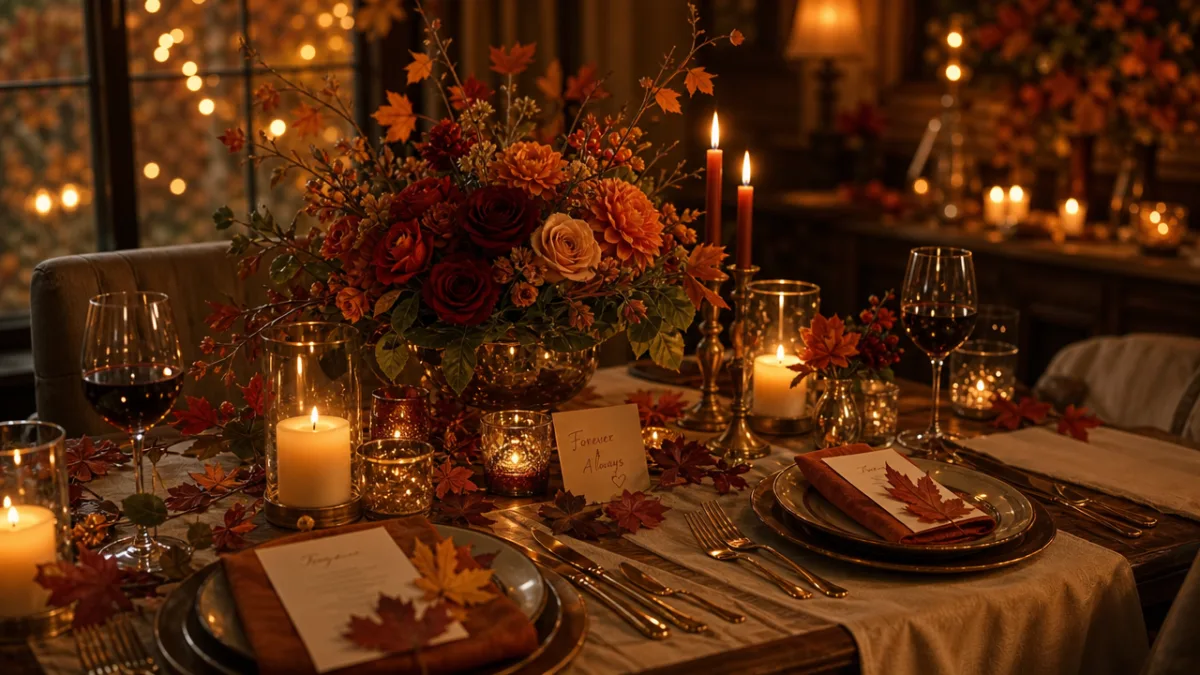
Autumn might honestly be the most naturally romantic season for table settings. The palette of deep burgundy, burnt orange, warm gold, and forest green creates a moody, intimate atmosphere without much effort at all. Dahlias, marigolds, and late-season roses alongside branches of fall leaves, pine cones, and small gourds make for a centerpiece that feels warm and abundant. Amber and bronze candleholders are perfect for this season, as are deep red taper candles and tablecloths in charcoal or forest tones.
Winter romantic centerpieces have their own kind of magic — cozier and more luminous. Lean into candlelight heavily in winter, using multiple pillar candles and votives to make up for the longer, darker evenings. Evergreen branches, frosted pinecones, and sprigs of berry add great texture and seasonal warmth. White flowers like amaryllis, white roses, and paperwhites look striking against dark winter tablecloths. And a scattering of mirrored ornaments or small glass baubles around the base of your centerpiece will catch the candlelight and give the whole setting a glittery, almost magical quality.
Final Touches and Presentation Tips for a Flawless Result
The difference between a centerpiece that looks homemade and one that looks professionally done usually comes down to a few small finishing details. Trim all flower stems at a forty-five degree angle before putting them in water — it maximizes water uptake and helps them last through the evening. Remove any leaves that will sit below the waterline in the vase, since they’ll cloud the water and look messy. Give everything a light mist with water just before you sit down to freshen the blooms and give the arrangement that just-made quality.
If you’re using candles, light them about fifteen to twenty minutes before you sit down. This gives the wax time to pool evenly and the candles to reach their full, warm glow before the meal starts. It also gives any scented candles a chance to release their fragrance gradually rather than hitting all at once when someone walks in. Scent is a real component of romantic atmosphere — something light and clean like rose, sandalwood, or white tea tends to work better in a dining setting than anything heavily sweet or very intense, which can compete with the food.
Take a photo of your finished table before you sit down. It’s a lovely thing to have as a memory, and looking at the table through a camera lens often reveals small things you’d otherwise miss — a stem that’s dropped too low, a napkin that’s shifted, a candle that needs centering. The photo also becomes a useful reference for next time, so when you want to recreate a similar look, you have something beautiful to work from. Your own past arrangements really do become your best source of inspiration.
And finally — the most important ingredient in any romantic table setting is your own presence. The centerpiece is a frame for connection, not a performance. Once the candles are lit and the flowers are arranged, let the table do its quiet work and turn your full attention to the person you’re sharing it with. The most romantic thing you can do is make someone feel genuinely seen and celebrated, and a table you put together with your own hands is one of the most eloquent ways to say exactly that without saying anything at all.








What do you think?
It is nice to know your opinion. Leave a comment.