










Daruma Dwarf Loropetalum: A Complete Guide to the Chinese Fringe Flower
Introduction to Daruma Dwarf Loropetalum
If you’ve ever walked past a shrub with deep burgundy leaves and hot pink blooms and thought “what on earth is that beautiful thing?” — there’s a good chance it was a Daruma Dwarf Loropetalum. Known botanically as Loropetalum chinense, this compact little showstopper originally comes from China, Japan, and the Himalayan region, and it’s been winning over gardeners ever since it became widely available. The name “Daruma” refers to its rounded, ball-like shape — a nod to the traditional Japanese Daruma doll — and once you see it in person, the comparison makes perfect sense.
What makes the Daruma stand out from its larger loropetalum cousins is its naturally dwarf character. The standard Chinese fringe flower can get quite large and a little unruly, but the Daruma stays tidy and manageable — typically topping out around two to three feet tall and wide at maturity. That restrained size makes it a genuinely useful plant for smaller gardens, containers, foundation beds, and anywhere else where you need something that won’t take over.
Honestly, the biggest selling point might just be how good it looks year-round. While a lot of ornamental shrubs have their moment and then fade into the background, the Daruma keeps things interesting all year long. The deep plum-to-burgundy foliage is evergreen, so there’s always color, and then those incredible hot pink to magenta fringe-like flowers show up in spring and keep coming back sporadically through the warmer months. For anyone who wants a beautiful garden without a ton of fuss, this plant is hard to beat.
Growth Habits and Physical Characteristics
Getting to know how the Daruma Dwarf Loropetalum actually grows will help you figure out exactly where it fits in your garden. The shrub naturally forms a rounded, mounding shape — you don’t really need to do much to keep it looking neat. Its branches arch outward in a graceful way, layering over each other to create a dense, full look that works great as a backdrop, a border, or even a low focal point. The overall vibe is tidy and refined, which means it plays well in both formal garden settings and more relaxed, naturalistic ones.
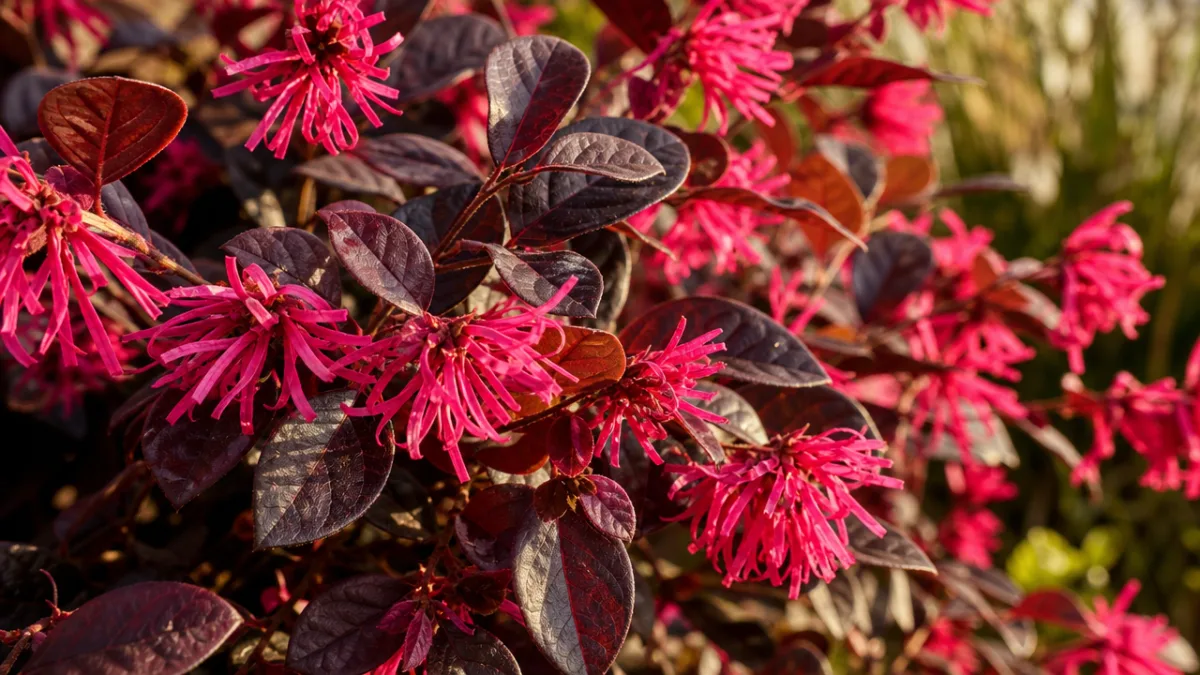
The leaves are small and oval-shaped with a slightly textured surface that catches the light nicely throughout the day. New growth comes in a vivid deep red or burgundy — almost wine-dark when the sun hits it just right. As the leaves mature, they settle into a rich plum-purple that creates a gorgeous backdrop for those signature pink flowers. The fact that the foliage color shifts and evolves adds a layer of visual interest that you just don’t get from most compact shrubs.
And the flowers — they’re genuinely something special. Each bloom has four long, strap-shaped petals that cluster at the branch tips, creating that distinctive fringe or spider-like look that gave the plant its common name. They range from soft bubblegum pink to deep magenta, with the exact shade depending on your growing conditions and how much sun the plant gets. The contrast between dark leaves and bright blooms is striking in the best possible way. They’re also mildly fragrant, which is a nice bonus you might not expect.
- Mature height: 2 to 3 feet
- Mature spread: 2 to 3 feet
- Growth rate: Slow to moderate
- Foliage color: Deep burgundy to plum-purple, evergreen
- Flower color: Hot pink to magenta
- Bloom time: Heavy in spring, sporadic through summer and fall
Planting Requirements and Ideal Conditions
Where you put your Daruma Dwarf Loropetalum matters more than almost anything else you’ll do for it, so it’s worth thinking through before you dig the hole. The plant is happiest in USDA hardiness zones 7 through 10, which covers a big chunk of the American South, the Pacific Coast, and similar temperate climates around the world. If you’re in a cooler zone, you can sometimes pull it off in a sheltered spot or grow it in a container you bring inside for winter, but it really thrives when it can stay outside year-round without stressing.
Sun exposure has a direct impact on how rich and dramatic that foliage color gets. Full sun to partial shade works, but if you want those deep, intense burgundy and purple tones, full sun is where it’s at. In shadier conditions, the leaves tend to go greener — still pretty, but you lose some of that moody depth that makes this cultivar so eye-catching. Aim for at least four to six hours of direct sun per day to keep the color saturated and the flowers coming.
Soil drainage and pH are just as important as sun. Loropetalum loves slightly acidic to acidic soil, ideally somewhere in the 4.5 to 6.5 pH range. It absolutely does not want to sit in wet soil — poor drainage is a quick path to root rot and a struggling plant. If your native soil is heavy clay or leans alkaline, mix in some peat moss, pine bark fines, or other organic material at planting time to improve both drainage and acidity. In tricky spots, a raised bed or berm planting can make all the difference.
Watering, Fertilizing, and General Care
Once the Daruma gets settled in, it’s a pretty low-maintenance plant — but that first growing season matters a lot. During establishment, water consistently every two to three days when it’s dry, keeping the root ball evenly moist without letting it get waterlogged. Deep, infrequent watering beats shallow frequent watering every time, because it encourages roots to grow down into the soil rather than staying near the surface where they’re much more vulnerable when dry spells hit.
When it comes to fertilizing, less is more. Too much nitrogen pushes leafy growth at the expense of flowers and that beautiful foliage color you’re going for. Stick with a balanced, slow-release granular fertilizer made for acid-loving plants — something formulated for azaleas or camellias works perfectly. Apply it once in early spring when new growth starts, and if you want, give it a second round in midsummer. Just be sure to water well after applying any granular product to protect the roots and help the nutrients actually make it into the soil.
Mulching is one of the easiest things you can do for this plant and it pays off in multiple ways. A two-to-three-inch layer of shredded pine bark, pine needles, or wood chips around the base moderates soil temperature, holds moisture between waterings, keeps weeds down, and slowly breaks down to enrich the soil over time. One thing to watch: keep the mulch pulled back a bit from the base of the stems. Moisture piling up against the bark is an invitation for fungal issues and stem rot, and it’s an easy problem to avoid.
Pruning, Shaping, and Landscape Uses
One of the genuinely great things about the Daruma is that it mostly takes care of its own shape. Unlike formal hedging plants that need constant shearing to look presentable, this one grows into a neat, rounded mound almost entirely on its own. If you do want to do a little light shaping, wait until right after the main spring bloom finishes. That way you’re not cutting off the flowers before you get to enjoy them, and the plant has time to set buds for the next round.
What you really want to avoid is heavy shearing or cutting it back into a box or ball shape. Aggressive shearing strips off those naturally arching branch tips that give the Daruma its graceful character, and worse, it removes the flower buds that form right at the branch ends. It also knocks back the foliar density that makes this shrub such an effective screen and ground cover. If you ever do need to do some rejuvenation pruning after winter damage or because the plant has gotten away from you, make selective thinning cuts at interior branch junctions rather than shearing the whole thing flat.
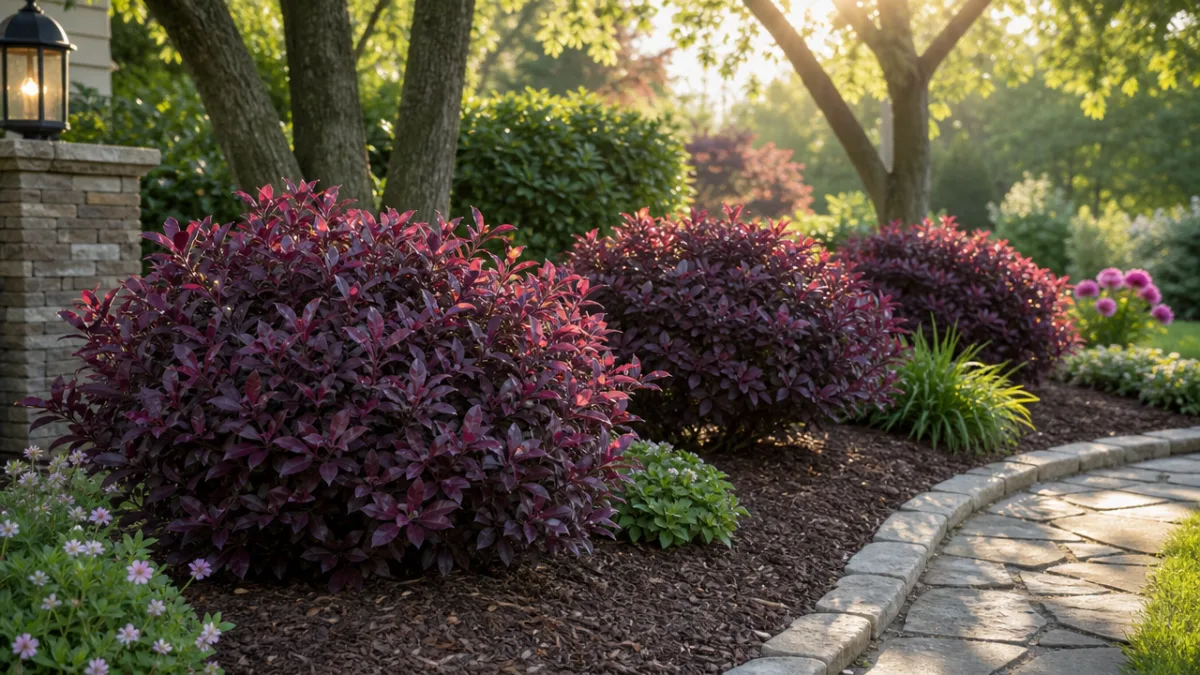
In the landscape, the Daruma is genuinely versatile. Its dense evergreen growth makes it a great low hedge or border plant that keeps its structure year-round. It does a nice job on slopes and embankments where its roots help hold soil in place. Planted solo in a large container by a front door or on a patio, it becomes a real focal point. It also mixes beautifully with other acid-loving plants in borders, where the dark foliage plays off contrasting textures and tones really effectively.
- Low hedge or formal border plant
- Mass planting on slopes for erosion control
- Specimen plant in large containers
- Foundation planting beneath windows
- Companion planting with azaleas, gardenias, and hollies
- Color anchor in mixed perennial borders
Pest, Disease, and Troubleshooting Considerations
The good news is that the Daruma Dwarf Loropetalum is a pretty tough, no-drama plant in the right conditions and doesn’t attract a lot of pest and disease problems. That said, nothing is completely bulletproof. The most common pest you’re likely to run into is scale insects, which occasionally show up on plants that are already stressed by drought, poor drainage, or too much shade. Scale looks like small waxy bumps on the stems and undersides of leaves, and if you ignore it long enough, it can do real damage over time.
Yellowing leaves — technically called chlorosis — is probably the most common complaint people have about loropetalum in home gardens, and it’s almost always a soil pH problem. When the soil is too alkaline, or if lime has been applied nearby, the plant can’t absorb iron and other trace minerals properly. The result is pale, yellowish leaves with green veins still showing — a telltale sign of iron-deficiency chlorosis. The fix is getting the pH back down with sulfur amendments, applying chelated iron as a foliar spray or soil drench, and making sure drainage is good. Get those things right and most plants bounce back within a season or two.
Root rot from Phytophthora and similar water mold pathogens is the most serious thing that can go wrong with loropetalum, and it almost always traces back to soggy soil or overwatering. A plant with root rot will wilt suddenly, show blackened or brown roots, and can go downhill fast — sometimes within a single season. The honest truth is that prevention through good site selection and soil prep is far more effective than trying to treat it after the fact. If you catch it early, improving drainage right away, dialing back irrigation, and applying a fungicide labeled for water molds may save the plant, but you’re in much better shape if you never get there.
Companion Planting and Design Inspiration
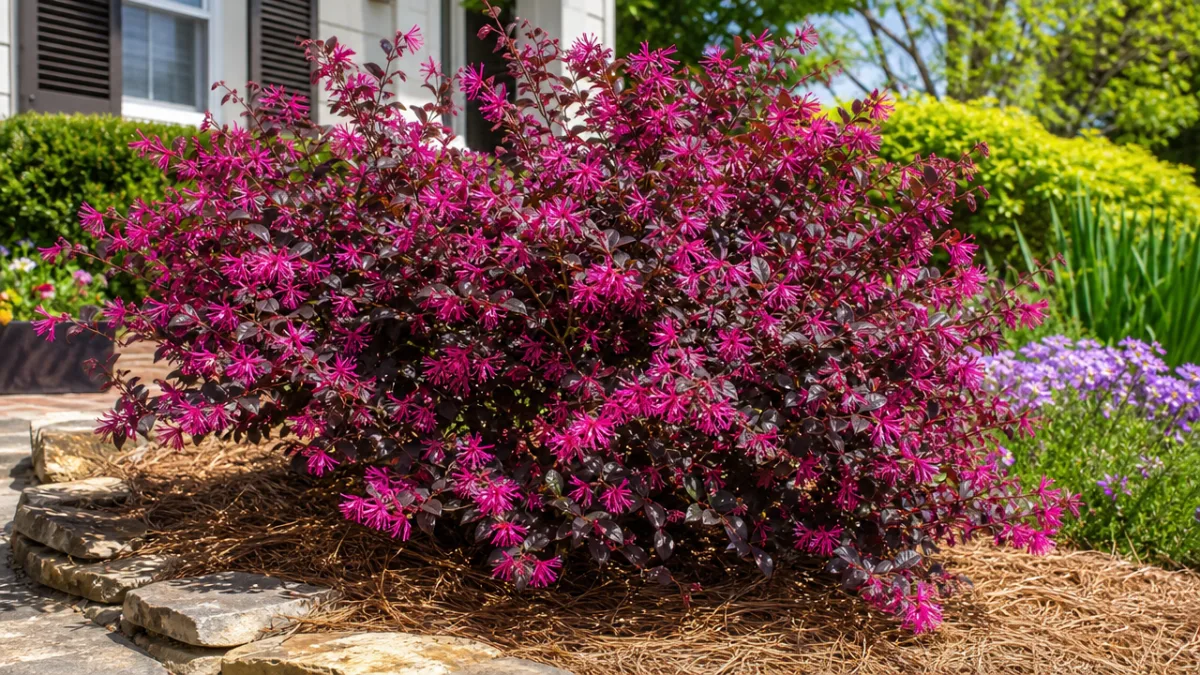
That deep, dark foliage makes the Daruma one of the most useful design partners you can have in a mixed planting. For bold, high-contrast combinations, try pairing it with silver or gray-leaved plants like Artemisia, Russian sage, or lamb’s ear. The cool silver tones against the warm plum of the Daruma is one of those pairings that just works — it’s striking in the garden and photographs beautifully. Lime-green or chartreuse plants like golden creeping Jenny or Japanese forest grass create an almost electric contrast when planted right alongside those dark burgundy mounds.
If you prefer a more harmonious, layered look in the pink-to-red spectrum, hot pink knockout roses, coral daylilies, or deep red pentas all play really well with the Daruma. The result feels lush and a little tropical. In shadier spots where the Daruma is doing more foliage work than flowering, pairing it with blue-green hostas or cream-variegated selections gives you a nice interplay of texture and form. The fine, dense foliage of the loropetalum contrasts beautifully with those big, bold hosta leaves in a way that keeps things visually interesting even when nothing is blooming.
Seasonally, the Daruma earns its keep by holding down the garden’s structure and color when surrounding perennials have gone dormant or are between bloom cycles. Planting it near spring bulbs like tulips or alliums lets those bulbs push up through the shrub’s canopy in a natural, charming way, and then fade gracefully as the loropetalum’s own spring flowers take over. Come fall, the burgundy foliage actually deepens and intensifies with the cooler temperatures, giving you a rich, warm counterpoint to all the golds, oranges, and russets that ornamental grasses and late perennials bring to the autumn garden.
Why Every Garden Deserves a Daruma Loropetalum
When you add it all up, the Daruma Dwarf Loropetalum just makes a lot of sense for a lot of gardens. It gives you year-round color through that dramatic foliage, recurring flowers, and a clean, refined shape that holds the garden together even in the off-season. Whether you’re using it as a single specimen, planting a sweep of them across a slope, or tucking one into a pot by the front door, it consistently delivers and doesn’t ask for a whole lot in return.
Its compact size is a genuine gift for anyone working with a smaller lot, an urban garden, or a townhouse landscape where every planting decision has to count. The Daruma won’t outgrow its spot or turn into something you regret putting there. It knows its proportions and stays within them, which makes it a genuinely trustworthy long-term investment — not one of those plants that looks great for two years and then becomes a problem you have to dig out.
For gardeners at any experience level, the Daruma strikes a really appealing balance between easy and interesting. If you’re newer to gardening, you’ll appreciate how forgiving it is and how well it performs even when care isn’t perfect. If you’ve been gardening for years, you’ll find plenty to enjoy in how its foliage shifts with the seasons and the light, and in the many ways it can anchor a planting design. In a world full of plants competing for space in your garden, the Daruma Chinese Fringe Flower is one of those rare ones that earns its keep quietly, season after season, without ever really letting you down.








What do you think?
It is nice to know your opinion. Leave a comment.