










“`html
15 Playful & Creative Candle Designs That Will Brighten Your Mood
The Art of Candle Design: Where Function Meets Creativity
Candles have been around forever — literally thousands of years — but somewhere along the way they stopped being just a light source and became something way more interesting. The candle world has genuinely exploded with creativity lately, with designs that run the full spectrum from quirky and whimsical to seriously sculptural and bold. Today’s candle makers are doing things that would have seemed completely over the top even ten years ago, mixing color theory, material know-how, and real artistic vision into objects that catch your eye long before you ever strike a match.
What really sets a playful or creative candle apart is its ability to catch you off guard. A candle shaped like a perfect little mushroom, a spiraling tower of jewel-colored wax, a sphere with dried wildflowers pressed inside — every one of those ideas starts with the same thought: what if a candle could be something more? Designers are treating wax the way sculptors treat clay these days, shaping it into forms that make you stop and smile. It’s turned candles into a corner of home décor that somehow feels both intimate and genuinely fun.
There’s also something deeper going on with why we’re all so drawn to these kinds of candles right now. In a world full of screens and identical mass-produced stuff, a hand-poured, thoughtfully designed candle feels refreshingly human. It brings warmth into a space — not just from the flame, but from the care that went into making it. Whether it’s sitting on a bookshelf, a bathroom counter, or the middle of a dinner table, a well-designed candle says something about the person who chose it. It says they find joy in everyday things, and honestly, that’s a beautiful quality to have.
Sculptural Candles: When Wax Becomes Fine Art
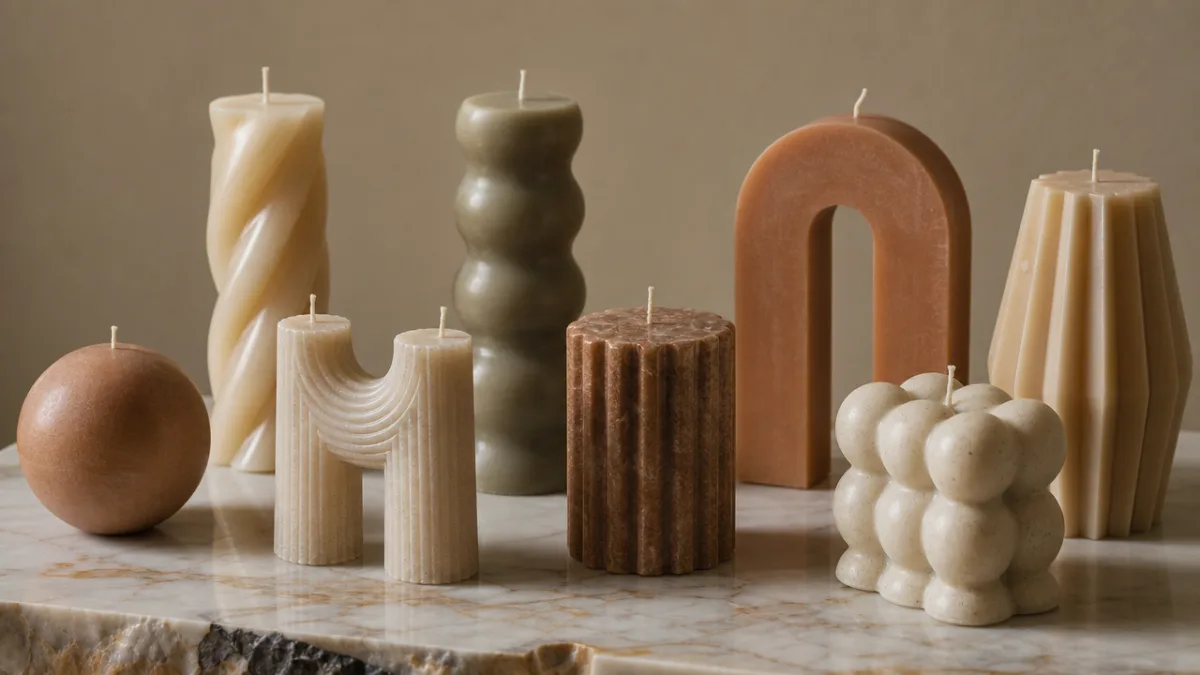
Sculptural candles are probably the most jaw-dropping thing happening in the candle world right now. These are pieces that genuinely blur the line between something you’d burn and something you’d hang in a gallery. Picture a candle formed in the exact shape of a human hand, fingers curling gracefully around a flame that feels almost too gorgeous to actually light. Or a twisted pillar spiraling upward in swirls of terracotta and cream, casting dramatic shadows on your wall as it burns down. These aren’t just candles — they’re conversation starters.
The ways makers actually create these things are just as varied as the designs themselves. Some use hand-pouring into custom silicone molds, others carve and shape the wax by hand once it’s cooled to the right consistency. A newer wave of candle artists is even bringing 3D printing into the mix to make molds with insane levels of detail — things that would simply be impossible to pull off by hand. That range of techniques means sculptural candles can be pretty accessible or genuinely collectible, depending on who made it and how complex the work is.
What’s especially compelling about sculptural candles is the tension between how they look sitting on a shelf versus what happens when you actually light them. A candle shaped like a delicate rose is already beautiful unlit, but once the flame gets going, the wax starts to melt in ways that feel almost choreographed — petals drooping and pooling in ways that look weirdly intentional. That whole duality of being both an art object and a consumable experience is a big part of why people love them so much.
Some of the most popular forms right now include mushrooms and toadstools in earthy autumn tones, abstract human figures that feel almost ancient, braided and knotted pillars that look like textile art made out of wax, and oversized fruit — lemons, peaches, pears — with surface detail that’s genuinely impressive. Each form carries its own mood, which makes it easy to pick one that actually fits the vibe you’re going for in a particular room.
Color Play: Bold Hues and Unexpected Combinations
If there’s one thing that instantly signals “playful” in candle design, it’s color. The modern candle maker’s palette has come so far from the old days of cream, white, and burgundy. Now you’re seeing candles in cobalt blue, chartreuse, deep forest green, dusty lilac, burnt sienna, vivid tangerine — genuinely everything. And those choices aren’t random. Color psychology is real, and good designers are using it intentionally to shape how a candle makes you feel the moment you walk into a room.
Layered and gradient candles have gotten really popular as a way to show color off in a more dynamic way. The idea is to pour wax in distinct layers of different colors — sometimes letting them bleed into each other slightly for a soft watercolor look, sometimes keeping the lines crisp and clean for something more graphic and modern. Ombre candles, which fade gradually from one color to another, have this painterly quality that looks gorgeous whether they’re lit or just sitting there. And as the flame works its way down through the layers, new colors keep getting revealed, which is kind of meditative to watch.
Marbled candles are another exciting direction for color play. You swirl two or more colors together while the wax is still partially liquid, and you end up with surfaces that look like natural stone or ink dropped in water. No two come out the same, which gives each one this feeling of organic uniqueness. Part of what makes marbling so appealing is that it requires the maker to let go of control a little — and the results are usually more beautiful because of it.
- Earthy neutrals: Terracotta, sand, cream, and warm taupe tones that feel grounded and organic, and play really nicely with natural materials like linen and wood.
- Jewel tones: Deep emerald, sapphire blue, amethyst, and ruby red that give a candle a rich, luxurious presence — especially stunning in low, flickering light.
- Pastel palettes: Soft blush, pale lavender, mint, and baby blue that bring a sense of lightness and a kind of springtime freshness to any space.
- Neon and brights: Bold, saturated colors with an energetic, youthful edge — perfect for contemporary or eclectic spaces where you want things to feel a little unexpected.
Embedded and Botanical Candles: Nature Captured in Wax
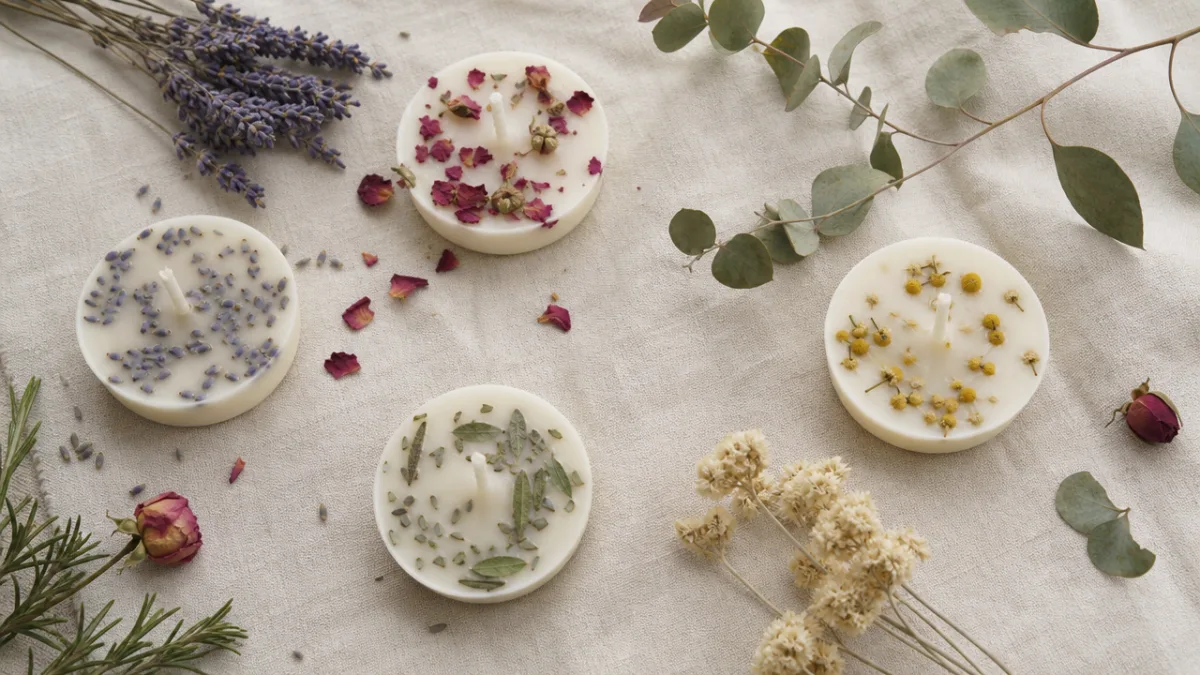
One of the most genuinely enchanting trends in creative candle design is the idea of embedding natural elements directly into the wax. Dried flowers, herbs, citrus slices, crystals, seeds — all kinds of botanicals can be pressed against the outer surface of a candle or suspended inside clear wax to create something that’s as much a piece of nature art as it is a candle. When light passes through translucent wax embedded with dried rose petals or lavender sprigs, the effect is almost magical. It’s like holding a little lantern with a preserved garden inside.
Botanical candles sit at this lovely intersection of the wellness world and home décor, and buyers are drawn to them for more than just the way they look. A candle pressed with dried calendula, chamomile, and rosemary feels intentional — like a small act of self-care. It ties the simple ritual of lighting a candle to a broader sense of natural living and mindfulness. That emotional resonance is a big part of why they keep performing so well on social media and in indie boutiques.
It’s worth knowing that botanical candles do require real skill and knowledge to make safely. Dried plant material near an open flame is something experienced makers think hard about — most keep botanicals on the outer surface of pillar candles rather than in the burn path, or design container candles so the embedded elements never actually reach the flame. When made by someone who knows what they’re doing, these candles are perfectly safe and absolutely beautiful. It’s just worth looking for makers who clearly understand the fire safety side of things before you buy.
Crystal-embedded candles have also taken off in a big way, riding the broader wave of cultural interest in gemstones and their meanings. Rose quartz chips in a pink soy candle, an amethyst cluster nestled in a purple pillar, pyrite flakes suspended in golden wax — these designs combine the tactile pleasure of natural minerals with the warmth of candlelight in a way that feels genuinely special. As the wax melts down, the crystals are slowly revealed and can be kept as a little treasure afterward, which adds this sweet, gift-like quality to the whole experience.
Novelty and Themed Candles: Humor, Pop Culture, and Personality
Not every candle needs to be a meditation on natural beauty or fine art. Honestly, some of the most delightful candle designs out there right now are just flat-out funny. Novelty candles shaped like fast food, dinosaurs, cartoon characters, household objects, internet memes — they occupy their own joyful little corner of the candle market, and they serve a real purpose: they make people laugh. In a home full of things chosen for elegance or practicality, a candle shaped like a tiny cheeseburger or a melting ice cream cone is a breath of fresh, unguarded fun.
Themed candles also make genuinely great gifts, which is a huge part of why they’re so popular. A candle shaped like a stack of books is an obvious win for your bookworm friend. A golden trophy candle makes a perfectly cheeky congratulations gift. A set shaped like vintage cameras, typewriters, or cassette tapes hits the nostalgia notes in a way that feels fresh rather than tired, purely because of the unexpected medium. There’s something about pairing a familiar, beloved image with the surprising material of wax that creates a kind of double delight you just can’t get from more straightforward gifts.
The rise of small-batch, independent candle makers on platforms like Etsy and at artisan markets has been huge for novelty candle culture. Without the constraints of large-scale manufacturing, small makers can go as niche as they want — a candle shaped like a specific obscure video game character, or scented to evoke some very specific childhood memory. They can find their exact audience online in a way that simply wasn’t possible before. It’s a genuinely exciting time for weird, wonderful candle ideas.
- Food-shaped candles — from elaborate layered cakes to tiny croissants — are endlessly charming and often look so realistic they get a double-take from anyone who spots them for the first time.
- Animal forms including cats, bears, rabbits, and more exotic creatures bring personality and warmth to any surface, and are especially popular in kids’ rooms or as playful accent pieces.
- Retro and vintage themes like rotary telephones, old-fashioned TV sets, and classic arcade machines are a hit with collectors and anyone who has a soft spot for mid-century design.
- Holiday and seasonal designs let candle lovers rotate their décor throughout the year, celebrating everything from Halloween to Lunar New Year with specifically themed wax art.
Choosing and Caring for Creative Candles: A Practical Guide
Shopping for artisan or creative candles is a little different from grabbing a standard jar candle off a shelf. Because these pieces often have as much going on visually as they do as a scent or burn experience, it’s worth thinking about where you’ll actually put them and whether you even plan to light them. Plenty of people who collect sculptural or novelty candles never burn them at all — they treat them like any other piece of art they’ve brought into their home. Others burn them fully and intentionally, embracing the fact that the candle will change and eventually disappear as part of the point.
If you do decide to burn a creative candle, a few basic habits will make the whole experience better and safer. Trim the wick to about a quarter inch before each use — it makes a real difference in getting a clean, even burn without excessive soot. Never leave a burning candle unattended, keep it away from drafts and anything flammable, and always burn on a stable, heat-resistant surface. With sculptural candles especially, the way the wax melts is part of what the maker designed — so try not to interfere. Just let it do its thing and enjoy watching it transform.
It’s also worth paying attention to what the candle is actually made of. Soy wax, beeswax, and coconut wax are generally the better options compared to paraffin — they burn cleaner and come from renewable sources. Fragrance oils ideally should be phthalate-free, and dyes should be specifically made for candle use. Good artisan makers are usually happy to share this information, and a maker who’s transparent about their materials is generally one who cares about quality all the way through.
Storage and display matter more than most people realize. Wax is surprisingly sensitive — direct sunlight and temperature swings can cause fading, warping, or that chalky surface bloom that makes candles look a bit sad. If you’re storing candles rather than displaying them, keep them somewhere cool and dry, away from windows. Even on display, try to keep them out of direct sun. For sculptural candles with a lot of fine detail, a soft brush or a gentle puff of air is the best way to deal with dust without risking damage to the surface. With a little care, a beautiful candle can stay looking great for months or even years before you ever light it.
At the end of the day, creative candle design is really about something bigger than home décor or a nice scent. It’s about the small, deliberate choices we make to surround ourselves with things that bring us joy. A tiny mushroom candle on a windowsill. A glowing gradient pillar in the middle of dinner. A botanical sphere slowly filling a quiet room with the smell of dried lavender. Each of those is a small act of aesthetic intention — a choice to make your space feel alive and a little more like you. And honestly, that might be the most powerful thing any candle can do, no matter how creatively it was made.
“`








What do you think?
It is nice to know your opinion. Leave a comment.