










The Power of Motivational Quotes in the World of Junk Journaling and Making
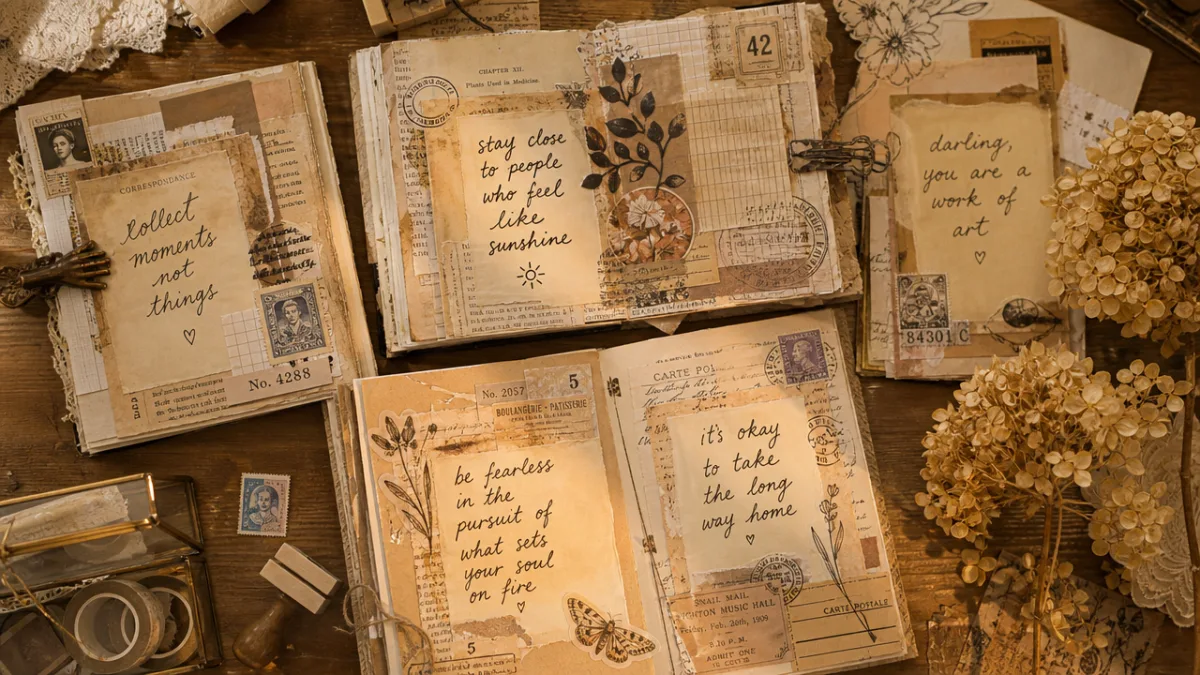
There’s something quietly rebellious about scrawling a meaningful quote on a torn scrap of paper and pressing it into a journal page alongside fabric scraps, coffee-stained ephemera, and hand-stamped images. Motivational craft quotes have become a real cornerstone of the junk journaling and maker community — not just as decoration, but as little declarations of intent. They remind us why we pull up a chair to a cluttered table, why we reach for the scissors and the glue, and why the creative act itself is worth protecting and celebrating.
Junk journaling has absolutely taken off in recent years, drawing in people from all walks of life who are drawn to its core philosophy: use what you have, embrace imperfection, and find beauty in the forgotten and thrown-away. In this community, words carry real weight. A single well-chosen phrase pinned to a vision board or tucked into a journal spread can completely shift a maker’s mindset — turning self-doubt into curiosity and creative paralysis into joyful experimentation. The right quote at the right moment genuinely can change everything.
Pinterest, especially, has become a living gallery of craft inspiration, and motivational quotes made specifically for junk journalers and makers have found a devoted home there. These aren’t generic productivity slogans borrowed from some corporate motivational poster. They’re intimate, handmade-feeling reminders that speak directly to the person hunched lovingly over their workbench, fingers smudged with ink, head buzzing with ideas. They honor process over product, the journey over the destination, and the maker over the market.
Why Words Matter in a Visual Craft
At first glance, junk journaling looks like a purely visual pursuit — all texture, color, and collage. But experienced makers will tell you that the written word is just as essential to their pages as any decorative paper or washi tape. Words anchor meaning. They transform a beautiful but abstract arrangement of images and textures into something deeply personal and intentional. A motivational quote nestled into a journal spread tells you where the maker was emotionally when they created that page, turning it into a record of the inner life as much as an artistic one.
The quotes that tend to resonate most in craft spaces often reflect a philosophy that runs through the whole maker community: that creativity isn’t a luxury but a necessity, that imperfection isn’t a flaw but a feature, and that the act of making is itself a form of self-care and self-expression. When a junk journaler stumbles across a phrase that perfectly captures what they believe about their practice, it usually feels less like discovery and more like recognition — like someone finally put into words what they’ve always felt but never quite said out loud.
The rise of typography and hand lettering in craft work has also elevated the motivational quote into an art form all its own. Hand-lettered sayings, stamped phrases, and printed typographic pieces are sought after, traded, and genuinely treasured in the community. The words aren’t just messages you read and move past — they’re visual elements to be composed, layered, and interacted with. A beautifully lettered quote becomes both inspiration and material at the same time, idea and object rolled into one.
The Culture of Inspiration Sharing Among Makers
One of the most genuinely lovely things about the modern maker community is how generous it is. Crafters share their techniques, their supply lists, their processes, and — maybe most meaningfully — the words and phrases that keep them going through dry spells and moments of doubt. Pinterest boards dedicated to craft motivation have become communal spaces of encouragement, where a quote shared by one maker can ripple out and reach thousands of others who needed to hear exactly those words on exactly that day. This culture of passing inspiration around is one of the things that makes the junk journaling world so special.
Social platforms have made it possible for makers to build real communities around shared values, not just shared aesthetics. When someone pins a motivational craft quote, they’re doing more than curating their own inspiration board — they’re contributing to a collective resource that sustains and encourages others. The comments beneath those pins are often full of gratitude, personal stories of creative struggle, and that warm recognition of shared experience. These small digital exchanges build real bonds and reinforce something important: making is never truly a solitary act, even when you’re alone at your worktable.
Craft educators and YouTube journaling personalities have also leaned into the role of motivational language in their content. Many open their videos with a quote, build tutorials around an inspiring idea, or use words as the conceptual anchor for an entire journal spread. It bridges the intellectual and the tactile in a really satisfying way, reminding their audiences that the best creative work grows from a well-nourished inner life. The quote isn’t just decoration on the page — it’s the seed the whole creative act grows from.
Finding Your Own Craft Mantra
Every maker eventually figures out that certain phrases land differently than others, and the quotes that speak most powerfully to you tend to reflect your own particular creative struggles and wins. For some people, the most motivating words are those that give permission to start before you feel ready, to actually use the good supplies instead of saving them for some imagined future project. For others, the most meaningful quotes are the ones that honor the slow, unglamorous work of building a creative practice over years. Finding your personal craft mantra is itself a meaningful act of self-knowledge.
A good exercise for makers is to collect quotes over time without immediately judging their relevance. Keep a running list in a notes app, a jar of folded paper slips, or a dedicated journal page, and revisit it every so often. You may find that certain phrases that once seemed only vaguely pleasant take on new meaning as your creative practice grows and shifts. The quote that spoke to a beginner about the courage to start will mean something completely different to an experienced maker navigating a creative plateau or a change in direction.
Some makers go even further and write their own mantras — short, personal phrases that capture their individual creative philosophy in a way borrowed words never quite can. This is, in many ways, the ultimate expression of the junk journaling spirit: taking raw material, in this case language itself, and transforming it into something entirely and authentically your own. Whether you find your words in a Pinterest scroll or forge them from your own experience, what matters is that they’re true, that they serve your creativity, and that you come back to them when the spark feels dim.
How to Incorporate Motivational Quotes into Your Journal Spreads
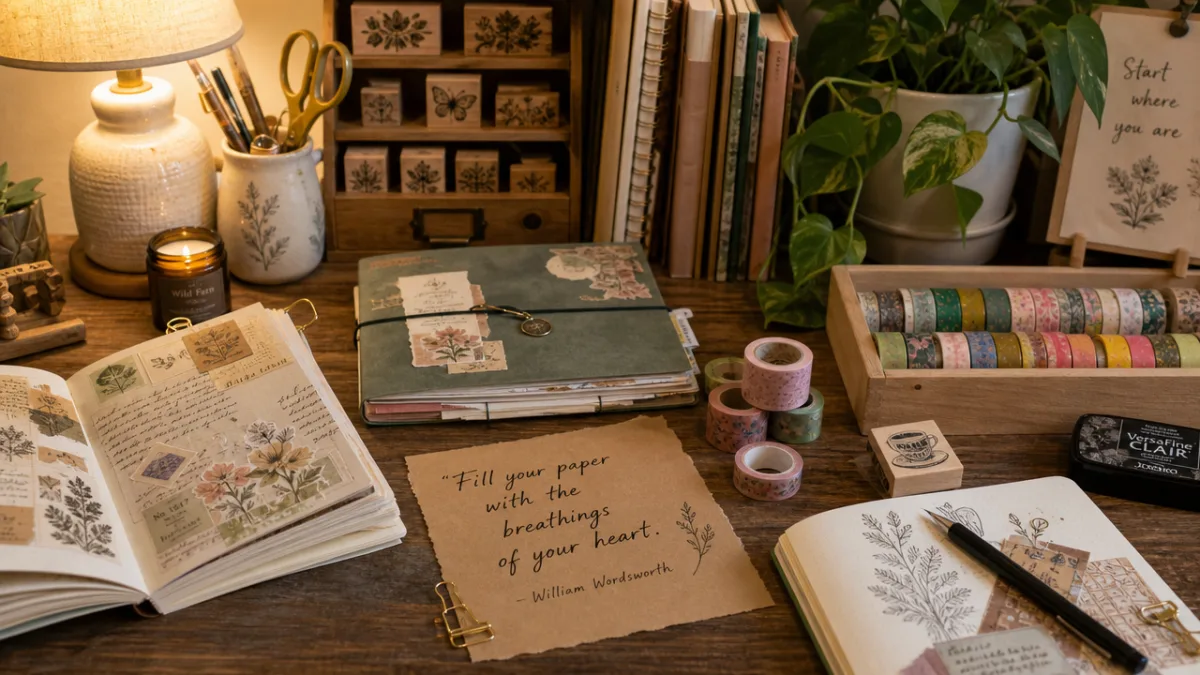
Adding quotes to junk journal pages opens up a whole world of creative possibilities, and the choices you make about how to present a quote affect both the visual impact and the emotional feel of the finished spread. There’s no single right approach — part of the joy here is that the same quote can be interpreted a dozen different ways depending on your materials, your mood, and what the page is about. Here are some of the most popular and effective methods experienced junk journalers use to weave motivational language into their work.
Hand lettering is probably the most intimate option, because it carries the unmistakable energy of your own hand. Even imperfect lettering has a warmth and humanity that no printed font can quite replicate. Many journalers use fine-tipped pens, brush pens, or even old-fashioned dip nibs to write out their chosen quotes, then embellish the lettering with watercolor washes, pencil shading, or stamped borders. The wobbles and quirks in hand lettering aren’t mistakes — they’re evidence of a real human being in the act of making, and they give a page a quality of presence that’s genuinely moving.
For those who prefer a more graphic look, printed or stamped text offers a different kind of visual punch. Rubber stamp alphabets, text-based stamps from craft suppliers, and printed ephemera all let you incorporate quotes with a more typographic, structured feel. These work beautifully layered with hand-worked backgrounds, torn and distressed edges, and mixed media elements to create spreads that feel both designed and organically alive. The contrast between crisp printed text and a loose, painted background is itself a kind of visual metaphor — intention meeting spontaneity, which is pretty much what great creative work is all about.
Materials and Techniques for Quote-Centered Pages
Building a quote-centered journal page really does benefit from thinking carefully about your materials. The substrate matters more than you might expect — a quote written on smooth white cardstock reads completely differently from the same words on aged book paper, kraft cardboard, or fabric. Many junk journalers deliberately hunt for materials with existing text, maps, music sheets, or handwriting, using these as backgrounds that create a layered conversation between old words and new ones. The history in found materials adds a resonance and texture to everything you put on top.
Color choices also play a huge role in how a motivational quote lands emotionally on the page. Warm earth tones, creamy whites, and faded golds tend to create nostalgia and quiet confidence — that feeling of timeless wisdom. Bright, saturated colors convey energy and excitement. Cooler blues, greens, and grays can give a quote a meditative, grounding quality. Thinking about the emotional temperature of your color palette — and how it plays with the words you’ve chosen — can take your pages from attractive to genuinely affecting.
The following approaches are particularly beloved in the junk journaling community for creating quote-focused pages:
- Tearing the edges of quote cards and layering them over painted backgrounds for a weathered, found-object look that feels both vintage and personal.
- Using washi tape to frame or anchor quote elements, adding color and pattern while also practically keeping lightweight paper pieces stuck to the page.
- Stenciling over hand-lettered quotes with translucent paint to create a ghosted, layered effect that gives words a beautiful sense of depth and mystery.
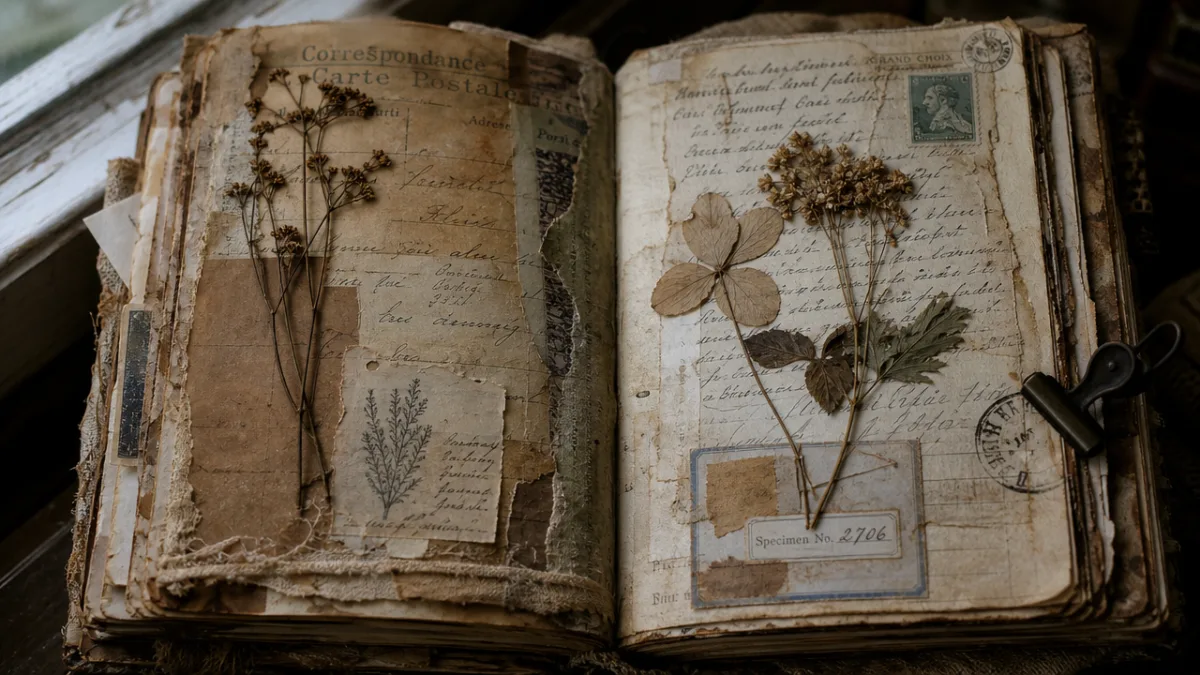
- Incorporating three-dimensional elements like twine, buttons, or dried botanicals around quote blocks to create tactile, textured pages that invite touch as much as reading.
- Aging printed or stamped quotes with distress inks, coffee or tea staining, or light scorching to give new materials the look of cherished, long-held papers.
The Psychology Behind Creative Motivation and Why It Works
There’s real psychological science behind why motivational language works in creative contexts, and understanding it can help makers be more intentional about how they use quotes in their practice. Research in positive psychology has consistently shown that exposure to language reinforcing a growth mindset — the belief that creativity and ability can be developed through effort and persistence — has measurable effects on creative output and resilience. When a maker surrounds themselves with words that affirm the value of process, experimentation, and self-compassion, they’re literally shaping the mental environment in which their creativity either flourishes or withers.
The act of physically writing or assembling a motivational quote also engages a different kind of cognitive processing than simply reading one on a screen. When you hand-letter a phrase, you slow down enough to actually absorb each word. When you select papers, choose inks, and compose a layout around a meaningful sentence, you’re giving the whole thing your full attention in a way that passive scrolling never allows. The quote becomes embedded in muscle memory and sensory experience, making it far more likely to surface naturally in moments of creative doubt or difficulty. This is embodied cognition at work — knowledge that lives not just in your mind but in your hands.
Affirmative language also helps combat the very specific kind of creative anxiety that plagues makers at every level of experience. Imposter syndrome, comparison paralysis, perfectionism, fear of judgment — these are endemic in creative communities, and motivational quotes that tackle these struggles head-on serve a real psychological function. Quotes that give explicit permission to make ugly things, to begin without a plan, to value the making over the outcome — these aren’t empty positivity. At their best, they’re hard-won wisdom distilled into something accessible, portable, and endlessly repeatable.
Building a Creative Practice Sustained by Inspiration
A creative practice that genuinely lasts requires more than materials and technique — it requires a nourished inner life, a community of fellow makers, and a reliable set of beliefs about what making is for and why it matters. Motivational quotes, at their best, are compact expressions of exactly this kind of sustaining wisdom. Building a practice around them means more than pinning pretty images to a board. It means actively engaging with the ideas they contain, testing them against your own experience, and letting the best of them genuinely shape how you show up to your creative time.
One of the most effective things you can do to sustain creative motivation over the long haul is to develop a ritual of beginning. Many experienced makers have small rituals that signal to themselves that creative time is sacred and separate from the demands of ordinary life — lighting a candle, brewing a specific cup of tea, opening a particular notebook, or reading a chosen quote aloud before starting work. These rituals create a psychological container for creativity, a space where the inner critic gets a bit quieter and the inner maker gets a bit louder. A motivational quote can be the keystone of such a ritual, a verbal threshold you cross every time you enter your creative space.
The junk journaling community’s emphasis on using what you have, honoring imperfection, and celebrating process over product is, at its heart, a pretty radical philosophy in a culture that prizes polish, productivity, and perfection above almost everything else. Motivational quotes that carry this philosophy forward serve not just the individual maker but the community as a whole. They articulate shared values, reinforce a collective identity, and remind every person who picks up a pair of scissors and a glue bottle that what they’re doing matters — that the making itself, messy and imperfect and entirely their own, is enough.
Passing the Inspiration Forward
The cycle of inspiration flowing through the maker community is one of its most life-giving qualities, and every person who creates and shares a motivational craft quote adds to that collective resource. Whether you’re designing a printable quote card to share on Pinterest, writing a phrase on a tag to tuck into a swap package for a fellow journaler, or just posting a photo of your latest quote-centered spread with a heartfelt caption, you’re contributing to an ongoing conversation about what creativity means and why it’s worth protecting. That generosity of spirit is what makes this community not just a hobby group but a genuine creative culture.
Junk journal swaps, craft retreats, and online challenges built around inspirational themes have all found enthusiastic participation, showing that makers are hungry not just for new techniques but for meaningful connection around shared values. When a swap theme is built around a particular motivational idea — abundance, courage, beginning again — the resulting pieces have an emotional coherence that purely aesthetic themes rarely achieve. The quote becomes a shared language, a way of speaking across distances about the inner experience of making that transcends geography, age, and background.
Ultimately, the motivational craft quote is a small thing with an outsized power. It costs nothing to write, nothing to share, and takes only a moment to read. But in that moment, it can be the difference between a maker who sits down at their table and one who doesn’t. It can be the nudge that turns hesitation into action, self-criticism into self-compassion, and creative fear into creative courage. In a world that doesn’t always make it easy to choose making over consuming, process over product, the imperfect handmade thing over the perfect machine-made one — we need all the encouragement we can get. Pin it, write it, stamp it, layer it, share it — and then go make something beautiful.








What do you think?
It is nice to know your opinion. Leave a comment.