










Garden Gnome Kid Costume: The Complete Guide to Creating Magical Halloween Magic
The Enchanting Appeal of Garden Gnome Costumes for Kids
Few costumes capture the whimsy and delight of childhood imagination quite like a garden gnome. These beloved folkloric figures have lived in gardens and fairy tales for centuries, and transforming your little one into one of these charming characters creates an unforgettable Halloween experience. The garden gnome aesthetic combines bright, cheerful colors with a touch of fantasy that resonates deeply with children and adults alike, making it a perennial favorite at costume contests and trick-or-treat evenings across the country.
What makes the garden gnome costume particularly special is its incredible versatility. Whether you’re working with a toddler who needs something comfortable and easy to move in, or an older child who wants elaborate accessories and a fully realized character, the gnome concept scales beautifully. Parents appreciate that the costume allows for significant creative freedom, while kids love the instantly recognizable silhouette — especially that iconic tall, pointed hat — that makes them stand out in any crowd of superheroes and witches.
Beyond Halloween, garden gnome costumes have become popular choices for school plays, fall festivals, themed birthday parties, and even family photo shoots. The earthy, nature-inspired color palette photographs beautifully in autumn settings, surrounded by fallen leaves and pumpkins. Once you’ve invested the time and creativity into building this costume, you’ll find yourself reaching for it again and again for different occasions throughout the year, making it one of the most cost-effective and joyful costume choices you can make for your child.
Why Kids Love Becoming Garden Gnomes
Children are naturally drawn to the magical world of gnomes because these creatures occupy a special place in storytelling tradition. Unlike monsters or villains, gnomes are fundamentally good-natured characters who protect gardens, treasure nature, and sometimes grant wishes. When a child puts on a gnome costume, they’re not just wearing clothes — they’re stepping into a role filled with quiet magic and gentle power. This positive character association makes the costume particularly wonderful for younger children who might be intimidated by scarier Halloween options.
The playful exaggeration built into gnome aesthetics also appeals enormously to kids. The oversized hat, the fluffy beard (even on little girls, which becomes delightfully absurd and funny), the rosy painted cheeks, and the chunky, earth-toned clothing all add up to a look that’s inherently comedic and joyful. Children love costumes that make people smile and laugh, and a well-executed garden gnome invariably draws warm reactions from neighbors, teachers, and party guests. That positive feedback loop makes wearing the costume genuinely fun rather than just performative.
Essential Components of an Authentic Garden Gnome Costume
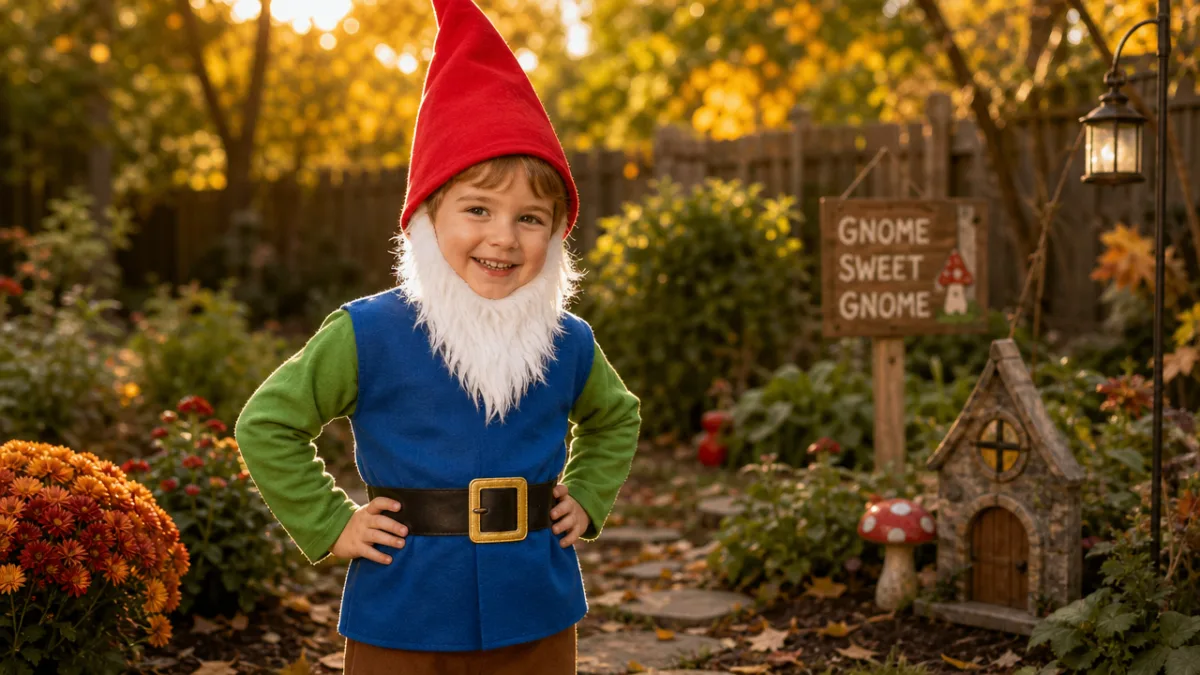
Building a convincing garden gnome costume requires attention to several key elements that work together to create the complete illusion. The most critical component is undoubtedly the hat — a tall, conical pointed cap in red, blue, or green that immediately signals “gnome” to any observer. Traditional gnome hats are typically red, drawing from the centuries-old European artistic tradition of depicting gnomes in bright red caps, but modern interpretations embrace the full spectrum, allowing you to coordinate the hat color with the rest of the outfit for a polished, cohesive look.
The body of the costume should suggest the rounded, comfortable silhouette associated with garden gnomes. Loose, slightly oversized tunics in earth tones — deep browns, forest greens, warm ochres, and muted reds — work beautifully. Layering is key to achieving that delightfully plump gnome shape without sacrificing your child’s comfort or mobility. A puffy vest worn over a long-sleeved shirt, or a gathered tunic belted at the waist, creates the right proportions. Pants should be simple and comfortable, often in a contrasting earth tone, tucked into or paired with boot-style shoes or shoe covers.
The beard is perhaps the most transformative accessory in the entire ensemble. Even on the smallest children, a fluffy white or gray beard instantly communicates the gnome character in a way that delights everyone who sees it. Craft store white felt, faux fur trim, or even pulled cotton batting can be fashioned into an adorable beard that attaches easily with elastic or ribbon ties. For very young children, a beard painted or drawn on with face paint is a perfectly charming alternative that avoids the potential discomfort of something covering the lower face.
Choosing the Right Materials for Comfort and Durability
When selecting fabrics and materials for a child’s costume, comfort must always come first. Children who are uncomfortable in their costumes quickly become unhappy, and an unhappy child in an expensive, elaborate costume is nobody’s idea of a good Halloween. Choose soft, breathable fabrics for the main body of the costume — cotton blends, fleece for cooler climates, and lightweight felt for decorative elements. Avoid scratchy interfacing, rough burlap effects, or any material that will irritate sensitive skin, particularly around the collar and wrists where fabric contacts skin most directly.
Durability matters particularly when the costume will see multiple wearings or be handed down to younger siblings. Reinforce stress points like the hat’s brim and any attached decorative elements with extra stitching or strong fabric glue. The beard attachment mechanism deserves special thought — it needs to be secure enough to stay in place during active trick-or-treating, but easy enough for a child to remove independently when needed. Elastic loops that hook over the ears work well for older children, while a simple piece of ribbon tied gently around the head suits toddlers better.
Step-by-Step Guide to Making the Iconic Gnome Hat
The gnome hat is the heart of the entire costume, and making one from scratch is a satisfying and surprisingly simple craft project. You’ll need approximately half a yard of felt or stiff fabric in your chosen color, a flexible measuring tape, scissors, fabric glue or a sewing machine, and optionally some decorative trim. Begin by measuring the circumference of your child’s head just above the ears, then add one inch for seam allowance. This measurement becomes the base of your cone template.
To create the cone pattern, draw a quarter-circle on a large piece of paper. The radius of this quarter-circle determines the height of your finished hat — for a classic gnome look, aim for a hat that’s roughly as tall as the length from your child’s chin to the top of their head. A radius of twelve to fourteen inches works well for most children aged three to eight. Cut out the pattern, pin it to your fabric, and cut carefully. When the fabric piece is rolled into a cone shape, the curved edge becomes the brim and the two straight edges meet in the back to be glued or sewn together.
Once your cone is assembled, fit it to your child’s head and make any necessary adjustments to the brim opening. You can add a simple cardboard ring inside the brim to help the hat hold its circular shape and sit properly on the head. Decorate the hat with whatever embellishments suit your vision: a jaunty feather, a small silk flower, decorative ribbon trim around the brim, or even tiny felt mushrooms glued along the base. A piece of thin elastic sewn inside the brim and looped under the chin will keep the hat securely in place during the most enthusiastic trick-or-treating adventures.
Adding Professional Finishing Touches to the Hat
The difference between a homemade hat that looks crafted with love and one that looks truly polished often comes down to small finishing details. Press your seams carefully with an iron if using fabric, or weight glued seams flat until fully dry. Trim any uneven edges with sharp scissors for a clean silhouette. If the hat brim wants to curl or flop, a thin wire inserted into a sewn channel along the edge gives you control over the final shape and allows you to give the brim a slight upward or outward curve that photographs beautifully.
Consider the texture of your hat material as part of the visual storytelling. Smooth felt reads as clean and classic, while a slightly fuzzy fleece creates a more whimsical, lived-in quality that suits a gnome who’s been working in the garden. You can also paint designs onto a finished felt hat using fabric paint — simple flower motifs, tiny stars, or geometric patterns add a handcrafted character that store-bought hats simply can’t replicate. Seal any painted decorations with a light coat of fabric sealant spray to prevent chipping during wear.
Face Paint and Makeup Techniques for Little Gnomes
The makeup for a garden gnome costume should enhance the character without overwhelming your child’s natural cuteness. The signature element is rosy, apple-red cheeks — larger and more exaggerated than natural blush, centered on the roundest part of the cheekbones and blended softly upward and outward. Use face paint rather than cosmetic blush for children, as face paint is formulated to be safe for young skin and comes off easily with soap and water. A bright, true red or deep rose works better than pink for the classic gnome look.
If you’re skipping an actual beard prop in favor of a painted one, use white or gray face paint to draw the basic beard shape below the nose, then add texture with a fine brush using slightly darker paint strokes to simulate individual hairs. A small, round nose tip in red or pink, slightly larger than the natural nose, adds to the gnome character beautifully. Keep all makeup applications gentle and test a small amount on your child’s inner wrist at least 24 hours before the big day to check for any sensitivity reactions, particularly with red pigments which can occasionally cause reactions in sensitive skin.
For children who resist having their faces painted — and there are many — the rosy cheeks can be the one non-negotiable element, since they transform any child’s face into a recognizable gnome face almost magically. If even that is a battle not worth fighting, simply lean into the accessories: the hat, the beard, the costume itself will carry the look perfectly well without any face paint at all. The goal is always a child who feels comfortable, confident, and excited about their costume rather than a technically perfect execution that creates stress for everyone involved.
Setting Up a Face Paint Station at Home
Creating a designated face paint station at home makes the whole process calmer and more enjoyable for both parent and child. Set up at a well-lit table with a mirror your child can see into, spread a washable tablecloth or old newspaper to protect surfaces, and gather all your supplies before you begin. Having everything within reach prevents the frantic searching that breaks the magic of the transformation. Keep baby wipes and a damp cloth nearby for quick corrections, because even the steadiest hand makes the occasional mistake.
Practice the makeup look once or twice in the days before Halloween while the stakes are low. This gives you a chance to refine your technique and helps your child understand and get comfortable with the process. Children who’ve had a practice run are dramatically more cooperative on the actual day because they know what to expect and have already experienced that the face paint doesn’t hurt and comes off easily. Turn the practice session into a fun event — play their favorite music, offer a special snack as a reward afterward, and make plenty of positive comments about how wonderful they look.
Accessorizing Your Garden Gnome Costume for Maximum Impact
The right accessories transform a good gnome costume into a great one, adding layers of storytelling and personality that make the character truly come alive. A small wicker basket or wooden bucket, perfect for collecting candy, doubles as an in-character prop — gnomes are known for their love of collecting treasures from the natural world. Fill it with a few decorative acorns, small pinecones, or colorful autumn leaves before heading out for the evening, and your child will look like they’ve just come from a day of gardening adventures.
Consider giving your little gnome a small garden tool to carry — a child-sized trowel, a tiny rake, or even a plastic watering can painted to look aged and weathered. Alternatively, a walking stick made from a sturdy stick gathered from your own backyard and decorated with wrapped twine and a few small nature elements is both free and deeply on-theme. These props give children something to do with their hands, which often helps shy or nervous kids feel more comfortable in social situations like trick-or-treating or costume parties.
Footwear is a surprisingly important element of the gnome look that many costume guides overlook. Traditional gnome shoes have upturned, curling toes — a detail you can replicate by stuffing the toes of old boots with newspaper and bending them upward, then securing the curl with a few stitches or a rubber band. Alternatively, felt boot covers slipped over regular sneakers and decorated with buckle-shaped felt pieces give the appearance of gnome footwear while your child actually walks in their comfortable everyday shoes, which is always the practical parent’s best choice for a long evening of walking.
Creating a Coordinated Family Gnome Theme
One of the most delightful extensions of the garden gnome costume concept is building a coordinated family theme around it. Parents and siblings can each take on different gnome characters, creating a charming gnome family or village. Vary the hat colors to distinguish each character — red for one child, blue for another, green for a parent — while keeping the core aesthetic elements consistent through shared color palettes, matching beard styles, and similar rosy-cheeked makeup. Family costume themes create wonderful memories and produce spectacular group photographs.
For a creative storytelling extension, assign each family gnome a specialty or role: a garden gnome who tends the flowers, a cooking gnome with a tiny wooden spoon, a reading gnome with a miniature book tucked under their arm, and a traveling gnome with a small bindle. These small narrative details give children something to talk about when neighbors ask about their costumes, building confidence and communication skills while making the trick-or-treating experience richer and more interactive. Children who have a character story to tell are always more engaged and enthusiastic participants in Halloween festivities.
Sourcing, Budgeting, and Planning Your Gnome Costume
One of the great pleasures of the garden gnome costume is that it can be executed beautifully at virtually any budget. At the most economical end, thrift stores are treasure troves of the earth-toned clothing you need — oversize vests, brown corduroy pants, plaid flannel shirts, and sturdy boots that fit the aesthetic perfectly often cost just a few dollars each. The hat can be made from a single piece of felt for under two dollars, and the beard from cotton batting or a remnant of faux fur trim is similarly inexpensive. A fully realized gnome costume assembled from thrift store finds and craft store basics might cost fifteen to twenty-five dollars total.
Mid-range costume builders might invest in higher-quality felt for the hat, a ready-made white beard from a costume supplier, and a purpose-bought tunic or vest in the right colors. Face paint kits designed for children’s costumes cost between eight and fifteen dollars and contain far more than you’ll need for a single application, making them good value if you have multiple children to costume or plan to use the paints again for other occasions. At this level, expect to spend forty to sixty dollars for a costume that looks polished and photographs beautifully.
For parents who prefer the convenience of a purchased base costume with personal customization on top, several retailers offer basic gnome costume sets that can be enhanced with handmade accessories, better-quality hats, and personalized touches. This hybrid approach — buy the foundation, make the distinctive elements — often produces the best results because it combines the time-saving benefit of a professionally made garment with the unique personality of handcrafted accessories. Whatever your budget, planning the costume two to three weeks before you need it gives you time to source materials thoughtfully, make test runs on the hat and beard, and address any issues before the big day arrives.
A Quick Reference Shopping List
- Half a yard of red, blue, or green felt or stiff fabric for the pointed hat
- White or gray faux fur trim, felt, or cotton batting for the beard and mustache
- Earth-toned tunic, shirt, or sweater in brown, green, or burgundy
- Comfortable pants in a coordinating earth tone, preferably with a slightly baggy fit
- Boots or boot-style shoe covers; alternatively, regular shoes with felt covers
- A wide belt or rope belt to cinch the tunic at the waist
- Child-safe red or rose face paint for rosy cheeks
- White face paint if creating a painted-on beard rather than using a prop beard
- Decorative elements for the hat: ribbon trim, feathers, small silk flowers, or fabric paint
- Elastic for hat chin strap and beard attachment
- Optional props: small basket, garden tools, walking stick, or decorative natural elements
With this complete guide in hand, you have everything you need to create a garden gnome costume that your child will treasure and remember. The combination of whimsical character, comfortable construction, and genuine creative fun makes this one of the most rewarding Halloween costume projects a family can undertake together. The hours spent cutting felt, painting cheeks, and practicing the gnome’s characteristic friendly wave create memories that outlast any single evening of trick-or-treating — and that, ultimately, is the whole point of the costume-making tradition.








What do you think?
It is nice to know your opinion. Leave a comment.