










Catalpa Trees Are Amazing: A Complete Guide to Nature’s Most Spectacular Ornamental Giant
Introduction to the Catalpa: A Tree Unlike Any Other
When most people think of remarkable trees, their minds wander to towering redwoods or ancient oaks. Yet few trees command attention quite like the catalpa, a broad-leafed deciduous giant that manages to be both wildly exotic in appearance and surprisingly common across North American landscapes. With its enormous heart-shaped leaves, clusters of orchid-like blossoms, and dramatic hanging seed pods, the catalpa is a tree that stops people in their tracks and demands a second look.
The catalpa belongs to the family Bignoniaceae and is native primarily to a relatively small region of the central and eastern United States, though it has been widely cultivated far beyond its original range. There are two main species commonly encountered in North America: the northern catalpa (Catalpa speciosa) and the southern catalpa (Catalpa bignonioides). Both share many of the same dramatic characteristics, though they differ in size, flower timing, and the range of conditions they tolerate best.
What truly sets the catalpa apart from most backyard and street trees is the sheer boldness of every feature it possesses. Nothing about this tree is subtle or understated. The leaves can measure up to a foot in length. The flower clusters erupt in dramatic sprays of white and purple. The seed pods hang like long green cigars late into winter. Every season brings a new reason to appreciate this extraordinary tree, and gardeners and naturalists who discover catalpas rarely forget them.
The Biology and Botany of Catalpa Trees
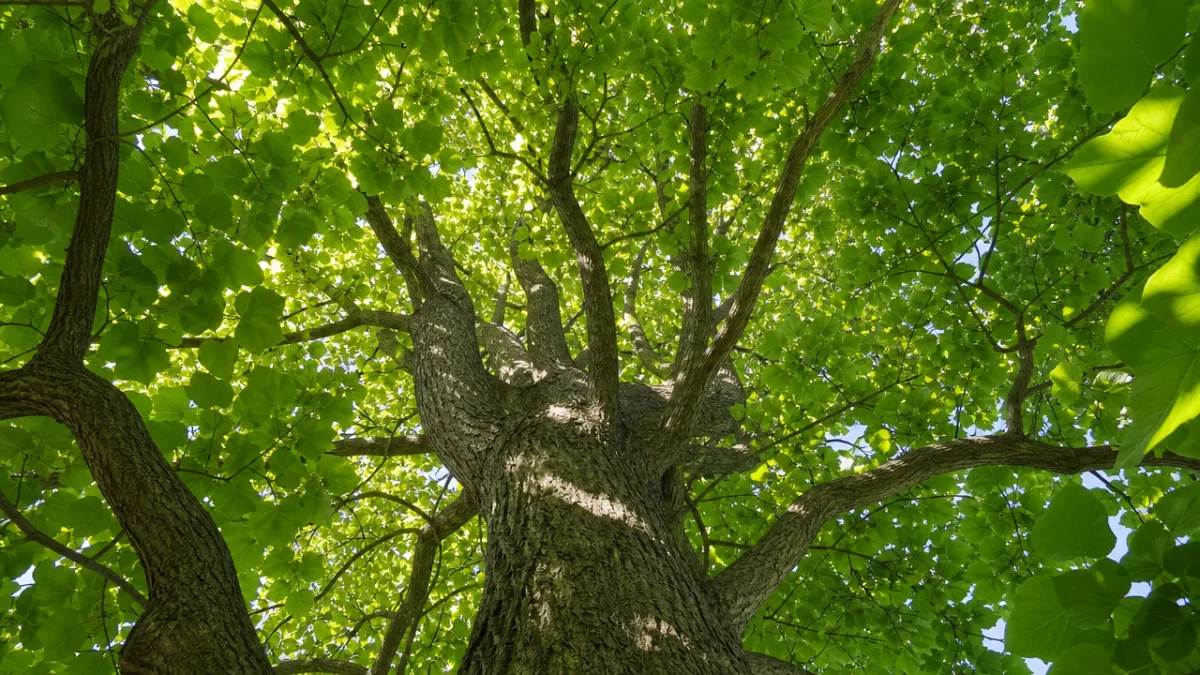
Catalpa trees are classified as medium to large deciduous trees, with northern catalpas regularly reaching heights of 40 to 70 feet at maturity, and occasionally pushing even taller in ideal conditions. The crown is broad and somewhat irregular, giving mature specimens a pleasantly relaxed, spreading silhouette that provides excellent shade during summer months. The bark is grayish-brown and develops attractive furrows and ridges as the tree ages, adding textural interest to the trunk and larger branches.
The leaves of the catalpa are arguably its most immediately striking feature outside of flowering season. They are large, broadly ovate to heart-shaped, and arranged in whorls of three along the branches rather than in the alternate or opposite patterns seen in most familiar trees. This whorled arrangement is itself botanically unusual and contributes to the lush, tropical appearance of the tree’s canopy. When you stand beneath a mature catalpa in full leaf, the effect is something like standing beneath a green cathedral ceiling assembled from oversized playing cards.
One curious biological detail that surprises many people is that catalpa leaves, when crushed or bruised, emit a distinctive and somewhat pungent odor that many describe as unpleasant. This scent is believed to serve a defensive function, discouraging some browsing animals from feeding on the foliage. Despite this chemical deterrent, catalpas are the exclusive host plant for the catalpa sphinx moth (Ceratomia catalpae), whose large caterpillars feed extensively on the leaves and have developed adaptations that allow them to tolerate the tree’s chemical compounds entirely.
The root system of catalpas is extensive but not typically as invasive as species like willows or silver maples. The trees develop a combination of deep taproots and wide-spreading lateral roots that anchor them effectively against wind and allow them to access moisture from a broad area of soil. This robust root architecture contributes to the catalpa’s impressive drought tolerance once it reaches maturity, making it more resilient than its lush tropical appearance might suggest.
The Spectacular Flowering Display
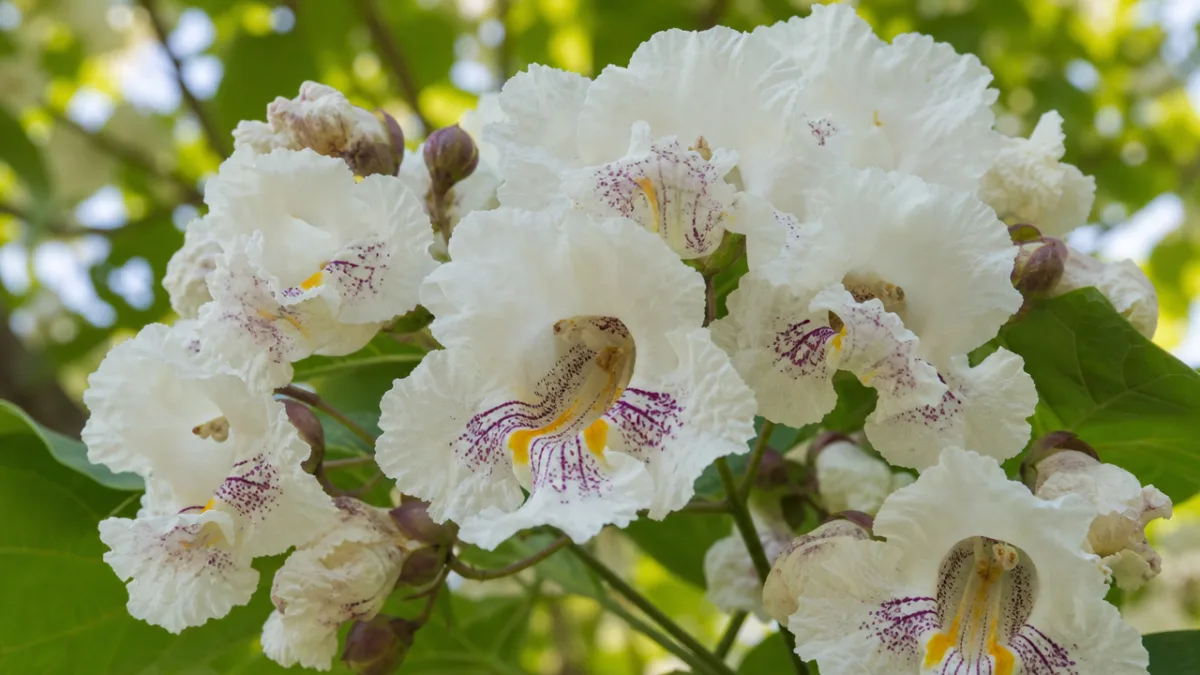
If any single feature earns the catalpa its reputation for magnificence, it is almost certainly the flowers. Catalpa trees bloom in late spring to early summer, typically May through June depending on location and species, producing large, upright clusters called panicles that hold dozens of individual blossoms. Each flower is trumpet-shaped, roughly an inch and a half in diameter, and white with intricate markings of yellow streaks and purple or reddish-brown spots concentrated in the throat. The effect from a distance is of a tree decorated with enormous white candles.
Up close, the individual flowers reveal a complexity that rivals the finest orchids. The two-lipped corolla has ruffled, slightly crinkled petals that give each blossom a delicate, handmade quality. The interior markings serve as nectar guides, directing pollinators toward the center of the flower where the reproductive structures are located. Bees, particularly bumblebees, are among the most important pollinators of catalpa flowers, and a blooming tree in full flower hums with their activity on warm afternoons.
The fragrance of catalpa flowers is another dimension of the experience that photographs and descriptions cannot fully capture. The blossoms emit a sweet, honeyed scent that intensifies on warm, humid days and can carry a surprising distance on a gentle breeze. Walking past a blooming catalpa can feel like walking past a perfume counter — the scent is noticeable, pleasant, and distinctly floral without being cloying. Fallen petals accumulate beneath the tree in drifts of white and create a brief but beautiful carpet that many gardeners treasure as part of the seasonal display.
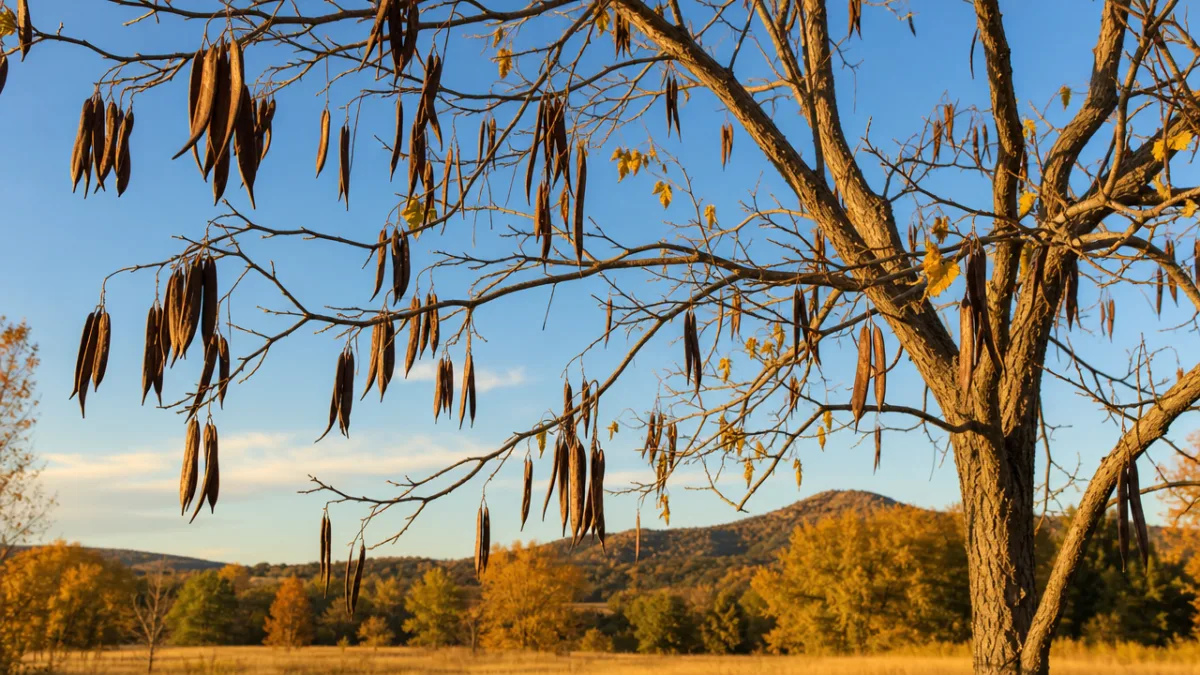
The flowering period typically lasts two to three weeks, which feels brief given how spectacular the show is, but the aftermath is equally interesting in its own way. After pollination, the fertilized flowers develop rapidly into the long, slender seed pods that are perhaps the tree’s second-most-recognizable feature. These pods are green initially and resemble oversized string beans, reaching lengths of six to twenty-four inches as they mature. They hang from the branches in clusters, slowly turning brown and woody, and persist on the tree long after the leaves have fallen, rattling in winter winds.
Growing Conditions and Landscape Uses
One of the most appealing aspects of catalpa trees from a practical landscaping perspective is their remarkable adaptability. These trees tolerate a wide range of soil types, including clay-heavy soils and compacted urban soils that would stress or kill more finicky species. They are reasonably tolerant of both wet and dry conditions, perform adequately in full sun and partial shade, and recover well from temporary flooding or drought stress. In short, the catalpa is a tough, forgiving tree that will grow in places where more elegant ornamentals refuse to thrive.
Catalpas are hardy across a broad geographic range. The northern catalpa (Catalpa speciosa) is cold-hardy to USDA Zone 4, meaning it can withstand winter temperatures as low as minus 30 degrees Fahrenheit with appropriate establishment. The southern catalpa (Catalpa bignonioides) is slightly less cold-tolerant, performing best in Zones 5 through 9. Both species handle heat well, making them suitable for the difficult climatic conditions of the American Midwest, where winter cold and summer heat can eliminate many landscape options.
In terms of landscape placement, catalpas work best as large specimen trees given plenty of room to develop their naturally spreading form. They are well-suited to the following settings and uses:
- Large residential lots where their eventual size can be accommodated without crowding structures or utilities
- Parks and public green spaces where their dramatic seasonal display can be appreciated by many people
- Naturalistic or wildlife-friendly gardens where their role as host plants for moths and food sources for birds adds ecological value
- Farmstead plantings and rural properties where their rapid early growth provides relatively quick shade
- Riparian buffer plantings along streams and drainage areas, where their tolerance for wet conditions is an advantage
One important practical consideration for gardeners and property owners is the catalpa’s significant litter profile. Between fallen flowers in early summer, seed pods throughout fall and winter, and large leaves in autumn, catalpas are not low-maintenance trees from a tidiness standpoint. Planting them over patios, parking areas, or meticulously maintained lawns will require consistent cleanup. In naturalistic settings or large lawn areas where litter can simply decompose in place, this concern diminishes considerably and the seasonal debris becomes part of the tree’s ecological contribution.
Ecological Value and Wildlife Connections
Beyond their visual appeal, catalpa trees play a genuinely significant ecological role in the landscapes where they grow. Their flowers provide important early-summer nectar resources for a variety of native and managed bee species at a time when some early spring flowers have faded but late-summer bloomers have not yet opened. Bumblebees and several solitary bee species visit catalpa flowers regularly, and a blooming catalpa in a garden or park setting is a reliable place to observe bee diversity and behavior.
The relationship between catalpas and the catalpa sphinx moth deserves special attention because it represents one of the more fascinating examples of plant-insect specialization in temperate North American ecology. The sphinx moth (Ceratomia catalpae) lays its eggs exclusively on catalpa foliage, and the resulting caterpillars can be strikingly large — up to three inches in length — with dramatic black and yellow or white markings that make them one of the more visually impressive caterpillars in eastern North America. When populations are high, these caterpillars can defoliate entire trees, though healthy catalpas typically recover fully and produce new leaves within the same growing season.
Interestingly, catalpa caterpillars have long been prized by anglers as fishing bait, and some rural property owners deliberately plant catalpas or maintain them specifically to harvest caterpillars for this purpose. The large, soft-bodied caterpillars are apparently irresistible to freshwater fish, particularly catfish and bass, and catching them in quantity from a well-established tree requires little more than shaking branches over a bucket. This human-tree-insect relationship adds a dimension of practical folkways and regional tradition to the catalpa’s story that few other ornamental trees can match.
Birds also benefit significantly from catalpa trees. The persistent seed pods provide winter food and nesting material. The broad canopy structure, with its multiple branching tiers and dense summer foliage, offers excellent nesting habitat for a variety of songbirds. Dead branches and cavities in older catalpas provide nesting sites for cavity-nesting species such as woodpeckers, chickadees, and small owls. The insects associated with catalpas throughout the season — from flower pollinators to leaf feeders to bark dwellers — represent a substantial and diverse food resource for insectivorous birds raising young in summer.
History, Culture, and Practical Uses of Catalpa Wood
The catalpa has a rich history in North America that extends well beyond ornamental horticulture. Native American peoples of the southeastern United States, where the southern catalpa is believed to have originated, used various parts of the tree medicinally. The bark was prepared as an antiseptic and used in the treatment of wounds and skin conditions. Seed pod preparations were reportedly used for their mild sedative properties. While these traditional uses are primarily of historical interest today, they speak to the catalpa’s longstanding integration into human landscapes and practices.
European settlers and later American farmers and foresters recognized the catalpa’s practical value fairly early. The wood is classified as moderately strong with excellent durability in contact with soil and moisture — properties that made it highly desirable for fence posts, railroad ties, and other outdoor applications during the nineteenth century. In fact, catalpa was so widely planted for fence post production in the Midwest during the late 1800s that it became naturalized far beyond its original native range, and what appear to be wild catalpas in many parts of the country are actually descendants of planted agricultural specimens.
The wood itself has a coarse, open grain and a somewhat soft texture compared to hardwoods like oak or hickory, but its decay resistance makes it valuable for specific applications even today. Craftspeople and woodworkers use catalpa for:
- Decorative turned objects where the interesting grain pattern adds visual appeal
- Outdoor furniture and garden structures where resistance to rot and weathering is important
- Small carved items and decorative boxes where the relatively easy workability is an advantage
- Musical instrument components, where some luthiers appreciate its acoustic properties
In terms of cultural and literary history, the catalpa appears in American writing and regional folklore with some regularity, particularly in accounts of Southern and Midwestern rural life from the nineteenth and early twentieth centuries. The tree’s distinctive appearance — so unlike the familiar maples, oaks, and elms of European botanical tradition — made it a frequent subject of comment among travelers and naturalists exploring the American interior. Its exotic quality in European eyes contributed to its popularity as an ornamental tree in European parks and gardens, where it was introduced in the eighteenth century and remains a valued specimen tree to this day.
Cultivars, Varieties, and Related Species
Gardeners and horticulturists interested in catalpas have access to a handful of cultivated varieties that offer interesting variations on the standard forms. Perhaps the most widely planted cultivar is Catalpa bignonioides ‘Aurea’, commonly known as the golden catalpa, which produces leaves of a striking soft yellow-green color rather than the standard deep green. This cultivar is particularly effective as a focal point in garden designs where a bold splash of warm color is desired, and its slightly smaller mature size compared to the species makes it more manageable in modestly scaled gardens.
The weeping catalpa, typically a weeping form of Catalpa bignonioides grafted onto an upright rootstock trunk, creates a dramatic architectural effect in formal garden settings. The cascading branches hang nearly vertically from the graft point, creating a mushroom-like silhouette that is simultaneously elegant and slightly theatrical. Weeping catalpas are frequently used as specimen trees in formal gardens, near water features, or at focal points in designed landscapes where their unusual form can be appreciated from multiple angles and distances.
Beyond the two common North American species, the genus Catalpa includes several other members worth knowing. Catalpa ovata, the Chinese catalpa, is native to China and Japan and produces smaller leaves and flowers than its American relatives, with yellow-white flowers that have distinctive purple striping. It is moderately available in the horticultural trade and offers similar toughness and adaptability in a slightly more compact form. Hybrids between Catalpa bignonioides and Catalpa ovata, collectively referred to as Catalpa × erubescens, have also been developed and are sometimes available from specialty nurseries.
For gardeners considering adding a catalpa to their landscape, selecting the right species or cultivar for the intended site is worth careful thought. The following points summarize the key distinctions to consider when making a selection:
- Northern catalpa (Catalpa speciosa) is the larger, hardier species, best for large sites in colder climates where its superior cold tolerance is an asset
- Southern catalpa (Catalpa bignonioides) is somewhat smaller at maturity and better suited to warmer, southern regions while still performing well in the mid-Atlantic and Midwest
- Golden catalpa (‘Aurea’) provides a colorful foliage alternative for gardeners who want the catalpa’s character with added visual brightness
- Weeping forms are best reserved for formal or architectural garden settings where their distinctive silhouette can serve a deliberate design purpose
- Chinese catalpa offers similar toughness in a more compact package suitable for smaller properties
Regardless of which form you choose, establishing a young catalpa tree is relatively straightforward compared to many landscape trees. They transplant well from container or balled-and-burlapped nursery stock, establish quickly given adequate moisture during the first growing season, and grow rapidly once their root systems are settled — often putting on three feet or more of height per year under good conditions. Within a decade, a properly sited catalpa can transform from a modest nursery specimen into an impressive landscape presence that provides substantial shade, extraordinary seasonal interest, and a genuine conversation piece for anyone who encounters it for the first time.








What do you think?
It is nice to know your opinion. Leave a comment.