










Campfire: The Ancient Art of Gathering Around the Flame
The History and Origins of the Campfire
Few discoveries have shaped human civilization as profoundly as the mastery of fire. Archaeological evidence suggests that our earliest ancestors were using controlled fire for warmth, protection, and cooking as far back as one million years ago. The campfire, in its most elemental form, represents humanity’s oldest technology — a circle of warmth carved out of the darkness, a boundary between the known and the unknown, safety and wilderness. It is not an exaggeration to say that the campfire is where human culture itself was born.
In ancient societies across every continent, fire served as the social and spiritual center of community life. From the longhouses of Indigenous North American tribes to the hearths of early European settlements, the fire was never merely a practical tool. It was a gathering place where stories were told, decisions were made, and the wisdom of elders was passed down to younger generations. The crackle of burning wood was the soundtrack to the earliest human conversations, the first music humanity ever heard repeated night after night throughout the ages.
As civilizations grew more complex and technologies more sophisticated, the symbolic power of the campfire did not diminish — it deepened. Ancient Greeks associated fire with Prometheus, the titan who stole it from the gods and gave it to humanity as a divine gift. Many Indigenous traditions hold fire as a living relative, something that must be tended with respect and gratitude. Even today, ceremonial fires burn at Olympic stadiums, at state funerals, and at coming-of-age rituals around the world, reminding us that the campfire is far more than burning wood. It is a living link between our past and our present.
Building the Perfect Campfire: Techniques and Methods
Building a successful campfire is both a science and an art, requiring an understanding of materials, airflow, and structure. The most important concept to grasp before striking a single match is the fire triangle: heat, fuel, and oxygen must all be present in the right proportions. A fire that lacks adequate oxygen will smolder and die; one with too much fuel piled on too quickly will choke itself out. Mastering the balance between these three elements is what separates a skilled fire-builder from someone who burns through half a box of matches in frustration.
Tinder, kindling, and fuel wood are the three layers of material every successful fire relies upon. Tinder consists of dry, easily ignitable material such as dried grass, birch bark, newspaper, or commercial fire starters. Kindling is slightly larger — pencil-thin sticks and small dry twigs that catch fire from the tinder and begin to generate real heat. Fuel wood, the larger logs that sustain the fire for hours, should only be added once a solid bed of coals and flame has been established from the kindling layer. Rushing this process is the single most common mistake novice fire builders make.
There are several well-established structural methods for building a campfire, each suited to a different purpose. The most popular include the following configurations:
- Teepee fire: Tinder is placed in the center and kindling is leaned against it in a cone shape. This design creates excellent airflow and is ideal for quickly generating heat or lighting cooking fires.
- Log cabin fire: Logs are stacked in alternating perpendicular layers like a log cabin, with tinder and kindling in the center. This structure burns long and steadily, making it perfect for evening campfires.
- Star fire: Large logs are arranged like spokes of a wheel pointing inward. As the ends burn, you push the logs further into the center, making it highly fuel-efficient and ideal for primitive or survival situations.
- Lean-to fire: A large log acts as a windbreak, with kindling leaned against it on the sheltered side. Best used in windy conditions where other structures would struggle.
Fire safety is not an optional consideration — it is an absolute requirement. Always build your campfire in a designated fire ring or clear an area down to bare mineral soil at least ten feet from tents, trees, and dry vegetation. Keep a bucket of water or sand nearby at all times. Never leave a fire unattended, and ensure it is fully extinguished before sleeping or leaving camp. The rule used by experienced outdoors people is simple: if it is too hot to touch, it is too hot to leave. Drown the fire with water, stir the ashes, and drown it again until all heat is completely gone.
The Science Behind the Flames
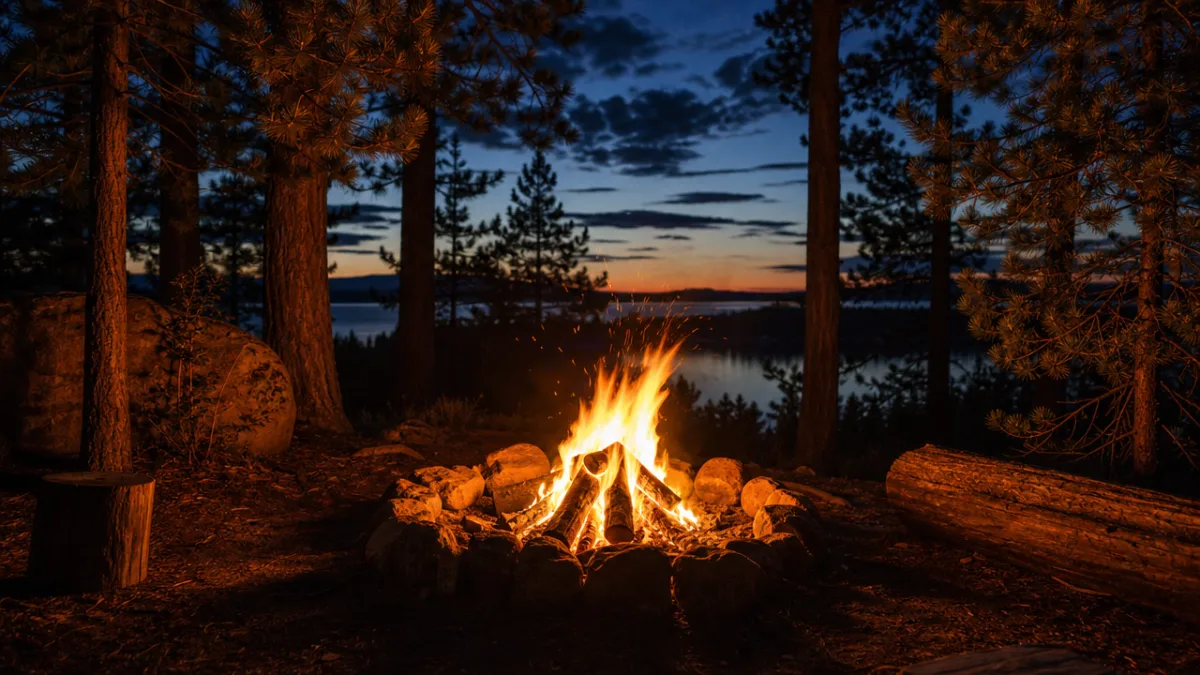
To the casual observer, a campfire is simply beautiful and warm. To a scientist, it is a complex and dynamic chemical reaction unfolding in real time. Combustion — the technical name for burning — is a rapid oxidation process that releases energy stored in organic material in the form of heat and light. When wood is heated to approximately 300 degrees Celsius, it begins to decompose and release flammable gases. These gases, mixing with oxygen in the air above the wood surface, ignite and produce the dancing flames we associate with fire. The wood itself does not truly burn — it is the gases it releases that create the visible flame.
The color of campfire flames tells a surprisingly detailed story about what is happening chemically. The deep orange and red hues typical of a wood campfire come from the incandescence of tiny soot particles — carbon particles that are heated until they glow. Blue flames, visible at the base of a fire, indicate complete combustion where fuel is burning efficiently with ample oxygen. Yellow and orange in the upper flame indicate partially burned carbon. When you burn different materials in a fire, you change the chemical composition of those gases and therefore the color of the flame — copper compounds burn green, potassium burns violet, and sodium (found in salt) burns brilliant yellow.
The smoke produced by a campfire is itself a complex mixture of water vapor, carbon dioxide, carbon monoxide, and thousands of organic compounds including some that are known irritants and health hazards. This is one reason why sitting upwind of a campfire is always advisable, and why burning only dry, well-seasoned hardwoods is preferable to green or treated wood. Hardwoods like oak, hickory, maple, and ash burn hotter and cleaner with less smoke than softwoods or chemically treated lumber. The crackling and popping sounds so beloved in a campfire come from pockets of moisture within the wood rapidly vaporizing and expanding outward as the wood heats up, a satisfying reminder that the fire is doing exactly what it should.
Campfire Cooking: Food, Flavor, and Tradition
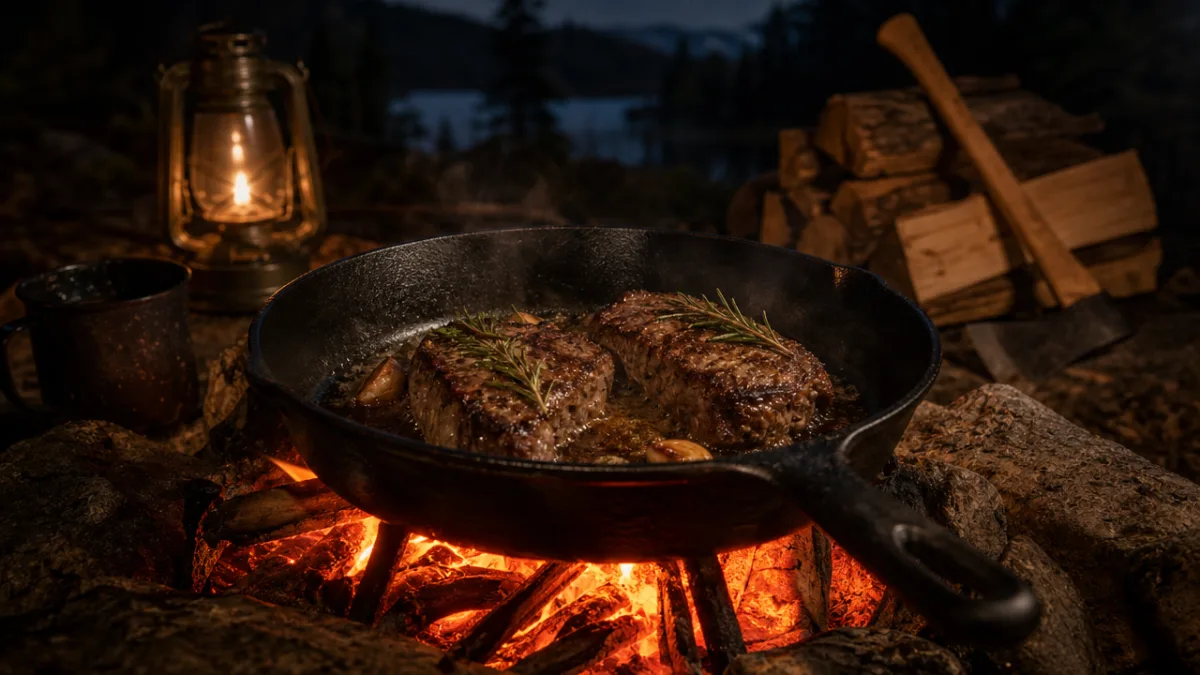
For most of human history, cooking over an open fire was not a hobby or a novelty — it was the only method available. Today, campfire cooking has become one of the most beloved aspects of outdoor culture, blending practical sustenance with a deeply sensory and social experience. There is something about food cooked over an open flame that no kitchen appliance can fully replicate: the subtle smokiness infused into meat, the caramelized crust on vegetables, the way marshmallows transform from rubbery white cylinders into molten golden clouds. Fire imparts flavors that are genuinely irreplaceable.
The key to excellent campfire cooking lies in understanding the difference between cooking over active flame and cooking over coals. Open flames are unpredictable and hot, making them difficult to control and prone to burning food quickly on the outside while leaving the inside raw. Glowing coals, on the other hand, provide steady, even radiant heat that is far more consistent and controllable — ideal for grilling, roasting, and even baking. Experienced campfire cooks plan their fire accordingly, building it well in advance and allowing it to burn down to a proper coal bed before placing any food on the grate.
Some of the most satisfying campfire meals are remarkably simple. Classic campfire foods enjoyed by generations of outdoor enthusiasts include:
- Foil packet meals: Vegetables, proteins, and seasonings wrapped in heavy-duty aluminum foil and nestled directly into the coals. These steam inside their packets and emerge perfectly cooked with minimal cleanup.
- Dutch oven cooking: A cast iron Dutch oven placed over coals with additional coals on the lid can bake biscuits, stews, cobblers, and even full roasts with impressive results.
- Skewered foods: From classic hot dogs and sausages to shrimp, vegetables, and fruit, skewered food cooked over open flame or coals is perhaps the oldest form of campfire cuisine in existence.
- Campfire bread: Simple dough wrapped around a stick and cooked slowly over coals produces a golden, slightly smoky bread that is extraordinarily satisfying to make and eat.
And of course, no campfire cooking tradition would be complete without s’mores — the beloved American treat made from toasted marshmallow and chocolate sandwiched between graham crackers. What s’mores lack in sophistication they more than compensate for in communal joy. The ritual of toasting a marshmallow over the fire, debating the merits of gentle golden browning versus aggressive full-on flaming, and then assembling the molten sandwich is a social ceremony in miniature. It is one of those rare foods that connects childhood memory to present-moment experience in an almost magical way, and it has earned its place as the definitive symbol of campfire culture.
The Psychological and Emotional Power of Campfire Culture
Modern neuroscience and psychology have begun to catch up with what humans have intuitively known for millennia: sitting around a campfire is genuinely good for us. A groundbreaking study by anthropologist Christopher Lynn at the University of Alabama found that gazing at a campfire measurably lowers blood pressure, induces relaxation, and promotes prosocial behavior — meaning it makes people more open, generous, and connected to those around them. The longer participants in the study watched fire, the more pronounced these effects became. The campfire, it seems, is not merely culturally significant but physiologically beneficial in measurable ways.
There is a concept in modern wellness culture called “campfire effect” — the way that fire naturally regulates our nervous system and shifts us out of the fight-or-flight stress response into a more parasympathetic, restful state. This is thought to be a deeply evolutionary response. For hundreds of thousands of years, a fire at night meant safety — predators kept at bay, warmth secured, community gathered close. Our nervous systems have been shaped by this association at a level so deep it precedes conscious thought. When we sit around a campfire today, we are activating ancient circuits of calm and belonging that remain embedded in our biology regardless of how urban or technological our daily lives have become.
The campfire also plays an irreplaceable role in human storytelling and emotional processing. Researchers who have studied storytelling cultures around the world note that nighttime campfire conversations are consistently deeper, more emotionally revealing, and more spiritually oriented than daytime conversations. The darkness beyond the fire circle creates an intimacy and a psychological safety that is difficult to replicate in any other setting. People speak more honestly around campfires. They share fears, dreams, memories, and beliefs that they might never articulate in a brightly lit room. The fire seems to act as both a permission-giver and a witness, and its ancient association with truth-telling runs through virtually every human culture on earth.
Responsible Campfire Practices and Environmental Stewardship
As much as the campfire is a source of joy and connection, it carries significant environmental responsibilities that every outdoor enthusiast must take seriously. Wildfires represent one of the most devastating and increasingly frequent natural disasters affecting ecosystems around the world, and human-caused ignitions — including escaped campfires — account for a significant percentage of wildfire starts in many regions. Understanding and practicing Leave No Trace fire ethics is not optional for anyone who loves wild places and wants to preserve them for future generations. The campfire tradition can only continue if we are good stewards of the landscapes that make it possible.
Before lighting any fire, always check current fire regulations for the area you are visiting. Many parks, forests, and wilderness areas implement seasonal fire bans during periods of high fire danger, and these restrictions must be respected without exception. Even when fires are permitted, using established fire rings significantly reduces impact. When no fire ring exists and fires are still allowed, building a mound fire on a non-combustible surface or using a fire pan are Leave No Trace-approved methods that protect the underlying soil, preserve the aesthetics of the landscape, and leave no lasting trace of your presence. Burn only wood that is already dead and on the ground, and never cut branches from living trees.
The wood you choose to burn also has important ecological implications. Transporting firewood from home or from distant locations has been identified as one of the primary vectors for spreading invasive insects and tree diseases, including the devastating emerald ash borer. Most land management agencies in North America now strongly recommend — and in some cases legally require — that campers purchase firewood locally, within a very short distance of their campsite, rather than transporting it from elsewhere. This simple practice helps protect the integrity of regional forest ecosystems and prevents the introduction of organisms that could fundamentally alter native tree populations over vast geographic areas.
Campfire Traditions Around the World
While the campfire is universal to human experience, the specific traditions, rituals, and meanings surrounding it are wonderfully diverse across cultures. In many Indigenous cultures of North America, fire is considered a sacred relative and must be treated with corresponding reverence. The Lakota people speak of fire as the first gift given to humanity by the Creator, and ceremonial fires maintained for specific spiritual purposes may burn continuously for days under careful tending. Protocol around approaching, feeding, and extinguishing such fires is specific and meaningful, and the roles of fire-keeper carry deep cultural responsibility within the community.
In Scandinavia, the tradition of Midsummer bonfires — enormous community fires lit on the summer solstice — dates back thousands of years to pre-Christian Norse celebrations of the sun. Today these fires are still lit across Sweden, Norway, Denmark, and Finland, drawing communities together in celebration of the longest day of the year. Similarly, the Irish tradition of Beltane fire festivals in early May involves lighting enormous bonfires on hilltops to mark the beginning of summer, with cattle historically driven between two fires to purify and protect them for the grazing season ahead. These traditions demonstrate the way fire has served as a community organizing force across vastly different cultures and historical periods.
In Australia, fire has been an integral part of Aboriginal land management for at least 50,000 years. The sophisticated practice of cultural burning — sometimes called “cool burning” or “fire-stick farming” — involves deliberately setting small, carefully managed fires to clear undergrowth, promote the growth of specific food plants, maintain habitat for animals, and reduce the fuel loads that contribute to catastrophic wildfires. This ancient ecological knowledge, long dismissed by colonial land managers, is now increasingly recognized by scientists and land managers as an extraordinarily effective tool for managing fire-prone landscapes. It is perhaps the most sophisticated campfire tradition in the world — one that transforms fire from a danger into a landscape-shaping partner in ongoing relationship with the land.
From the gauchos of the Argentine pampas who gather around an asado fire as a sacred social institution, to the tea ceremonies conducted over small charcoal fires in Japan, to the Bedouin traditions of coffee prepared over desert campfires as an expression of hospitality and honor — fire speaks every human language. Its warmth, its light, and its invitation to gather are understood instinctively by every culture on earth. The campfire is, perhaps more than any other single human practice, a reminder of what we all share beneath the surface differences of culture, language, and geography: a deep, ancient need for warmth, for light, and for each other.








What do you think?
It is nice to know your opinion. Leave a comment.