










DIY Budget Backyard Makeover: Transform Your Outdoor Space Without Breaking the Bank
Why Your Backyard Deserves a Second Look
Your backyard is one of the most underutilized spaces in your home. Many homeowners spend thousands decorating interior rooms while letting their outdoor space sit neglected, overgrown, or simply uninspiring. The truth is that a well-designed backyard can add significant value to your home, improve your mental health, and give your family a true retreat without ever leaving your property. You don’t need a massive renovation budget to make it happen.
The concept of a DIY backyard makeover has exploded in popularity over the last several years, and for good reason. With the rise of online tutorials, budget-friendly materials at major home improvement stores, and a culture that celebrates handmade, personal touches, more homeowners than ever are picking up shovels and paintbrushes and getting to work themselves. The results can be genuinely stunning, even when working with modest budgets of a few hundred dollars or less.
Before you begin any project, it’s worth spending some time outside in your backyard at different times of day. Notice where the sun hits in the morning, where shade falls in the afternoon, which areas feel uncomfortable, and which spots already have some natural charm. This kind of observation will inform every decision you make, from where to place a seating area to what kinds of plants will thrive without constant intervention. A thoughtful plan is the foundation of any successful transformation.
Planning Your Makeover on a Tight Budget
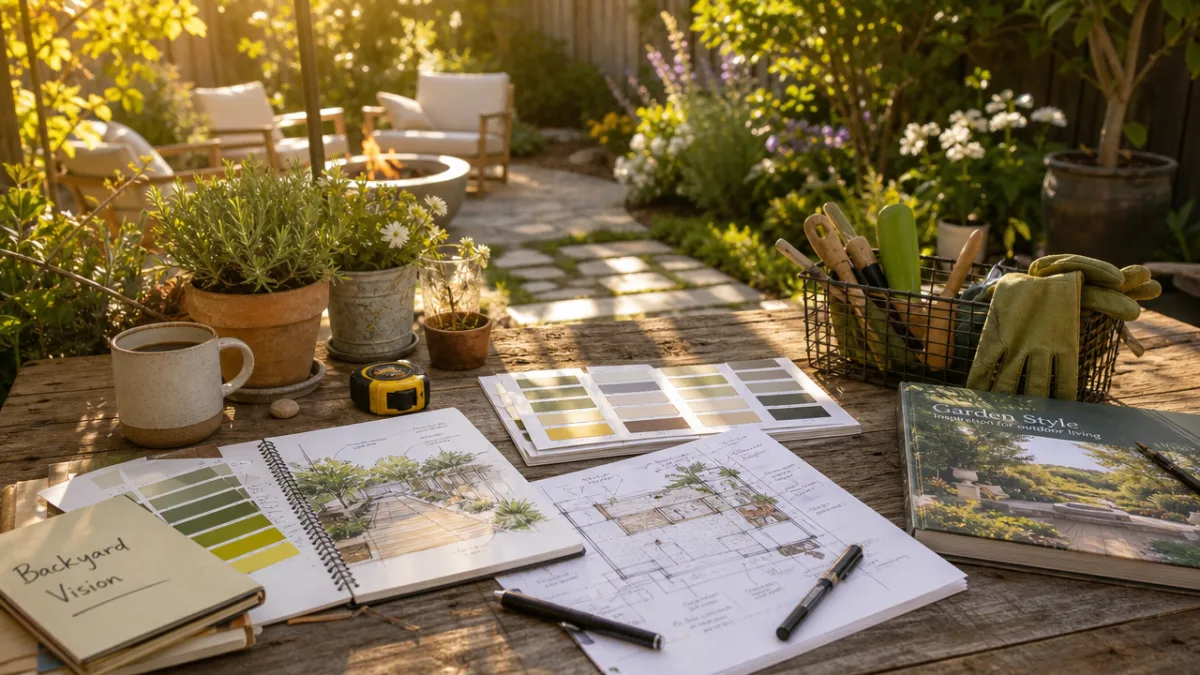
The single most important step in any budget makeover is creating a realistic plan before spending a single dollar. Start by sketching a rough layout of your backyard to scale, noting any existing features like fences, trees, garden beds, or patios. Then prioritize what bothers you most. Is it a lack of privacy? An ugly patch of dead grass? No place to sit and enjoy the space? Identifying your top two or three pain points will help you allocate your limited funds where they’ll have the greatest impact.
Set a firm budget before you begin shopping. It’s shockingly easy to overspend at a garden center or hardware store when you’re excited and surrounded by tempting options. A smart approach is to divide your total budget into categories: hardscaping, plants, furniture, and lighting. Allocating percentages ahead of time — for example, 40% to furniture, 30% to plants, 20% to hardscaping, and 10% to décor — keeps you anchored as you shop. Write it down and stick to it, adjusting only if you find an unexpected deal in one category that frees up funds for another.
Don’t underestimate the power of free and low-cost resources. Neighbors dividing perennial plants are often happy to give divisions away. Facebook Marketplace and Craigslist are goldmines for used patio furniture, garden tools, and even stone pavers. Local buy-nothing groups frequently feature plants, pots, and garden décor. Lumber mills and landscaping companies sometimes offer free or discounted mulch and stone chips. Tapping into these community resources before heading to a store can dramatically stretch your budget further than you might expect.
- Sketch your yard to scale and note all existing features before planning any changes.
- Prioritize the two or three changes that will have the biggest visual or functional impact.
- Divide your total budget into clear categories: hardscaping, plants, furniture, and accent pieces.
- Check Marketplace, Craigslist, and buy-nothing groups before purchasing anything new.
- Visit garden centers near closing time in the season when plants are heavily discounted.
Transforming Your Lawn and Garden Beds
The lawn and garden beds form the living canvas of your backyard, and even small improvements here create a dramatically different feel. If your lawn is patchy or weedy, resist the urge to immediately lay sod, which is expensive. Instead, try overseeding bare patches with quality grass seed appropriate for your climate, water consistently, and give it a season to fill in. For persistent bare spots caused by poor drainage or deep shade, consider replacing grass entirely with mulch, gravel, or shade-tolerant ground cover plants, which often look more intentional and require less maintenance.
Edging your garden beds is one of the highest-return improvements you can make for almost no money. A clean, defined edge between lawn and planting areas signals intentional design even when the plants inside the beds are simple and sparse. You can use a flat spade to cut a crisp edge for free, or invest in inexpensive metal or plastic landscape edging for a more permanent result. This one step alone can make a tired-looking yard look cared-for and professionally designed almost instantly.
When it comes to planting, focus on perennials over annuals whenever possible. Perennials cost more upfront but return year after year, multiplying over time and reducing the need to replant every season. Good budget-friendly perennial choices include black-eyed Susans, hostas, coneflowers, daylilies, and ornamental grasses, all of which are widely available, hardy across many climate zones, and attractive for multiple seasons. Fill gaps between perennials with inexpensive annuals the first year, then let the perennials spread and take over as the garden matures.
Mulch is arguably the most transformative and affordable material in any garden makeover. A fresh layer of dark brown or black mulch instantly makes garden beds look polished, suppresses weeds, retains moisture, and improves soil health over time as it breaks down. Purchase mulch by the cubic yard in bulk rather than by the bag, which is significantly cheaper. Many municipalities also offer free mulch from chipped tree debris, which can be picked up directly or sometimes even delivered to your home.
Creating a Welcoming Outdoor Living Area
Every backyard, no matter its size, benefits from a defined outdoor living space — somewhere intentional to sit, eat, gather, or simply relax. This doesn’t require a professional deck installation or an expensive stone patio. A level area of pea gravel, a few concrete stepping stones laid in a pattern, or even a simple arrangement of outdoor rugs on an existing concrete slab can define a seating zone effectively and attractively. The key is creating a sense of boundary and purpose that signals to anyone entering the space that this is a room, just without walls.
Furniture doesn’t have to be new or expensive to look great outdoors. A coat of spray paint in a consistent color can unify mismatched pieces found at thrift stores, garage sales, or the curb into a cohesive set that looks intentional and stylish. Matte black, deep navy, and forest green are popular choices that blend beautifully with outdoor settings. Add an outdoor-rated cushion or throw pillow in a complementary fabric and the transformation is complete. Weatherproof fabrics are widely available at discount stores and make a huge impact at low cost.
Consider building simple DIY furniture if you have even basic woodworking skills. Cinder block and wood plank benches are among the most popular budget DIY options because they require no special tools, cost very little, and can be assembled in under an hour. Pallets can be repurposed into sofas, coffee tables, and plant stands with minimal effort. Simple Adirondack chairs can be built from basic lumber for a fraction of the retail price and painted any color to suit your style. These projects also add a personal, handcrafted quality that no store-bought item can replicate.
- Define your seating area using pea gravel, pavers, or an outdoor rug to create a sense of room.
- Spray paint mismatched secondhand furniture in a unified color for an instant cohesive look.
- Build simple cinder block benches or pallet sofas for extremely low-cost seating options.
- Add outdoor cushions and throw pillows in weather-resistant fabrics to boost comfort and style.
- Anchor the space with a central element like a fire pit, coffee table, or water feature.
Adding Privacy, Shade, and Ambiance
One of the most common complaints about backyard spaces is a lack of privacy, particularly in suburban neighborhoods where yards sit close together. Fortunately, creating privacy doesn’t require a six-foot cedar fence, which can be costly. Fast-growing privacy hedges like arborvitae, bamboo in containers, or clumping ornamental grasses planted in a row can create a dense green screen within one to two growing seasons. Trellises covered in climbing vines like clematis, morning glory, or sweet pea provide a beautiful and inexpensive privacy solution that doubles as a garden feature.
Shade is another element that dramatically affects how comfortable and usable a backyard space is during warm months. If you don’t have a large tree providing natural shade over your seating area, a sail shade or canvas canopy is an affordable and stylish solution. These can be purchased for as little as thirty to fifty dollars at discount retailers and installed using eye bolts screwed into a fence post, the side of a house, or a freestanding pole. The effect is dramatic — a previously sun-baked patio becomes a comfortable, inviting shaded retreat in minutes.
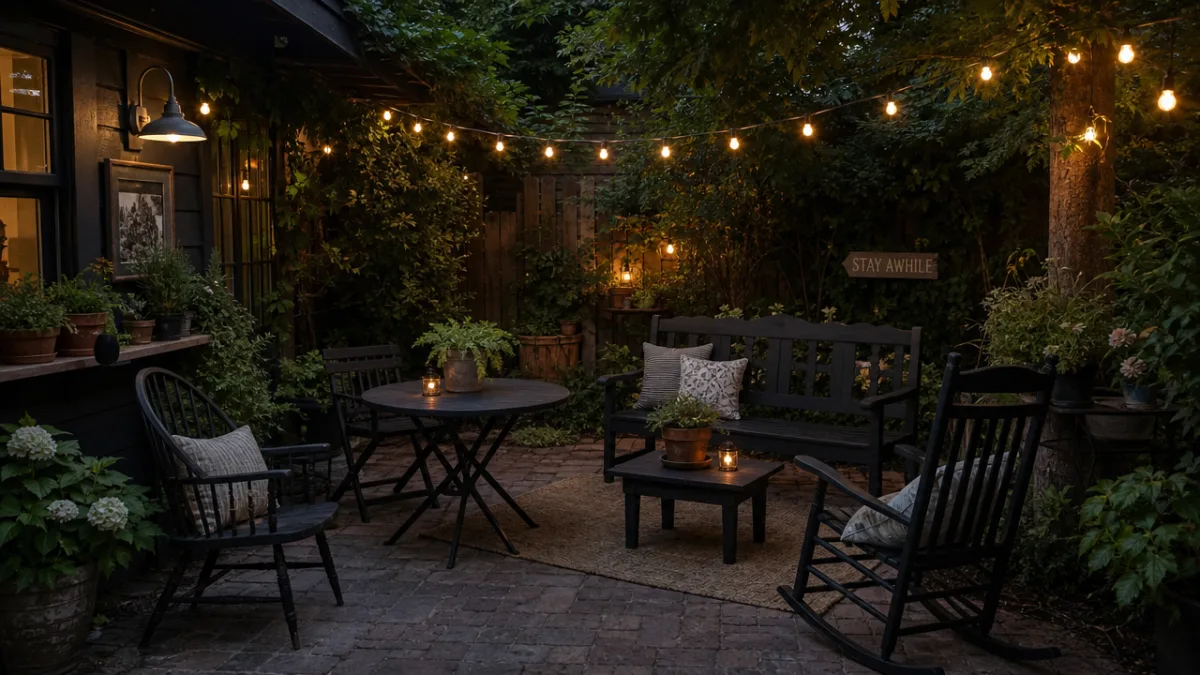
Lighting transforms an outdoor space from a daytime-only area into an evening destination that extends the usable hours of your backyard well into the night. Solar-powered string lights are among the most affordable and popular options, requiring no wiring and no ongoing electricity costs. Hang them in a canopy pattern overhead, drape them along a fence, or weave them through a trellis for an instantly magical atmosphere. Solar stake lights lining a pathway cost just a few dollars each and improve both safety and aesthetics simultaneously.
Small water features add sound, movement, and a sense of tranquility to any outdoor space, and they don’t need to be elaborate or expensive. A simple solar-powered fountain dropped into a large ceramic pot or half-barrel planter creates the gentle sound of moving water that masks neighborhood noise and attracts birds and beneficial insects. These kits are widely available for under fifty dollars and can be set up in an afternoon without any plumbing. The combination of sound and visual interest makes a water feature one of the most impactful small additions you can make to a backyard.
Budget-Friendly Décor and Finishing Touches
The details are what elevate a backyard from simply tidy to genuinely beautiful and personality-filled. Once your major elements are in place, it’s time to look at the finishing touches that make a space feel complete. Outdoor art, painted pots, garden sculptures, and decorative lanterns all contribute to a cohesive aesthetic without requiring significant investment. The goal is to choose a handful of complementary pieces that reflect your personal style rather than filling every surface with random décor, which quickly looks cluttered and chaotic.
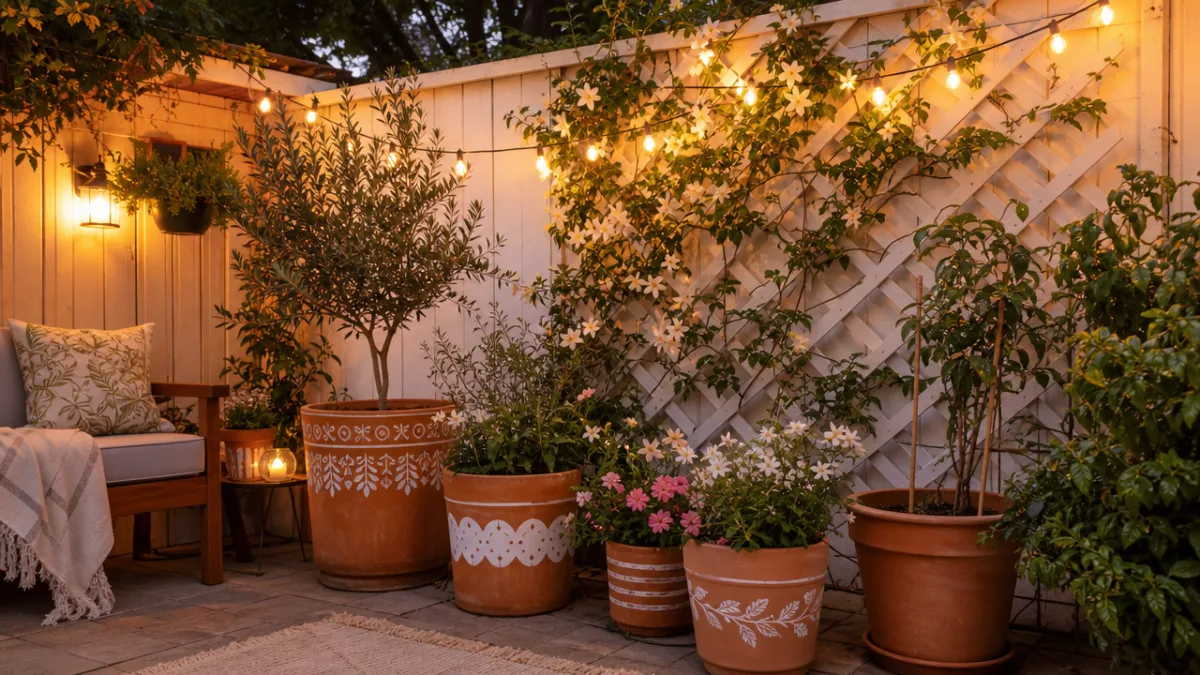
Terra cotta pots are among the most versatile and affordable containers in any gardener’s toolkit. They can be painted with weather-resistant craft paint in any color to match your outdoor palette, grouped in clusters of varying heights for visual interest, and planted with herbs, flowers, succulents, or trailing vines. A well-arranged container garden on a patio or deck adds enormous color, fragrance, and life to a space while remaining completely portable and rearrangeable as your tastes evolve over time. They’re also easy to bring inside or store during harsh winters, prolonging their life significantly.
Repurposing items you already own or find secondhand is one of the most creative and satisfying aspects of a budget backyard project. An old wooden ladder becomes a charming plant display. A worn metal bucket becomes a planter. Chipped mismatched teacups become whimsical succulent containers. Mason jars become candle holders or lanterns. Broken concrete pieces can be arranged into a charming irregular stepping stone path. These repurposed elements add character and story to your space that perfectly uniform, freshly purchased items simply cannot match.
Finally, don’t overlook the power of cleaning and refreshing what you already have. Pressure washing a grimy concrete patio, fence, or old garden furniture costs nothing beyond a little time and can reveal surfaces that look almost new underneath years of weathering and grime. Repainting a tired wooden fence in a fresh color instantly updates the whole yard. Cleaning and re-staining a weathered deck brings it back to life for a fraction of replacement cost. Sometimes the best makeover strategy isn’t adding new things — it’s simply restoring and celebrating what’s already there.
- Paint terra cotta pots in coordinating colors and group them at varying heights for a polished container garden.
- Repurpose ladders, buckets, jars, and crates as plant displays and decorative accents.
- Pressure wash existing hardscaping and furniture before deciding what needs to be replaced.
- Choose three to five cohesive decorative elements rather than filling the space with random pieces.
- Add fragrant herbs like lavender, rosemary, and mint to pots near the seating area for sensory appeal.
Maintaining Your New Backyard Without Spending a Fortune
Creating a beautiful backyard is only half the challenge — the other half is keeping it that way without letting ongoing maintenance costs undo your careful budgeting. The good news is that a well-designed low-maintenance yard actually saves you time and money in the long run compared to high-maintenance lawns and elaborate planting schemes. The key is making smart choices during the design phase that set you up for easier ongoing care. Choosing native plants, for example, dramatically reduces watering and fertilizing needs because they’re already adapted to your local climate and soil conditions.
Establish a simple seasonal maintenance routine that keeps the yard looking its best without becoming a burden. In spring, refresh mulch, divide overcrowded perennials, and edge garden beds. In summer, water deeply but infrequently to encourage deep root growth, deadhead flowers to prolong blooming, and keep on top of weeding before it becomes overwhelming. In fall, cut back perennials, plant spring bulbs, and apply a final layer of mulch to protect plant roots over winter. In winter, take stock of what worked and what didn’t, and plan any changes for the coming season. This rhythm of attention keeps the yard thriving without massive effort or expense at any single point.
Composting is one of the most valuable habits you can develop as a backyard gardener, and it costs almost nothing to start. Kitchen scraps, fallen leaves, grass clippings, and spent plant material break down into rich, dark compost that feeds your garden beds better than most store-bought fertilizers. A simple compost bin can be built from wooden pallets, wire fencing, or even purchased as a compact tumbler at a reasonable one-time cost. Over time, free compost reduces or eliminates the need to buy bagged soil amendments, saving meaningful money each season while dramatically improving soil health and plant performance throughout your entire yard.
Remember that a backyard is a living thing that grows and changes with every season, and that’s part of its magic. Unlike a one-time interior renovation, your outdoor space will look different in spring than in summer, evolve year after year as plants mature, and offer opportunities for small updates and experiments that keep it feeling fresh without requiring large investments. Approach it as an ongoing creative project rather than a task to complete, and you’ll find that maintaining your beautiful, budget-friendly backyard becomes one of the most rewarding parts of homeownership rather than one of the most stressful.








What do you think?
It is nice to know your opinion. Leave a comment.