










27 Easy DIY Outdoor Benches That Look Professional in 2025
Why DIY Outdoor Benches Are Worth Every Moment of Effort
There is something deeply satisfying about sitting on a bench you built with your own hands. DIY outdoor benches have surged in popularity not just because they save money, but because they allow homeowners to create pieces that fit their exact space, aesthetic, and lifestyle. In 2025, the combination of widely available quality lumber, affordable hardware, and a wealth of free online plans has made it easier than ever to tackle a project that looks like it came straight from a furniture showroom.
Beyond the financial savings, which can be substantial since a comparable store-bought bench often runs between $200 and $800, building your own gives you complete control over dimensions, materials, and finish. Whether your backyard is a sprawling entertainer’s dream or a compact urban balcony, you can tailor every measurement to maximize comfort and utility. This level of customization simply does not exist when you browse a retail catalog or scroll through a home goods website.
There is also an environmental argument worth considering. Many DIY builders in 2025 are choosing reclaimed wood, sustainably sourced pine, or composite materials that reduce their ecological footprint. When you build rather than buy, you can make intentional choices about where your materials come from and how long they will last. A well-built outdoor bench, sealed and maintained properly, can serve your family for decades rather than breaking down after a few seasons like some mass-produced alternatives.
Choosing the Right Wood and Materials for Your Outdoor Bench
The foundation of any great DIY outdoor bench is the material selection, and in 2025 builders have more excellent options than ever before. Cedar remains a perennial favorite thanks to its natural resistance to moisture, insects, and rot. It is lightweight, easy to work with standard tools, and takes stain and paint beautifully. Pressure-treated pine offers similar durability at a lower price point, though it does require proper sealing and some patience during the drying process before finishing.
Hardwoods like teak, ipe, and white oak bring a premium look and extraordinary longevity to outdoor furniture. Teak in particular has a natural oil content that keeps it looking rich and prevents cracking even through harsh freeze-thaw cycles. These woods do cost significantly more upfront, but the decades of service they provide make the investment worthwhile for many homeowners. If you are building a bench that you want to become a permanent fixture in your landscape, hardwoods are worth serious consideration.
Composite and alternative materials have also matured considerably as options for outdoor furniture. Composite lumber made from recycled wood fibers and plastic resins requires virtually no maintenance, never splinters, and resists fading far better than natural wood. Concrete, steel pipe, and even repurposed pallets each bring their own character and functional advantages. When selecting your material, consider your local climate, the amount of maintenance you are willing to perform, and the visual style you want to achieve in your outdoor space.
- Cedar: Lightweight, naturally rot-resistant, easy to cut and sand, takes stain well.
- Pressure-Treated Pine: Budget-friendly, very durable, widely available at most lumber yards and home improvement stores.
- Teak: Premium choice with exceptional longevity, natural oils prevent moisture damage without sealing.
- Ipe (Brazilian Walnut): Extremely dense and hard, resists scratches, insects, and decay for 25 or more years.
- Composite Lumber: Low maintenance, eco-friendly options available, consistent appearance over time.
- Reclaimed Wood: Unique character, sustainable sourcing, often more affordable than new hardwoods.
Essential Tools You Need Before You Begin Building
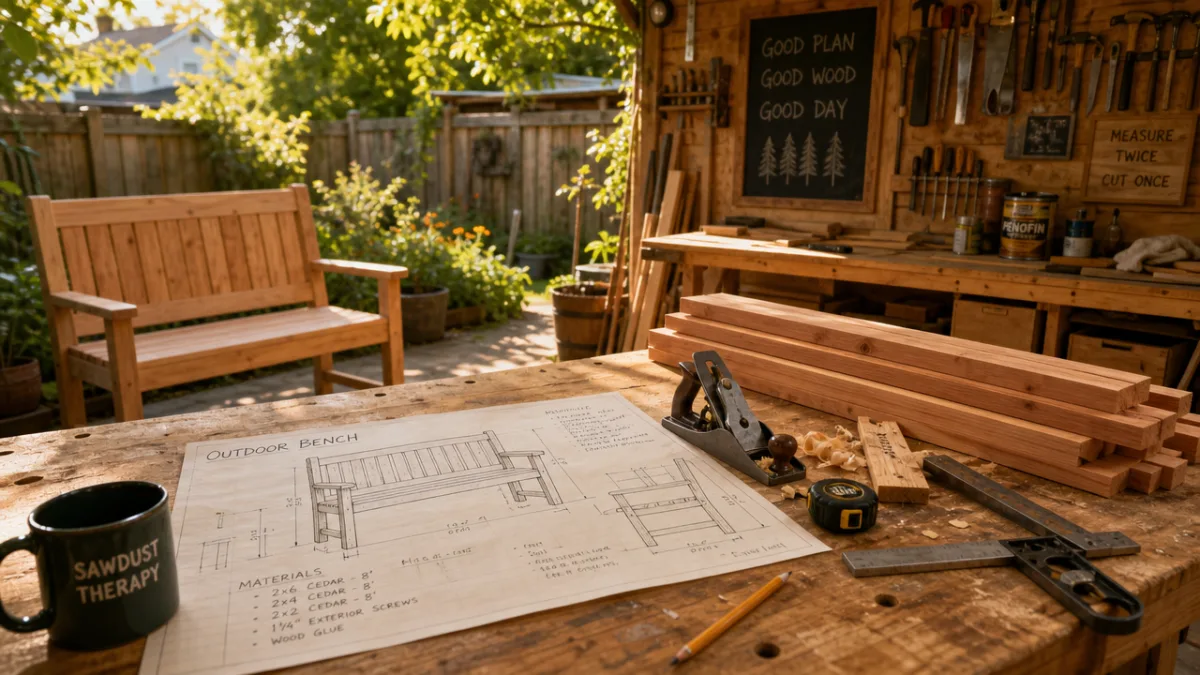
One of the most common mistakes first-time DIY builders make is underestimating the importance of having the right tools before starting a project. You do not need a fully outfitted professional woodshop to build a stunning outdoor bench, but a handful of reliable tools will make the difference between a smooth, enjoyable experience and a frustrating, inaccurate one. At minimum, a circular saw or miter saw, a cordless drill with a full bit set, a sander, measuring tape, and a speed square will handle the vast majority of bench-building tasks.
A miter saw deserves special mention because its ability to make precise angle cuts cleanly and repeatably is invaluable when building furniture. Many of the most attractive bench designs feature angled legs, angled back supports, or decorative end cuts that would be tedious and imprecise with a circular saw alone. If you do not own a miter saw, many tool rental services and even some home improvement stores offer rental by the day at very reasonable rates, making it accessible even for a one-time project.
Beyond cutting tools, do not underestimate the value of good clamps, a pocket hole jig, and a quality random orbital sander. Clamps are the extra set of hands you never knew you needed, holding pieces in perfect alignment while glue dries or screws are driven. A pocket hole jig, like those made by Kreg, allows you to join boards at precise angles using hidden screws, creating joints that are both strong and clean-looking from the outside. Thorough sanding at multiple grits, from rough to fine, is what separates a truly professional-looking finish from something that looks handmade in the less flattering sense of the word.
- Circular saw or miter saw for accurate, clean cuts.
- Cordless drill and driver with assorted drill bits and screwdriver tips.
- Pocket hole jig for strong, hidden joinery.
- Random orbital sander with 80, 120, and 220 grit pads.
- Measuring tape, pencil, and speed square for accurate layout.
- Bar clamps or F-clamps to hold pieces during assembly.
- Safety glasses, ear protection, and dust mask for personal protection.
Five Beginner-Friendly Bench Designs That Look Impressive
Not every spectacular bench requires advanced woodworking skills or complex joinery. Some of the most popular and visually stunning designs in 2025 are specifically suited for beginners who are working with basic tools and a limited time budget. The classic farmhouse bench, for example, requires nothing more than straight cuts, basic pocket hole joinery, and a few hours of work. Made from construction-grade lumber and finished with a dark walnut stain, it looks like a piece that could sell for several hundred dollars at a boutique furniture store.
The floating garden bench is another design that has captured enormous attention in recent years. It attaches directly to a fence or retaining wall using heavy-duty hardware, eliminating the need for legs entirely and creating a clean, architectural look that suits modern and minimalist outdoor spaces. This design is particularly brilliant for small patios and balconies where floor space is precious. The construction involves mounting a pair of steel brackets and spanning them with a thick slab of finished wood, making it one of the simplest builds with one of the most dramatic visual impacts.
Cinder block benches, log benches, pallet benches, and concrete benches round out the list of accessible beginner builds that consistently produce impressive results. The cinder block design, in particular, has exploded on social media because it requires no tools whatsoever beyond a level and some outdoor adhesive. You simply stack and arrange blocks, bond them with construction adhesive, and top them with a wooden or stone slab. The result looks genuinely architectural and can be customized with paint or stucco to complement any landscape style.
Top Five Beginner Bench Styles for 2025
- Classic Farmhouse Bench: Straight cuts, pocket holes, and a dark stain for timeless appeal in any outdoor dining setting.
- Floating Wall Bench: Steel brackets, a thick wood slab, and minimal hardware for a sleek modern look in tight spaces.
- Cinder Block Bench: No tools required beyond a level, endlessly customizable, and surprisingly polished in appearance.
- Pallet Bench: Repurposed shipping pallets sanded smooth and finished with outdoor paint create an eco-friendly seating solution.
- Tree Surround Bench: A hexagonal or square bench built around a mature tree trunk that becomes a functional focal point in any yard.
Finishing Techniques That Make DIY Benches Look Professionally Made
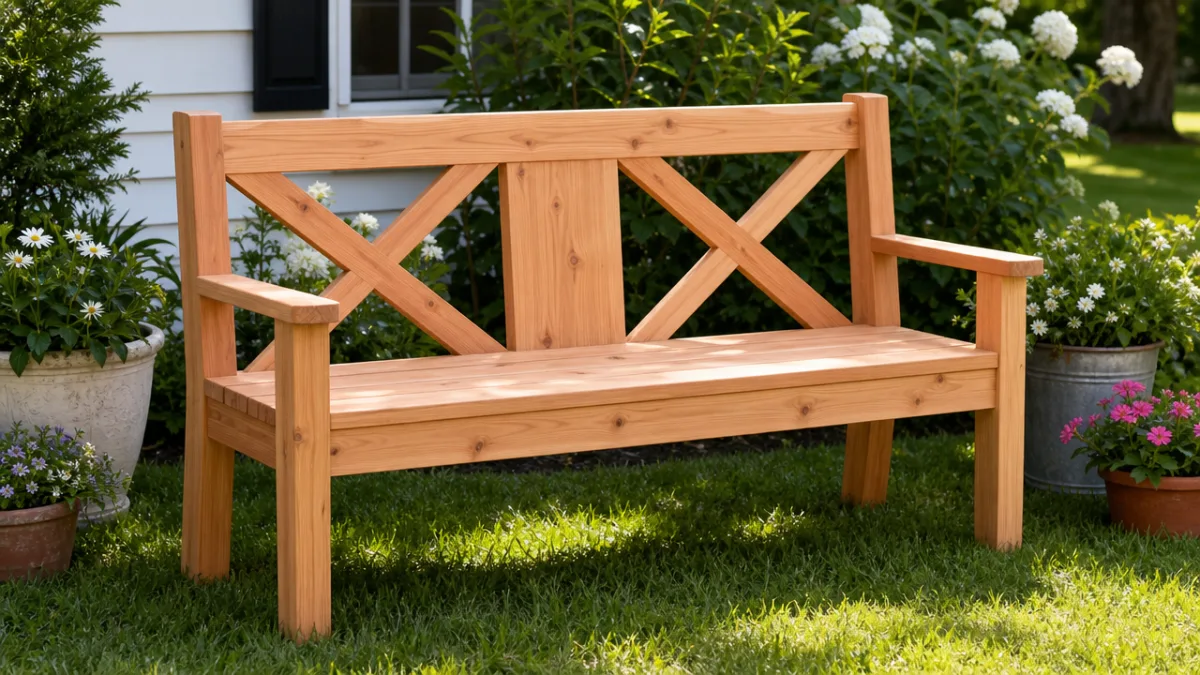
The gap between a bench that looks homemade and one that looks professionally crafted almost always comes down to the finishing process rather than the construction itself. Even a perfectly assembled bench will look rough and amateur if the wood is poorly sanded, the finish is unevenly applied, or the hardware is misaligned. Investing the same time and care in finishing that you put into cutting and assembling is what elevates a good project into an exceptional one that draws compliments from every visitor to your yard.
Proper wood preparation is the non-negotiable first step in achieving a flawless finish. Begin sanding with 80 grit sandpaper to remove any mill marks, rough spots, or surface imperfections. Progress through 120 grit to refine the surface, and finish with 220 grit for a silky-smooth result that will absorb stain or paint evenly. Always sand with the grain of the wood rather than across it, because cross-grain sanding leaves tiny scratches that become very visible once a stain or finish is applied. After your final sanding pass, wipe the entire surface down with a tack cloth or damp rag to remove all dust before applying any finish.
For outdoor furniture, your choice of protective finish is critical. Exterior stains with built-in UV inhibitors protect the wood from sun damage while highlighting its natural grain and character. Outdoor-rated polyurethane provides a harder, more durable surface that resists moisture and abrasion particularly well. Teak oil and other penetrating oils work from within the wood fibers to replenish natural moisture and prevent cracking, making them ideal for hardwoods. Whatever product you choose, apply thin, even coats rather than one thick coat, allowing full drying time between applications and sanding lightly with 220 grit between coats for the smoothest possible result.
Hardware and Finishing Details That Make a Difference
Hardware selection is a detail that many first-time builders overlook, but it has an outsized impact on the final appearance of a bench. Stainless steel or coated deck screws resist rust and staining in outdoor environments, and driving them slightly below the wood surface and filling the holes with wood plugs or filler creates a clean, intentional appearance. Alternatively, using structural pocket hole screws that are completely hidden from view eliminates visible fasteners entirely for the most refined look.
Adding a small chamfer or roundover to every exposed edge of your bench using a router or sanding block dramatically improves both appearance and comfort. Sharp 90-degree edges look machine-made and raw, while gently eased edges feel comfortable against the backs of legs and thighs and give the piece a finished, furniture-quality appearance. This single step takes very little additional time but adds significant perceived quality to the finished project, and it is something that distinguishes the work of experienced builders from those who are just starting out.
Finally, consider the role of outdoor cushions and accessories in completing your bench’s look. Even the most beautifully built bare-wood bench benefits from a set of weather-resistant cushions in a complementary color, which add comfort and visual warmth. Outdoor throw pillows, potted plants arranged nearby, and string lights overhead transform a simple bench into a true destination within your landscape. The bench itself is the foundation, but the surrounding styling is what creates the full outdoor living experience that makes your yard feel like an extension of your home.
Maintenance Tips to Keep Your Outdoor Bench Beautiful for Years
A well-built outdoor bench is a long-term investment, and protecting that investment through regular maintenance is far easier and more rewarding than most people expect. The single most important maintenance task for any wood outdoor bench is keeping the finish intact. Exposure to UV radiation, rain, and temperature fluctuations gradually degrades even high-quality exterior finishes, and once moisture penetrates unprotected wood fibers, swelling, cracking, and eventual rot can follow. A visual inspection each spring, followed by light sanding and a fresh coat of finish wherever needed, takes a few hours but extends the life of your bench by many years.
Keeping your bench clean throughout the season prevents the buildup of mold, mildew, pollen, and dirt that can stain wood and degrade finishes over time. A simple solution of mild dish soap and warm water applied with a soft brush handles most cleaning tasks without damaging the wood or its finish. For stubborn mildew stains, a diluted mixture of white vinegar and water is effective and gentle. Avoid pressure washing at high settings, which can raise wood grain, drive water into joints, and strip exterior finishes far more aggressively than gentle hand cleaning.
Seasonal storage or covering is one of the most effective ways to dramatically extend the lifespan of your outdoor bench. If your climate brings harsh winters with freezing temperatures, snow, and ice, storing your bench in a garage or shed during the off-season prevents the wood from enduring repeated freeze-thaw cycles that cause cracking and joint failure over time. If storage is not practical, a high-quality, breathable outdoor furniture cover that allows moisture to escape while blocking precipitation is the next best option. With these straightforward maintenance habits in place, a well-built DIY outdoor bench can remain a beautiful and functional part of your outdoor living space for twenty years or more.
Budget Breakdown: What You Can Realistically Expect to Spend
One of the most compelling arguments for building your own outdoor bench is the dramatic cost savings compared to purchasing a comparable piece from a retailer or custom furniture maker. Understanding what a realistic budget looks like before you start helps you plan effectively and avoid the common pitfall of underestimating material costs, which can dampen the enthusiasm of an otherwise wonderful project. In 2025, a basic but beautiful outdoor bench can be built for as little as $40 using construction-grade lumber, while mid-range cedar builds typically fall in the $80 to $150 range including hardware and finish.
Premium hardwood benches built from teak, ipe, or white oak represent the upper end of the DIY cost spectrum, typically ranging from $200 to $400 in materials depending on size and design complexity. Even at the top of this range, you are generally saving 50 to 70 percent compared to purchasing a comparable piece from a furniture retailer, and you have the satisfaction of knowing exactly how it was built and what it was built from. For anyone planning to build multiple benches or a full set of outdoor furniture, those savings multiply substantially and the initial investment in quality tools pays itself back very quickly.
When budgeting for your project, remember to account for the full cost of consumables beyond just the lumber itself. Sandpaper, exterior screws, wood glue, wood filler, primer, stain or paint, and a quality topcoat all add up, often totaling $30 to $60 for a single project. If you need to purchase or rent tools, factor that cost in as well, though most basic tools pay for themselves within one or two projects. Creating a complete materials list before your first trip to the lumber yard prevents costly return trips and ensures your project stays on budget from start to finish.
- Budget Build (Construction Pine): $40 to $80 including lumber, screws, and finish.
- Mid-Range Build (Cedar or Redwood): $100 to $200 including premium hardware and exterior stain.
- Premium Build (Teak or Ipe): $200 to $400 for a bench that will last 25 or more years with minimal maintenance.
- Reclaimed Wood Build: $20 to $60 in hardware and finish costs if you source lumber for free or very cheaply.
- Composite Build: $150 to $300 for a virtually maintenance-free bench with a contemporary look.
The bottom line is that DIY outdoor benches represent one of the best returns on both time and money in the entire realm of home improvement projects. Whether you spend an afternoon and $50 building a simple farmhouse bench for your garden or invest a full weekend and $300 creating a heirloom-quality teak piece for your covered porch, you will end up with something that adds genuine beauty, function, and personal value to your outdoor living space. With 27 distinct designs to choose from spanning every skill level, material preference, and budget range, there has never been a better time to pick up a saw and start building.








What do you think?
It is nice to know your opinion. Leave a comment.