










Bar Layout Ideas for Basement Spaces of All Shapes and Sizes
Why Your Basement Is the Perfect Place for a Home Bar
For a lot of homeowners, the basement is basically a glorified storage unit — boxes, old furniture, holiday decorations that haven’t seen daylight in years. But here’s the thing: that underused space is actually sitting on a goldmine of potential. More and more people are waking up to the fact that the basement makes an incredible entertainment hub, and a home bar is the perfect anchor for that transformation. The natural separation from the rest of the house gives it a vibe you just can’t replicate upstairs.
One of the biggest perks of going basement for your bar is the freedom it gives you with noise. You’re below the rest of the house, which means you can blast music, host late-night hangouts, and get loud without worrying about waking up the kids or bothering the neighbors. That kind of acoustic buffer is something most above-ground entertainment spaces can only dream about, and it makes every gathering — whether it’s a casual Friday night or a full-blown celebration — just feel easier and more relaxed.
Basements also come with some surprisingly practical construction advantages. Concrete floors make plumbing reroutes much less painful, utility rooms often put you right next to existing water lines, and the naturally cooler temperature down there means your refrigeration system doesn’t have to work as hard. Whether you’re working with a wide-open rectangle or a quirky L-shaped room full of support columns, there’s a bar layout out there that’ll make your basement shine.
Choosing the Right Bar Layout for Your Basement Shape
No two basements are the same, and that’s actually a good thing — it means your bar can be genuinely one of a kind. That said, you need to understand how your room’s shape affects what kind of layout will actually work before you start buying lumber or cabinetry. The most common configurations are straight rectangles, L-shaped rooms, spaces with structural columns, and irregular rooms built around mechanical systems. Each one calls for a different approach, so grab a measuring tape and sketch out your floor plan before you do anything else.
If you’ve got a long, narrow rectangular basement, a straight-wall bar is almost always your best bet. Run the counter along one of the longer walls and you instantly maximize your usable floor space, leaving plenty of room for seating, a pool table, or a TV area. A straight bar also happens to look fantastic with a modern aesthetic — think a continuous run of cabinetry, a clean countertop, and a mirrored or shelved back bar that draws the eye down the room and makes the whole space feel bigger.
An L-shaped basement, on the other hand, is practically designed for an L-shaped bar that wraps the corner. You get double the counter space and seating without the bar dominating the room, and the layout naturally creates two distinct zones — a serving area on one side and a lounge or game space on the other. It’s also a great way to carve up an open-concept basement without putting up any additional walls, which is always a win.
- Straight bar: Best for long, narrow rooms; maximizes open floor space and creates a sleek, linear aesthetic.
- L-shaped bar: Ideal for corner spaces or room divisions; increases seating and creates natural zone separation.
- U-shaped bar: Perfect for larger square basements; creates an immersive bartender-style experience with three sides of counter space.
- Peninsula bar: Works well when one wall is unavailable; extends into the room like an island and encourages social interaction from multiple sides.
- Wet bar nook: Suited to smaller alcoves or under-stair spaces; compact and efficient without dominating the room.
Design Elements That Define a Standout Basement Bar
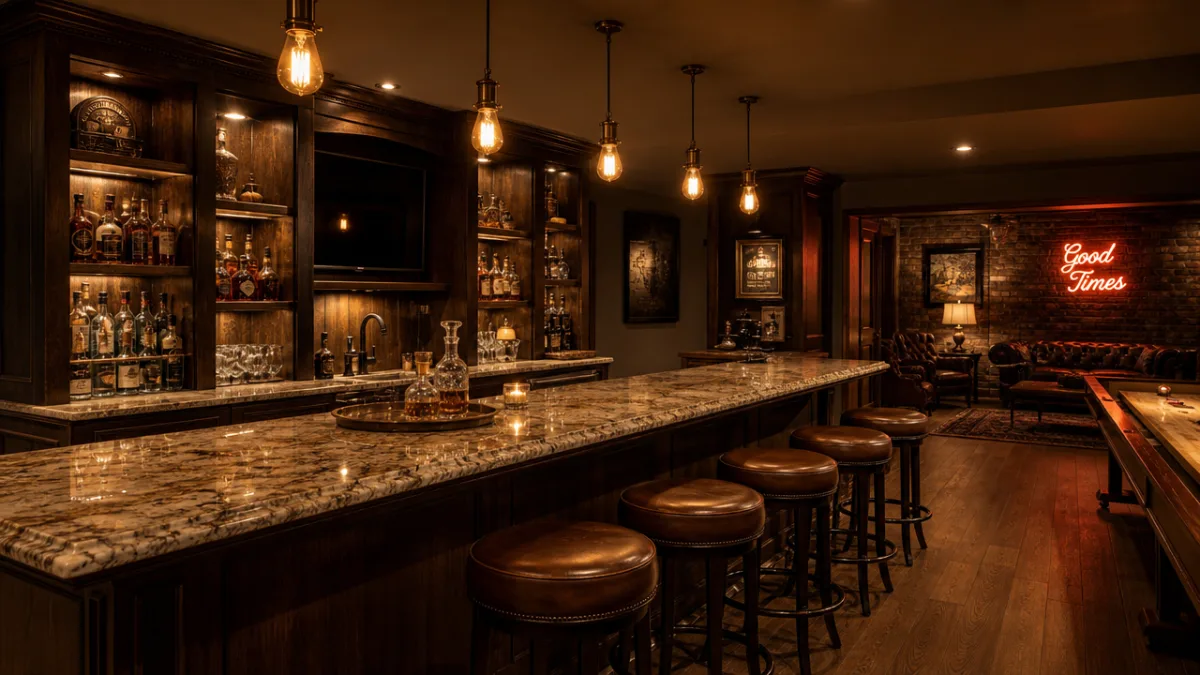
Once your layout is locked in, the fun part starts: figuring out what your bar is actually going to look and feel like. The countertop is probably the single biggest aesthetic decision you’ll make, because it sets the tone for everything else. Butcher block gives you that warm, cozy tavern feel and is pretty forgiving to install. Quartz and granite bring elegance and durability with a huge range of color options. And if you want to go a little edgier, poured or prefab concrete countertops have an industrial character that looks incredible alongside exposed brick and Edison-style pendant lights.
The back bar — the shelving, cabinetry, and display wall behind where you’d stand while mixing drinks — deserves just as much love as the counter. It’s the first thing people notice when they come downstairs, the visual centerpiece of the whole space. Open floating shelves lined with bottles and glassware feel clean and contemporary. Glass-front cabinets keep your collection on display while protecting it. And a large mirror mounted behind the shelves? That’s a classic trick that makes the room feel significantly bigger and bounces light around in a way that gives even a modest basement a surprisingly luxurious feel.
Lighting is especially important in basements because, unlike the rest of your house, you’re probably working with little or no natural light. A layered approach works best — combine ambient overhead fixtures with under-cabinet task lighting and accent lights inside your shelving units or behind decorative glass. Dimmer switches on every circuit let you go from bright and functional when you’re setting up to warm and intimate once the party actually starts, which makes a huge difference in the overall atmosphere.
Maximizing Small or Awkward Basement Spaces
Not everyone is working with a big, open basement, and honestly, some of the most impressive home bars out there were built in the tightest, strangest spaces imaginable. If your basement is small, weirdly shaped, or sliced up by ductwork and columns, try not to see those as problems. They’re actually opportunities to create something more interesting and personal than a generic open-plan setup ever could be.
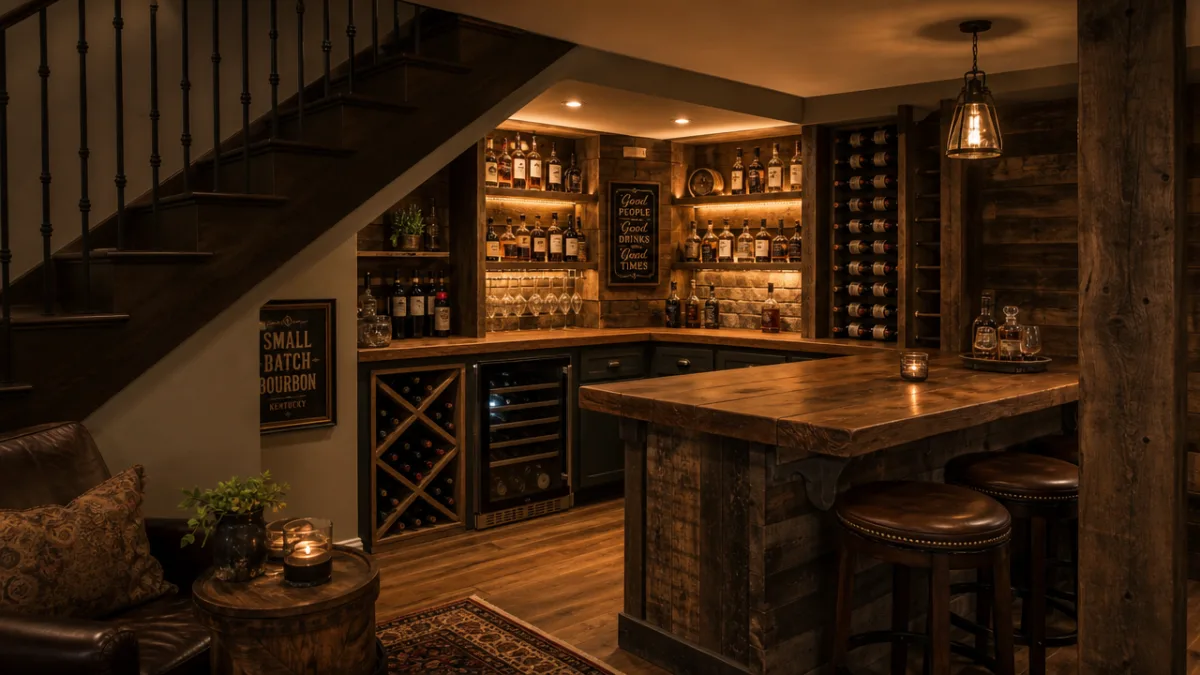
Under-stair spaces are a classic for a reason. That triangular footprint is basically tailor-made for a compact wet bar — stepped shelving that follows the angle of the stairs above, a small sink, a mini fridge, a wine rack tucked into the lower void, and a few bar stools pulled up to a narrow counter. What used to be dead space becomes a charming little cocktail station that genuinely surprises people the first time they see it.
Structural columns — a fixture in a lot of unfinished basements — don’t have to be hidden or worked around. Wrap one in reclaimed wood or stacked stone and position your bar counter to run around it, and suddenly you’ve got a natural focal point and extra surface area to boot. If you’ve got multiple columns, use them to define the bar area from the rest of the basement. They work beautifully as open architectural dividers that separate the space without blocking sightlines or making the room feel closed in.
- Measure every dimension carefully, including ceiling height, column positions, and mechanical clearances, before drawing your layout plan.
- Use vertical space aggressively in smaller basements — floor-to-ceiling shelving dramatically expands perceived storage capacity.
- Choose compact appliances specifically designed for bar installations, such as 15-inch dishwashers, 24-inch refrigerators, and under-counter ice makers.
- Install pocket doors or barn doors in tight spaces where a swinging door would consume valuable square footage.
- Use reflective surfaces — mirrors, glass tile backsplashes, polished metal hardware — to visually expand a smaller footprint.
Essential Features Every Functional Basement Bar Needs
A bar that looks incredible but falls apart during an actual party is a real letdown. Before you spend a dollar on decorative touches, make sure you’ve got the functional fundamentals locked down. Getting the basics right is what makes your bar a pleasure to use night after night, not just something that photographs well.
Plumbing is at the top of that list. Having a dedicated sink takes your bar from a fancy drinks cart to an actual hospitality station where you can rinse glasses, wash your hands, and keep up with a room full of people who want refills. Running a drain to an existing basement floor drain or adding a new one with a pump is a manageable job for most contractors, and the convenience payoff is enormous. If plumbing really isn’t in the cards, a dry bar with a portable ice bucket and a good beverage cooler can still hold its own — it just takes a little more planning ahead.
Refrigeration and ice are the next big priorities. An under-counter beverage fridge keeps beer, wine, and mixers at the right temperature without eating up your back-bar shelf space. A dual-zone wine cooler lets you store reds and whites at the right temperatures at the same time. And built-in ice makers, which used to be strictly commercial territory, are now available in compact residential sizes that can handle an entire evening’s worth of cocktails without a single trip upstairs to the kitchen freezer.
Storage needs to be planned from the start, not figured out later. A bar that runs out of organized space fast becomes a cluttered mess that makes everything harder. Map out dedicated zones for spirits, mixers, glassware, bar tools, and supplies before you finalize anything. Deep lower cabinets with pull-out drawers handle heavy bottles and bulky gear well. Open shelving at eye level keeps your go-to spirits and glasses easy to grab. And a locking cabinet for your premium bottles is a nice touch — it keeps them safe and subtly signals to guests that those ones are being saved for something special.
Finishing Touches That Transform a Bar Into an Experience
The difference between a bar people enjoy and a bar people genuinely never want to leave usually comes down to the details. These finishing touches are the last things you pick out, but they’re often the first things guests actually notice, because they tell you immediately what kind of place this is and how much thought went into it. This is where a renovation becomes a destination.
Seating is one of the most impactful calls you’ll make. Classic bar stools at the counter create that interactive, everyone-talking-to-the-bartender energy that people love. Counter-height stools at a slightly lower peninsula feel a little more casual. But the real magic happens when you mix in some comfortable lounge seating — a couple of upholstered chairs, a leather sofa, a low cocktail table — so guests can choose how they want to settle in throughout the night. Give people options and they’ll stay longer. It really is that simple.
Sticking to a consistent theme is what makes a bar feel intentional rather than assembled from random purchases. Whether you’re going for the warm nostalgia of an English pub, the clean lines of a modern cocktail lounge, the raw textures of a craft brewery taproom, or the full commitment of a tiki bar, carry that vision through every single element — stools, light fixtures, artwork, hardware, all of it. When it’s done well, guests feel like they’ve walked into somewhere, not just someone’s basement.
- Neon signage: Custom neon signs with bar names, cocktail graphics, or witty phrases add instant personality and ambient glow.
- Chalkboard walls: A painted chalkboard surface allows you to update the cocktail menu, write welcomes, or display drink specials without permanent commitment.
- Sound system: Ceiling-mounted or wall-mounted speakers integrated into a multi-zone audio system ensure perfect background music throughout the space.
- Draft beer system: A kegorator or through-the-wall draft system adds an authentic bar experience that home guests consistently find exciting and impressive.
- Personalized glassware: Custom-etched or printed glasses with your home bar’s name or logo make every drink feel like it came from a real establishment.
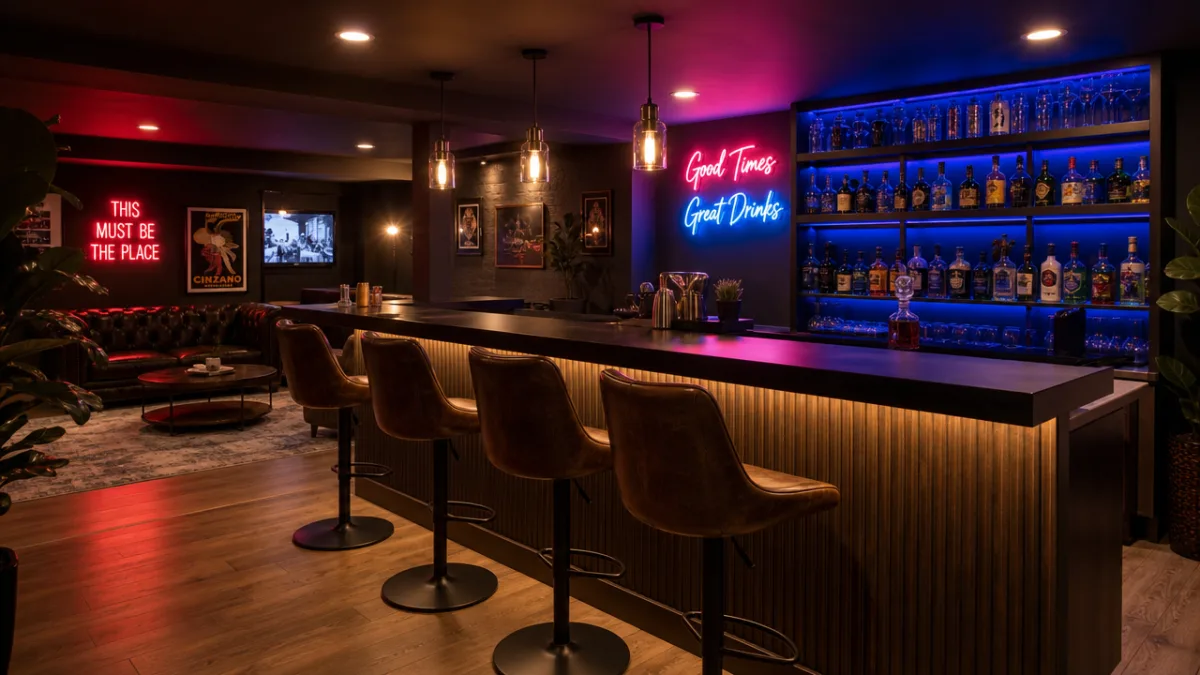
And don’t overlook the power of giving your bar a name. It sounds like a small thing, but naming your bar, putting together a simple logo, and carrying that identity through your signage, coasters, and glassware changes how the whole space feels — both to you and to everyone who comes over. Guests aren’t just visiting your house anymore; they’re going somewhere. That sense of arrival, of stepping into a space that has its own identity and story, is what all of these decisions have been building toward, and it’s what turns your basement bar into the room everyone looks forward to most.








What do you think?
It is nice to know your opinion. Leave a comment.