










How To Set Up A Home Bar: The Complete Guide
Why Every Home Needs a Dedicated Bar Space
There is something undeniably special about having a dedicated space in your home where you can craft cocktails, entertain guests, and unwind after a long day. A home bar is more than just a collection of bottles on a shelf — it is a statement about how you choose to live and host. Whether you have an entire room to dedicate to the endeavor or simply a corner of your kitchen, setting up a thoughtful home bar transforms your entertaining game entirely and gives you a destination to look forward to at the end of the day.
The beauty of a home bar lies in its personalization. Unlike a commercial bar, yours can reflect exactly who you are — your taste in spirits, your preferred cocktail styles, your aesthetic sensibilities. You are not constrained by a menu or a bartender’s preferences. Over time, your home bar becomes a curated collection that tells the story of your drinking journey, from the first bottle of quality whiskey you purchased to the rare amaro you discovered on a trip abroad. It grows with you, shifts with your tastes, and always has exactly what you want.
From a purely practical standpoint, a well-stocked home bar also saves money in the long run. Cocktails at restaurants and bars come with a significant markup, often three to five times the cost of making the same drink at home. Once you have invested in your core spirits and tools, the cost per drink drops dramatically. Hosting friends becomes more affordable, more relaxed, and more impressive all at once. The upfront investment pays dividends every time you shake a Negroni or pour a perfect Old Fashioned without leaving your living room.
Choosing the Right Location in Your Home
Before you purchase a single bottle, you need to decide where your bar will live. The location shapes everything — what furniture you will need, how much storage you can work with, and how the bar will function during gatherings. Common choices include a dedicated bar cart that can be moved around, a built-in bar cabinet in a dining room or living room, a repurposed sideboard or credenza, or if you are lucky, an entire room or basement corner. Each option has its own advantages depending on your space and lifestyle.
Consider the practical factors carefully. Proximity to a sink makes mixing drinks and washing tools considerably easier, so a spot near a kitchen or a room with plumbing access is ideal. You also want the bar area to have some degree of separation from the main flow of traffic so guests can gather around it without blocking pathways. Good lighting is essential — not just ambient lighting, but focused task lighting so you can actually see what you are measuring and pouring. A dark corner might feel atmospheric, but it will frustrate you every time you try to read a label.
Think about your long-term vision as well. A bar cart is a fantastic starting point because it is flexible and affordable, but if you see your collection growing significantly, investing in something more permanent makes more sense from the beginning. Floating shelves above a console table create a stylish and expandable setup. A repurposed antique hutch or china cabinet offers plenty of storage for bottles, glassware, and tools. Whatever you choose, make sure the surface area is large enough to actually work on — you need room to muddle, shake, and garnish without knocking things over.
Building Your Essential Spirits Collection
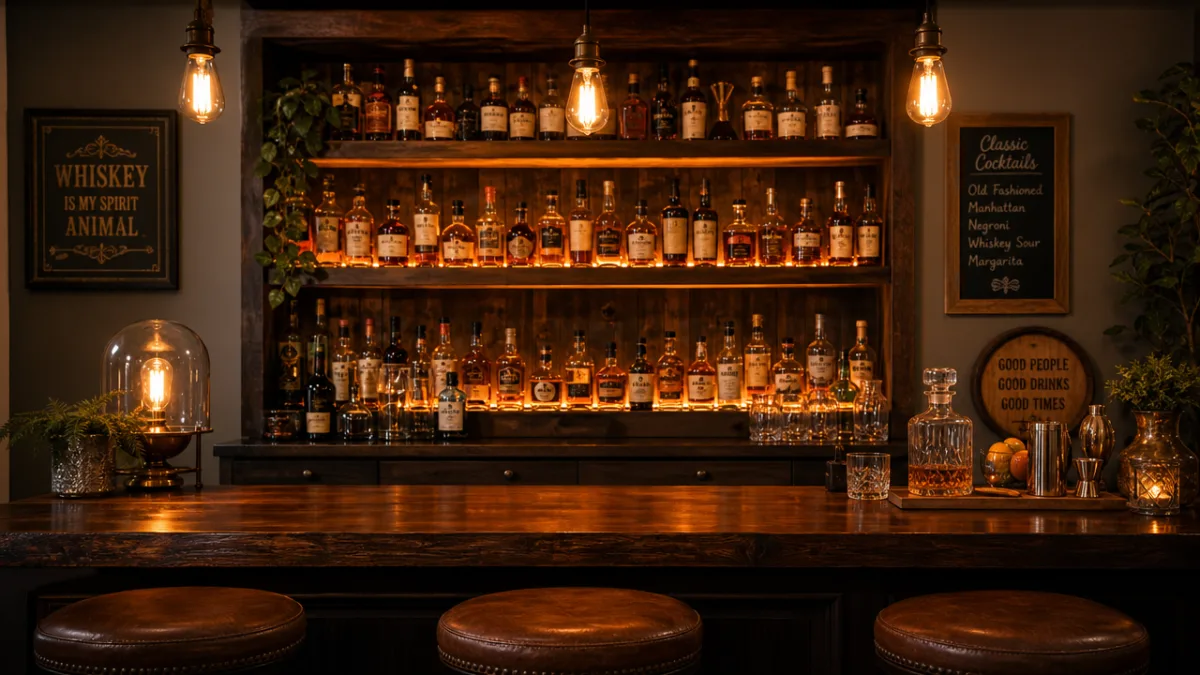
The spirits you choose to stock are the foundation of your entire home bar, and getting the selection right makes the difference between a bar that can make almost anything and one that leaves guests disappointed. The classic approach is to build what bartenders call a “base spirit” collection — one solid bottle each of vodka, gin, rum, tequila, bourbon, and Scotch whiskey. These six spirits give you the ability to make the vast majority of classic cocktails and cover almost any guest preference that walks through your door.
When selecting your bottles, you do not need to start with the most expensive options, but you should aim for quality within the mid-range tier. Look for bottles in the twenty-five to fifty dollar range for each category as your starting point. For vodka, something clean and neutral like Tito’s or Ketel One works beautifully. For gin, a classic London Dry style like Tanqueray or Beefeater gives you the most versatility. Rum is best approached with both a light and a dark bottle — a white rum like Bacardi for mixing and something like Diplomático Reserva for sipping and tiki drinks.
Tequila deserves special attention because the category has exploded in quality and variety. A good blanco tequila made from 100 percent agave is your workhorse for margaritas and other mixed drinks, while a reposado adds depth for sipping or richer cocktails. For whiskey, a solid American bourbon like Buffalo Trace or Bulleit is endlessly versatile, while a blended Scotch like Monkey Shoulder handles both cocktails and casual sipping gracefully. As your bar matures, you can add more specialized bottles, single malts, aged rums, mezcal, and American rye whiskey to expand your range.
Liqueurs, Vermouths, and Modifiers That Complete the Picture
No home bar is truly functional without a thoughtful selection of liqueurs and modifiers. These are the supporting cast that transforms a simple spirit into a layered, complex cocktail. The must-haves include a dry vermouth and a sweet vermouth for martinis and Manhattans, triple sec or Cointreau for Margaritas and Cosmopolitans, Campari for Negronis and Spritzes, and a coffee liqueur like Kahlúa for Espresso Martinis and White Russians. These bottles alone unlock dozens of iconic recipes and give your bar real depth.
Beyond the classics, a few additional liqueurs dramatically increase your cocktail vocabulary. Amaretto brings an almond sweetness that works in Sours and Disaronno Sours. St-Germain elderflower liqueur has become a modern classic that adds floral complexity to gin and sparkling wine cocktails. A bottle of Aperol opens up the world of Aperol Spritzes and light, approachable aperitivo drinks that are perfect for warm-weather entertaining. Peach schnapps, while sometimes dismissed as unsophisticated, is genuinely useful in a range of Southern-inspired cocktails and punches.
Bitters are small but mighty additions that no serious home bar should be without. Angostura aromatic bitters are the absolute essential — they appear in Manhattans, Old Fashioneds, Champagne Cocktails, and countless other drinks. Orange bitters like Regan’s or Fee Brothers add brightness to gin cocktails and Martinis. Peychaud’s bitters are necessary for an authentic Sazerac and bring a distinctive anise-floral note unlike anything else. A bottle of simple syrup, or the knowledge of how to make it yourself with equal parts sugar and water, rounds out your mixer toolkit alongside your bitters collection.
Essential Bar Tools and Equipment
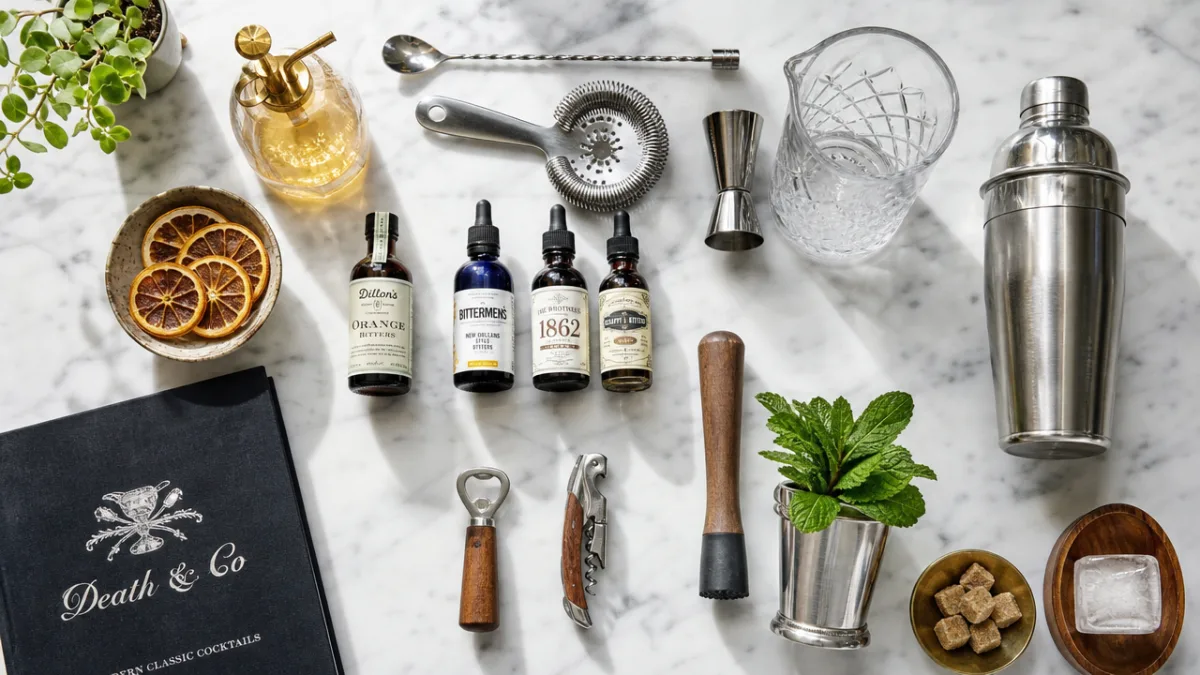
Having the right tools is what separates a well-functioning home bar from a frustrating one. You do not need everything at once, but a core set of quality tools makes the difference between cocktails that taste right and ones that fall slightly flat due to imprecise technique. The good news is that a solid starter toolkit does not cost a fortune, and quality bar tools are built to last years if not decades with proper care. Investing in good tools upfront is almost always worth it.
Here is a breakdown of the essential tools every home bar needs:
- Cocktail shaker: A Boston shaker (two-tin system) is preferred by professionals and is more durable than cobbler shakers. Alternatively, a cobbler shaker with a built-in strainer is more beginner-friendly and works beautifully for home use.
- Jigger: Precision matters in cocktail making. A double-sided jigger with one-ounce and one-and-a-half or two-ounce sides gives you flexibility and accuracy in measuring your pours.
- Bar spoon: A long-handled bar spoon is essential for stirred cocktails like Manhattans and Negronis, as well as layering drinks and reaching the bottom of tall glasses for muddling.
- Hawthorne strainer: Used with a Boston shaker tin to strain ice and solids out of shaken or stirred cocktails. The coiled spring catches ice chips and fruit pulp efficiently.
- Fine mesh strainer: Used in conjunction with the Hawthorne strainer for “double straining,” which produces exceptionally smooth, chip-free cocktails.
- Muddler: For crushing herbs, fruit, and sugar in the bottom of a glass. A wooden or stainless steel muddler is needed for Mojitos, Old Fashioneds, and Caipirinhas.
- Citrus juicer: Fresh juice is non-negotiable in quality cocktails. A handheld Mexican elbow-style juicer works for limes, while a larger press handles lemons and oranges.
- Cutting board and bar knife: For slicing citrus garnishes, peeling twists, and prepping other fresh ingredients.
- Ice bucket and tongs: Quality ice is the unsung hero of great cocktails. An insulated ice bucket keeps your supply cold and accessible throughout a gathering.
- Bottle opener and wine key: Self-explanatory, but essential for any bar situation involving beer, wine, or cordials with cork closures.
Beyond the basics, a few additional tools elevate your home bar experience considerably. A channel knife or Y-peeler helps you create elegant citrus twists for garnishing. A cocktail picks set keeps garnishes tidy and adds a professional visual touch. A blender is necessary if you intend to make frozen cocktails or blended drinks. For the more adventurous, a smoking gun or smoking dome allows you to add dramatic wood-smoke flavors and presentation to cocktails like smoked Old Fashioneds, which never fail to impress guests.
Glassware: The Often Overlooked Essential
Your glassware collection matters more than most people realize. Serving a Martini in the wrong glass is a small but noticeable misstep that can subtly undermine an otherwise excellent drink. More importantly, certain glass shapes genuinely improve the drinking experience — a wide-mouthed coupe allows the aromas of a cocktail to reach the nose properly, while a narrow highball glass maintains the carbonation in a Tom Collins or Gin and Tonic for longer. Having the right glass for the drink shows attention to detail and enhances every sip.
The core glassware collection for a home bar should include rocks glasses (also called Old Fashioned or lowball glasses) for spirit-forward drinks served over ice, highball glasses for tall mixed drinks and sodas, coupe glasses for shaken cocktails served without ice, and wine glasses for obvious reasons. If you plan to make Martinis frequently, a set of classic V-shaped Martini glasses adds a timeless elegance that coupés do not quite replicate, though coupés have largely replaced them in modern cocktail culture. Champagne flutes are useful if you enjoy Champagne Cocktails and sparkling wine-based drinks.
When building your glassware collection, quality over quantity is the guiding principle. Four to six of each essential type is usually sufficient for home entertaining. Look for glasses that feel substantial in the hand without being overly heavy, and avoid glasses with decorative patterns around the rim that interfere with drinking. Brands like Libbey offer excellent durability and value, while Riedel and Schott Zwiesel represent the premium tier for those who want the finest possible experience. Store your glassware upright rather than inverted on shelves to prevent musty odors from developing inside the glass.
Stocking Your Mixers, Garnishes, and Fresh Ingredients
Even the finest spirits in the world cannot save a cocktail made with flat soda, artificial juice from a bottle, or stale garnishes. The quality of your mixers and fresh ingredients is just as important as the quality of your spirits, and this is where many home bars fall short. Committing to fresh ingredients, quality sodas, and thoughtful garnishes immediately elevates your cocktails from homemade to genuinely impressive. Guests notice the difference, even when they cannot quite identify why one drink tastes so much better than another.
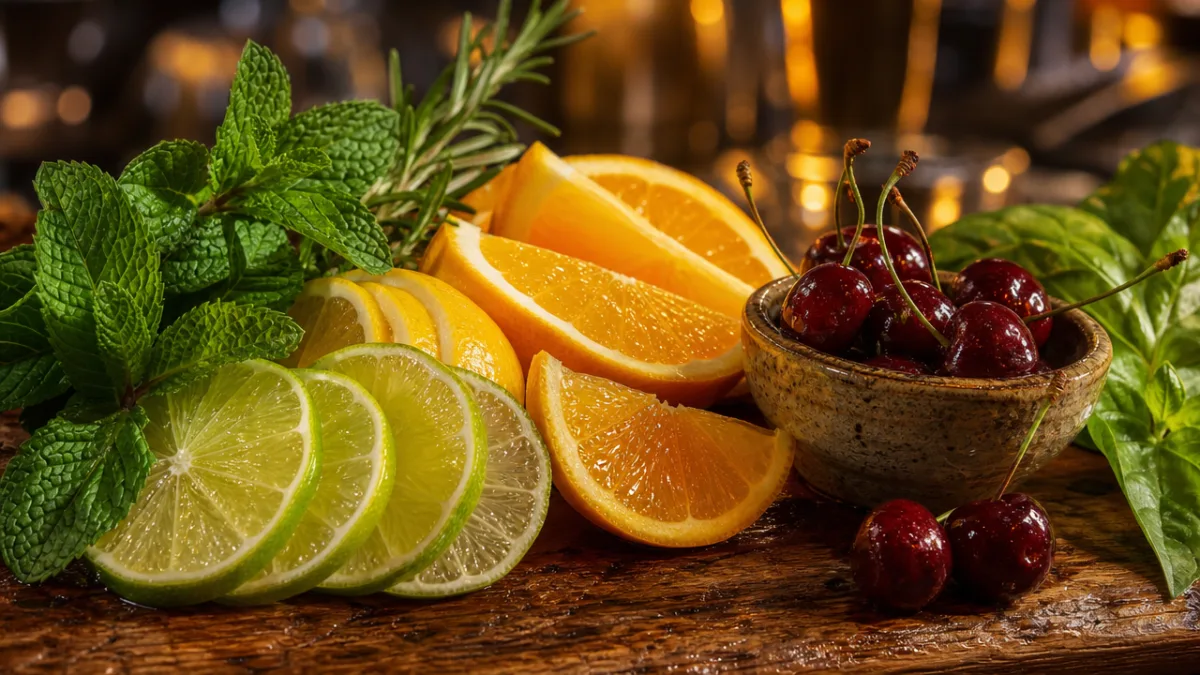
Your mixer pantry should include tonic water in small individual bottles rather than large two-litre bottles that go flat, club soda, ginger beer for Moscow Mules and Dark and Stormys, and cola for the inevitable crowd who prefers simple mixed drinks. Freshly squeezed citrus juice — lemon, lime, and orange — is absolutely essential for quality cocktails. Never use bottled lime juice in a Margarita or Daiquiri if you want it to taste right; the difference is immediately apparent. Keep a bowl of fresh citrus on or near your bar at all times so you always have it available without having to search the refrigerator.
Garnishes transform the visual presentation of your cocktails and contribute real flavor when done correctly. A citrus twist expressed over a cocktail deposits aromatic oils onto the surface that change the drink perceptibly. Fresh herbs like mint and basil add both visual appeal and fragrance. Cocktail cherries — specifically Luxardo maraschino cherries, not the fluorescent red variety — are a worthwhile splurge that elevate any drink they appear in. Olives, pearl onions, and cucumber slices complete your savory garnish options. Keep a small tray or dedicated garnish station set up and ready when entertaining so you can plate drinks efficiently without scrambling.
Setting the Atmosphere and Hosting With Confidence
A home bar is ultimately about more than the drinks — it is about creating an environment where people feel comfortable, welcomed, and genuinely entertained. The atmosphere you cultivate around your bar sets the tone for the entire gathering. Lighting is your most powerful tool here: warm, low lighting creates intimacy and makes every cocktail look beautiful in the glass, while overly bright overhead lighting kills the mood instantly. Invest in dimmable fixtures or use lamps and candles strategically to create a warm, inviting glow that makes your bar feel like a destination rather than just a corner of a room.
Music is the invisible ingredient that holds the atmosphere together. Curate playlists in advance that match the kind of gathering you are hosting — jazz and bossa nova for intimate dinner parties, something more energetic for lively group gatherings, classic rock or soul for casual weekend hangs. The volume should allow for conversation without people having to raise their voices uncomfortably. Background music that is too quiet disappears unnoticed, while music that is too loud forces people to shout across the bar and kills the conversational flow that makes hosting truly memorable.
Confidence behind the bar is something that develops naturally with practice, but you can accelerate it significantly by mastering a small repertoire of cocktails that you can make smoothly and consistently. Rather than trying to learn fifty recipes, become genuinely excellent at five to ten drinks that cover a range of flavor profiles and spirits. Know your Negroni, your Margarita, your Old Fashioned, your Aperol Spritz, and your Whiskey Sour inside and out. When guests make requests you do not recognize, do not panic — ask them what flavors they enjoy and make something thoughtful based on what you have. That adaptability is the mark of a genuinely skilled home bartender.
Building Your Bar Over Time and Keeping It Organized
One of the most satisfying aspects of a home bar is that it evolves continuously. You do not need to arrive at a fully stocked, perfectly organized bar overnight — in fact, the bars that feel most authentic and personal are usually the ones that have accumulated their character gradually, through bottles purchased for specific occasions, spirits discovered while traveling, and gifts from friends who know your tastes. Allow your bar to grow organically, adding bottles that genuinely excite you rather than filling slots on some imagined checklist of what a complete bar should look like.
Organization is what keeps your bar functional as it grows. Group spirits by category so you can find what you need quickly: all whiskeys together, all gin together, all liqueurs in their own section. Keep your most-used tools front and center and your less-frequently-needed items stored in a drawer or lower cabinet. Rotate bottles so that older ones are at the front and newer purchases are at the back — this is the same system professional bars use and prevents waste from forgetting about open bottles. Label homemade syrups and infusions with the date they were made so you always know how fresh they are.
Finally, approach your home bar with a spirit of generosity and curiosity. Be willing to experiment with new recipes, try unfamiliar spirits, and share your discoveries with guests. A home bar at its best is not a static display but a living, breathing part of how you entertain and connect with the people you care about. Every bottle tells a story, every cocktail is an expression of hospitality, and every gathering around that bar is an opportunity to create the kind of relaxed, joyful moments that people remember long after the glasses are empty. Set it up thoughtfully, stock it with care, and let it become one of the most beloved spaces in your home.








What do you think?
It is nice to know your opinion. Leave a comment.