










The Ultimate Guide to FREE Crochet Leaf Tutorials: Step-by-Step Patterns
Introduction to Crochet Leaf Patterns
Crochet leaves are among the most versatile and enchanting elements you can add to your handmade projects. Whether you are decorating a garland, embellishing a hat, or crafting a nature-inspired centerpiece, a beautifully worked leaf can elevate the entire piece. The good news is that you do not need to spend a fortune on patterns — there are extraordinary free tutorials available that guide you from the very first chain stitch all the way to a finished, dimensional leaf that looks strikingly realistic.
What makes leaf crochet so appealing is the sheer variety of styles and techniques involved. From simple two-row beginner leaves to intricate lacework designs with veining details, the spectrum covers every skill level imaginable. Crafters who are picking up a hook for the first time will find gentle, approachable patterns, while seasoned artists can challenge themselves with multi-layered, textured designs that mimic the complexity of real botanical specimens found in a garden or forest floor.
This guide is designed to walk you through everything you need to know about finding, selecting, and completing free crochet leaf tutorials. We will cover the materials you will need, the foundational stitches involved, the best free pattern resources, tips for achieving realistic shapes, and creative ideas for using your finished leaves in stunning projects. By the time you finish reading, you will have all the knowledge and inspiration required to start crocheting leaves with confidence and joy.
Essential Materials and Tools for Crocheting Leaves
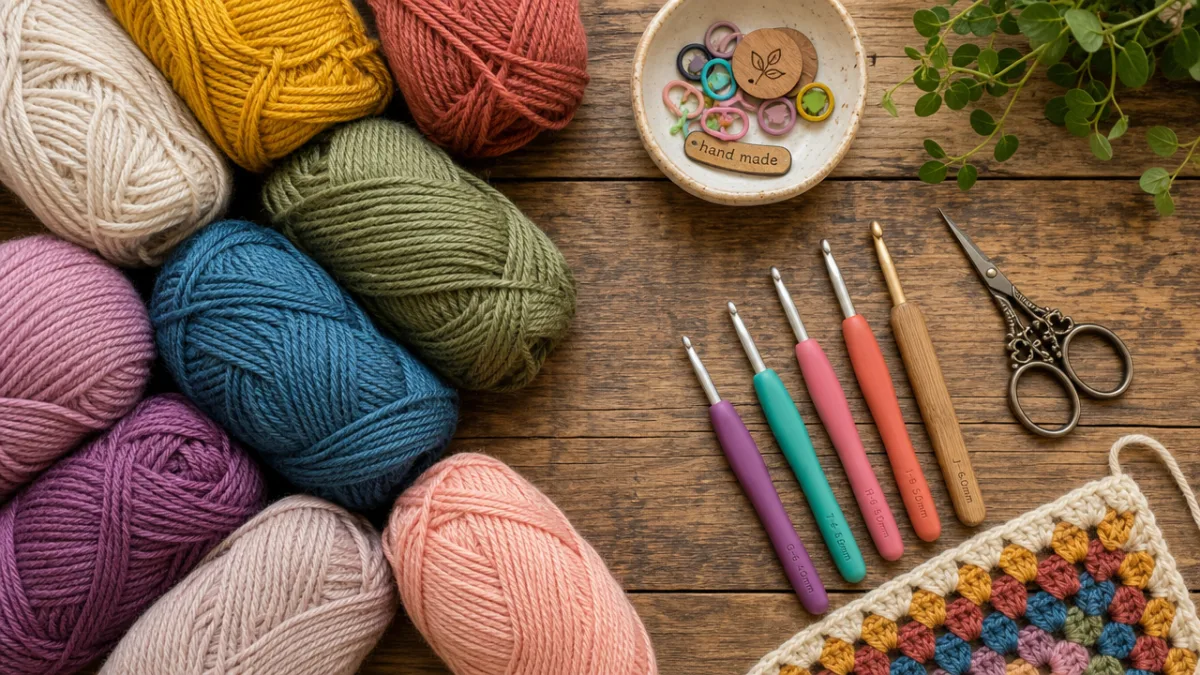
Before diving into any tutorial, it is important to gather the right materials, because the tools and yarn you choose will have a significant impact on the final appearance of your crochet leaves. The most common yarn weight used for leaves is a light worsted or DK weight yarn in shades of green, though do not feel limited to natural tones. Autumn-inspired leaves in burnt orange, deep red, and golden yellow are equally stunning and make for beautiful seasonal decorations that feel timely and festive throughout the year.
Your crochet hook size should correspond to the recommended gauge on your yarn label, but for leaves specifically, many crafters prefer going down one hook size to create a tighter, more defined fabric. A tighter stitch definition helps the leaf hold its shape without curling excessively at the edges, which is a common challenge. For most DK weight yarns, a 3.5mm or 4.0mm hook works beautifully. If you are working with fine thread for delicate lacework leaves, you may need a steel hook as small as 1.5mm or 2.0mm to achieve the intricate detail those patterns require.
Beyond yarn and hooks, a few additional tools will make your leaf-crocheting experience much smoother and more enjoyable. These include a yarn needle for weaving in ends cleanly, scissors, stitch markers to track pattern repeats, and optionally, a blocking mat with rustproof pins. Blocking is a transformative step for crochet leaves — pinning a damp leaf to a foam mat and allowing it to dry in the desired shape can turn a slightly uneven or curled piece into a perfectly flat, professionally finished leaf that looks like it came straight from a boutique craft store.
Foundational Stitches You Need to Know
Most crochet leaf patterns rely on a core set of stitches that, once mastered, will unlock an enormous library of designs. The chain stitch forms the foundation of nearly every leaf pattern, establishing the central spine from which stitches are worked on both sides to create the leaf’s body. Single crochet stitches are used along edges to create tight, firm outlines, while half double crochet and double crochet stitches build the body and width of the leaf. Understanding when and why to use each stitch is a key part of reading patterns fluently and efficiently.
One of the most important techniques for creating realistic, shaped leaves is the use of increases and decreases. Increases — achieved by working two or more stitches into the same stitch — create the widening belly of the leaf as it builds toward its widest point. Decreases, such as single crochet two together (sc2tog) or double crochet two together (dc2tog), taper the leaf elegantly toward its pointed tip. When these shaping techniques are applied symmetrically on both sides of the central spine, the result is a leaf with natural, flowing contours that closely mirrors the structure of real foliage.
Slip stitches play a subtle but critical role in many leaf patterns, particularly for finishing edges and creating clean joins when working in the round or along a foundation chain. Some advanced patterns also use treble crochet or even double treble crochet to build taller, more dramatic leaves with deeper curves and more pronounced veining. The slip stitch is also commonly used to form the stem of a leaf, creating a neat, rounded cord-like extension that makes the leaf easy to attach to wreaths, bouquets, or wearable accessories without any additional assembly required.
Best Free Crochet Leaf Tutorial Resources Online
The internet is overflowing with generous crafters and designers who share their leaf patterns completely free of charge, and knowing where to look will save you enormous amounts of time. Platforms like Ravelry host thousands of free leaf patterns that are searchable by difficulty level, yarn weight, stitch type, and even the intended season or holiday. Creating a free Ravelry account allows you to save your favorites into a queue or library so you can return to them whenever inspiration strikes, making it one of the most powerful organizational tools available to modern crocheters.
YouTube is another treasure trove for visual learners who prefer to follow along with a video tutorial rather than interpret written instructions. Channels dedicated to crochet, including many hosted by talented independent designers, offer step-by-step video guides that pause, zoom in, and repeat tricky sections so you never feel lost. Spirited Maria is a wonderful example of a designer whose tutorials walk viewers through each stitch with clarity and warmth, making even complex patterns feel entirely achievable. Searching for specific leaf styles — such as “crochet maple leaf tutorial” or “crochet autumn leaf pattern free” — will surface a wide variety of options suited to your current project needs.
Craft blogs remain one of the richest sources of free crochet patterns, and many bloggers provide both written instructions and photo tutorials so you can follow along in whichever format suits your learning style best. Some of the most beloved free leaf patterns online include simple five-petal ginkgo leaves, realistic oak and maple leaf designs, tropical monstera-inspired leaves with dramatic splits, and delicate fern sprigs that work beautifully in home decor. Here are some especially popular leaf styles to search for:
- Simple two-row beginner leaf — perfect for adding quick embellishments to hats, bags, and scarves
- Autumn maple leaf — a bold, recognizable shape ideal for fall wreaths and garlands
- Tropical monstera leaf — dramatic and modern, perfect for home decor and boho-style projects
- Delicate fern sprig — a multi-leaf branch design that creates full, lush botanical arrangements
- Holly leaf with berries — a classic Christmas motif that works beautifully on holiday decorations
- Lacy doily-inspired leaf — intricate thread crochet designs for advanced crafters seeking a challenge
Tips and Techniques for Realistic, Beautiful Leaves
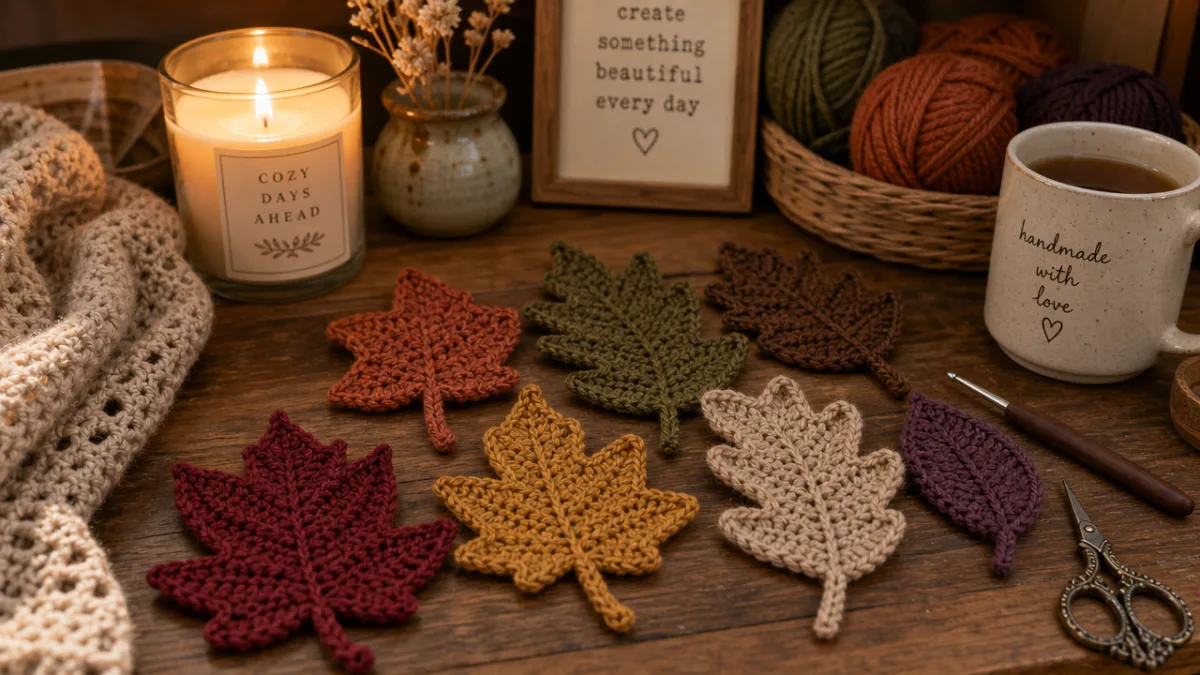
Achieving a leaf that looks truly lifelike requires attention to a handful of key details that separate beginner results from expert-level finishes. One of the most important factors is color selection. Real leaves are rarely a single flat tone — they have variations, gradients, and depth. Using a variegated or self-striping yarn can naturally simulate these subtle color shifts, or you can intentionally change yarn colors at strategic points in your pattern to mimic the look of a leaf that is just beginning to change with the season. Even a simple shift from a bright spring green to a deeper forest green can add incredible dimension.
Tension consistency is another crucial element that many beginners struggle with, but it becomes easier with practice and mindful attention. Inconsistent tension creates leaves with lumpy surfaces and irregular edges, while even, steady tension produces clean stitch definition and smooth, graceful curves. If you find that your tension tends to tighten when you are concentrating hard on a difficult section, take a slow breath, loosen your grip slightly on the yarn, and continue. Experienced crafters often recommend practicing the entire stitch sequence of a new pattern on a swatch before starting the actual leaf to build muscle memory and consistency.
Blocking, as mentioned earlier, is one of the most powerful finishing techniques available to crocheters, and it is especially transformative for leaves. Once your leaf is complete, lightly mist it with water or submerge it briefly in cool water, then gently press out excess moisture with a clean towel. Pin the leaf to a blocking mat, stretching it carefully into the desired shape and pinning at key points along the edges and tip. Allow it to dry completely — usually overnight — before removing the pins. The difference between a blocked and unblocked leaf is dramatic, and this single step can make your finished piece look truly professional and polished.
Creative Projects and Ways to Use Your Crochet Leaves
Once you have built up a collection of beautiful crochet leaves, the creative possibilities for incorporating them into projects are truly endless. One of the most popular applications is creating a nature-inspired garland by stringing together leaves in a variety of sizes and autumnal colors. These garlands look stunning draped across a fireplace mantel, hung above a bed as a boho canopy accent, or used as a festive table runner centerpiece for a harvest dinner or seasonal celebration. The combination of different leaf shapes along a single garland adds visual interest and makes the piece feel organic and dynamic rather than repetitive.
Wearable accessories represent another exciting avenue for your finished leaves. A single large leaf can be pinned to a lapel as a nature-inspired brooch, or several smaller leaves can be sewn along the brim of a sun hat for a whimsical garden-party look. Crocheted leaf clusters make charming additions to headbands, hair clips, and even earring findings when worked in fine thread. For knitters and crocheters who enjoy garment making, leaves can be used as decorative appliqués on cardigans, sweaters, and shawls, adding a botanical motif that feels both artistic and timeless.
Home décor projects offer perhaps the broadest canvas for your crochet leaves. Consider some of the following creative applications that crafters around the world have embraced with wonderful results:
- Autumn wreath — combine crochet leaves with dried botanicals and twigs on a grapevine base for a stunning seasonal door decoration
- Table centerpiece — arrange a cluster of leaves around pillar candles in a shallow bowl for an elegant, nature-inspired table display
- Bookmark set — small, flat leaves make charming and practical bookmarks that are also wonderful as handmade gifts
- Floral bouquet accents — tuck crochet leaves among artificial or dried flowers in a vase to add softness and texture
- Gift wrapping embellishment — tie a crochet leaf to a ribbon on a wrapped gift for a personalized, artisanal finishing touch
- Photo frame decoration — glue a collection of colorful autumn leaves around a picture frame for a unique, handcrafted keepsake
Beyond decorative uses, crochet leaves can serve as learning tools and community-building projects. Many crochet groups and guilds host collaborative projects where each member contributes leaves that are then joined together into large community blankets, wall hangings, or decorative installations for local events and exhibitions. These collaborative creations highlight the incredible diversity of interpretation that emerges even when many different hands work from the same pattern, making each community piece truly one of a kind and deeply meaningful to all who contributed their time and creativity.
Getting Started: Your First Crochet Leaf Step by Step
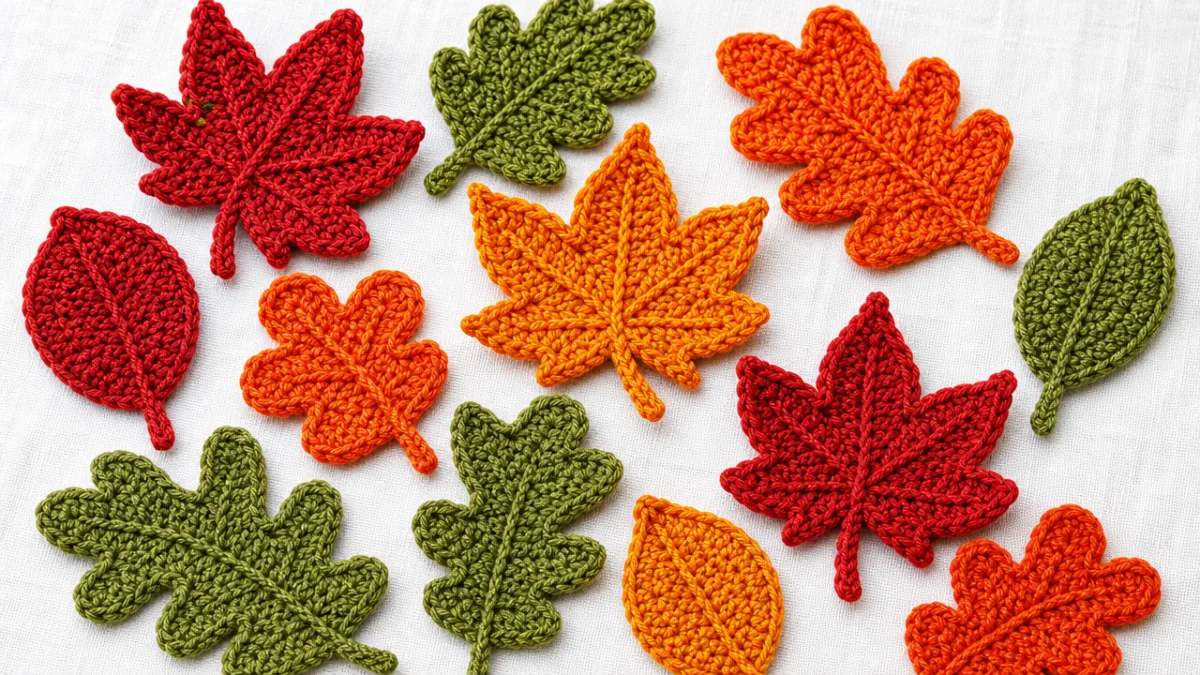
If you are ready to dive in and crochet your very first leaf today, starting with a simple beginner-friendly pattern is the wisest approach. A basic oval leaf can be completed in under thirty minutes and requires only a chain stitch, single crochet, half double crochet, double crochet, and slip stitch — all fundamental techniques that beginners typically learn in their first few sessions. Begin by chaining twelve to fifteen stitches depending on the desired leaf size, then work a series of stitches along both sides of the foundation chain, gradually increasing in the middle and tapering toward each end to form the classic oval leaf shape.
Once you have completed the main body of the leaf, work a single crochet edging all the way around the perimeter to create a clean, defined border. This edging step is often where beginners feel tempted to rush, but taking your time here pays enormous dividends in the overall quality of the finished piece. If the pattern calls for a picot edge — small loops created by chaining two or three stitches before slip stitching back into the same stitch — these tiny details add an elegant, finished quality that makes even a simple beginner leaf look sophisticated and thoughtfully crafted.
Finally, finish your leaf by cutting the yarn and pulling the tail through the last loop to secure it, then thread the tail onto a yarn needle and weave it neatly into the body of the leaf so no ends are visible from either side. Repeat this process for any other yarn tails from color changes or the beginning of the pattern. Block your leaf as described earlier, and admire the beautiful result of your work. There is a particular kind of satisfaction in holding a finished crochet leaf — it is small enough to complete quickly, yet detailed enough to feel like a genuine creative achievement that you can proudly share and display.
Building Your Leaf Collection and Growing as a Crafter
The journey from your very first simple leaf to a confident, varied collection of botanical crochet creations is one of the most rewarding paths in the fiber arts. Each new pattern you attempt teaches you something — a new stitch variation, a different approach to shaping, or a clever technique for adding surface texture and detail. Keeping a small project journal where you note which patterns you have tried, which yarns you used, and what you would do differently next time is a wonderfully effective way to track your growth and build a personalized reference library tailored to your own experience and preferences.
Connecting with other crochet enthusiasts through online communities, social media groups, and local craft circles can significantly accelerate your learning and deepen your enjoyment of the craft. Sharing photos of your finished leaves on platforms like Instagram or Pinterest, tagging the original pattern designer, and engaging with comments creates a warm feedback loop of encouragement and inspiration that keeps motivation high even during stretches when projects feel difficult or frustrating. Many designers, including those who offer their tutorials for free, genuinely appreciate seeing how their patterns are being made and interpreted by crafters around the world, and these connections often blossom into meaningful friendships built around a shared love of making.
As your skill and confidence grow, consider experimenting with designing your own original leaf patterns. Start by observing real leaves closely — notice the way the veins radiate from the central stem, how the edges are smooth or serrated, and how the widest point of the leaf sits closer to the base or the tip depending on the species. Translating these botanical observations into crochet stitches is a creative challenge that is deeply satisfying and uniquely personal. The world of free crochet leaf tutorials gave you the foundation — now your imagination, your hands, and your hook can take you anywhere your creativity dares to go.








What do you think?
It is nice to know your opinion. Leave a comment.