










Revive Your Gardenias: Fixing Yellow Leaves
Understanding Why Gardenia Leaves Turn Yellow
Gardenias are pretty hard to beat — those glossy dark leaves and incredibly fragrant white blooms make them a favorite for gardens and homes alike. So when those beautiful leaves start turning yellow, it’s understandably alarming. Here’s the reassuring part: yellowing leaves (botanists call it chlorosis) are almost always your plant’s way of waving a flag and saying something’s off. And once you figure out what that something is, it’s almost always fixable. The trick is learning to read the signs.
The frustrating thing about yellow leaves is that a whole range of issues can cause them — nutrient deficiencies, pH problems, watering mistakes, pests, temperature stress, or just older leaves naturally dying off. Because the symptoms look so similar on the surface, a lot of gardeners reach for the fertilizer as a first response and call it done. That sometimes makes things worse. A little detective work upfront will save you a lot of grief down the road.
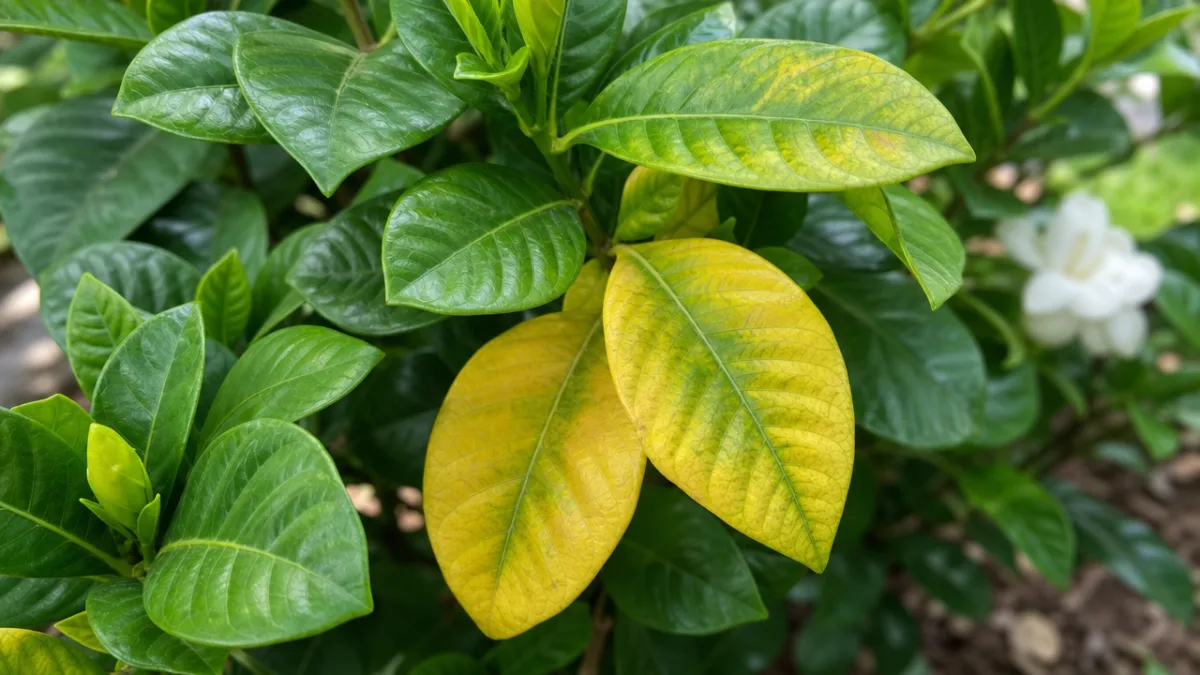
The best place to start is paying attention to where and how the yellowing is happening. Are new leaves at the branch tips going yellow while the older ones stay green? Is the whole leaf turning pale, or do the veins stay dark while the tissue around them fades out? Is it only the older leaves near the base that are affected? Each of these patterns is a clue pointing to a different problem — and reading them correctly will get you to the solution a lot faster.
Soil pH and Nutritional Deficiencies: The Hidden Culprits
If you had to pick the single most common reason gardenias turn yellow, wrong soil pH would be a strong contender — and it’s also one of the most overlooked. Gardenias are acid lovers that do best in soil with a pH between 5.0 and 6.0. When that number creeps higher (which can happen slowly over time from hard tap water, alkaline mulches, or just natural soil changes), the plant loses its ability to absorb iron and manganese even when those nutrients are sitting right there in the soil. What you end up with is interveinal chlorosis — the leaf tissue goes yellow, but the veins stay noticeably greener.
Iron deficiency is the most common nutritional issue you’ll see in gardenias planted in neutral or alkaline soil. Newer growth near the branch tips tends to look washed-out or yellow-green with dark veins still visible. Manganese deficiency looks almost identical and has the same root cause. In both cases, just dumping more iron or manganese into the soil isn’t the answer — you need to fix the pH first so the plant can actually use what’s already there. A simple soil test kit from your local garden center is money well spent before you start adding anything.
To bring the pH down, you can use a sulfur-based soil acidifier, switch to a fertilizer made for acid-loving plants like azaleas, or work in organic matter like pine bark or composted pine needles, which gradually acidify the soil as they break down. If you want quicker results while those longer-term fixes do their thing, chelated iron applied as a foliar spray or soil drench can get into the plant even when pH isn’t ideal, so you’ll often see visible improvement sooner. Swapping out hard tap water for collected rainwater when you can also helps stop that slow pH creep from happening in the first place.
Watering Problems: Too Much or Too Little
Watering is another big reason gardenias go yellow — and the tricky part is that overwatering and underwatering can look frustratingly similar. Gardenias want soil that stays consistently moist but drains well. Soggy roots are bad news, but so is letting the soil dry out completely. Getting that balance right takes a bit of practice, and it changes depending on the season, your climate, and whether the plant is in a pot or in the ground.
Overwatering is probably the more common mistake, especially with potted gardenias indoors. When roots sit in waterlogged soil, they can’t get oxygen and they start to rot. Here’s the counterintuitive part: a plant whose roots are rotting may actually look like it’s drought-stressed — wilting, yellowing leaves — because the damaged roots can’t move water and nutrients through the plant anymore. To check for this, stick your finger a few inches into the soil. If it feels cold and soggy rather than just moist, or if you notice mushy stems near the soil line or a sour smell from the pot, root rot is likely what you’re dealing with.
Underwatering tends to show up differently — yellowing that starts at the leaf margins and tips, often with crispy brown edges, and leaves dropping off. Gardenias don’t handle drought well and can shed both buds and leaves fast when they get too dry. The fix is to stop watering on a fixed schedule and start checking the soil regularly instead, since water needs shift a lot with the seasons. A well-draining potting mix with some perlite mixed in, and containers with good drainage holes, will go a long way toward keeping things in that ideal middle ground.
Pests and Disease: When Your Gardenia Is Under Attack
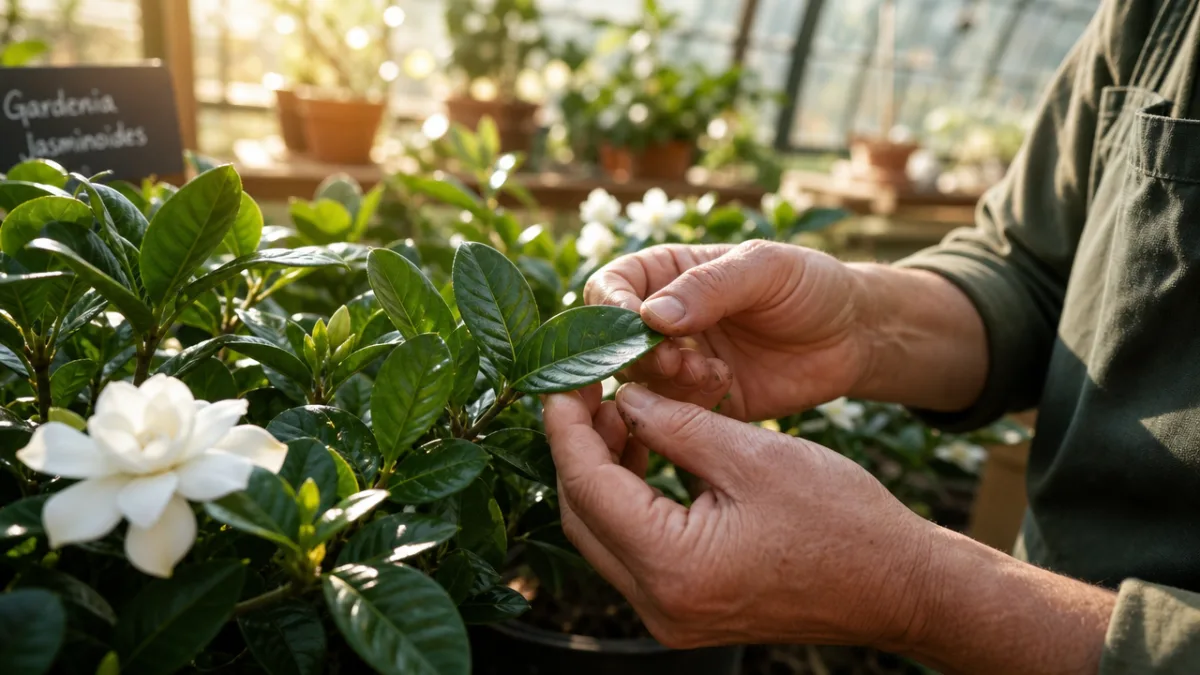
Sometimes yellow leaves are a sign something is actively feeding on your gardenia or that disease has taken hold. The usual pest suspects include spider mites, scale insects, whiteflies, and mealybugs — all of them sap-feeders that gradually weaken the plant and cause leaves to yellow, curl, or develop a pale, stippled look. Spider mites are especially sneaky because they love hot, dry conditions and can spread across a whole plant before you even notice them. Get in the habit of flipping leaves over and checking the undersides regularly — that’s where most of these pests hang out.
Scale insects are easy to miss because they look like small waxy or brownish bumps on stems and leaf veins — more like part of the plant than a pest. One telltale sign is the sticky residue they leave behind, called honeydew, which coats nearby leaves and creates the perfect environment for sooty mold — a black, powdery fungal coating that blocks sunlight and makes photosynthesis harder. If your gardenia has sticky leaves with dark patches and is generally looking sad and yellow, scale is worth investigating. Treatment options include dabbing individual insects with a cotton swab dipped in rubbing alcohol, applying horticultural oil, or using insecticidal soap — just plan on repeating treatments a few times to break the pest’s life cycle.
On the disease front, root rot from Phytophthora fungus is probably the most serious threat, and it almost always comes down to overwatering or poor drainage. Bacterial leaf spot and botrytis blight can also cause yellowed, spotted foliage, especially in humid spots with poor air circulation. The best defense is good habits: give plants enough space, water at the base rather than overhead, clean up fallen leaves and spent flowers promptly, and make sure there’s decent airflow. If disease is already present, fungicides can help, but they won’t do much if the underlying conditions stay the same.
Temperature Stress and Environmental Factors
Gardenias are subtropical plants, and they can be a bit fussy about temperature. They’re happiest with daytime temps around 65–70°F and nights around 60–65°F. Push them below 60 or above 90, and they’ll let you know — usually through yellow leaves, dropped buds, and poor flowering. Indoor gardenias are particularly vulnerable to cold drafts sneaking in from air conditioning vents, drafty windows, or doors that open to the outside in winter.
What really stresses gardenias out is sudden change. Moving a plant from a warm nursery greenhouse to your living room, repotting at the wrong time of year, or even just rotating a pot so a previously shaded side suddenly gets more sun can all trigger yellowing while the plant adjusts. A bit of leaf drop during these transitions is pretty normal and usually resolves on its own. But if the yellowing keeps going weeks after a move, the new spot probably isn’t meeting the plant’s basic needs for light, temperature, or humidity.
Speaking of humidity — this one gets overlooked a lot, but it really matters for gardenias, which come from warm, humid parts of Asia. They do best at 50% relative humidity or higher, and indoor air — especially in winter when heating systems dry everything out — often falls well short of that. Low humidity can cause yellow leaves and prevent the plant from setting buds at all. A pebble tray with water beneath the pot, grouping the gardenia with other moisture-loving plants, or running a small humidifier nearby are all good solutions. You might see recommendations to mist the leaves, but that’s not ideal — lingering moisture on foliage can encourage fungal disease.
A Practical Recovery Plan: Bringing Your Gardenia Back to Life
Once you have a sense of what’s causing the problem — or what the most likely culprits are — you can put together a plan to fix it. The most important thing to keep in mind is to make changes one at a time rather than all at once. Amending the soil, repotting, and changing your watering routine simultaneously can overwhelm a plant that’s already stressed. Start with the basics: make sure it’s getting the right light, that the soil is moist but not waterlogged, and that there are no pests visibly taking over. Get those fundamentals right before adding anything else into the mix.
For most gardeners trying to turn things around, this step-by-step approach is a solid place to start:
- Test your soil pH and amend with sulfur-based acidifiers or acid-forming fertilizers if the reading is above 6.0.
- Apply chelated iron as a foliar spray or soil drench to address iron deficiency quickly while long-term pH corrections take effect.
- Review your watering habits and adjust to maintain evenly moist but never waterlogged soil, checking moisture levels with your finger rather than relying on a fixed schedule.
- Inspect for pests by checking both surfaces of leaves with a magnifying glass, and treat any infestation promptly with appropriate insecticidal soap or horticultural oil.
- Improve humidity around indoor plants using a pebble tray, plant grouping, or humidifier, particularly during the dry winter months.
- Protect from temperature extremes by moving the plant away from drafts, air vents, or windows that let in cold air during winter.
- Fertilize appropriately with a fertilizer formulated for acid-loving plants during the growing season, following label directions carefully to avoid over-fertilization, which can itself cause leaf burn and yellowing.
It’s also worth remembering that not all yellow leaves are a crisis. Older leaves at the base of the plant naturally yellow and fall off as the plant focuses energy on new growth — that’s just normal housekeeping. What you want to watch for is widespread yellowing that’s hitting new growth, middle leaves, or large sections of the plant at once. That pattern signals something systemic is going on. Learning to tell the difference between the two will make you a much more confident gardenia grower.
With consistent care, the right soil conditions, and a good match between the plant and its environment, most gardenias respond really well once the underlying issue is sorted out. New growth that comes in after your fixes should be a healthy, deep green — a clear sign things are headed in the right direction. Just be patient. Gardenias are slow to bounce back, and it might take a few weeks or even a full growing season before you really see the difference. But when those waxy green leaves start looking lush again and you catch the first whiff of those creamy white blossoms, it absolutely makes it worth the effort.








What do you think?
It is nice to know your opinion. Leave a comment.