










Cozy Wall Corner Decor Ideas: Transform Your Forgotten Spaces Into Stunning Nooks
Why Wall Corners Deserve Your Attention
Most people walk past the corners of their rooms every single day without giving them a second thought. These tucked-away spaces are treated as architectural afterthoughts, left bare or cluttered with items that have nowhere else to go. Yet corners hold extraordinary decorating potential precisely because they exist at the intersection of two walls, creating a natural focal point that draws the eye and invites a sense of intimacy and depth into any room.
When you begin to see corners as opportunities rather than obstacles, your entire approach to interior design shifts. A well-styled corner can anchor a room’s aesthetic, balance an otherwise lopsided layout, and even add the illusion of more square footage. Interior designers consistently highlight corners as one of the most underutilized spaces in residential homes, and addressing them is often one of the easiest, most budget-friendly ways to elevate an entire room’s appearance.
The beauty of corner decorating lies in its flexibility. Whether you live in a sprawling farmhouse, a compact studio apartment, or a modern townhome, every corner offers a blank canvas. You don’t need to commit to expensive renovations or professional help. With a few thoughtful pieces, some greenery, and a clear sense of mood, you can turn a neglected nook into the coziest, most visually compelling part of your home.
Understanding Your Corner’s Character
Before you start shopping for decor, spend a few minutes observing the corners in your home. Notice how natural light moves through the space at different times of day, what wall colors surround the corner, and how much floor space you actually have to work with. A sun-drenched morning corner has entirely different decorating needs than a dim evening nook tucked beside a chimney breast. Taking stock of these qualities helps you make intentional choices rather than impulse buys you’ll later regret.
Consider also the function of the room the corner lives in. A bedroom corner calls for softness, warmth, and calm — think draped textiles, warm-toned lighting, and gentle botanical elements. A living room corner might support a bolder statement, perhaps a dramatic floor lamp paired with an architectural plant like a fiddle-leaf fig. A home office corner can balance productivity with personality through a combination of practical shelving and curated personal objects that keep your space feeling human and grounded.
Traffic flow matters too. Some corners sit naturally apart from the main walkways of a room, making them ideal for creating a cozy reading nook or a still-life vignette you can appreciate from across the space. Others are more active zones, positioned near doorways or frequently used furniture, and these benefit from taller, more architectural arrangements that don’t require rearranging whenever someone passes through. Knowing the difference helps you design something that is both beautiful and livable for the long term.
The Art of Layering: Building a Cozy Corner From the Ground Up
Creating a cozy corner isn’t about placing a single statement piece and calling it done. True coziness comes from layering — building up multiple elements at different heights, textures, and visual weights so that the eye has somewhere interesting to travel. Think of it the way a skilled photographer composes a shot, with a clear foreground, midground, and background that work together harmoniously. Starting from the floor and working your way up is a reliable method that prevents the common mistake of everything floating at the same level.
Begin with a foundational element at floor level. A plush round rug placed partly beneath a chair creates an immediate sense of warmth and definition, signaling to anyone entering the room that this corner is intentional and inviting. If floor space is limited, even a small jute mat or sheepskin throw draped over a stool serves the same purpose of grounding the composition. Texture at this level is especially important because it adds tactile richness that photographs can’t fully capture but that every person who enters the room will instinctively feel.
From there, build upward with furniture, objects, and botanical elements at graduated heights. A low side table, a medium-height lamp, and a tall plant create a dynamic staircase effect that keeps the corner from looking flat or monotonous. Vary the shapes you introduce as well — a round lamp base next to a rectangular bookshelf next to the organic curves of a plant — because contrast in form is one of the most underappreciated principles in interior styling. Each layer should feel like it belongs while also adding something the layer below it doesn’t already provide.
Furniture Choices That Make Corners Feel Intentional
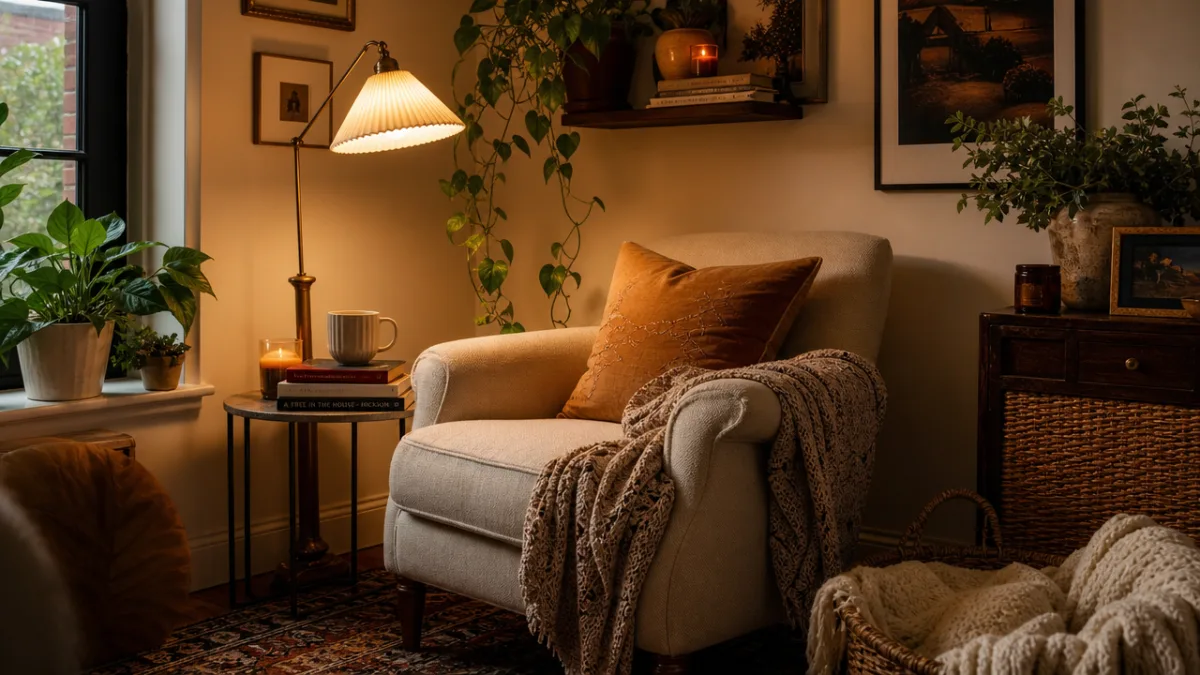
Choosing the right furniture piece is often the most consequential decision in corner decorating. An accent chair is the classic choice, and for good reason — it immediately implies comfort, function, and a human presence that makes a corner feel lived-in rather than staged. When selecting an accent chair for a corner, look for pieces with some visual weight, like a barrel chair, a wingback, or an oversized reading chair, rather than something too spindly or transparent, which can look lost in the space.
If a full-sized chair feels like too much, a small corner shelf unit or ladder shelf can achieve a similar sense of purpose without consuming precious floor space. These vertical structures work especially well in tighter rooms because they draw the eye upward, creating the impression of height and openness. Style them with a mix of books, small potted plants, candles, and a few personal objects to avoid the sterile look of furniture store displays. The goal is always to suggest a real life lived beautifully, not a catalog page.
Benches and ottomans are another versatile option, particularly in entryways, bedrooms, and larger living rooms. A tufted bench nestled into a corner with a wall-mounted hook arrangement above it creates a practical landing zone that also reads as deliberately designed. Pair it with a small basket or woven storage container tucked underneath, and you have a corner that handles real household function while still looking polished and considered. Multifunctional pieces are especially valuable in smaller homes where every item needs to earn its keep.
Greenery and Botanicals: Bringing Life Into the Corner
Plants are perhaps the single most transformative element you can introduce into a corner. They bring color, movement, organic texture, and a sense of vitality that no inanimate object can fully replicate. More importantly, plants are one of the few decorating elements that actively change and grow over time, meaning a corner styled with living greenery never quite looks the same twice, which keeps the space feeling fresh and alive season after season without requiring constant redesigning or spending.
For floor-level impact, large statement plants are unbeatable. The fiddle-leaf fig remains a perennial favorite for its dramatic architectural silhouette, but bird of paradise plants, rubber trees, and olive trees are all excellent alternatives that bring similar height and presence without the fiddle-leaf’s notoriously fussy temperament. Place a large plant in a beautiful pot — ceramic, terracotta, or woven rattan all work beautifully — and let it fill the upper portion of the corner naturally. The result is a lush, organic focal point that softens hard architectural lines and adds warmth instantly.
Don’t limit your botanical thinking to floor-level plants alone. Trailing plants like pothos, string of pearls, or heartleaf philodendrons work beautifully on wall-mounted shelves or in hanging planters, creating a cascading effect that adds depth and movement to vertical surfaces. Smaller plants grouped together on a side table or stool create charming little gardens-within-a-room that reward close inspection. Mixing different leaf shapes, sizes, and shades of green creates the kind of layered richness that feels collected and natural rather than artificially composed.
Pairing Plants With Lighting for Maximum Ambiance
Lighting and plants are natural partners in corner decorating, and thoughtful placement of both together creates a dramatically different atmosphere than either element achieves on its own. A floor lamp positioned beside a tall plant so that its warm glow spills across the leaves produces beautiful shadows on the surrounding walls during evening hours — a subtle, organic light show that gives a corner genuine character. This kind of layered, dappled light is far more interesting than overhead lighting and contributes enormously to the feeling of coziness.
String lights woven through a trailing plant or draped over a corner shelf are another beloved technique for adding warmth. Warm white or amber-toned LED string lights are especially effective because their color temperature mimics candlelight, which is widely understood to be one of the most psychologically comforting light sources available. The combination of soft electric light and green living foliage creates the kind of atmospheric corner that invites people to settle in, slow down, and stay a while — which is precisely the goal of all cozy decor.
For those who love the aesthetic of candlelight but prefer a lower-maintenance approach, battery-operated flameless candles grouped at varying heights on a corner shelf or tray are an elegant and practical solution. Arrange them alongside small potted succulents, a trailing vine, and a few natural objects like smooth stones or dried seed pods, and you have a corner tableau that feels genuinely serene and thoughtfully curated. The interplay of soft flickering light and organic materials is deeply satisfying to the eye and creates a corner you’ll find yourself gravitating toward every evening.
Wall Decor Strategies That Anchor the Corner
The walls themselves are critical components of any corner decor arrangement, and leaving them bare often undermines even the most beautifully styled floor-level elements. Wall decor in a corner functions differently than on a flat, open wall because you’re working with two surfaces that meet at an angle — an inherently dynamic situation that requires some additional thought. The key is to create a sense of cohesion across both walls while still allowing each wall to have its own visual identity.
A gallery wall that wraps around a corner is one of the most striking approaches available. Rather than placing frames only on one wall, extend your arrangement across both surfaces so that it literally turns the corner, creating a panoramic effect that envelops anyone sitting beneath it. Mix art prints, photographs, small mirrors, and even three-dimensional objects like woven wall hangings or pressed botanicals in frames to add the kind of variety that makes a gallery wall feel genuinely personal and layered rather than just a grid of identical frames from the same store.
Floating shelves arranged on one or both of the corner walls offer a practical alternative to purely decorative arrangements. They provide surfaces for styling small objects, books, and plants while also contributing to the overall visual architecture of the corner. Position one shelf at eye level when seated if the corner contains a chair, so that whatever you display there can be appreciated at close range. A shelf at this height becomes a kind of personal altar — a curated collection of meaningful objects that tells a story about whoever decorated it, which is one of the most powerful things interior styling can achieve.
Mirrors, Macramé, and Textural Wall Elements
Beyond framed art and shelving, textural wall elements add a layer of sensory richness to corners that flat prints simply cannot match. Macramé wall hangings have enjoyed a significant resurgence in recent years, and their appeal is easy to understand — the intricate knotwork creates beautiful shadow play, the natural fibers add warmth, and their organic shapes complement botanical arrangements perfectly. A large macramé piece hung in the upper portion of a corner creates an immediate bohemian coziness that feels handcrafted and intentional without demanding a great deal of decorating expertise.
Mirrors are another highly effective wall element in corner decorating. A round or arch-shaped mirror hung at a slight angle against one of the corner’s two walls captures light from windows across the room and bounces it back into the corner, brightening what might otherwise be a shadowy spot. Mirrors also visually expand the space, which is particularly valuable in corners that risk feeling cramped or closed-in. An antique or vintage-style mirror with a warm gold or aged brass frame adds both reflective function and decorative character that elevates the entire corner’s mood.
Woven wall art, ceramic wall hangings, and even carefully hung textiles like vintage kilim rugs or embroidered tapestries are all worth considering for corners where you want maximum texture and warmth. These materials absorb sound subtly, which contributes to the hushed, cocoon-like quality that the best cozy corners possess. They also photograph beautifully, which matters if you take pride in your home’s aesthetic on social media, but more importantly, they create a genuine sensory experience for anyone who spends time in that corner in real life — and that is always the truest measure of successful home decor.
Seasonal Styling: Keeping Your Corner Fresh Year-Round
One of the most enjoyable aspects of corner decorating is that it lends itself naturally to seasonal updates. Because corners are self-contained compositions rather than full-room redesigns, refreshing them with each passing season requires minimal effort and expense but delivers a disproportionate visual impact. Swapping out a few key accessories — a throw blanket, some candles, a seasonal botanical element — can completely transform the mood of a corner from summer’s breezy freshness to autumn’s deep, burnished warmth without requiring any permanent changes to the underlying arrangement.
In autumn and winter, lean into warmth and texture with layered blankets in chunky knit or faux fur, deep-toned candles in amber and clove scents, dried botanicals like pampas grass and eucalyptus branches, and warm-toned ceramic vessels. Add additional lighting through string lights or extra candles to compensate for shorter days, and consider swapping any lightweight linen or cotton textiles for heavier wool or velvet equivalents. These seasonal swaps cost relatively little but produce a corner that feels genuinely aligned with the time of year, which contributes to a powerful sense of home-based contentment and belonging.
Spring and summer updates move in the opposite direction, toward lightness, freshness, and an almost outdoor quality. Replace heavy textiles with linen throws and cotton cushions in soft greens, warm whites, or peachy terracotta tones. Bring in fresh flowers or flowering potted plants alongside your year-round greenery. Swap warm amber candles for unscented white or cream versions, or eliminate candles entirely in favor of a beautiful diffuser with a clean botanical scent. The goal is a corner that feels like a breath of fresh air — cool, bright, alive, and completely in harmony with the energy of the season.
Budget-Friendly Ways to Refresh Your Corner Regularly
Keeping a corner feeling fresh doesn’t require a generous decorating budget — it requires a creative approach to what you already own and a willingness to shop selectively for small, high-impact additions. Thrift stores and vintage markets are extraordinary sources for the kinds of objects that make corners feel genuinely layered and personal: old ceramic pots, unusual candleholders, interesting frames, small woven baskets, and quirky little sculptures that add character no mass-market retailer could replicate. The hunt itself becomes part of the pleasure, and the resulting corner tells a story of discovery rather than consumption.
Propagating your own plants is another deeply satisfying and cost-effective way to keep corners feeling abundant and alive. A single pothos plant purchased years ago can fill an entire corner through consistent propagation, with individual cuttings in small glass vessels adding a charming, botanical-laboratory quality to shelves and side tables. Growing your own cuttings also creates a personal investment in the space that makes it feel more meaningful — you tend these corners the way you tend a garden, with patience, attention, and genuine care for living things.
Finally, don’t underestimate the power of rearranging what you already own. Moving a lamp from one corner to another, rotating which plants live where, shifting a shelf’s contents to foreground different objects — these zero-cost changes can make a corner feel completely new without spending a single dollar. Developing the habit of looking at your corners with fresh eyes every few months, and giving yourself permission to experiment freely with what’s already in your home, is perhaps the most important styling skill of all. The most beautiful homes are rarely the most expensive ones; they are the ones whose inhabitants pay close attention and make thoughtful, loving choices about every inch of the space they inhabit.








What do you think?
It is nice to know your opinion. Leave a comment.