










Create Stunning DIY Diwali Decorations with The Home Depot and Himani Singh of Decor Thy Nest
The Magic of Diwali and the Art of Handmade Celebration
Diwali, the Festival of Lights, is one of the most beloved and visually breathtaking celebrations anywhere in the world. Observed by millions of Hindus, Jains, Sikhs, and Newar Buddhists across the globe, it marks the triumph of light over darkness, knowledge over ignorance, and good over evil. The five-day festival is a time for family, sweets, the warm glow of oil lamps called diyas, and the creation of intricate rangoli patterns that turn homes into stunning displays of color and artistry.
What makes Diwali so special, though, is how personal the decorations feel. Unlike a lot of holidays that have become pretty commercially driven, Diwali has a long, rich tradition of handmade adornments — things that carry real cultural and spiritual meaning. From clay diyas painted in gold and jewel tones to flower garlands draped across doorways, every element of a Diwali-decorated home tells a story rooted in heritage, family memory, and genuine joy. Making those decorations yourself adds something that no store-bought piece ever really can.
In recent years, creative voices like Himani Singh of the home décor blog and social media community Decor Thy Nest have helped people — both within and outside the South Asian diaspora — find accessible, contemporary ways to decorate for Diwali. Through her partnership with The Home Depot, Himani has made it clear that you don’t need a specialty craft shop or imported goods to create a festival-worthy home. With the right guidance and materials you can pick up on a regular shopping trip, anyone can craft a Diwali atmosphere that genuinely honors tradition while feeling fresh and personal.
Who Is Himani Singh and What Is Decor Thy Nest?
Himani Singh is a home décor influencer, DIY enthusiast, and cultural storyteller whose platform, Decor Thy Nest, has become a go-to destination for anyone wanting to blend South Asian heritage with modern interior style. Through her blog, YouTube channel, and social media, she shares detailed tutorials, shopping guides, and personal stories that help her audience create homes that are as meaningful as they are beautiful. Her style is warm and approachable — she has a real talent for breaking down techniques that might seem intimidating and making high-end looks feel genuinely achievable on a regular budget.
What really sets Himani apart from other home décor creators is how seriously she takes cultural authenticity. Rather than skimming the surface of Diwali’s visual appeal, she actually explains the meaning behind each element — why marigolds appear in garlands, what a diya’s flame represents, why specific rangoli colors carry symbolic weight. That educational approach has earned her a devoted following among first-generation immigrants hoping to keep cultural traditions alive for their kids, as well as curious people from all backgrounds who want to engage with the festival in a thoughtful, respectful way.
Her collaboration with The Home Depot feels like a natural extension of that mission. By sourcing materials from one of America’s most widely available home improvement stores, she shows that celebrating Diwali beautifully doesn’t mean hunting down specialty items. Terracotta pots, candles, floral supplies, craft foam, metallic spray paint — all Home Depot staples — suddenly become the raw ingredients for something truly festive, which has genuinely delighted her growing community.
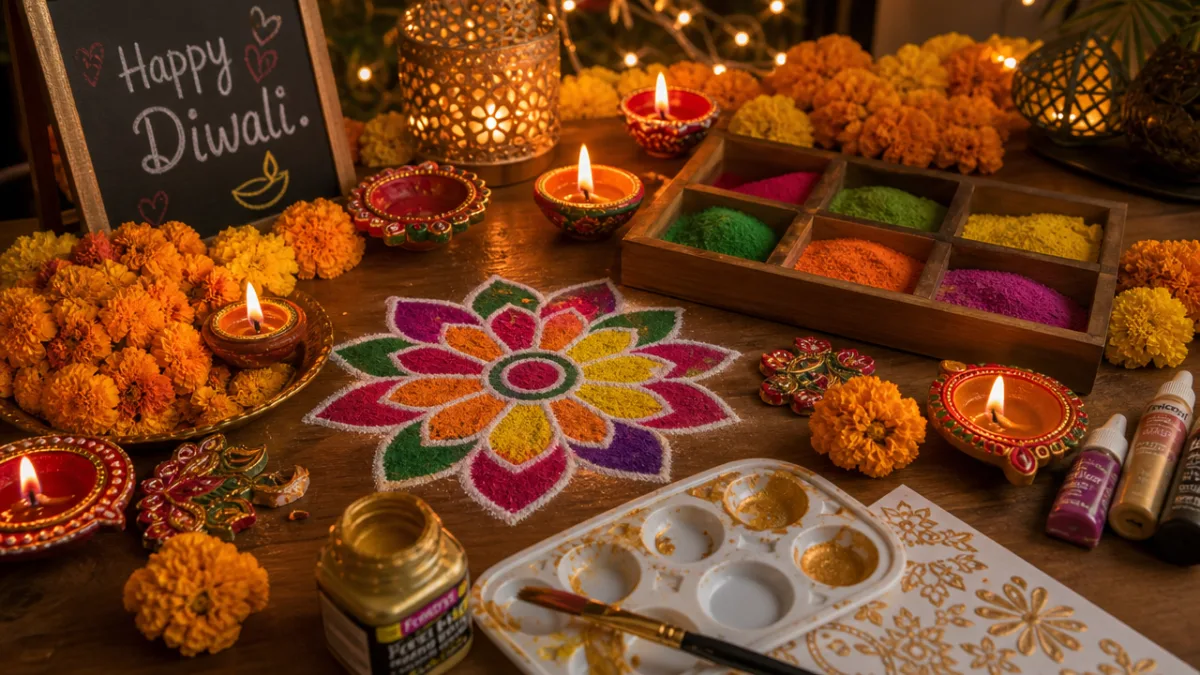
Essential Materials and Where to Find Them at The Home Depot
One of the best surprises of Himani’s Home Depot partnership is just how much Diwali-worthy material you can find in a single trip. Terracotta pots from the garden section are a perfect base for painted diyas — they’re authentic clay vessels that take paint beautifully and hold a tea light or small oil wick without any fuss. They come in multiple sizes, and with a few coats of metallic paint and some adhesive gems, they transform into ornate luminaries that honestly look like they came from an artisan market in Jaipur.
The paint aisle is its own treasure trove. Metallic spray paints in gold, copper, and bronze give everything from plain wooden frames to glass jars an opulent, traditional feel. Chalk paints in deep jewel tones — sapphire blue, emerald green, ruby red — work beautifully for rangoli-inspired patterns on terracotta trays or wooden boards that double as table centerpieces. Sample-size paint containers are a great economical option for small projects, letting you try out several colors without spending a lot.
Beyond paint, a few other materials round out a solid Diwali DIY toolkit. Here’s a handy shopping list to bring on your next Home Depot run:
- Terracotta pots and saucers in assorted sizes for diya and candle holders
- Metallic spray paint in gold, copper, and silver finishes
- Acrylic or chalk paint in jewel tones for decorative patterns
- Tea light candles and battery-operated fairy lights for ambient glow
- Floral wire, foam, and picks from the garden section for garland-making
- Clear glass vases and hurricane lanterns for floating candle arrangements
- Adhesive gems, glitter glue, and metallic washi tape for embellishment
- Drop cloths or kraft paper for protecting surfaces during crafting
With these on hand, you’re well set to tackle a wide range of Diwali DIY projects that will transform your home into a celebration of light, color, and cultural beauty. And because The Home Depot is so widely available across North America, these supplies are within reach for most people — which removes one of the biggest practical barriers to decorating your home from scratch.
Step-by-Step DIY Diwali Projects Inspired by Decor Thy Nest
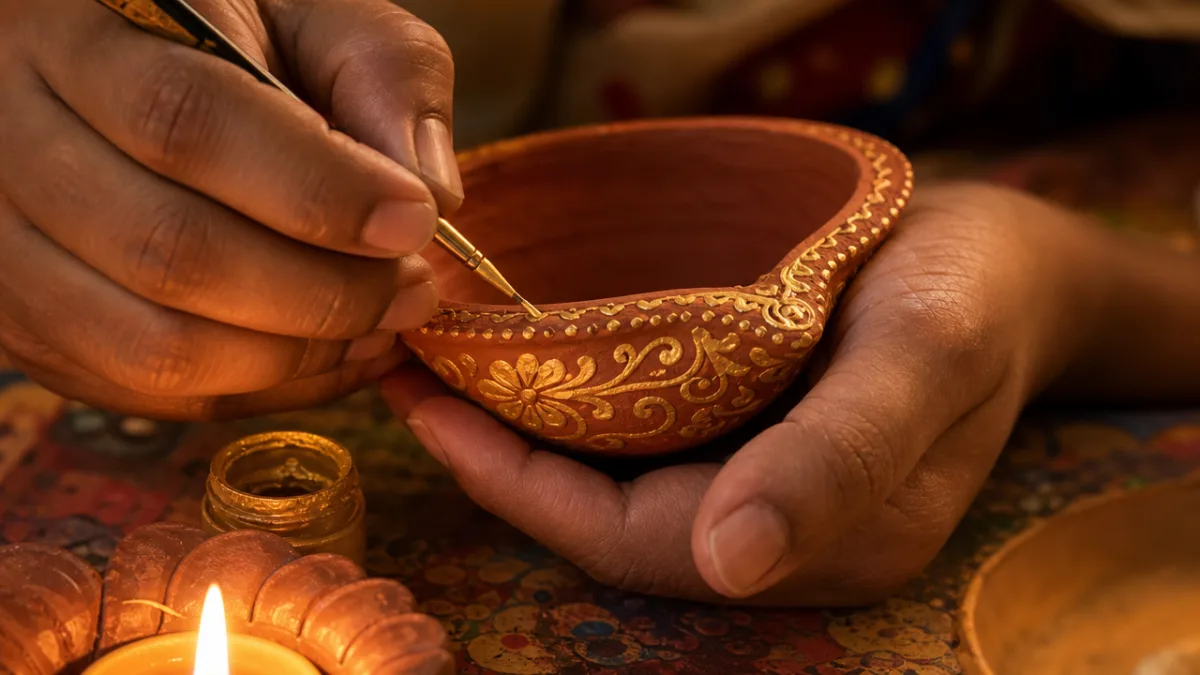
The centerpiece of any Diwali décor setup is the diya, and Himani’s terracotta pot diya tutorial is one of the most loved projects she’s shared through this partnership. Start with a small terracotta pot and saucer — the saucer becomes the lamp’s dish, the pot its decorative base. Lightly sand any rough edges, then apply two coats of metallic gold spray paint, letting each coat dry fully before moving on. Once that’s done, use a fine-tipped brush and red or white acrylic paint to add simple geometric patterns around the rim, drawing from traditional Indian folk art motifs like paisley, lotus flowers, or interlocking diamonds.
Another gorgeous option is a Diwali lantern cluster, which makes a dramatic focal point on a dining table, mantel, or entryway console. Pick up glass hurricane lanterns or large mason jars in varying heights from The Home Depot, fill each with a little decorative sand or salt, and nestle a tea light or pillar candle inside. Then surround the base of each lantern with fresh or faux marigold petals, small diyas, and loosely wound strands of gold fairy lights. The result is a warm, glimmering arrangement that captures the spirit of Diwali beautifully — and looks effortlessly elegant even to guests who aren’t familiar with the festival’s traditions.
For a bold entryway moment, try making a marigold and mango leaf garland — a traditional Indian threshold decoration called a toran — using supplies from The Home Depot’s garden section. Cut floral wire into lengths, then thread faux marigold blooms tightly together, alternating with glossy artificial leaves in deep green. Add small bell charms or gold ribbon loops here and there for a traditional touch. Hang the finished toran above your front door or across a fireplace mantel to welcome guests with genuine Diwali warmth. Here’s a quick step-by-step reference for this one:
- Cut floral wire into sections of roughly 36 inches each for a standard doorway
- Thread faux marigold heads tightly together, rotating between golden yellow and deep orange
- Tuck in artificial mango or bay leaves between every third or fourth bloom
- Attach small gold bells or charm accents every six to eight inches for a traditional detail
- Form loops at each end of the wire for easy hanging, securing with ribbon if you like
- Hang using removable adhesive hooks to avoid damaging your door or wall
Designing a Cohesive Diwali Home Aesthetic
Individual DIY projects are wonderful, but the most impactful Diwali décor comes from thinking about your whole home as one unified, intentional space. Himani consistently emphasizes this in her Decor Thy Nest content, encouraging her audience to pick a color palette upfront and carry it through from room to room. Classic Diwali palettes lean into deep jewel tones — burgundy, navy, emerald, purple — accented with gold and ivory. A more contemporary take might start with a warm neutral base of cream and terracotta, then layer in saffron yellow and antique brass for something a little more muted and sophisticated.
Layering is another principle Himani comes back to again and again. A beautiful Diwali vignette isn’t just a collection of objects sitting on a surface — it’s a thoughtfully arranged composition that plays with varying heights, textures, and light sources. On a console table, for example, you might place a tall hurricane lantern at the back, a cluster of mid-height painted diyas in the middle, and a scattering of petals and tea lights at the front. Adding a textile — a folded silk scarf or a printed fabric runner in a complementary pattern — anchors the whole thing and brings a warmth and dimension that a hard surface alone just can’t provide.
Lighting is arguably the single most transformative thing you can do for a Diwali space, and it’s also one of the easiest wins on a budget. Battery-operated fairy lights from The Home Depot can be woven through garlands, coiled inside glass vases, draped across bookshelves, or tucked behind translucent fabric to cast a soft golden glow throughout your home. Pair these with the living flame of real candles or diyas in safe, stable spots, and you get the kind of layered, multidimensional light environment that gives a Diwali home its unmistakable magic — warm, flickering, intimate, and genuinely alive.
Tips for Celebrating Diwali Responsibly and Sustainably
As Diwali decorating has grown in popularity beyond its traditional communities, there’s been a really important conversation about celebrating in ways that are both culturally respectful and environmentally conscious. Himani has been a thoughtful voice in that dialogue, encouraging her audience to think about the lifecycle of what they make. Choosing durable, reusable materials over single-use plastics or disposable mass-produced décor reduces waste and also builds a collection of pieces that get brought out year after year — gaining sentimental value with every passing Diwali season.
On the environmental side, a few simple choices make a real difference. Beeswax or soy candles are a better option than paraffin since they release fewer harmful chemicals into your home’s air. Real marigolds from local farms, rather than synthetic plastic blooms, support local agriculture and can be composted when the festival is over. And if fireworks are part of your community’s Diwali traditions, joining an organized community display rather than setting off individual consumer fireworks significantly cuts down on air and noise pollution — especially worth considering in urban areas where air quality is already a concern.
Cultural sensitivity matters just as much, particularly for those outside the South Asian community who are drawn to Diwali’s visual traditions. Himani’s approach — grounded in education and genuine storytelling — is a wonderful model for respectful engagement. Taking time to learn what the decorations you’re making actually mean, turning to creators and educators from within the community for guidance, and staying open to learning as you go — all of that reflects a real and thoughtful appreciation for a rich, living cultural tradition. Diwali’s message of light, generosity, and community genuinely does extend an invitation to everyone, and honoring that invitation with care is, in its own way, the most beautiful decoration of all.

Building a Diwali Community Through Shared Creativity
One of the most meaningful things about Himani Singh’s work through Decor Thy Nest is the community she’s built around shared creativity and cultural celebration. Her tutorials aren’t just instructional content — they’re invitations to connect, share memories, and build new traditions that honor heritage while fitting into modern life. Her comment sections and social feeds are filled with people sharing photos of their finished projects, swapping tips, asking questions, and genuinely cheering each other on with a warmth that’s honestly rare in the often competitive world of social media.
The Home Depot partnership makes all of that even more accessible. When materials are easy to find and affordable, more people can actually participate — first-time decorators, families crafting with young kids, college students decorating small apartments, seniors recreating cherished Diwali memories in new forms. Accessibility is a kind of generosity in itself, and by choosing a partner as widely available as The Home Depot, Himani has opened the creative invitation of Diwali decorating to a remarkably broad audience.
If you’re new to Diwali decorating, the best thing you can do is simply start — imperfectly, enthusiastically, with an open heart. Pick one project from Himani’s extensive archive of tutorials, grab your materials from The Home Depot, and set aside an afternoon to make something with your hands. Share what you create online, tag Decor Thy Nest, and join a growing community of people who know that the most meaningful homes aren’t the ones that look like showrooms — they’re the ones that glow from within, lit by creativity, filled with intention, and decorated with love. That, really, is what Diwali has always been about.








What do you think?
It is nice to know your opinion. Leave a comment.