










Spring Green Taper Candle Collection: The Art of Handmade Soy & Beeswax Candles
The Renaissance of Handmade Candles in Modern Home Décor
There’s something about the warm, flickering glow of a taper candle on a dinner table or mantelpiece that just feels right. Over the past few years, handmade candles have made a real comeback — and it’s not hard to see why. People are gravitating toward artisanal craftsmanship, more sustainable choices, and objects that bring genuine beauty into their everyday lives. The Spring Green Taper Candle Collection sits right at the heart of that movement, blending time-honored candle-making traditions with a fresh, modern sensibility that feels right at home in today’s interiors.
What really sets handmade taper candles apart from the mass-produced stuff isn’t just the materials — though those absolutely matter — it’s the human care that goes into every single step. Each candle is shaped by someone who genuinely understands how wax behaves, how color takes hold, and how form and function work together. When you pick up a twisted or ribbed taper from this collection, you’re holding something no factory line could replicate with quite the same character. That intangible quality is exactly what collectors and interior designers keep coming back for.
The color palette here — built around the fresh, uplifting tones of spring green — taps into one of the most enduring color stories in home décor. Green in all its forms speaks of renewal, growth, nature, and calm. From the softest sage to a vivid emerald, green candles have become a staple of seasonal tablescaping and year-round decorating. This collection brings those hues together in a range that pairs beautifully with natural materials, earthy ceramics, white linens, and just about everything in between.
Understanding Soy Wax and Beeswax: A Tale of Two Natural Materials
Every great candle starts with great wax, and the Spring Green Taper Collection doesn’t cut any corners there. Soy wax, made from hydrogenated soybean oil, has become a go-to for artisan candle makers — and for good reason. It burns more slowly and at a lower temperature than paraffin, so your tapers last longer and drip less. It’s also biodegradable and renewable, which makes it a genuinely responsible choice for anyone trying to be more mindful about their environmental footprint without giving up the things they love.
Beeswax is a whole different story — and a much older one. It’s possibly the earliest candle-making material humans ever used, with a history stretching back thousands of years to ancient Egypt. It comes from honeybee hives and carries a soft, natural honey-like scent that many people find incredibly comforting, even in candles labeled unscented. Beeswax burns remarkably clean, producing very little soot, and it’s known to release negative ions when burning, which some enthusiasts believe helps freshen the air. Its warm, creamy base also interacts beautifully with color dyes, producing rich, complex tones that are hard to achieve with other waxes.
Offering both soy and beeswax in one collection means there’s something here for everyone. Some people want the vegan credentials of soy; others are drawn to the heritage and performance of beeswax. Both take color well, hold their taper shape reliably, and deliver a clean, steady burn that’s well-suited to candlelit dinners, meditation spaces, or simply a beautiful display on a shelf. Knowing the difference makes it easier to choose what actually fits your values and lifestyle.
The Art of Twisted and Ribbed Candle Forms
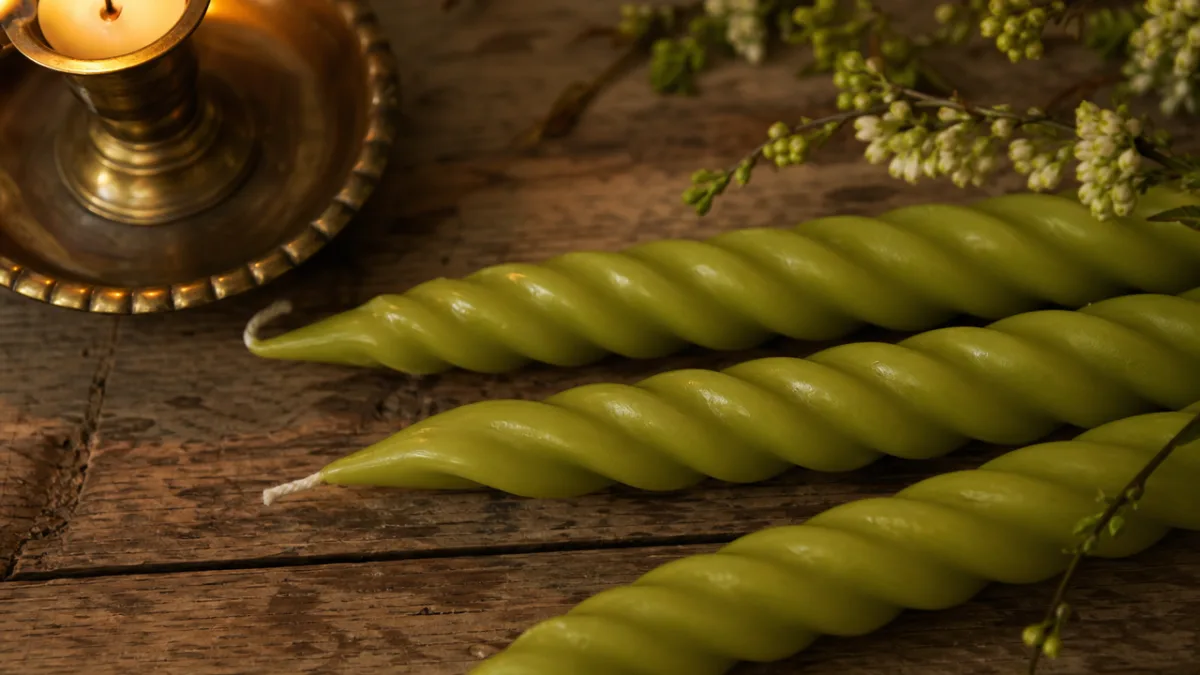
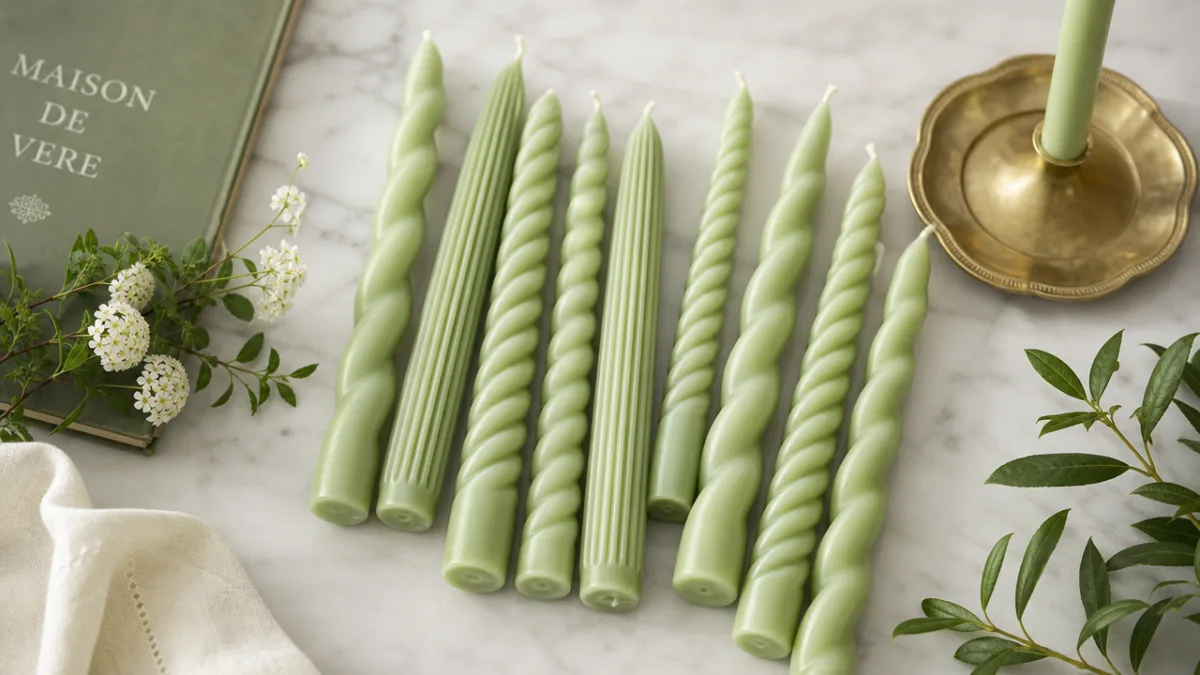
One of the most eye-catching things about the Spring Green Taper Collection is the choice of forms: the fluid, sinuous twisted taper and the crisp, structured ribbed taper. These aren’t just pretty details — they reflect real skill and a deep understanding of how wax behaves in that narrow window between fully liquid and fully set. Making a twisted candle means working fast and confidently, pulling and turning the warm wax with practiced hands before it locks into shape permanently.
The twisted taper has quietly become an icon of contemporary maximalist décor. You’ll spot it at upscale restaurant tables, in the pages of design magazines, and all over your social media feeds. Its spiral form catches light from every angle, creating a dynamic, almost kinetic effect even before you strike a match. Once it’s lit, the twisting grooves guide the melting wax in endlessly mesmerizing patterns. In spring green, the form takes on an almost organic quality — twisted vines, unfurling ferns, the exuberant energy of nature waking up after a long winter.
Ribbed tapers offer a different kind of appeal: one built on repetition, rhythm, and clean structure. The evenly spaced ridges running vertically along the surface are satisfying to touch and beautiful to look at, catching light in parallel lines that give the candle real depth and dimension. They’re a natural fit for minimalist and Scandinavian-inspired spaces, where restrained ornamentation lets individual objects do the talking. Both forms come in the spring green palette, so you can mix and match freely depending on what speaks to your personal aesthetic.
Unscented by Design: Why Fragrance-Free Candles Have Their Place
In a market absolutely packed with heavily scented candles, going fragrance-free might seem like an odd choice — but there are actually some really compelling reasons why the Spring Green Taper Collection takes this approach. For one, unscented candles are far more versatile in social settings. A dinner party is all about the aromas coming from the kitchen and the pleasure of good company; a strong candle fragrance can easily compete with — or flat-out overpower — the food. Unscented tapers let the meal take center stage while still bringing all the warmth and romance of candlelight to the table.
There’s also a significant number of people for whom fragrance in candles — synthetic or natural — triggers headaches, allergies, or respiratory issues. Fragrance sensitivities are more common than you might think, and they can make an otherwise lovely space genuinely unpleasant for anyone affected. By keeping things fragrance-free, the Spring Green Collection makes sure everyone at the table can enjoy the ambiance without any downsides. That kind of thoughtfulness is the mark of really good hospitality.
And honestly, the natural materials themselves have something to offer in the scent department. Beeswax especially carries that soft, warm honey note — present but never pushy, like a gentle background hum rather than a full-volume announcement. For anyone who likes to layer their home fragrance, unscented candles are the ideal starting point. They won’t clash with your room spray, essential oil diffuser, or fresh flowers — they just quietly support whatever else you’re doing. That flexibility is actually a pretty sophisticated quality in a candle.
Styling Your Spring Green Taper Candles: Tablescaping and Interior Design Ideas
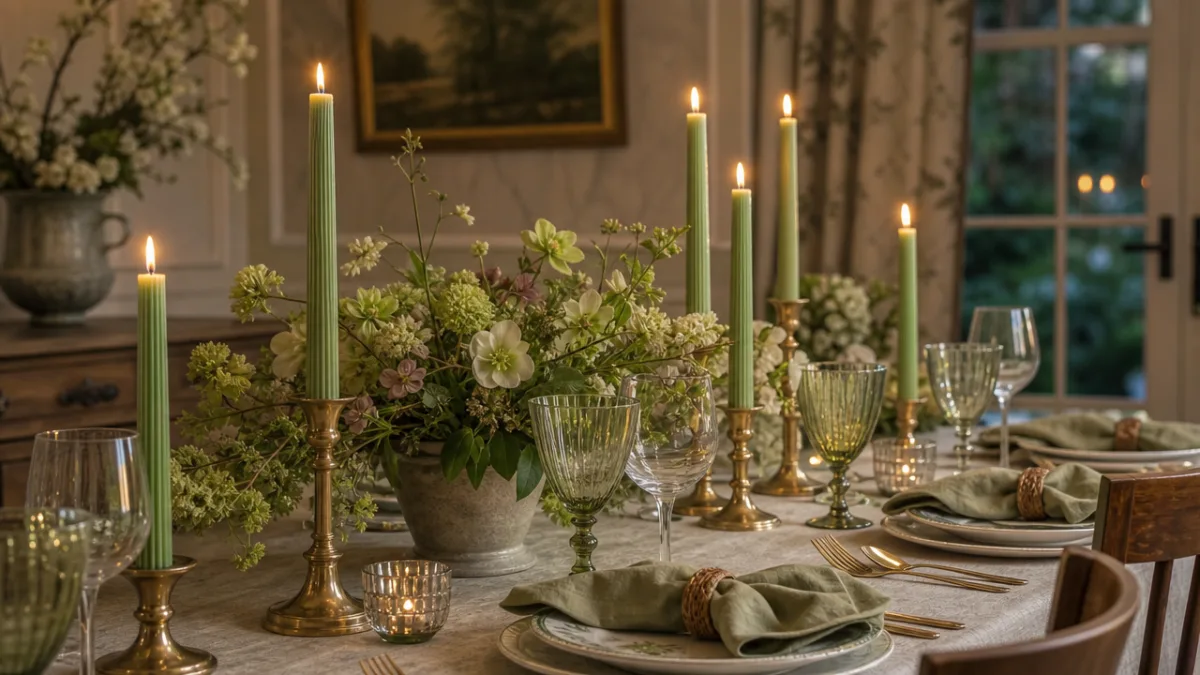
One of the things that makes this collection so enjoyable to work with is how adaptable it is. Spring green sits right in that sweet spot between the muted palette of winter and the full saturation of summer, which makes these candles ideal for decorating from early March all the way through late June. They work just as well in a formal dining room as they do on a relaxed kitchen table, an outdoor entertaining spread, or a bedroom nightstand where a single candle creates that quiet sense of luxury.
When building a tablescape around these candles, think about natural elements that reinforce the spring green story — eucalyptus, moss, fern fronds, white or cream-colored blooms. The right candle holders make a huge difference too, and there are some great options depending on the look you’re going for:
- Brass or gold candlesticks — The warm metallic tones of brass create a luxurious contrast against spring green wax, evoking a sense of old-world elegance with a contemporary twist.
- Terracotta or ceramic holders — Earthy, handmade ceramic holders reinforce the artisanal quality of the candles themselves and ground the arrangement in natural textures.
- Clear glass taper holders — Transparent holders allow the full beauty of the candle’s color and form to be the focal point, while adding a light, airy quality to the composition.
- Marble or stone bases — The cool, smooth surface of marble provides a sophisticated counterpoint to the organic warmth of the candles, creating a refined and gallery-like presentation.
- Wooden candelabras — Natural wood supports the botanical color story and adds height and drama to a centerpiece arrangement featuring multiple tapers at varying heights.
Beyond the dining table, these candles can do a lot of work elsewhere in the home. A cluster of three at varying heights on a bathroom shelf can genuinely transform the space into something that feels spa-like. On a mantelpiece, nestled among trailing ivy, ceramic vessels, and a few stacked books, they become a real focal point. The twisted form tends to shine in eclectic and maximalist rooms, while the ribbed variety is more at home in pared-back, contemporary spaces. The main thing is to give each candle a little visual breathing room so it can actually be appreciated.
Caring for Your Handmade Taper Candles: Practical Tips for Longevity and Safety
When you invest in handmade artisan candles, you want to get everything out of them — the full burn time, the visual beauty, all of it. That starts before you even light one. Store your tapers in a cool, dry spot away from direct sunlight, which can fade the color and soften or warp the wax. If your candles arrive during a heat wave, give them at least an hour to settle at room temperature before you handle or burn them. Storing them horizontally in their original packaging helps prevent bending — something to be especially mindful of with the twisted varieties, since their spiral form is more vulnerable to distortion when warm.
When it’s time to light up, a few simple habits will make a noticeable difference. Always trim the wick to about a quarter inch before each burn — it cuts down on smoke, reduces soot, and keeps the flame controlled. On that very first burn, let the candle stay lit long enough to form a full melt pool across the top, which usually takes one to two hours depending on the diameter. Skipping this step leads to tunneling, where the candle burns straight down the middle and leaves a thick ring of wasted wax around the edges. Nobody wants that.
Keep burning candles in sight, and always use holders designed for tapers that can properly catch any dripping wax. Drafts are the enemy here — moving air from open windows, air conditioning vents, or ceiling fans causes uneven burning, more flickering, and a shorter burn time overall. With a little care, quality soy and beeswax tapers from this collection will reward you with a generous burn time that makes them genuinely good value compared to cheaper alternatives. When you’re done, use a snuffer to extinguish the flame rather than blowing it out — this prevents hot wax from spattering and avoids that lingering smoky smell that tends to hang around a room.
The Sustainability Story: Why Choosing Handmade Natural Wax Candles Matters
Every purchase we make carries some kind of environmental or social weight, and choosing handmade candles made from natural waxes is one of those small but meaningful decisions that adds up over time. The conventional candle industry leans heavily on paraffin wax, a petroleum byproduct that releases potentially harmful volatile organic compounds when burned and feeds overall demand for fossil fuel extraction. Soy wax, by contrast, comes from soybeans — an annually renewable crop. Beeswax is a natural byproduct of healthy honeybee colonies tended by beekeepers who practice ethical, sustainable apiculture. Neither of those requires drilling into the earth.
There’s also something worth thinking about on the economic and social side of things. When you buy from a small-batch, handmade producer instead of a large corporation, your money travels a much shorter distance. It supports individual livelihoods, small business ecosystems, and the kind of traditional craft skills that are genuinely at risk of being lost to industrialization. Artisan makers tend to source their materials with more care and transparency than large manufacturers — often choosing domestic suppliers, fair-trade options, or certified sustainable materials. That supply chain integrity means the candle you light at dinner actually carries a story worth knowing.
Small artisan candle businesses also tend to be more thoughtful about packaging and shipping — using recycled or biodegradable materials, keeping plastic to a minimum, and shipping in ways that reduce the carbon footprint per unit. When you burn your candles all the way down, nothing goes to waste, and since both soy and beeswax are biodegradable, any residual wax can be composted or simply wiped away without a second thought. Choosing the Spring Green Taper Collection is, in the end, a choice that lets aesthetic pleasure and environmental responsibility coexist — and that feels like exactly the kind of balance worth striving for.








What do you think?
It is nice to know your opinion. Leave a comment.