










How to Create Show-Stopping Hanging Baskets
Hanging baskets might just be one of the best things you can do for an outdoor space. Whether you want to dress up a tired front porch, bring some life to a balcony, or make a plain garden wall into something worth looking at, a well-planted basket can do all of that and more. The real secret isn’t just about picking pretty plants — it’s about knowing how to combine them, how to care for them, and how to present them so the whole thing looks lush and generous right from the start.
A lot of gardeners feel a bit daunted by hanging baskets. They worry they’ll dry out within weeks, or that getting them right requires some kind of specialist knowledge they don’t have. But honestly, with a bit of preparation, a planting scheme you’ve actually thought through, and a simple routine to keep on top of, anyone can grow baskets that have the neighbours slowing down for a look. This guide covers the whole journey — from picking the right container to keeping things blooming well into autumn.
Hanging baskets are also a brilliant entry point for getting kids into gardening. They’re one of those projects where you see results quickly and visibly, which makes all the difference. Children can get involved in picking colours, helping with planting, and taking their turn with the watering can. There’s something genuinely lovely about watching a basket fill out and burst into bloom together — and the habits and enthusiasm that come from it tend to stick.
Choosing the Right Basket and Liner
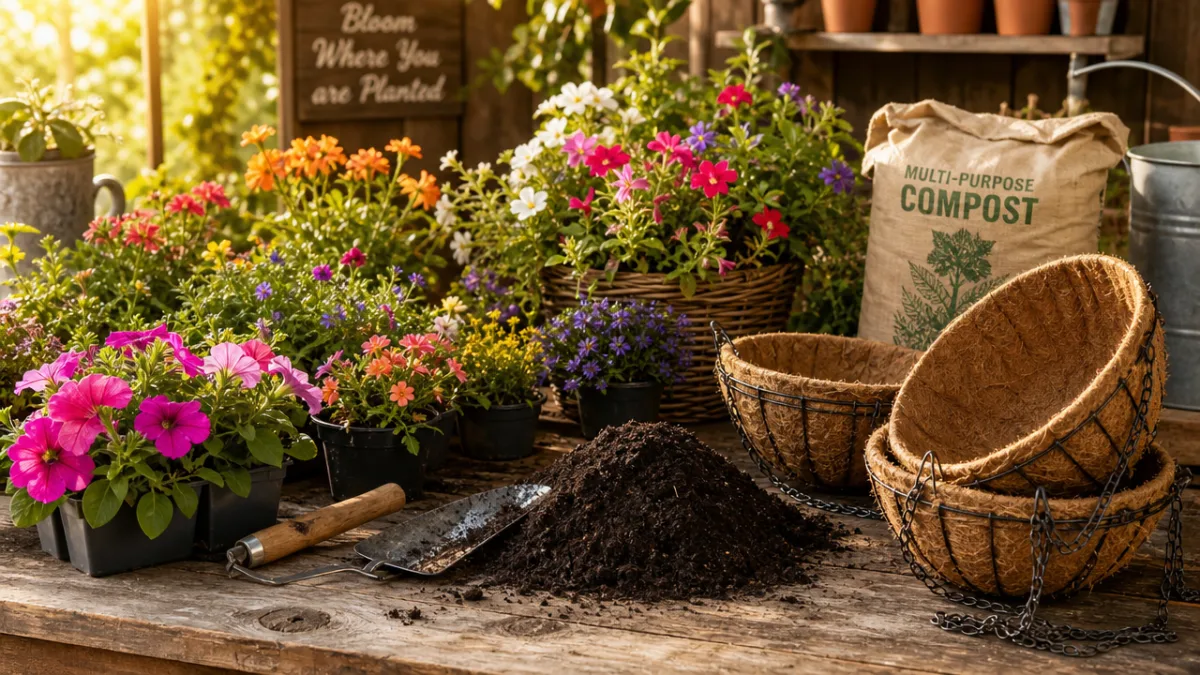
It all starts with the container. Wire baskets are the traditional go-to because they let you plant through the sides as well as the top, which is how you get that gorgeous ball-of-flowers effect. They come in all sorts of sizes, but if you want something truly impressive, aim for at least 35 to 40 centimetres across. Smaller baskets dry out quickly and just don’t hold enough compost to keep plants growing well through a whole season.
The liner matters more than people often realise, both for how the basket looks and how well it performs. Moss liners are the classic option — they look natural and drain well, but moisture does escape from them pretty quickly. Coir liners are a more sustainable choice that hold onto water a little better while still draining properly. Foam liners with pre-cut holes are great for beginners because they make it much easier to thread plants through the sides without damaging the roots. Whatever you go with, it’s worth tucking a small piece of polythene or a cut-down plastic bag into the base to create a little water reservoir — it makes a real difference to how often you need to water.
Solid plastic baskets with built-in drip trays have really grown in popularity, especially for people who want something lower-maintenance or who garden somewhere particularly windy. You can’t plant through the sides the same way, but modern designs often look great in their own right, and that built-in reservoir can seriously cut down on watering. If you go plastic, buy the biggest size you can find, and think about adding water-retaining granules to the compost mix as well — it helps keep things going through dry spells.
Selecting the Best Compost and Feed
Don’t skimp on compost — it really does matter. Your basket plants are packed in densely, sharing a relatively small amount of growing medium, so they need everything working in their favour. Start with a good multipurpose compost as your base, but always build on it before you plant. Mixing in water-retaining granules at the rate shown on the packet means the compost holds moisture for much longer, like having a network of tiny sponges running through the root zone.
Slow-release fertiliser granules are probably the most important thing you can add. Stir them thoroughly into your compost before planting and they’ll feed your plants consistently for several months without you having to think about it. This is especially useful early in the season when life gets busy, and it saves plants from the boom-and-bust cycle of inconsistent feeding that can cause real stress and knock flowering back. Look for something formulated for flowering plants — you want a higher potassium content to push blooms rather than leafy growth.
Once that slow-release feed starts to run low — usually around eight to ten weeks in, depending on the product — you’ll want to switch to a liquid feed to top things up. A high-potash tomato fertiliser is perfect and easy to find anywhere. Apply it every week to ten days through the flowering season and the results are obvious: continuous blooms and really vivid colour. If leaves start looking a bit yellow, especially later in the season, that usually points to a nitrogen shortfall, and a brief switch to a balanced liquid feed can help bring the foliage back to that deep green that really makes flowers stand out.
Planning Your Planting Scheme
The best hanging baskets aren’t put together by grabbing whatever looks nice at the garden centre — they’re planned. And the planning doesn’t have to be complicated. Most great baskets are built around a simple three-part idea: thriller, filler, and spiller. The thriller is your star plant, something tall or bold that draws the eye upward. The fillers are mounding plants that build density and lushness around it. The spillers trail over the rim and cascade downward, giving you that overflowing, abundant look that’s so hard to resist.
Colour is just as important as plant choice. A harmonious scheme — maybe deep burgundy, soft coral, and pale peach — gives you something elegant and refined. A bold contrasting scheme — purple and yellow, orange and blue — creates real visual impact that reads well from a distance. For family gardens, an exuberant mix of colours often works brilliantly. It reflects the energy of the household, and it’s also the most forgiving option if you end up adding extra plants along the way.
Don’t forget foliage plants when you’re putting your scheme together. Variegated or silver-leaved options like helichrysum, dichondra, or variegated ivy bring texture and contrast that make flowers look even more vivid by comparison. Dark-leaved sweet potato vine or alternanthera act as a dramatic backdrop that makes bright blooms practically jump out. Foliage plants also tend to handle the odd missed watering much better than flowering ones, which adds a bit of resilience to the whole display and keeps things looking decent even when the blooms are between flushes.
The Best Plants for Hanging Baskets
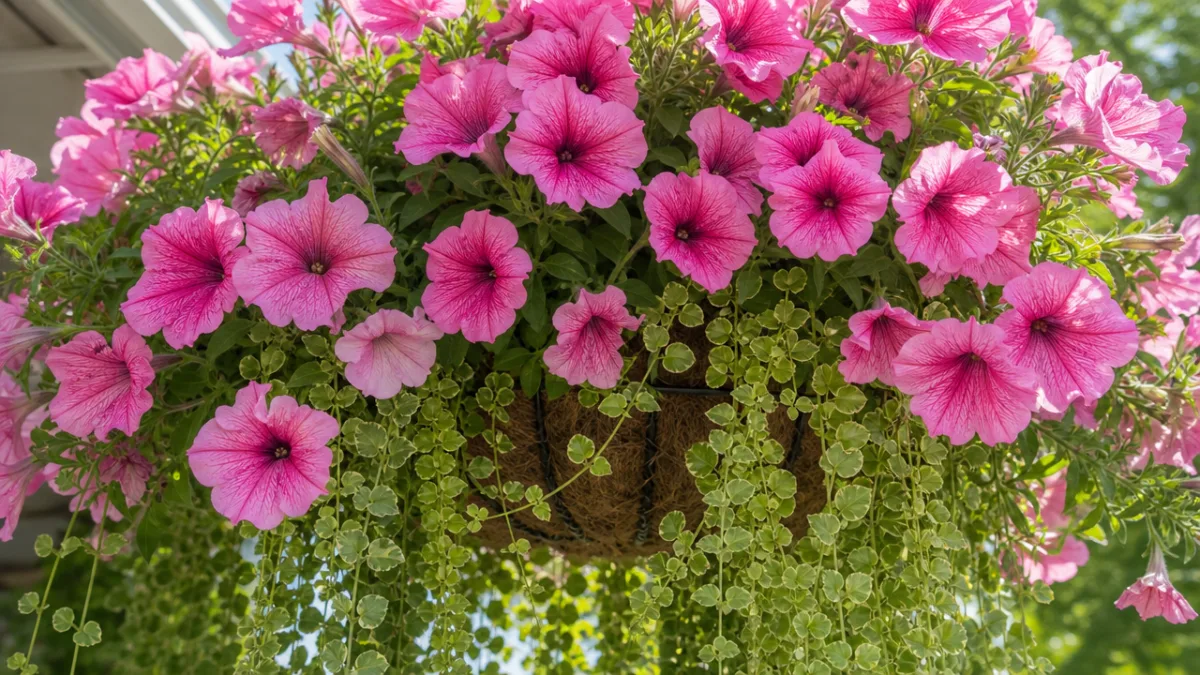
Some plants have just earned their reputation as basket classics through sheer consistent performance. Trailing petunias — especially Surfinia and Million Bells — are among the most popular, and deservedly so. They bloom non-stop through summer without needing deadheading, they trail magnificently (sometimes up to a metre in a good season), and they come in just about every colour you can think of. They’re also reasonably tough and handle changeable weather better than a lot of alternatives.
Fuchsias are another perennial favourite, particularly well suited to shadier spots where other flowering plants tend to struggle. Trailing varieties like ‘Cascade’ or ‘Golden Marinka’ put on a gorgeous show of pendulous blooms in rich combinations of pink, red, purple, and white, especially when fed regularly and kept deadheaded. Begonias are excellent performers too — both trailing and upright types — and their waxy flowers hold up surprisingly well in wet weather that can turn petunias to mush. The Illumination and Pendula series are particularly well suited to life in a basket.
If you fancy something a bit different, edibles are worth considering. Trailing tomato varieties like Tumbling Tom or Tumbler produce sweet little fruits that hang beautifully from the rim and are a genuine hit with children. Strawberries are a classic basket plant that gives you pretty white flowers, cascading runners, and delicious fruit. Herbs like trailing rosemary, thyme, and even trailing nasturtiums can make baskets that are just as useful as they are beautiful — a productive little display that earns its place twice over.
How to Plant Your Hanging Basket
Planting day is genuinely enjoyable if you take your time with it. Start by resting the basket in a large bucket or pot so it sits steady while you work. Line it with your chosen liner, and if you’re using a wire basket, begin by placing your first layer of plants through the sides at the lowest level. The easiest way to do this is to roll each root ball gently into a cone shape using a scrap of newspaper or cloth, thread it through the mesh from the outside, then unwrap it once it’s inside so the roots settle onto the liner properly.
Add a layer of your prepared compost, firm it gently around those first plants, then add another ring of side plants at a slightly higher level — staggered so they sit in the gaps between the row below. This staggering is what creates that full, round, ball-shaped effect once the basket matures. Once you’ve built up two or three levels of side plants, fill the top with your thriller in the centre, your fillers arranged around it, and your spillers positioned around the outer rim where they can cascade freely.
Give the basket a really good watering after planting, let it drain completely, then hang it up. That said, it’s worth keeping newly planted baskets somewhere sheltered for the first week or two — especially if there’s still a frost risk in your area. Most summer bedding plants won’t thank you for a late cold snap, and they shouldn’t go outside permanently until after your local last frost date. During that hardening-off period, bring baskets in if temperatures are forecast to drop below five degrees Celsius, gradually getting them used to outdoor conditions so they build up strength before the season really gets going.
Caring for Your Baskets Through the Season
Watering is where most of the effort goes, especially during hot spells. On the warmest summer days, a large basket in full sun might genuinely need watering twice — once in the morning and again in the early evening. The easiest way to tell whether it’s needed is simply to lift the basket; a dry one feels noticeably lighter. A long-spouted watering can helps enormously if your baskets are hung at height, and if you have several baskets or a holiday coming up, a drip irrigation system with a timer is absolutely worth the investment.
Deadheading — snapping off spent flowers before they set seed — is what keeps the blooms coming all season. Many modern trailing varieties are marketed as self-cleaning, which means the old flowers drop on their own, but even these benefit from a quick once-over now and then. For varieties that do need deadheading, work it into your watering routine. While you’re already holding the basket to check its weight, just run your other hand through the plants and pinch off anything that’s past its best. It takes a couple of minutes and makes a noticeable difference to how the basket looks and performs.
Around midsummer, a lot of baskets start to look a bit tired and leggy as that first flush of growth begins to slow. This is the perfect moment to give them a proper trim — cut back the straggliest stems by about a third, then water well and follow up with a good liquid high-potash feed. Within two to three weeks you’ll see fresh, vigorous new growth and a whole new flush of flowers. This midsummer haircut, as it’s sometimes called, can genuinely extend a display by six to eight weeks, keeping baskets looking great well into September and beyond.
Troubleshooting Common Hanging Basket Problems
Even experienced gardeners run into trouble with hanging baskets sometimes, so knowing what to look for — and how to respond quickly — is really what keeps displays looking their best. By far the most common problem is wilting, which is almost always down to underwatering. But here’s the thing: plants can also wilt when they’ve been overwatered, because waterlogged roots can’t do their job properly. If you water a drooping basket and it still hasn’t perked up after a few hours, check whether the compost is actually dry or whether poor drainage might be the real culprit.
Pests can cause real headaches too. Vine weevil grubs are particularly nasty — they attack the roots of basket plants, especially begonias and fuchsias, and plants can suddenly wilt and collapse without much warning. Adding biological control nematodes to your compost at planting time, or drenching with them in late summer, is an effective and wildlife-friendly way to stay ahead of the problem. Aphids often cluster on the soft new growth at plant tips, and while a small colony is usually fine, a heavy infestation can distort growth and spread viruses. A firm blast of water dislodges most of them, and insecticidal soap spray handles the rest without harming the beneficial insects you want to keep around.
If your baskets simply aren’t flowering well, there are a few likely culprits. Not enough light is a common one — even shade-tolerant plants need some indirect light to really perform. Nutrient deficiency, particularly a lack of potassium, is another frequent cause, so if light and water aren’t the issue, step up the liquid feeding and see if that shifts things. And sometimes, after a long or particularly hot season, a basket is just genuinely spent. Rather than trying to revive something that’s run its course, think about replanting it with autumn stars like pansies, violas, or ornamental cabbages — they’ll carry your display all the way through until the first hard frosts bring the season to a close.








What do you think?
It is nice to know your opinion. Leave a comment.