










Home Office Minimalist Styling: Creating a Focused, Functional Workspace
The Philosophy Behind Minimalist Home Office Design
Minimalism in the home office is far more than an aesthetic trend — it is a deliberate philosophy that prioritizes clarity of mind through clarity of space. When your environment is stripped of visual noise and unnecessary clutter, your brain is free to focus on the work that actually matters. The minimalist workspace operates on a simple but powerful premise: every object you keep must earn its place, and everything else must go.
The roots of minimalist design philosophy stretch back to the mid-twentieth century, drawing from Japanese wabi-sabi traditions, Scandinavian functionalism, and the Bauhaus movement’s conviction that form should follow function. Applied to the modern home office, these ideas converge into a single guiding principle — that restraint is not deprivation but a form of discipline that ultimately creates more room for creativity, concentration, and calm. A desk with three well-chosen tools will always outperform a desk buried under twenty mediocre ones.
Understanding this philosophy before you buy a single shelf or paint a single wall is crucial. Too many people approach minimalism as a shopping list — buying white furniture, neutral rugs, and matching desk accessories — without first asking themselves what they truly need versus what they have simply accumulated. The transformation of a home office begins not in a store but in a mindset shift: from more is better to less, but intentional, is best. Embrace the idea that your workspace should feel like a breath of fresh air every time you enter it.
Decluttering and Editing Your Space With Intention
Before any styling decisions are made, the most important step is a ruthless and honest decluttering process. This means removing everything from your home office — every book, every cable, every pen, every decorative object — and placing it all in a neutral space where you can see it clearly. Only then can you evaluate each item with fresh eyes and ask yourself honestly: does this object serve a function I use regularly, or does it simply occupy space out of habit or guilt?
Editing your space with intention means making deliberate decisions, not impulsive ones. Start by categorizing items into three groups: essential tools you use daily, reference materials you access weekly or monthly, and everything else. The third category is where most people find the majority of their possessions sitting. Items that have not been used in three to six months should be donated, archived in a separate storage room, or discarded entirely. This process can feel uncomfortable, but the discomfort is temporary while the benefits are lasting.
Once you have identified only the essentials, consider how those items will be stored and displayed. In a minimalist office, storage is not an afterthought — it is a design element. Closed cabinets and drawers keep surfaces clean and allow the eye to rest without distraction. Open shelving, if used at all, should be curated with great care, displaying only items that are both functional and visually harmonious. The goal of this editing phase is to create a space where every surface feels intentional and every object has a clear reason for being exactly where it is.
Choosing the Right Color Palette and Materials
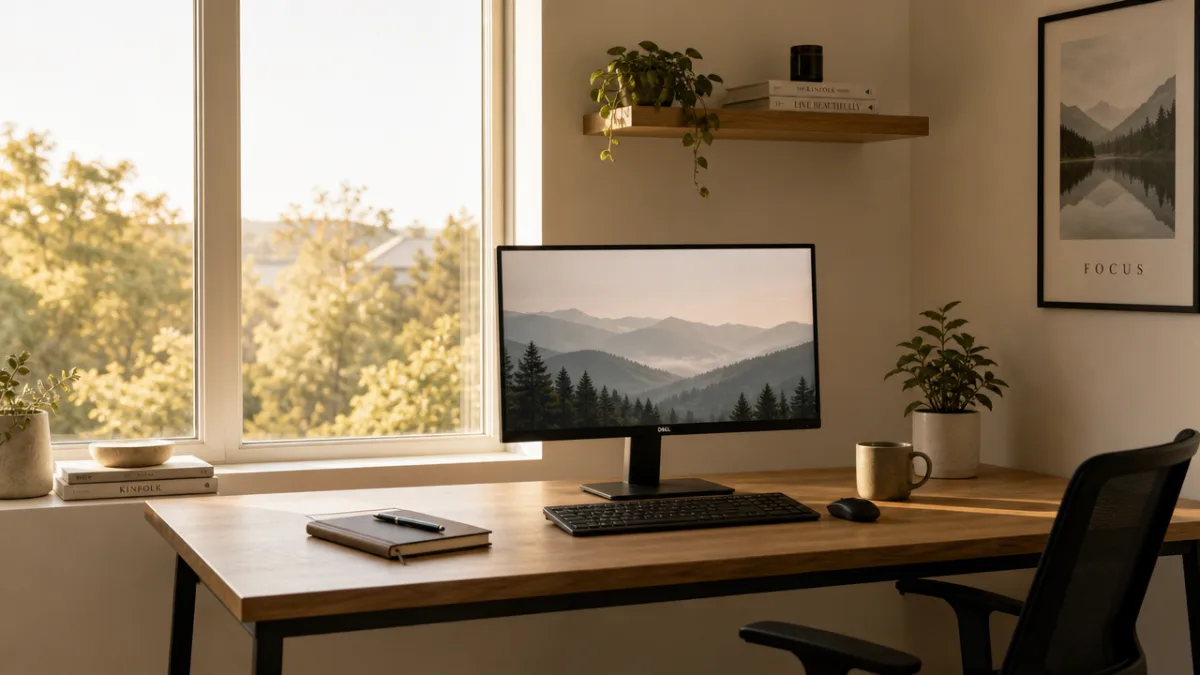
Color is one of the most powerful tools in minimalist design, and in the home office, it carries even greater weight because it directly influences mood, focus, and energy levels throughout the workday. The minimalist color palette is typically built around a neutral foundation — whites, warm creams, soft grays, and muted beiges — with one or two carefully chosen accent tones introduced sparingly. This restrained use of color allows the architecture of the room and the quality of the light to take center stage rather than competing with busy patterns or bold hues.
White walls remain the most popular choice for minimalist home offices because they reflect natural light, making even small spaces feel open and expansive. However, a true minimalist approach does not demand clinical sterility. Warm whites with slight yellow or pink undertones create a much more inviting atmosphere than cold, blue-toned whites. If pure white feels too stark, consider off-white shades like warm ivory or linen, which soften the room without introducing visual complexity. A single wall painted in a deeper shade — a muted sage, a dusty terracotta, or a cool charcoal — can anchor the space beautifully when kept in balance with lighter surrounding tones.
Materials matter enormously in a minimalist office because, with so few objects present, the texture and quality of each one becomes highly visible. Natural materials like solid oak, walnut, or ash wood bring warmth and organic character to an otherwise spare environment. Stone, ceramic, and linen add tactile richness without overwhelming the palette. Avoid mixing too many different material families — choose two or three that complement one another and repeat them across the room in subtle ways. A walnut desk paired with a linen chair cushion and a ceramic desk organizer creates a cohesive material story that feels considered and calm rather than assembled by chance.
Furniture Selection: Function Meets Elegant Simplicity
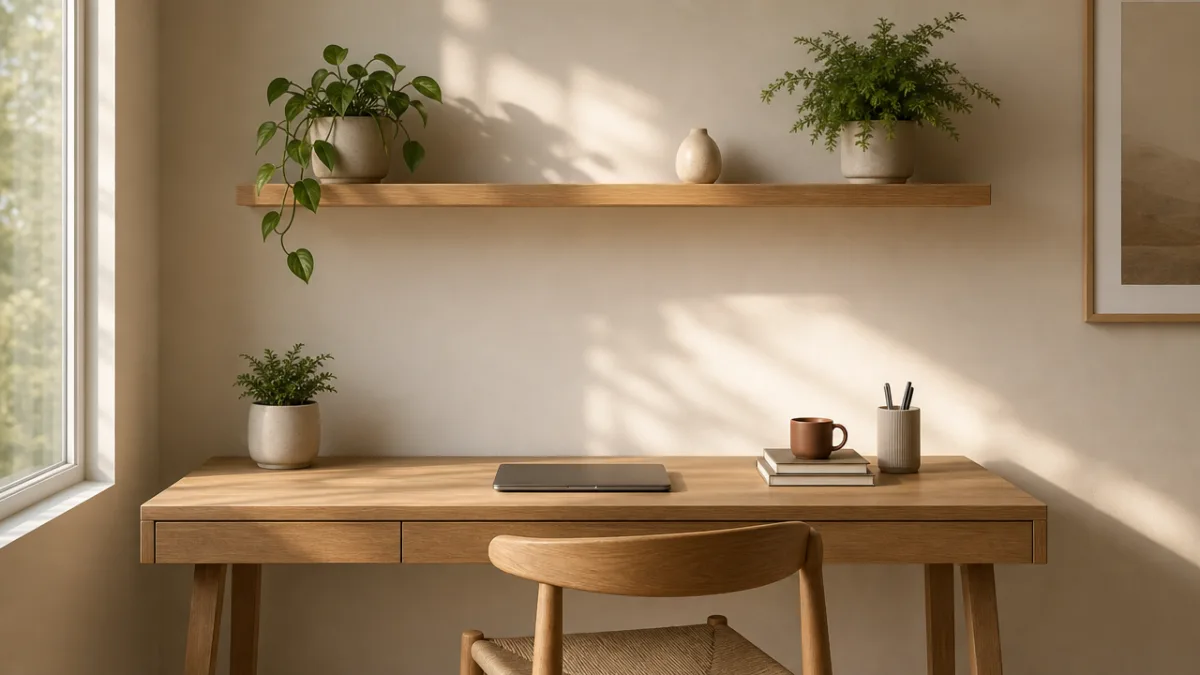
The furniture you choose for a minimalist home office should be selected with extreme care, because in a spare environment, every piece carries significant visual weight. The desk is the heart of the workspace and deserves the most consideration. Look for a desk with clean lines, no ornate detailing, and a surface large enough to accommodate your actual workflow without excess. Solid wood desks with tapered legs, or sleek surfaces mounted directly to the wall as floating desks, are both excellent choices that embody the minimalist ethos of purposeful simplicity.
Your office chair is the next most critical furniture investment, and here, ergonomics and aesthetics must work together rather than against each other. The minimalist home office does not require you to sacrifice physical comfort in pursuit of visual purity — in fact, an uncomfortable chair will disrupt your focus far more than a slightly imperfect aesthetic choice. Look for chairs in neutral tones — light gray, warm white, natural linen, or cognac leather — with clean silhouettes that do not clash with the overall design language of the room. Many Scandinavian and Japanese furniture brands offer ergonomic chairs that are also visually understated.
Beyond the desk and chair, most minimalist home offices benefit from restraint in additional furniture pieces. A single well-proportioned shelving unit or a narrow credenza can provide necessary storage without crowding the room. Resist the temptation to add side tables, additional seating, or decorative cabinets unless there is a clear functional reason for each. Consider the negative space in your room — the empty floor, the bare stretches of wall — as active design elements rather than gaps waiting to be filled. That openness is precisely what gives a minimalist office its distinctive sense of calm and possibility.
When evaluating any potential furniture purchase for your minimalist office, apply this simple test before committing: identify the specific function the piece will serve, confirm that function cannot be handled by an existing item, and assess whether the piece’s visual presence is in proportion to its usefulness. Furniture chosen this way will always feel right in the space because it was never chosen casually or impulsively but with full awareness of how it serves both your working life and the overall design harmony of the room.
Lighting Design for Productivity and Atmosphere
Lighting in a minimalist home office is not merely functional — it is transformative. The right lighting can make a compact room feel spacious and airy, reduce eye strain during long work sessions, create a sense of warmth and welcome in an otherwise spare environment, and even regulate your circadian rhythm to support sustained energy levels throughout the day. Because the minimalist office contains fewer objects to decorate with, lighting becomes one of the primary means through which you introduce atmosphere and personality into the space.
Natural light should always be prioritized above all other light sources. If your home office has a window, position your desk to take maximum advantage of that light without placing the screen in direct glare. Sheer linen or cotton curtains diffuse harsh direct sunlight beautifully while still allowing the room to feel bright and connected to the outdoors. If natural light is limited, invest in full-spectrum lighting that mimics daylight as closely as possible — this type of illumination is far more flattering and energizing than the cool fluorescent tones common in commercial office environments.
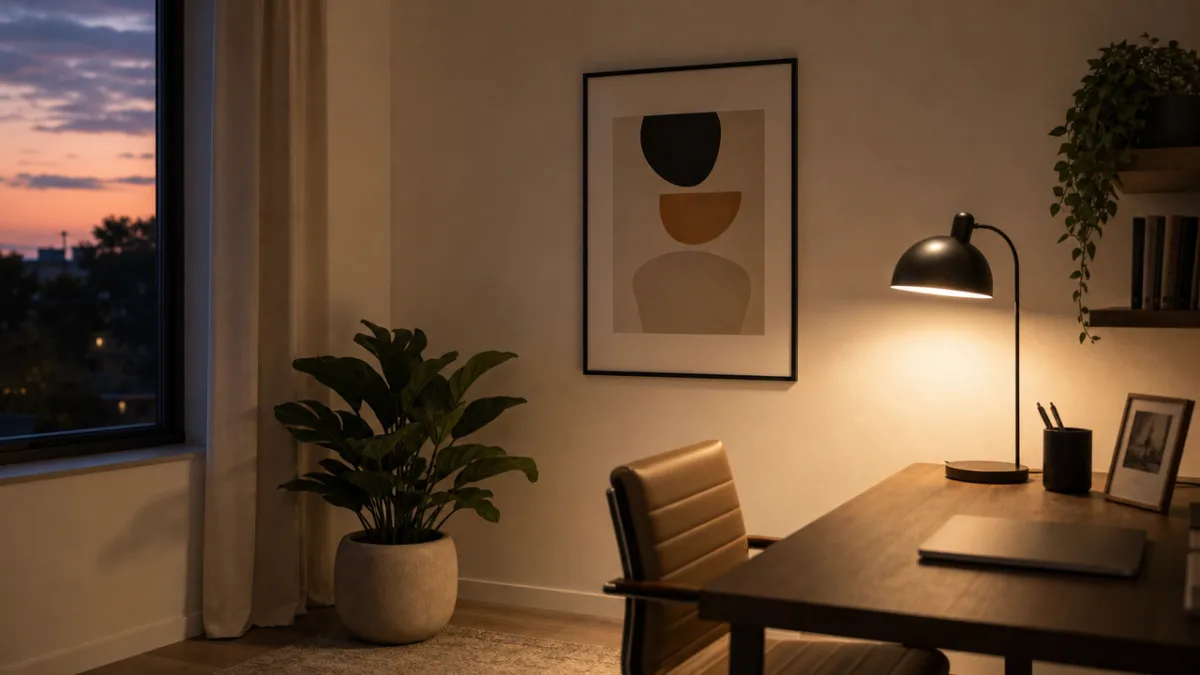
Layering your artificial light sources is a technique borrowed from interior designers that works exceptionally well in a minimalist workspace. Rather than relying on a single overhead ceiling light, combine three distinct layers: ambient light for overall room illumination, task lighting at the desk for focused close work, and accent lighting to add depth and warmth. A simple wall-mounted sconce, a sleek desk lamp with a warm-toned bulb, and a dimmable ceiling pendant together create a lighting environment that can shift throughout the day from bright and productive to calm and focused depending on the nature of your work.
Incorporating Plants, Art, and Considered Accessories
The greatest misconception about minimalist design is that it must be cold, impersonal, or devoid of character. In reality, the minimalist home office at its best is deeply personal — it simply expresses that personality through a small number of highly intentional choices rather than a large quantity of random ones. Plants, artwork, and carefully selected accessories are the elements that breathe life and individuality into a space that could otherwise feel generic, and in a minimalist office, each of these elements carries far greater visual impact precisely because it is not competing with dozens of other objects for attention.
Plants are perhaps the single most effective way to introduce warmth, texture, and organic life into a minimalist workspace without creating visual clutter. The key is choosing species that are visually architectural rather than bushy or chaotic. A single large-leafed monstera in a simple ceramic pot, a slender fiddle leaf fig, or a cluster of varying-height succulents on a window ledge all make striking statements without overwhelming the restrained palette of the room. Beyond aesthetics, plants have well-documented benefits for air quality and cognitive function, making them one of the most genuinely functional decorative choices you can make for an office environment.
Art should be chosen with the same deliberate care as furniture. In a minimalist office, one significant piece of artwork will always outperform a gallery wall of smaller pieces, because it commands attention without fragmenting the eye across multiple focal points. Choose artwork that resonates personally but also harmonizes with your color palette — an abstract print in muted earth tones, a simple black-and-white photograph, or a single line drawing can each add enormous character to a plain wall without disrupting the overall sense of calm. The frame matters as much as the image: thin black, natural oak, or frameless floating mounts all suit the minimalist aesthetic far better than ornate gilded frames.
For accessories, apply the same rigorous editing process you used for furniture. Every object on your desk or shelves should be either functional, beautiful, or — ideally — both. A handthrown ceramic cup that holds your pens, a single smooth stone used as a paperweight, a linen desk pad in a neutral tone — these small choices accumulate into the distinctive character of your minimalist office. Below are some accessory categories worth considering as you curate your workspace:
- Desk organization: A single pen holder, a small tray for loose items, and a cable management solution to keep cords invisible and tidy. Choose one material family — ceramic, wood, or metal — and keep all desk accessories within it for visual cohesion.
- Textile elements: A textured cushion for your office chair, a small woven rug placed beneath your desk, or a linen throw draped over a nearby hook adds tactile warmth without visual noise. Limit yourself to two complementary textile textures maximum.
- Books and reference materials: If books are displayed openly, arrange them by color or keep their spines facing inward for a cleaner look. Use bookends that feel sculptural — a smooth marble pair or a pair of simple brass forms — to turn the practical into the beautiful.
- Technology and cables: Cord management is a non-negotiable element of minimalist office styling. Invest in quality cable ties, cable raceways, or a desk with built-in cable management. Wireless peripherals — a wireless keyboard, trackpad, and charger — dramatically reduce desk surface clutter.
The final consideration when accessorizing a minimalist home office is the practice of regular editing over time. As months pass, it is natural for small items to accumulate — a souvenir here, an extra notebook there — until the space gradually loses its intentional quality. Scheduling a brief monthly review of your office surfaces, where you reassess whether each item still belongs, ensures that the minimalist character of your workspace is maintained not as a one-time achievement but as an ongoing practice of attention and care.
Maintaining a Minimalist Office: Habits and Long-Term Strategies
Designing a beautiful minimalist home office is only the beginning — sustaining that environment over time requires the development of consistent daily habits that prevent the natural accumulation of clutter from eroding everything you have worked to create. The minimalist office is not a static achievement but a living practice, and the habits that support it are ultimately what determine whether your workspace remains a source of calm and focus or gradually reverts to the chaotic state that prompted the redesign in the first place.
The single most powerful maintenance habit is the end-of-day reset, a brief five-to-ten minute routine performed at the close of each workday in which every item on your desk is returned to its designated home. Papers are filed or discarded, pens are returned to their holder, notebooks are closed and aligned, and the desk surface is wiped clean. This ritual serves a dual purpose: it brings each workday to a definitive close — creating a psychological boundary between work and personal time that is especially important in a home office context — and it ensures that you begin each new morning with a clean, inspiring workspace rather than the residue of the previous day.
Beyond the daily reset, a weekly review of the broader office environment helps catch accumulation before it becomes overwhelming. During this review, assess your shelves, your filing system, your cable situation, and any surfaces beyond the desk. Ask whether any new items have entered the space without a proper home being assigned to them, and deal with those items immediately rather than allowing them to linger. The weekly review need not take more than fifteen minutes, but its consistency over months and years is what separates a temporarily tidy space from a genuinely minimalist one.
For long-term success, it is helpful to establish what designers sometimes call a one-in-one-out policy: whenever a new object enters your home office, an existing one must leave. This constraint forces genuine evaluation before any purchase or introduction of new items, and over time it trains a mode of thinking that is naturally selective and intentional rather than accumulative. Combined with the daily and weekly maintenance habits described above, the one-in-one-out policy ensures that your minimalist home office grows more refined and more personal with each passing year rather than quietly reverting to the cluttered state that preceded it.








What do you think?
It is nice to know your opinion. Leave a comment.