










Orontium aquaticum: The Golden Club — A Complete Guide to America’s Native Aquatic Wonder
Introduction to Orontium aquaticum
If you’ve ever wandered past a quiet wetland in spring and spotted what looked like tiny golden torches rising out of the water, there’s a good chance you were looking at Orontium aquaticum — the Golden Club. It’s one of North America’s most distinctive native aquatic plants, and once you know what it is, you never forget it. It belongs to the Araceae family, the same group that includes peace lilies and jack-in-the-pulpit, and it’s been catching the eye of botanists, water gardeners, and naturalists for centuries. That brilliant golden spike against dark, velvety blue-green leaves is the kind of thing that stops you in your tracks.
The Golden Club is native to the eastern United States, growing in freshwater wetlands, swamps, shallow ponds, and slow-moving streams from Florida all the way up through New England and west into Kentucky and Tennessee. What’s especially interesting is that it’s one of the few members of its family that’s truly aquatic — it can grow with its leaves submerged or floating depending on how deep the water gets. That kind of flexibility has made it an important part of many riparian ecosystems, where it provides habitat, food, and all kinds of ecological services to the wildlife around it.
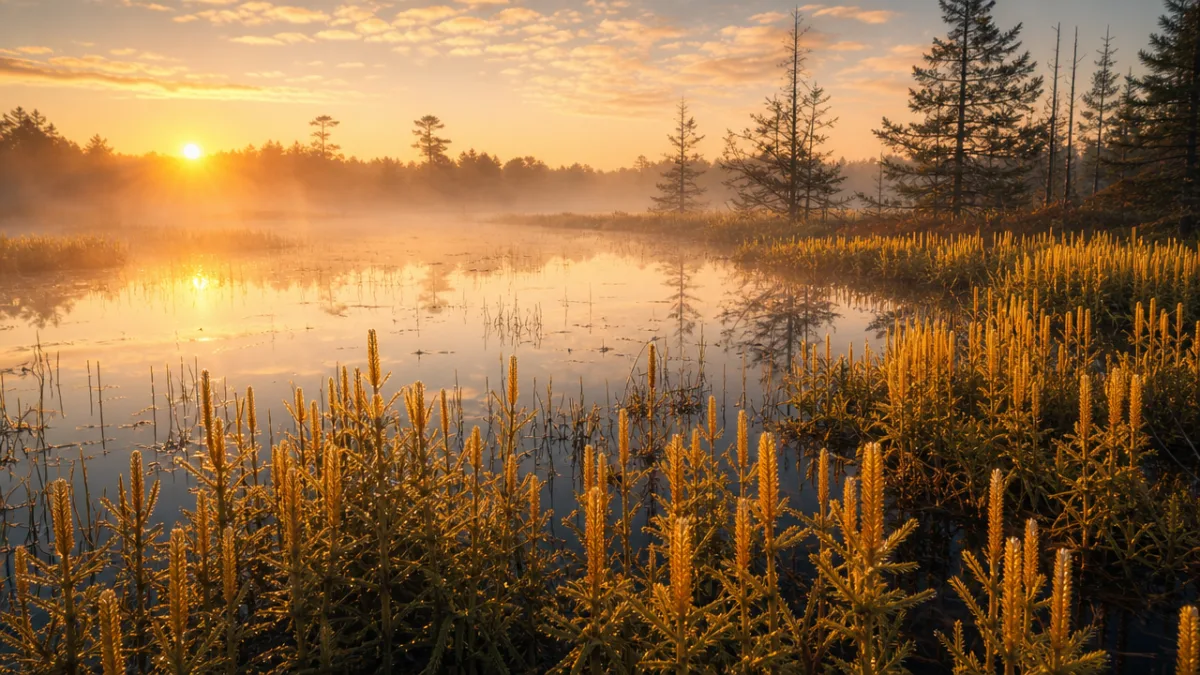
The name “Golden Club” comes pretty naturally once you see it flowering. The spadix — that slender, club-shaped spike — is covered in tiny golden-yellow flowers that almost seem to glow in spring sunlight. That pop of luminous yellow against the dark, silvery leaves has made this plant a favorite for native plant enthusiasts and water garden designers. But honestly, its looks are just the starting point. The more you dig into its ecology, cultural history, and botanical quirks, the more fascinating it gets.
Botanical Description and Unique Characteristics
The Golden Club is a rhizomatous perennial, which means it spreads and survives through a thick, fleshy underground rhizome that anchors it firmly in muddy pond bottoms. Its leaves are genuinely striking — elliptical to lance-shaped, anywhere from 20 to 40 centimeters long, with a velvety, silvery-blue-green surface caused by microscopic hairs that actually repel water. Watching droplets bead up and roll right off the leaves like mercury is one of those small natural wonders that never gets old. This trait earned it the folk name “never-wet” in parts of Appalachia and the coastal South, which is a pretty perfect description.
The flowering structure is where things get really botanically interesting. Most plants in the Araceae family have a hooded spathe wrapping around the spadix — think of a calla lily or an anthurium. The Golden Club does things differently: its spathe is reduced to a tiny bract that withers early in the season, leaving the golden spadix completely exposed and naked above the water. That spike rises on a long white stem directly from the rhizome, with hundreds of tiny perfect flowers packed tightly along its upper yellow portion. The lower stem stays pure white, which creates a clean, elegant contrast that makes the whole structure look almost architectural.
After flowering, the plant produces small green, berry-like fruits that swell to about the size of peas, eventually turning blue-green before dropping into the water. Each one contains a single seed wrapped in a gelatinous coating that helps it float and drift to new locations. As for the leaves, whether they stand upright or float flat on the surface depends entirely on water depth — shallower water produces emergent leaves, deeper water produces floating ones. That kind of physiological adaptability is a big part of why this plant does so well across such a broad range.
Natural Habitat and Ecological Role
In the wild, Orontium aquaticum tends to gravitate toward nutrient-poor, acidic freshwater environments. You’ll most often find it along the shallow margins of ponds and slow streams, in bogs, and in wooded swamps where the water runs clear and the bottom is sandy or peaty mud. It’s especially at home in the coastal plain wetlands of the southeastern U.S., growing alongside pickerelweed, arrowhead, sedges, and rushes — and it’s a frequent companion of bald cypress and water tupelo in the swampy forests along the Atlantic coast.
The ecological work this plant does in its native habitat is genuinely impressive. Its dense rhizome mats stabilize sediments along pond edges and stream banks, cutting down on erosion and keeping the water clearer. The submerged portions shelter aquatic invertebrates, small fish, and amphibian larvae. Wood ducks and mallards eat the seeds and fruits, and beavers and muskrats occasionally work through the rhizomes. It’s woven into the food web at multiple levels.
There’s also a water quality dimension to its role. Like other macrophytes, the Golden Club absorbs excess nitrogen and phosphorus from the water and sediment, which helps slow the eutrophication process in areas dealing with agricultural or urban runoff. Conservation ecologists pay close attention to it for this reason — its presence in a wetland tends to signal relatively healthy water conditions, since it fades and disappears from heavily polluted or disturbed sites. In a very real sense, if the Golden Club is thriving, the wetland is probably doing reasonably well, and that makes it a useful indicator species for broader ecosystem monitoring.
Cultivation and Water Garden Use
Over the past few decades, as interest in native plant gardening has really taken off, Orontium aquaticum has earned a well-deserved following among water garden enthusiasts, native plant gardeners, and landscape designers. It’s widely regarded as one of the most elegant native aquatics you can grow in a pond in eastern North America. It does ask for a little patience — this isn’t a plant that hits the ground running — but once it’s established, it’s remarkably low-maintenance and puts on a spectacular show each spring.
Getting it off to a good start means planting it in heavy loam or clay-based soil, either directly into the pond bottom or in a container, with a slightly acidic pH somewhere between 5.5 and 6.5. It’s comfortable in water anywhere from a few centimeters to about 45 centimeters deep and will adjust its leaf form accordingly. Full sun to partial shade both work, though it flowers most generously with at least six hours of direct sun during the growing season. Worth knowing upfront: growing from seed is slow, and it can take two to three years to reach flowering size, so most people find it much more practical to start with established plants or rhizome divisions from a reputable native plant nursery.
The following key cultivation considerations will help ensure successful establishment and long-term health of Golden Club in a water garden setting:
- Plant rhizomes in late winter or early spring just before the growing season begins, positioning them horizontally with the growing tip pointing upward just below the soil surface.
- Use a heavy, unamended loam or aquatic planting compost in containers — avoid lightweight potting mixes that will float or disperse into the water.
- Place containers at the appropriate depth for the desired leaf form: shallower water (under 15 cm) encourages upright emergent leaves, while deeper placement promotes floating leaves.
- Fertilize sparingly if at all; excess nutrients tend to feed algae rather than the plant itself, and Orontium aquaticum genuinely does well in low-nutrient conditions.
- Divide clumps every three to five years in late winter to keep the plant vigorous and prevent overcrowding.
- In colder climates (USDA zones 5 and 6), make sure the rhizomes stay below the ice line through winter — either by moving containers to deeper water or by mulching the pond margin heavily.
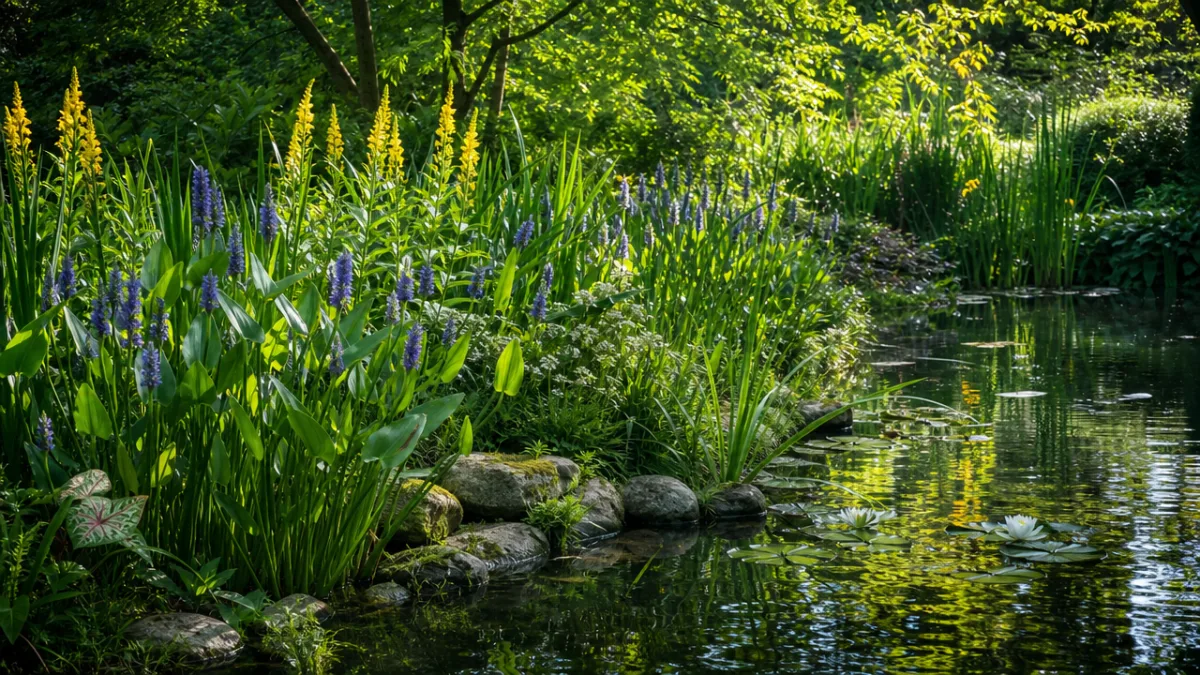
The Golden Club plays beautifully with a range of other native aquatic and marginal plants. Some particularly good companions include blue flag iris (Iris virginica), pickerelweed (Pontederia cordata), swamp rose (Rosa palustris), and royal fern (Osmunda regalis). These combinations aren’t just visually satisfying — the contrasts in texture, color, and height feel genuinely natural — they also recreate the ecological character of eastern North American wetlands and keep pollinators, birds, and beneficial insects happy throughout the season.
Ethnobotanical History and Traditional Uses
Long before the Golden Club ever appeared in an ornamental water garden, it was a practical resource for Indigenous peoples across its native range. Several eastern woodlands and coastal plain tribes are documented to have eaten parts of the plant — primarily the seeds and rhizomes — as significant starch sources when other food was scarce. There’s a catch, though: every part of the plant contains calcium oxalate crystals that cause an intense, painful burning sensation in the mouth and throat if eaten raw. That’s the kind of experience that definitely shapes how you approach a plant, and it’s why preparation methods were so important.
The key was thorough drying or prolonged cooking to break down those calcium oxalate crystals. Dried seeds could be ground into a meal or flour and made into porridge or baked into cakes. The rhizomes, after extended drying and roasting, yielded a starchy material with a mild, slightly nutty flavor that could be used in similar ways. Early European colonists in the Chesapeake Bay region and the Carolinas witnessed these practices and wrote about them in journals and natural histories — records that still survive today and give us a genuine window into how the plant fit into pre-colonial foodways.
The Golden Club also appears in the folk medicine traditions of several Indigenous nations, though those uses are less thoroughly documented than the food applications. Its dramatic water-repelling leaves and its ability to flourish in harsh, waterlogged conditions may have given it symbolic or ceremonial significance in some cultural contexts, though the surviving ethnohistorical record doesn’t capture this fully. Given how many species in the broader Araceae family carry documented medicinal, ritual, and economic uses across Indigenous North American cultures, it seems likely that the Golden Club occupied a richer cultural role than the written record currently reflects.
Conservation Status and Threats
The Golden Club is still relatively common through much of its core range in the southeastern U.S., but the picture gets more concerning as you move toward the northern and western edges of its distribution. In Maryland, Pennsylvania, and New York, it’s been listed as a species of conservation concern, with populations wiped out at sites that have been drained, developed, or degraded by pollution and invasive species. The broader loss of eastern North American freshwater wetlands — more than half of their historical extent gone to drainage, development, and agricultural conversion — strikes directly at the habitat this plant needs to survive.
Two invasive plants pose the most immediate competitive threat: purple loosestrife (Lythrum salicaria) and common reed (Phragmites australis), both of which can rapidly take over wetland communities and fundamentally change the hydrology and structure that native species like Golden Club depend on. Deer herbivory has also caused localized problems in areas where white-tailed deer populations are high, with overabundant deer browsing emergent vegetation during low-water periods. Looking further out, climate-driven shifts in precipitation patterns, longer droughts, and changes in growing season length add another layer of uncertainty for populations already hanging on in marginal habitat.
The most effective conservation work for this species happens as part of broader wetland protection and restoration efforts. Organizations like the Lady Bird Johnson Wildflower Center, native plant societies, and regional land trusts have championed the Golden Club in restoration plantings and have pushed for stronger legal protections for the wetland habitats it calls home. Nurseries specializing in native aquatics have also made a real difference by propagating the plant commercially, which relieves pressure on wild populations and gives the water garden trade a responsible source. If you’re growing Orontium aquaticum at home, buying from reputable native plant nurseries and supporting local wetland conservation initiatives are genuinely meaningful ways to contribute to the bigger picture.
Orontium aquaticum in Modern Horticulture and Science
In contemporary horticulture, Orontium aquaticum sits in a respected but somewhat specialized corner of the water garden world. It’s hardy across USDA zones 5 through 10, which means it can be grown across a surprisingly wide swath of North America, and it’s earned the Royal Horticultural Society’s Award of Garden Merit for its outstanding ornamental qualities and reliable performance in cultivated settings. Its popularity has grown alongside the native plant gardening movement, which gained real momentum in the early 2000s — largely driven by research from entomologists like Doug Tallamy showing just how critical native plants are for sustaining insect and wildlife communities in managed landscapes.
On the scientific side, researchers have been drawn to several dimensions of the plant’s biology. Its hydrophobic leaf surface has attracted attention from materials scientists looking at natural models for water-repellent engineering. Its role in wetland nutrient cycling has been studied by ecologists. And its evolutionary position within the Araceae family has interested botanists considerably — phylogenetic studies have confirmed that Orontium represents one of the earliest-diverging lineages in the family, making it a genuinely ancient lineage with a lot to tell us about how monocots evolved. Its reduced spathe, so unusual among Araceae, has been a particular focus of morphological research into how the family’s diverse floral structures came to be.
As climate change reshapes the distribution and timing of freshwater wetland plants across the continent, Orontium aquaticum will face new pressures and, in some places, new opportunities. Warmer winters could allow it to push northward into habitat that’s currently too cold, while increased drought frequency in parts of its existing range could put real stress on populations that need consistent water. Long-term monitoring of population status, flowering times, and seed set will be increasingly important for understanding how this ancient plant is adapting — or struggling to adapt — to rapidly shifting conditions. For gardeners, naturalists, and conservationists, the Golden Club remains one of the most compelling ambassadors for the depth and richness of North America’s native aquatic flora. It’s the kind of plant that the more you learn about it, the more there is to appreciate.








What do you think?
It is nice to know your opinion. Leave a comment.