










Easy Small Rustic Garden Decor Ideas – DIY Inspiration for Your Space
The Charm of Rustic Garden Style
There’s something about a rustic garden that just feels right in a way no perfectly manicured, modern landscape ever quite manages. The weathered textures, the slightly rough edges, the sense that everything has been collected gradually over time rather than ordered in one go — it all adds up to a space that feels genuinely warm and lived-in. A rustic garden tells a story, and the best part is that you’re the one writing it, one salvaged planter and hand-painted sign at a time.
Small gardens are actually perfect for the rustic look, because working with limited space pushes you to think more carefully and creatively about what you include. Instead of filling a big yard with expensive landscaping, a compact outdoor area becomes a curated little collection of meaningful touches. A single weathered wooden bench, a cluster of terracotta pots, a trellis draped in climbing vines — in a small garden, each of these gets to be a proper focal point rather than just fading into the background.
The rustic style is also one of the most forgiving approaches you can take as a home gardener. Imperfections aren’t just okay here — they’re actually the whole point. A cracked clay pot, a slightly wonky birdhouse, a fence board that’s faded unevenly in the sun: none of these are flaws in a rustic garden. They’re features. They add character and make everything feel more authentic. That’s what makes this style so accessible, especially if you’re just starting out or working with a tight budget.
Choosing Materials That Speak to Nature
The whole look of a rustic garden comes down to the materials you choose, and the rule of thumb is pretty simple: go for natural, reclaimed, and handmade over anything that looks fresh off a factory line. Wood is probably the cornerstone of it all — whether you’re building raised beds from rough-hewn timber, using old log sections as stepping stones, or popping some hand-lettered plant stakes beside your herb patch. The grain, the knots, the weathering — real wood has an organic quality that nothing synthetic can convincingly fake.
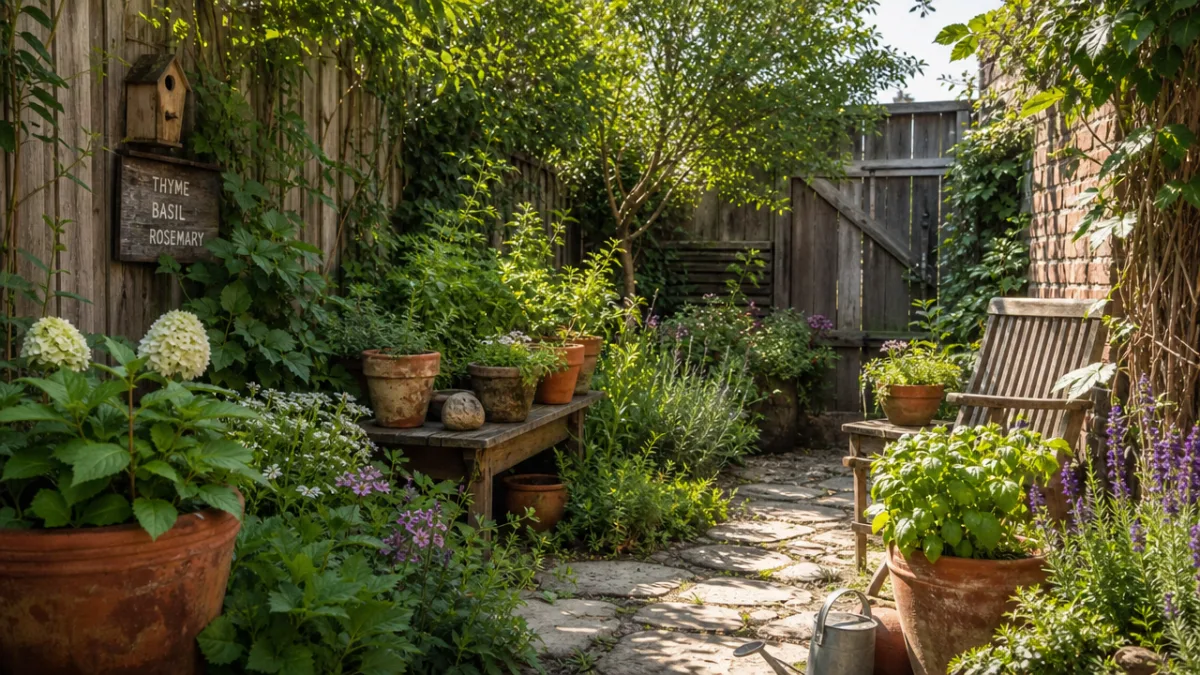
Stone and gravel are just as important. River rocks you’ve picked up on walks, flat fieldstones salvaged from an old wall, or a simple layer of pea gravel along a garden path all bring that earthy, unfussy quality the style is built on. Terracotta is another staple — unglazed clay pots develop a beautiful patina outdoors over time, and grouping them in different sizes creates a lovely visual rhythm without needing to match or coordinate anything beyond the material itself. If you ever spot old terracotta drainage pipes or chimney pots at a salvage yard, snap them up — they make extraordinary planters.
Don’t sleep on metal as an accent material either. Vintage watering cans used as planters, galvanized buckets stuffed with lavender or rosemary, old iron garden tools hung decoratively on a fence — these details add a subtle industrial edge that balances the softness of wood and greenery really nicely. The trick is to look for pieces that already show their age: rust, dents, and patina are all your friends. And if you’ve got newer metal pieces you want to age up, a diluted vinegar solution brushed on works a treat.

DIY Planter Ideas That Cost Almost Nothing
One of the best things about decorating a rustic garden is how much it rewards a bit of imagination and a willingness to raid the charity shop. Honestly, almost any container with drainage can become a planter, and the more unexpected the vessel, the more charming the result. An old rubber boot propped by the back door and stuffed with trailing nasturtiums is the classic example — cheerful, quirky, and practically free if you count only the seeds. A cracked colander picked up for 50p at a car boot sale makes a brilliant hanging basket for strawberries or herbs, with the existing holes doing all the drainage work for you.
Wooden crates and wine boxes are among the most versatile options going. Line them with burlap or landscape fabric, fill with good compost, and plant with anything from salad leaves to flowering annuals. Stack a few at different heights against a wall or fence and the whole thing looks deliberately styled rather than thrown together. Old wooden pallets work brilliantly too — lean one against a vertical surface, fit it with small pots, and you’ve got a living wall that takes up almost no floor space at all, which is perfect for the tiniest of gardens.
If you fancy a slightly more hands-on project, building a simple raised planter box from reclaimed timber is genuinely well within reach for a complete beginner. You just need a saw, a screwdriver, some decking screws, and a few lengths of rough-sawn wood — no joinery experience needed. Keep the proportions generous so plant roots have room to grow, line the base with weed-suppressing membrane, and fill with a mix of topsoil and compost. Left untreated, these homemade planters silver beautifully in the weather on their own. Or if you want a slightly more finished look, a coat of chalk paint in a muted shade still keeps things feeling very rustic.
Quick Planter Ideas to Try This Weekend
- Old ceramic sink or butler’s basin planted with alpines or succulents
- Vintage tin cans grouped together on a window sill, planted with herbs
- Hollow log sections used as natural planters for shade-loving ferns
- Repurposed wooden drawer pulled from an old dresser and planted with bedding plants
- Enamel colanders or strainers hung from a fence and filled with trailing plants
- Stacked terracotta pots of diminishing size to create a tower planter for strawberries
Decorative Accents That Add Personality
Beyond the plants themselves, it’s the small decorative touches that really bring a rustic garden to life and make it feel like yours rather than anyone else’s. Hand-painted signs are one of the easiest wins you can go for. A scrap of driftwood or a rough-cut piece of timber, lightly sanded and painted with the name of a herb, a little welcome message, or even just a simple botanical illustration in chalk paint or exterior acrylic — it immediately adds warmth and a handmade quality to any corner of the garden. You genuinely don’t need any artistic skill for this. The slight wobble in a hand-painted letter is exactly what makes it look charming.
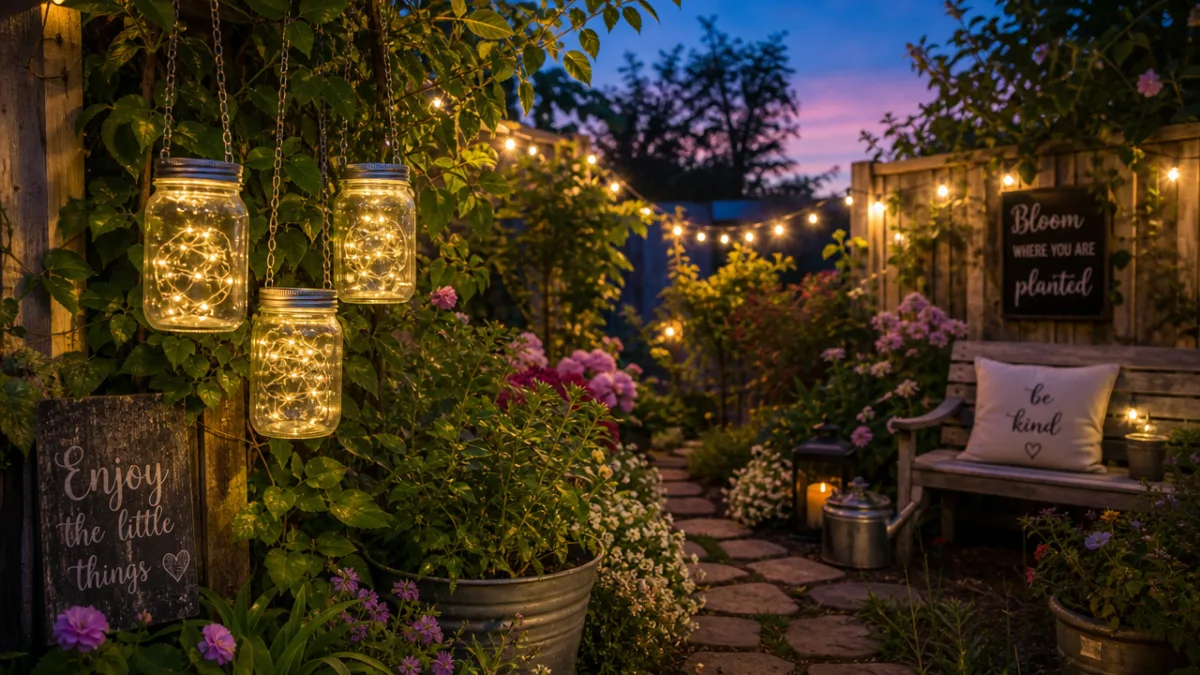
Lighting is worth thinking about carefully, because the right lighting can transform a small rustic garden from a nice daytime space into something that feels genuinely magical after dark. Solar-powered fairy lights wound around a fence or threaded through a climbing rose give off a soft, flickering glow that costs nothing to run and requires zero electrical know-how to set up. Old jam jars make beautiful DIY lanterns — drop a tea light inside, loop some garden wire around the neck, and hang them from branches or hooks at different heights. Vintage-style Edison bulb string lights are another lovely option, giving off that warm amber glow that flatters both plants and people.
Even a very modest water feature adds something you can’t quite put into words — a sense of calm, of completeness. A small solar-powered fountain sitting in an old stone trough or galvanized tank brings gentle movement and sound for very little cost or effort. A bird bath made from an upturned chimney pot topped with a shallow dish will bring in wildlife and add visual interest at the same time. And even something as simple as arranging smooth pebbles and river stones around the base of a planter creates a quiet nod to water and movement, like a tiny dry stream bed tucked into the smallest of spaces.
Plants That Thrive in the Rustic Aesthetic
Getting the plants right matters just as much as choosing the right containers and decorative bits, and in a rustic garden the general direction is to go for plants that look like they belong in a cottage garden, a meadow, or a kitchen plot rather than something formal and clipped. Lavender is probably the most quintessentially rustic plant there is — that soft gray-green foliage, those upright purple spikes, that incredible scent. It’s a natural companion to weathered wood and aged terracotta, and it’s also incredibly easy to grow and practically looks after itself once it’s settled into a sunny, well-drained spot.
Herbs as a group are a natural fit for the rustic style, adding practical value alongside good looks. Rosemary tumbling over a stone wall, thyme creeping between stepping stones, mint kept in its own pot so it doesn’t take over the whole garden — these plants visually connect your space to the traditions of kitchen gardens and cottage smallholdings that the rustic aesthetic is really rooted in. Mixing edible and ornamental plants freely, the way traditional cottage gardeners have always done, gives a rustic garden that effortless, unpretentious quality that’s hard to manufacture when you’re only working with purely decorative plants.
For flowers, look to old-fashioned varieties with that slightly loosely-assembled, abundant quality that suits rustic spaces so well. Cosmos with its feathery foliage and delicate blooms, sunflowers in every size from dwarf to giant, sweet peas scrambling up a wigwam of hazel poles, echinacea buzzing with bees from midsummer onwards — these are all plants that reward a light touch and actually look better the more freely you let them grow. You can even work in so-called weeds like ox-eye daisies and red clover, blurring the line between garden and meadow in a way that’s both lovely to look at and genuinely good for wildlife.
Recommended Plants for a Small Rustic Garden
- Lavender — fragrant, drought-tolerant, and perfect alongside stone and aged wood
- Rosemary — structural, evergreen, and beautiful when allowed to sprawl naturally
- Cosmos — fast-growing, self-seeding annual that fills gaps with airy, colorful blooms
- Sweet peas — climbing fragrant flowers that adore a rustic wigwam or trellis
- Foxgloves — dramatic biennial spires that naturalize beautifully in partial shade
- Thyme — low-growing, fragrant groundcover that softens hard edges and paths
- Echinacea — long-blooming, wildlife-friendly perennial with a naturally wild appearance
Putting It All Together: Composing Your Rustic Garden Scene
Knowing what the individual elements of rustic garden design are is one thing — knowing how to put them together into something that actually looks cohesive is where it really clicks. The key is layering: arranging things at different heights, depths, and scales so the eye has somewhere interesting to land at every level. A tall sunflower at the back, a mid-height terracotta planter filled with lavender in the middle, and a low cluster of thyme-planted vintage tins at the front creates exactly that kind of depth, even in a space no bigger than a patio table.
Repetition is another really useful tool. Repeating a particular material, color, or plant throughout the space creates a sense of unity without making everything feel matchy-matchy. If you’ve used terracotta pots in one corner, echo them somewhere else. If you’ve painted a fence panel in a chalky sage green, use the same shade on a garden sign or a planter. That kind of visual threading holds everything together and keeps the space from feeling chaotic — which matters a lot in a small garden where every single element is on show and nothing gets lost in the distance.
And finally, it’s worth remembering that a rustic garden is never really finished, and that’s honestly part of what makes it so lovely. It shifts with the seasons, picks up new found objects and rescued treasures along the way, and changes as plants mature and self-seed and spill beyond where you originally put them. Give yourself permission to add things, take things away, and rearrange as you go, treating the space as an ongoing creative project rather than something to tick off a list. The most enchanting rustic gardens are always the ones that look like they’ve been slowly and lovingly built up over many years — and with a bit of patience and imagination, yours can absolutely look that way too.








What do you think?
It is nice to know your opinion. Leave a comment.