










35+ Outdoor Bar Ideas That Will Make Your Neighbors Jealous (2026)
There is something undeniably magical about stepping outside on a warm evening, drink in hand, surrounded by the people you love most. An outdoor bar transforms an ordinary backyard into a destination — a place where memories are made, laughter lingers in the air, and the line between entertaining and vacation blurs beautifully. Whether you have a sprawling estate or a modest patio, the right outdoor bar setup can completely reinvent the way you use your exterior space. This guide walks you through the most inspiring, practical, and jaw-dropping outdoor bar ideas for 2026, giving you everything you need to start planning the backyard of your dreams.
1. Why Every Backyard Needs an Outdoor Bar
The outdoor bar has evolved far beyond a simple folding table with a cooler underneath. Today’s designs are architectural statements, blending functionality with serious aesthetic ambition. Homeowners across the country are investing in permanent outdoor kitchen and bar structures that rival anything you would find at an upscale restaurant or resort hotel. The shift is part of a broader movement toward outdoor living — the idea that the space beyond your back door deserves the same level of thoughtfulness and comfort as the interior of your home.
From a purely practical standpoint, having a dedicated outdoor bar keeps the party outside where it belongs. No more guests tracking in and out of the kitchen, no more crowded hallways, and no more worrying about spills on the living room rug. A well-designed outdoor bar centralizes the action and gives the host a command center from which to operate without missing a moment of the fun. It creates a natural gathering point that encourages conversation and keeps energy flowing throughout any event, large or small.
Beyond the social benefits, an outdoor bar is a genuine real estate asset. Studies consistently show that well-designed outdoor living spaces, particularly those with cooking and entertaining amenities, deliver strong returns on investment when it comes time to sell. Potential buyers walk through a backyard with a built-in bar and immediately begin picturing their own summer parties, holidays, and Sunday afternoons there. You are not just building a bar — you are building equity, lifestyle value, and memories that will outlast any renovation project inside your home.
2. Choosing the Right Style for Your Space
Before you commit to any design, materials, or layout, it is essential to think clearly about the visual language of your existing outdoor space and home architecture. An ultra-modern stainless steel and concrete bar might look spectacular in a sleek contemporary backyard but feel jarring beside a traditional colonial home with a shaded, vine-covered porch. The most successful outdoor bars feel like they were always meant to be there — an organic extension of the house and landscape rather than something dropped in from a different design universe entirely.
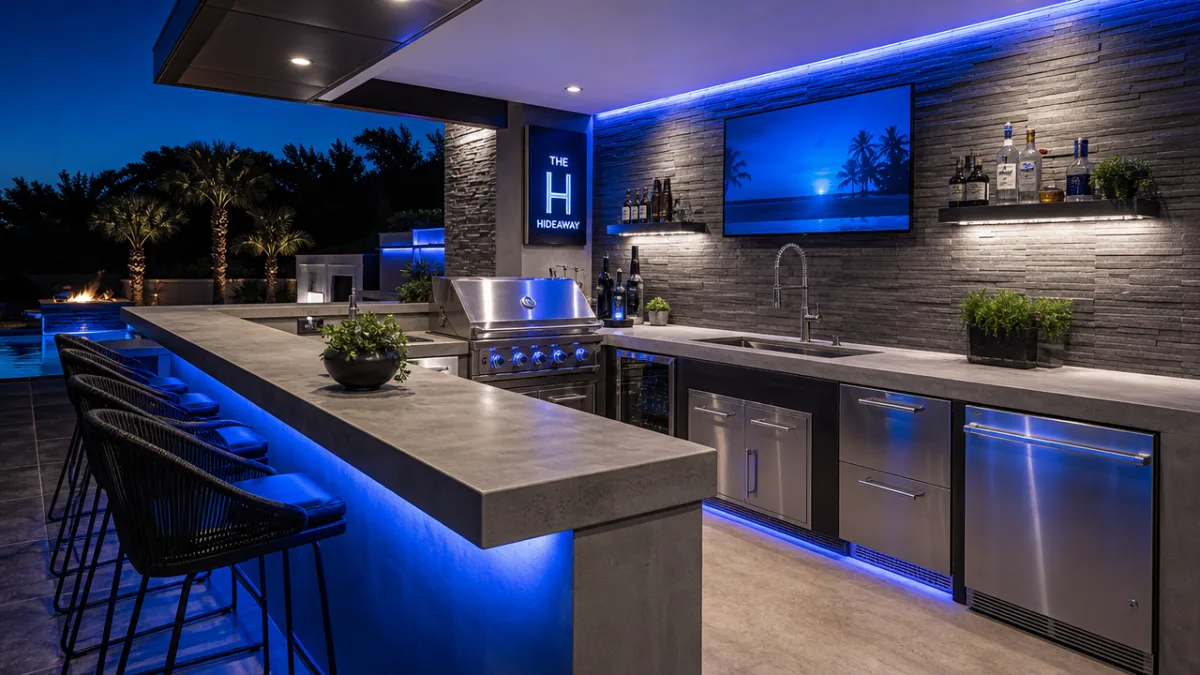
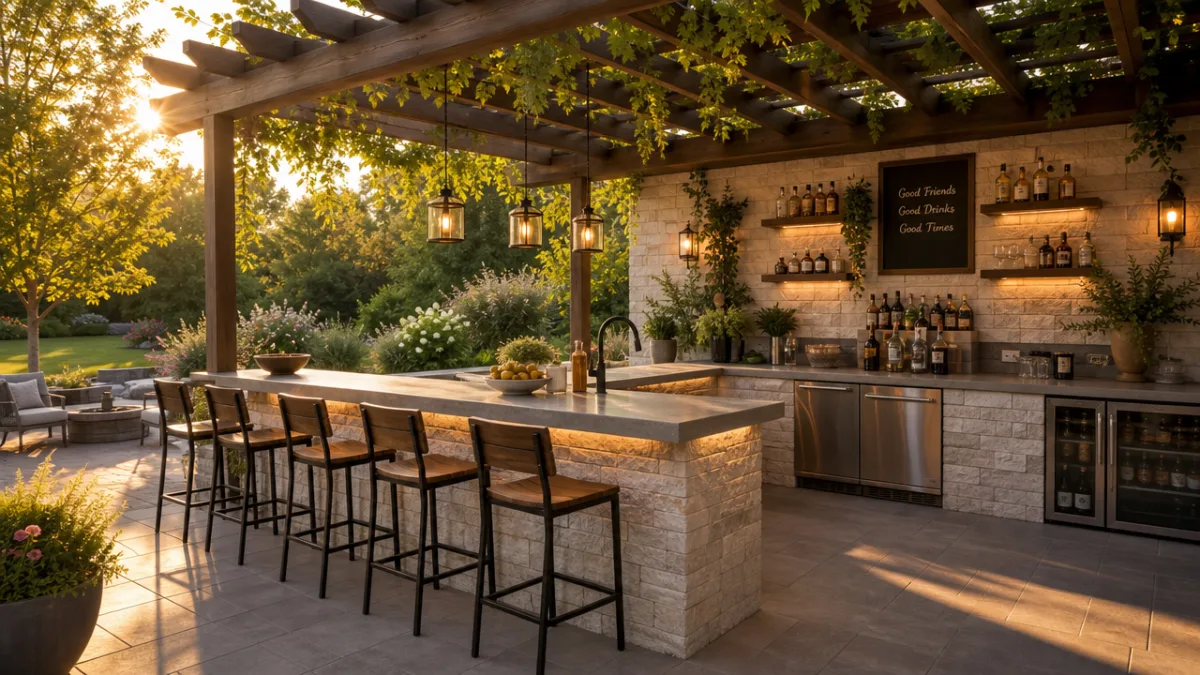
Rustic and farmhouse styles remain enormously popular in 2026, drawing on reclaimed wood, wrought iron hardware, shiplap siding, and warm Edison-bulb lighting to create spaces that feel cozy and lived-in from day one. Tropical tiki bar aesthetics have also seen a major resurgence, with bamboo structures, thatched roofing, and lush planted surroundings creating genuine resort vibes without the price tag. For those who lean modern, clean horizontal lines, polished concrete countertops, and integrated LED lighting can produce a bar that looks like it belongs in an architectural magazine spread.
Mediterranean and Spanish Colonial styles are gaining considerable traction as well, incorporating stucco finishes, terracotta tile, wrought iron bar stools, and climbing flowering vines to produce a warmly romantic atmosphere perfect for slow evenings under the stars. The key across every aesthetic is cohesion: your bar, your patio furniture, your landscaping, and your home’s exterior should all speak the same visual language. Spend time gathering inspiration images and identifying the three to five design elements that consistently appear across your favorites — that cluster of recurring elements is your personal style blueprint.
- Rustic Farmhouse: Reclaimed wood, barn-door accents, galvanized metal fixtures, and string lighting create warmth and nostalgia.
- Modern Minimalist: Polished concrete, stainless steel, frameless glass panels, and integrated LED strips deliver a sleek, high-design look.
- Tropical Tiki: Bamboo, thatch, rope details, and tropical plantings transform your backyard into a beachside escape.
- Mediterranean: Stucco, terracotta, wrought iron, mosaic tile accents, and climbing vines offer timeless old-world romance.
- Industrial Chic: Exposed steel framing, raw concrete, dark iron bar stools, and Edison bulbs create an urban loft feel outdoors.

3. Built-In vs. Freestanding: Making the Right Call
One of the earliest and most consequential decisions you will face is whether to go with a permanent built-in bar structure or a freestanding setup that offers flexibility and portability. Both approaches have genuine merit, and the right choice depends heavily on your budget, your timeline, your homeownership situation, and how committed you are to a particular layout. Understanding the full range of implications for each option will save you a great deal of frustration and expense down the road.
Built-in outdoor bars are the gold standard for homeowners who are fully committed to maximizing their outdoor entertaining potential. These structures are typically constructed from concrete block, natural stone, brick, or stucco-coated cement board, finished with tile, stone veneer, or other weather-resistant surface materials. They can incorporate a sink with running water, a built-in refrigerator or wine cooler, a dedicated ice maker, a blender station, and even a tap system for draft beer. The permanence of a built-in bar signals to every guest — and every potential homebuyer — that this is a serious, fully realized outdoor living space.
Freestanding bars, on the other hand, offer remarkable versatility. High-quality options now available in weatherproof resin wicker, powder-coated aluminum, and treated hardwood can look nearly as polished as their built-in counterparts while allowing you to reconfigure your layout season to season, move the bar under cover during winter, or take it with you if you relocate. For renters, those in climates with harsh winters, or anyone who wants the look without the commitment, a premium freestanding bar is an extremely smart choice. The freestanding market has improved dramatically in recent years, with commercial-grade options now widely available for residential purchase.
A hybrid approach that many homeowners are adopting in 2026 involves building a permanent base structure — a simple concrete block or stone foundation — and using modular stainless steel or powder-coated aluminum components on top that can be rearranged or upgraded over time. This approach delivers much of the permanence and aesthetic weight of a fully built-in bar while preserving some degree of adaptability. It also allows you to start with a modest setup and expand strategically as your budget allows, adding an ice maker one season and a built-in tap system the next.
4. Must-Have Features and Smart Accessories
The features you include in your outdoor bar will define how functional and enjoyable the space actually is in daily use. Many first-time outdoor bar builders focus almost entirely on aesthetics and underinvest in the practical elements that determine whether the space gets used constantly or sits idle after the initial excitement wears off. The most beloved outdoor bars tend to be the ones that anticipate every small inconvenience and design it away — leaving the host free to be fully present with their guests rather than constantly running back inside for forgotten items.
Refrigeration is arguably the single most important functional feature. A dedicated outdoor-rated refrigerator or beverage cooler keeps drinks cold without requiring constant trips inside, and it signals to guests that this is a fully self-contained space. Equally important is a built-in sink with hot and cold running water — the ability to rinse glasses, wash hands, and dispose of ice right at the bar is a game-changer for anyone who has ever hosted a serious outdoor party. If a plumbed sink is not feasible due to distance from existing water lines, a large recessed ice bin with a drain is an excellent alternative that handles most of the same needs.
Lighting deserves far more attention than most people give it during the planning phase. Your outdoor bar needs to function beautifully after dark, and that requires layering different types of light thoughtfully. Overhead string lights or a pergola with integrated LED strips provide ambient illumination, while under-counter LED lighting makes it easy to see what you are reaching for. Step lights and low landscape lighting along pathways prevent accidents and extend the usable hours of your outdoor space. Smart lighting systems that allow you to dim, color-shift, and schedule from your phone are now accessible at reasonable price points and add enormous versatility.
- Outdoor-rated refrigerator — keeps beverages and garnishes at ideal serving temperature without trips inside
- Built-in sink with running water — enables proper cleanup and dramatically improves workflow behind the bar
- Ice maker or recessed ice bin — eliminates the perpetual problem of running out of ice during peak entertaining hours
- Weather-resistant bar stools — select materials rated for UV exposure and moisture to avoid premature fading and deterioration
- Pergola or shade structure — extends comfortable usable hours by providing shelter from direct sun and light rain
- Outdoor sound system — weather-resistant speakers integrated into the structure create an immersive atmosphere
- Draft beer tap system — a kegerator setup transforms game days and large gatherings into genuinely memorable experiences
5. Materials That Withstand the Elements
The outdoor environment is unforgiving. Sun, rain, humidity, freezing temperatures, and biological growth from mold and mildew will attack every surface of your outdoor bar relentlessly over the years. Choosing materials that are genuinely rated and proven for exterior use is not optional — it is the foundation of a bar that looks as good in year ten as it did on day one. The mistake many homeowners make is selecting materials based on how they look in showroom conditions without fully investigating how they perform outdoors over time.
For countertop surfaces, porcelain tile remains the champion of outdoor use in 2026. Modern large-format porcelain tiles are extremely hard, nearly impervious to moisture, resistant to UV fading, and available in stunning natural stone and wood-look finishes that are frankly indistinguishable from the real thing at casual glance. Granite remains a classic choice with proven outdoor durability, though it requires periodic sealing. Poured concrete countertops offer a beautifully customizable option but demand careful sealing and maintenance to prevent staining and surface crazing over time. Avoid quartz outdoors — despite its popularity for interior applications, most engineered quartz products are not rated for direct UV exposure and will discolor or crack.
For structural materials and cabinetry, the landscape in 2026 has shifted decisively toward aluminum-framed, powder-coated outdoor kitchen components. These modular systems resist rust completely, handle temperature extremes without warping or cracking, and are available in a wide range of finishes from brushed stainless appearance to matte black and earthy toned powder coats. Ipe and teak hardwoods, properly maintained with annual oiling, remain the gold standard for natural wood surfaces on outdoor bars, offering rich beauty and genuine durability that cheaper softwoods simply cannot match.
Stone veneer and natural stone tile for vertical surfaces are experiencing a sustained surge in popularity because they add tremendous visual weight and organic texture to outdoor bar structures while performing exceptionally well in exterior conditions. Ledger stone panels — thin slices of natural quartzite, slate, or fieldstone mounted to a substrate — are particularly efficient, delivering the look of full stone at a fraction of the cost and weight. Stucco-finished cement board structures, common in warmer climates, are highly durable and relatively affordable while offering a smooth canvas that pairs beautifully with colorful tile accents, pendant lights, and lush landscaping.
6. Layout Planning and Space Optimization
The layout of your outdoor bar will determine how smoothly it functions during a busy gathering, how comfortable guests feel while sitting at it, and how the space integrates visually with the rest of your patio or backyard. Poor layout planning is one of the most common and costly mistakes in outdoor bar construction, often resulting in awkward traffic flow, insufficient counter space, or a bar that feels disconnected from the rest of the entertaining area. Taking the time to plan your layout carefully — ideally with measurements, a rough sketch, and some cardboard or painter’s tape mock-ups on the ground — is time extremely well spent.
The standard bar counter height of 42 inches is the correct target for an outdoor bar where guests will be seated on bar stools, while a working surface behind the bar for the host should ideally sit at a more comfortable 36 inches for extended use. Plan for a minimum of 24 inches of counter space per seated guest, and build in additional preparation space on at least one end of the bar where the host can work without encroaching on guests’ space. An L-shaped or U-shaped configuration dramatically increases both storage and counter space without necessarily requiring a larger footprint, and it creates a natural hosting position that keeps the bartender centrally engaged with everyone seated at the bar.
Traffic flow is critical and frequently overlooked. Your bar should not be positioned so that it creates a bottleneck between the house and the main entertaining area. Ideally, it sits slightly to one side of the primary gathering zone, accessible from multiple angles, with clear pathways of at least 36 inches on all sides to allow guests to circulate freely. A bar positioned beneath or adjacent to a pergola or shade structure gains an architectural anchor that makes it feel intentional and permanent rather than an afterthought dropped into empty lawn space.
Consider the relationship between your outdoor bar and any adjacent outdoor kitchen, pool, fire pit, or seating area. The best outdoor entertaining layouts create a connected experience where each zone flows naturally into the next, with the bar serving as the social gravitational center that connects everything else. Hardscaping — pathways, defined patio zones, and coordinated material choices — does tremendous work in making all these elements feel unified rather than scattered. Spend time thinking about sightlines too: a bar positioned so that the host can see the pool where children are playing, or can maintain eye contact with guests at the fire pit, is a bar that will be used with far greater frequency and ease.
7. Budget Planning and Where to Invest
Outdoor bar projects span an enormous range of budgets, from a few hundred dollars for a quality freestanding unit to well over $50,000 for a fully custom built-in masterpiece with all the amenities. Understanding where your money goes, which elements deliver the best long-term value, and where you can save without sacrificing quality will help you make confident decisions regardless of where your budget falls. The most common budgeting mistake is underestimating the cost of the plumbing and electrical work required for a fully featured built-in bar — these trades typically represent 30 to 40 percent of the total project cost.
If your budget is limited, the single best investment is in the structural shell and countertop. A solid, well-built base with a beautiful countertop surface creates the impression of quality that elevates everything else around it, and these are the elements that are most costly and disruptive to change later. Appliances, hardware, lighting, and accessories can all be upgraded over time without major construction work, but the bones of the structure are largely permanent. Prioritize getting the structure right first, then layer in the premium amenities as budget allows in subsequent seasons.
Mid-range budgets in the $5,000 to $15,000 range can deliver a genuinely impressive built-in outdoor bar with a solid masonry or modular aluminum structure, a porcelain tile countertop, a built-in undercounter refrigerator, a sink, quality outdoor lighting, and a pergola overhead. This is the budget range where the majority of homeowners who are serious about outdoor entertaining operate, and the results in this range can be truly spectacular with good design choices and careful contractor selection. Getting multiple bids from licensed contractors who have specific experience with outdoor kitchen and bar construction is essential — this is a specialized trade, and quality varies enormously.
At the higher end of the budget spectrum, the sky is genuinely the limit, but certain upgrades deliver disproportionate impact on the experience. A draft beer tap system connected to a dedicated kegerator is universally beloved by guests and becomes the centerpiece of countless stories. A motorized retractable awning that deploys at the touch of a button extends the usable hours of your bar in both sun and light rain. A built-in outdoor sound system with weather-rated speakers integrated flush into the pergola overhead creates an immersive atmosphere that transforms even a Tuesday evening into something that feels special. Invest in the features that will genuinely change how often and how joyfully you use the space.








What do you think?
It is nice to know your opinion. Leave a comment.