










Charming Crochet Unicorns: Handmade Magic for Your Collection
The Enduring Enchantment of Crochet Unicorns
There’s something about a crochet unicorn that just gets people. These little yarn creatures hit a sweet spot between genuine craft skill and pure, unapologetic whimsy — and they appeal to pretty much everyone, from collectors and gift-givers to crafters who just love making things with their hands. You can perch one on a nursery shelf, tuck one into a gift bag for a kid you adore, or keep one on your own desk because honestly, why not? Whatever a mass-produced toy can do, a handmade crochet unicorn does with more heart. Every stitch went in on purpose, and the finished piece shows it.
The unicorn’s staying power as a craft subject goes way deeper than any passing trend. Across centuries and cultures, it’s been a symbol of purity, wonder, and that particular magic that seems to exist just past the edge of ordinary life. When crochet artists bring one to life in yarn, they’re joining a long line of storytellers who worked with their hands. And there’s something in the softness of crochet that makes it feel especially right for the subject — these aren’t cold, marble-carved creatures. They’re warm and huggable and made to be held.
The modern crafting world has taken crochet unicorns and completely run with them. On Pinterest, Etsy, and Instagram, handmade unicorn amigurumi and plush figures rack up thousands of admirers every single day. Crafters share patterns, swap tips, and post their finished pieces for friends across the world to enjoy. That global community has lifted the humble unicorn pattern from simple toy project to something closer to a genuine art form — with experienced makers producing pieces so detailed and original they stop people in their tracks. It’s a living tradition that keeps growing with every skein of yarn picked up.
Essential Materials and Tools for Crafting Your Unicorn
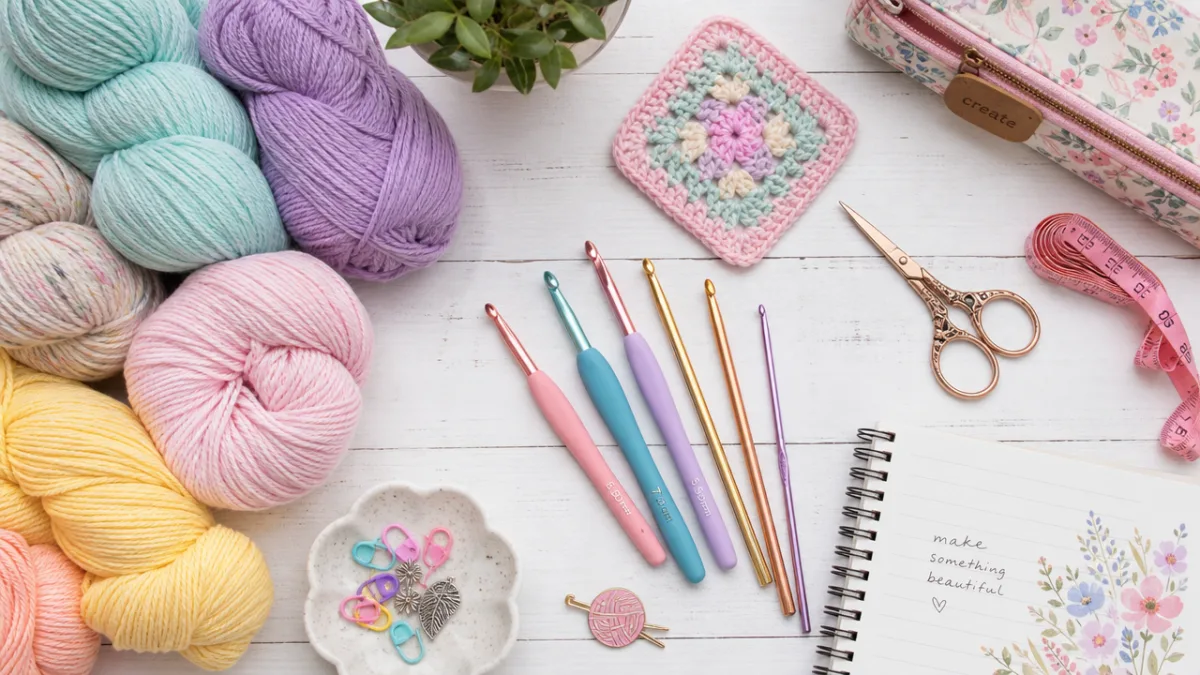
Before the magic can happen, you need the right stuff. Yarn is the biggest decision you’ll make, and it shapes everything about how your finished unicorn looks and feels. For unicorns that are actually going to be played with by kids, a high-quality acrylic or cotton-acrylic blend is a solid choice — it holds up, washes well, and feels genuinely soft. If you’re making something more decorative or collector-focused, stepping up to merino wool, a mohair blend, or even a specialty metallic yarn can take the piece somewhere else entirely, giving it that shimmery, ethereal quality that feels genuinely magical.
After yarn, your hook size matters more than people expect. Most unicorn patterns want you to go a size or two smaller than what the yarn label suggests, which tightens up the fabric so your polyfill stuffing doesn’t peek through. If you’re planning a longer project, it’s worth investing in an ergonomic hook with a cushioned handle — your hands will thank you after the first hour. Keeping a range of hook sizes around is also a good idea, since different sections of the same project can call for different tension.
And don’t overlook the finishing details, because they really do make or break the piece. Safety eyes alone can completely change a unicorn’s personality — go big and you get that sweet, wide-eyed innocent look; go smaller and more precise and the character shifts to something more refined or playfully mysterious. A few well-chosen embellishments like ribbon, lace trim, tiny flowers, or iridescent beads can turn a finished unicorn into something that feels completely one of a kind. Here’s what a solid unicorn crochet kit usually looks like:
- Soft worsted-weight or DK-weight yarn in your chosen color palette, including white or pastel base colors and coordinating accent shades for the mane and tail
- A crochet hook sized 2.5mm to 4mm depending on your yarn weight and desired tension
- High-quality polyester fiberfill stuffing for a plush, even finish
- Safety eyes in multiple sizes for experimentation
- Tapestry needle for seaming and weaving in ends
- Stitch markers to track rounds in amigurumi construction
- Optional embellishments: metallic thread, ribbon, small floral appliqués, and iridescent yarn for mane effects
Beginner-Friendly Unicorn Patterns to Start Your Journey
One of the nicest things about crochet unicorn crafting is that there’s genuinely something for every skill level. If you’re just starting out, simple standing or sitting unicorn designs built mostly from basic single crochet stitches give you a welcoming entry point. These patterns typically work in continuous rounds — the amigurumi method — creating separate body parts that you stuff, sew together, and embellish. It’s a satisfying, methodical process with visible progress at every stage, which helps a lot when you’re still building confidence.
You’ll find plenty of free and affordable beginner patterns through dedicated crochet websites, YouTube tutorials, and communities like Ravelry. Designers like Airali Handmade, Amigurumi Today, and countless independent Etsy sellers have built loyal followings by offering clear, photo-illustrated patterns that walk you through every step, including the parts that trip beginners up most often, like color changes, invisible decreases, and assembly. Starting small — maybe a palm-sized sitting unicorn — is a great way to build the skills you’ll need when you’re ready to tackle something more ambitious.
If you’d rather learn with a group, many local yarn shops and online craft schools run crochet unicorn workshops in person or via video. There’s something about learning in that setting that makes the technical side feel a lot less intimidating, and the social element is genuinely fun. People who finish their first unicorn in a workshop often come away with the confidence to keep going on their own, whether that means making more for themselves, gifting them, or eventually selling them. And no matter how your first one turns out, finishing it is absolutely worth celebrating.
Advanced Techniques for Spectacular Unicorn Creations
Once you’ve got the basics down, the possibilities open up in really exciting ways. Tapestry crochet is one of the techniques experienced makers fall in love with — it lets you work intricate color patterns directly into the fabric, rather than going back and embroidering or appliquéing them on afterward. The results can be stunning: unicorns with detailed geometric patterns, smooth color gradients, or even pictorial designs worked right into the body, producing pieces that honestly look like they could have come from a high-end collectible manufacturer.
Wire armatures are another game-changer at the advanced level. Inserting a bendable wire skeleton into a finished crocheted body means you can create poseable figures — legs, neck, tail, all repositionable into naturalistic or dramatic stances. This is especially popular in the collector and display market, where people want pieces they can arrange on a shelf or in a shadow box display. There’s an extra skill involved in working with armature wire safely (you really don’t want any sharp points working through the yarn), but the results are pretty remarkable.
At this level, yarn selection becomes its own art form. Gradient yarns, self-striping colorways, and hand-dyed skeins can give a unicorn’s mane and tail a quality that almost seems to move with the light. Brushed mohair halo yarn layered over a base coat adds an ethereal softness that photographs beautifully and feels incredible to touch. Some advanced makers even commission custom hand-dyed yarn from independent dyers, specifying exact color progressions to match their vision. When you’re working at that level of intention, the finished piece really is a work of fiber art.
Building and Displaying Your Crochet Unicorn Collection
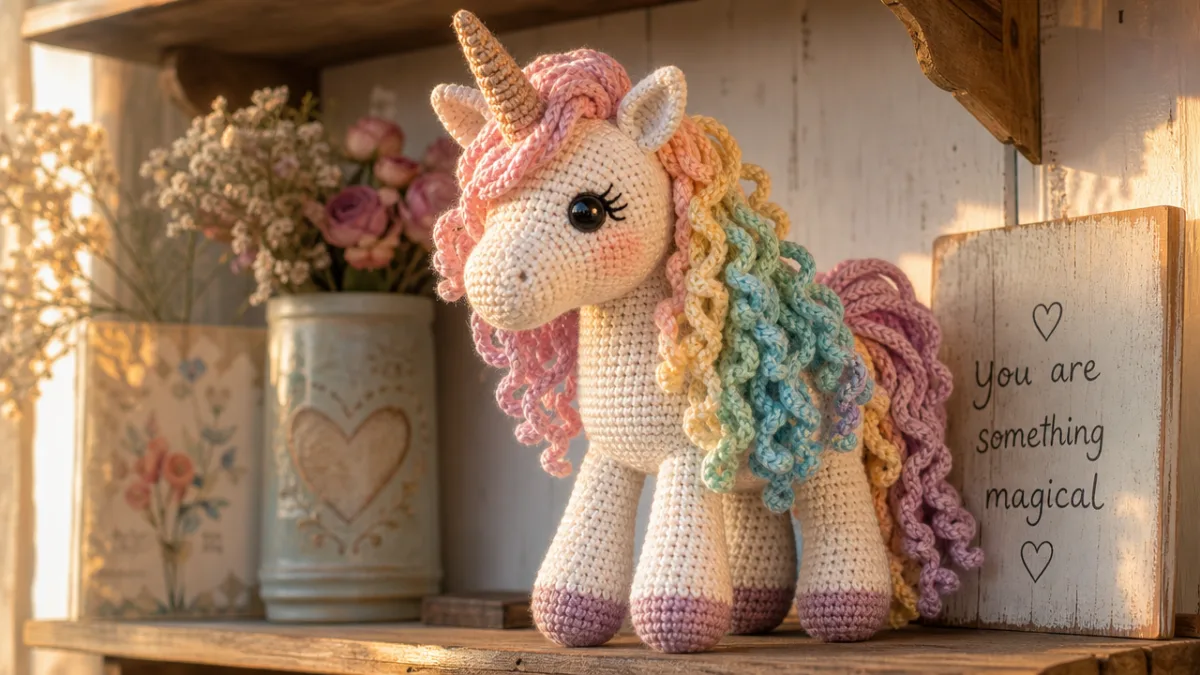
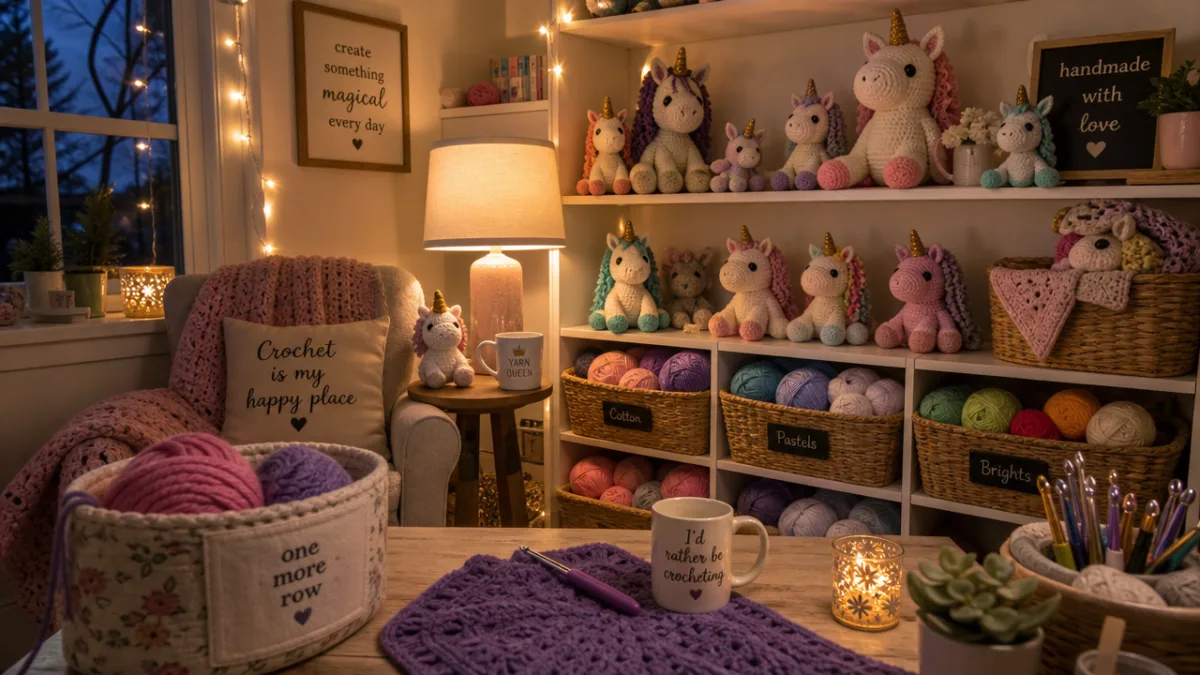
Once the crochet unicorn bug bites seriously, figuring out how to build and display a collection becomes its own delightful puzzle. A thoughtfully put-together group of handmade unicorns can tell a coherent visual story — maybe a family of unicorns in a coordinated seasonal color palette, or a gallery-style arrangement featuring pieces from different makers whose styles show just how many ways there are to interpret the same beloved subject. Plenty of collectors actively seek out unicorns from multiple artists, treating the whole collection as a celebration of creative diversity.
How you display them matters a lot too. Floating shelves at varying heights give each piece room to breathe and create a nice visual rhythm. Shadow box frames can be repurposed as little diorama displays where unicorns are arranged in miniature landscape scenes with moss, tiny flowers, and fabric sky backdrops. If you want your pieces protected from dust but still visible, glass-fronted display cabinets give a collection a genuinely museum-worthy feeling. Even a modest collection of three or four pieces can look striking when it’s been thoughtfully arranged.
Keeping some kind of record of your collection adds real meaning over time. A simple journal or digital log noting each piece’s maker, when you got it, the yarns used, and any personal significance it holds transforms a group of beautiful objects into a living archive. If you made the pieces yourself, looking back at early entries alongside recent work is one of the most satisfying ways to see how much you’ve grown. It’s not just a collection — it becomes a kind of personal history.
Sharing the Magic: Gifting, Selling, and Community
A handmade crochet unicorn might be one of the most meaningful gifts you can give, precisely because of everything that went into making it. Giving one to a child says, loudly and clearly, that they are worth hours of your time and attention — that someone loved them enough to make something just for them. Adults feel it too. In a world full of things that were manufactured in bulk, receiving something someone made with their hands carries a weight that’s hard to put into words. A lot of people keep these gifts for decades and eventually pass them along to their own kids.
For crafters thinking about turning their hobby into something more, crochet unicorns hold up really well in the handmade marketplace. Etsy, Not on the High Street, and local craft fairs are all accessible places to sell finished pieces, and pattern sales can become a separate income stream for makers whose designs are original and well-documented. Pricing your work fairly is a conversation the crochet community takes seriously — experienced sellers tend to push back hard against the idea of competing with mass-production prices, and the customers who genuinely appreciate handmade work are the ones who’ll happily pay for real craftsmanship.
Beyond the making and the selling, the community that’s gathered around crochet unicorns is something special in its own right. Facebook groups, Reddit threads, and Discord servers connect makers from all over the world to share works in progress, work through tricky pattern sections together, celebrate finished pieces, and just hang out with people who get it. Crochet-alongs — where a whole community works through the same pattern together over a set period — bring a sense of shared purpose and friendly accountability that a lot of crafters find genuinely motivating. It can feel like a pretty small, warm corner of the internet, and that’s not nothing.
Whether you’re picking up a crochet hook for the first time, adding a new piece to a collection you’ve been building for years, or just hunting for the perfect handmade gift for someone you love — crochet unicorns have something real to offer. These small yarn creatures carry the care of whoever made them, the wonder of a myth that’s been around for centuries, and the warmth of a tradition that connects people across time and distance. The magic in them is real. And it’s real precisely because someone made them by hand.








What do you think?
It is nice to know your opinion. Leave a comment.