










The Honesty Flower: A Gardener’s Guide to Lunaria Annua
What Is Lunaria Annua? Understanding the Honesty Plant
If you’ve ever come across a plant with papery, coin-shaped seed pods that seem to glow in the winter light, there’s a good chance you were looking at Lunaria annua — better known as the Honesty plant, Money Plant, or Silver Dollar plant. It’s one of those biennials that genuinely earns its place in the garden, not just for the cheerful purple flowers it throws up in spring, but for those remarkable seed pods that stick around long after everything else has called it a day. Honestly (no pun intended), very few plants can carry a garden from early spring all the way through to the depths of winter the way this one can.
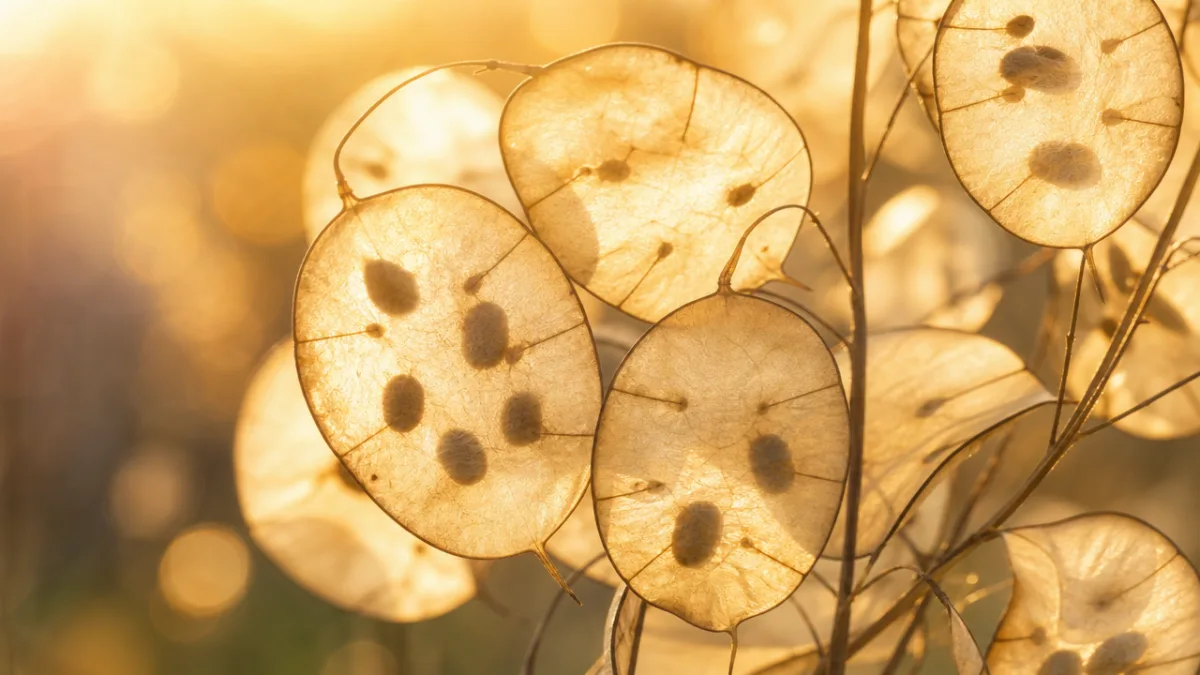
The name “Honesty” comes from the plant’s most iconic feature: those translucent, papery seed pods that stay on the stems long after the seeds are gone. Because you can see right through them, they came to symbolize transparency and truth — nothing to hide behind a membrane that thin. The French call it “la Monnaie du Pape” (Papal Money), and in Germany it’s “Silberling,” meaning little silver coin. Different names, same idea: there’s something about those silvery discs that just captures people’s imaginations, which is probably why Lunaria has been a staple of cottage gardens and dried flower arrangements for centuries.
Being a biennial, Lunaria takes two years to complete its life cycle. In year one it simply settles in, producing a rosette of coarse, heart-shaped leaves. Year two is when things get interesting — tall flowering stems shoot up anywhere from 60 to 90 centimeters, and then after flowering and setting seed, the plant dies. But before it goes, it scatters seeds that will soon be sprouting to start the whole cycle over again. Once Honesty gets comfortable in your garden, it tends to self-sow reliably enough that it just keeps coming back, year after year, with barely any help from you.
A Rich History and Cultural Significance
Lunaria has been growing in European gardens since at least the sixteenth century. The great Renaissance herbalist John Gerard wrote about it in his famous Herball of 1597, and what’s interesting is that even back then, when most plants were grown for medicine or food, Honesty was valued mainly for how it looked. That’s actually quite remarkable for the time — it makes Lunaria something of an early pioneer in ornamental gardening, grown purely because people found it beautiful.
In the Victorian language of flowers, Honesty stood for sincerity, fascination, and money — so tucking a stem of it into a bouquet was essentially a declaration of genuine, transparent affection. Beyond romance, it was associated with prosperity and good luck in various parts of Eastern Europe and Scandinavia, where dried stems of the silvery pods were hung in homes to attract financial abundance. It’s a lovely tradition, and frankly, those glowing seed pods do feel like something a little magical found its way into your house.
Lunaria also made minor appearances in folk medicine over the centuries. The seeds were used in preparations believed to help with epilepsy, and the root was sometimes eaten as a condiment not unlike horseradish. None of this has any grounding in modern medicine, and it’s not something to pursue without professional guidance, but it does speak to how deeply woven into everyday life plants like this once were. Today its value is mostly aesthetic and ecological, but that long history of human connection gives it a richness that many newer cultivars simply can’t match.
Growing Conditions and Site Selection
One of the things that makes Lunaria such a genuinely useful garden plant is how adaptable it is. It’s perfectly happy growing in partial shade — those awkward spots under deciduous trees or along a north-facing fence where most flowering plants just give up. It’ll certainly bloom more freely in a sunnier position, but its ability to perform reasonably well in dappled or even fairly deep shade makes it a real problem-solver for gardeners dealing with a heavily wooded or built-up plot.
When it comes to soil, Lunaria is refreshingly easy-going. It does best in moderately fertile, well-drained ground, but it will tolerate heavy clay and poor soils far better than a lot of ornamentals. If your soil is really compacted or prone to waterlogging, working in some garden compost will help, but you don’t need to do anything dramatic. It does prefer a neutral to slightly alkaline pH, so if your garden runs quite acidic, a light application of garden lime can make a noticeable difference. One thing to avoid: overfeeding, especially with nitrogen-heavy fertilizers. Too much of that and you’ll get lush foliage and not much else.
Hardiness is another of Lunaria’s strong suits. It’s rated for USDA zones 4 through 8 and handles frosts without fuss, even as a young seedling. Across the British Isles and much of northern Europe, cold is simply not a concern. In warmer climates it can still be grown but may behave more like an annual, rushing through its cycle in a single season. If you’re gardening in a Mediterranean climate or the warmer parts of the United States or Australia, try sowing in autumn rather than spring — giving it a cooler growing season tends to suit it much better.
Sowing, Planting, and Propagation
Growing Lunaria from seed is about as straightforward as seed-sowing gets. The seeds are large, flat, and easy to handle, and they germinate reliably without any special fuss like stratification or pre-soaking. For the classic biennial approach, sow directly outdoors in late spring or early summer once the last frosts are done. The soil will be warm enough by then to get things moving quickly — germination usually happens within ten to fourteen days under decent conditions. Thin or transplant the seedlings to their final spots in autumn or the following spring.
If you’d rather start them indoors, sow in early spring using seed-starting compost in small pots or module trays, putting two or three seeds per cell and thinning to the strongest once they’re up. Lunaria isn’t keen on having its roots disturbed, so be gentle when transplanting and give them a good drink of water after moving. Aim for around 30 centimeters between plants so each one has enough room to develop into a well-branched, sturdy specimen without getting crowded out.
Once you’ve got Honesty established, propagation more or less takes care of itself. Leave the seed pods on the plant to mature and split naturally, and seedlings will pop up all over the place — sometimes in spots you’d never have chosen, but they’re easy enough to move when they’re small. If you want a bit more control over where they end up, collect the ripe pods just before they open and scatter the seeds where you actually want them to grow. One thing worth keeping in mind: because Lunaria is biennial, you need plants at two different stages of their cycle growing at the same time to guarantee flowers every year. Once a colony gets going, that balance establishes itself naturally.
Caring for Lunaria Through the Seasons
Once Lunaria is settled in, it really doesn’t ask much of you, which is one of its greatest qualities. In year one, the main job is just making sure seedlings don’t dry out during any prolonged dry spells, particularly through summer. A layer of mulch around the base does a lot of the work for you, holding moisture in and keeping weeds down at the same time. By the time the plants are into their second year and racing away in spring, they’re largely self-sufficient, drawing on well-developed root systems to fuel all that growth.
Staking is usually unnecessary, but in a particularly exposed or windy spot the tall stems can get knocked around. A few unobtrusive canes and some soft twine is all you need. As for deadheading — it’s really up to you. Unlike many annuals and perennials, removing spent flowers won’t encourage a second flush, but it will cut down on self-seeding if things are getting a bit too enthusiastic. If you’re planning to harvest the pods for drying, timing is the key thing to get right: you want them fully ripe and starting to dry naturally on the stem before you cut them.
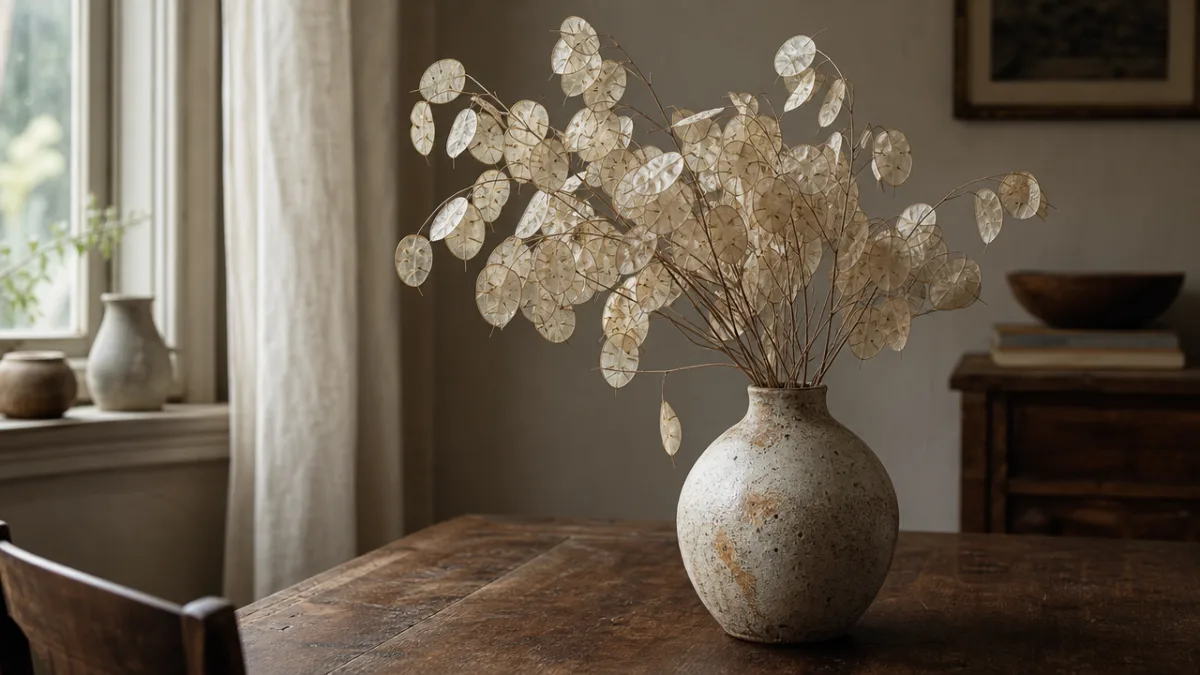
Harvesting and drying the seed pods is genuinely one of the most rewarding things Lunaria offers. Cut the stems when the pods are dry and papery but before they start shattering and dropping their seeds. Hang them upside down somewhere warm, dry, and airy for a few weeks. Once fully dried, you can gently rub away the outer layers of each pod to reveal the beautiful silver membrane underneath — and suddenly you have those ethereal, glowing wands that look so extraordinary in dried arrangements. Kept away from damp and direct sunlight, these dried stems last for years, making them one of the most long-lasting and cost-free decorative things your garden can produce.
Varieties, Companions, and Garden Design
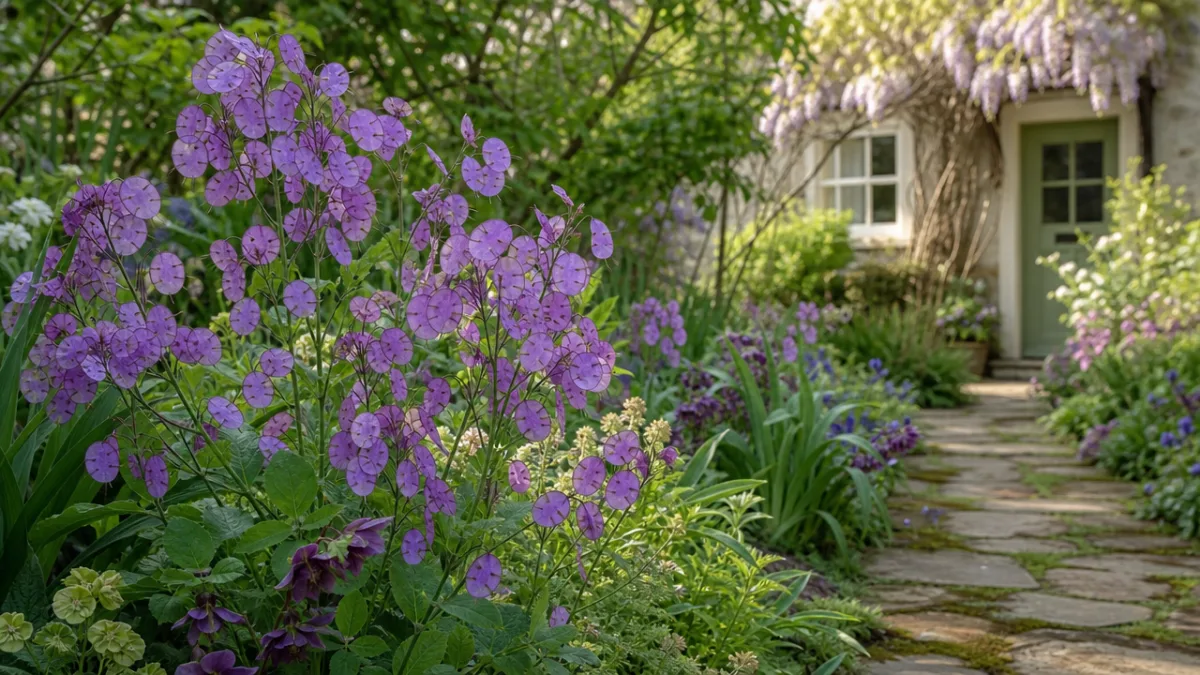
The wild species gives you the familiar purple-pink flowers, but there are some really lovely cultivated varieties worth tracking down. ‘Alba’ has pure white flowers that look especially beautiful in shaded spots and work wonderfully alongside other white spring bloomers like Solomon’s seal and white foxgloves. ‘Variegata’ is grown primarily for its cream-edged leaves, which give it visual interest throughout the whole first year before the flowers even arrive. And then there are the deeper wine-red and violet selections, which really lean into that romantic, cottage-garden atmosphere that Lunaria naturally creates.
For companion planting, Lunaria plays nicely with a wide range of spring and early summer plants. Some combinations that work particularly well:
- Lunaria with tulips and forget-me-nots for that classic cottage-garden spring tapestry of purple, blue, and mixed colour.
- Lunaria ‘Alba’ with Dicentra spectabilis (bleeding heart) for a softly romantic white and pink pairing that really sings in partial shade.
- Lunaria with alliums, where the globe-shaped allium heads echo the circular form of the Lunaria seed pods later in the season — a lovely bit of visual continuity.
- Lunaria beneath deciduous shrubs like Amelanchier or Cornus, where it naturalizes beautifully in the dappled light underneath.
- Lunaria with Aquilegia (columbine) and Geranium sylvaticum for a naturalistic, meadow-inspired feel in light woodland conditions.
From a design standpoint, Lunaria makes a far stronger statement in generous drifts than it does dotted around as isolated plants. A colony of twenty or thirty creates something genuinely dramatic and also ensures a reliable display as plants at different stages of their biennial cycle support each other. And in winter, when the rest of the garden has gone quiet, those silver seed pods really come into their own — catching the low winter sunlight and glimmering in the cold air, providing that bit of structure and quiet magic that makes the garden worth stepping outside for even in the bleakest months.
Ecological Value and Sustainability
Lunaria isn’t just a pretty face — it’s genuinely good for the garden ecosystem too. The flowers arrive early in spring, at a point when a lot of other plants haven’t come into bloom yet, making them a valuable early source of nectar and pollen for pollinators. Bumblebees in particular are regular visitors, and the relatively simple, open flower structure means that even long-tongued species that can’t access many modern complex-flowered cultivars can get what they need from Lunaria with ease.
Perhaps most significantly, Lunaria is the sole or primary larval food plant for the Orange-tip butterfly in Britain and much of Europe. Female Orange-tips lay their eggs singly on the flower buds, and the caterpillars feed on the developing seed pods. Growing Honesty in your garden is therefore a genuinely meaningful contribution to supporting this lovely and increasingly pressured butterfly. The Orange-tip is often one of the first butterflies to appear each spring, and watching one settle on a Lunaria flower is, without question, one of the season’s real highlights.
From a sustainability angle, Lunaria ticks almost every box. It needs no supplementary feeding, minimal watering once it’s established, and no pest control to speak of — it’s largely resistant to slugs and snails, possibly thanks to its slightly hairy leaves and stems. Its self-seeding habit means that once you buy it, you never need to buy it again. And those dried seed pods are a home-grown, zero-carbon alternative to imported decorative materials, produced entirely by your own garden with no effort beyond the very enjoyable process of harvesting and drying them. In every sense, Lunaria annua is a plant that gives back far more than it ever asks for.








What do you think?
It is nice to know your opinion. Leave a comment.