










Why Are These Upcycled Clothing Ideas Taking Over Everyone’s Feed?
The Rise of Upcycled Fashion in the Digital Age
Something really interesting has been happening on social media over the past few years. Upcycled clothing — taking old, worn-out, or forgotten pieces and turning them into something you’d actually want to wear — has gone from a niche DIY hobby to something you can’t scroll past without seeing. It used to be the kind of thing your crafty grandmother did, or the broke college student who couldn’t afford new clothes. Now? Fashion influencers are doing it, celebrities are doing it, and regular people are doing it because they genuinely want to — not just to save money, but because they’re done with the whole fast fashion cycle.
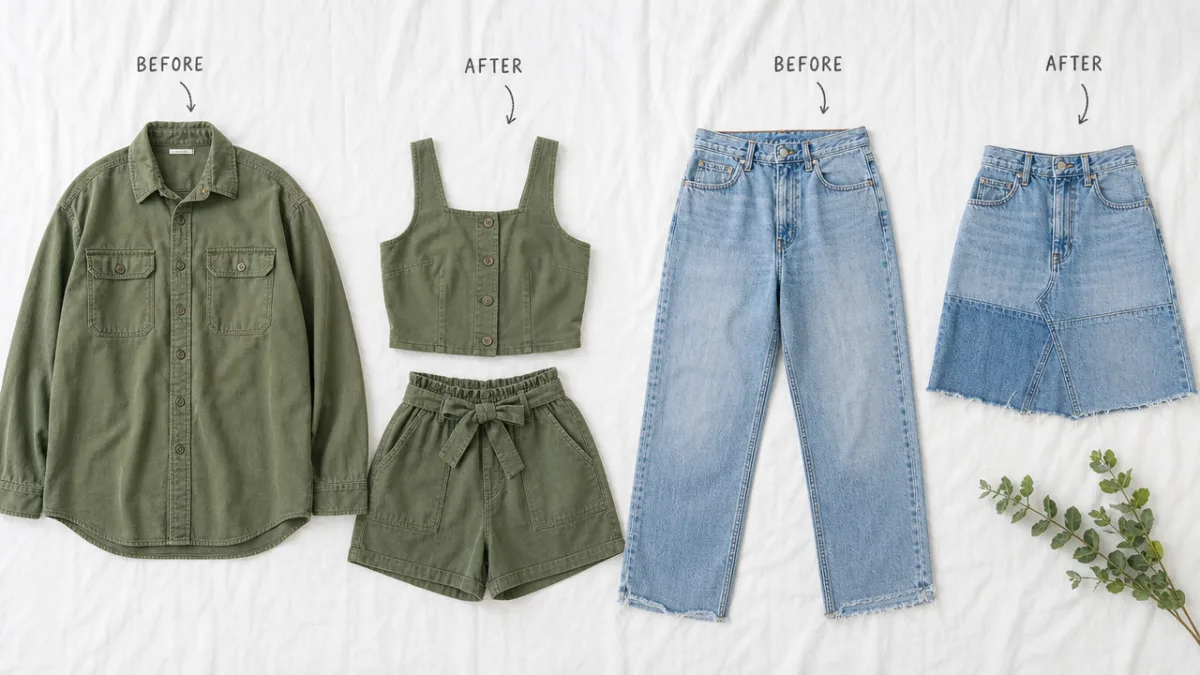
Platforms like Pinterest have a lot to do with how fast this spread. The moment someone pins a brilliantly reworked denim jacket or a patchwork dress they made from old scraps, it ripples out to thousands of boards almost instantly. And honestly, these platforms were made for this kind of content. A dramatic before-and-after transformation practically begs to be shared — a pair of faded jeans becomes embroidered statement trousers, an oversized men’s blazer becomes a sharp little waistcoat. It’s the kind of visual story people can’t stop clicking on.
But it’s more than just pretty pictures. There’s something genuinely satisfying about the story behind upcycled pieces. Every garment has a history, and you can see the effort and intention in the finished product in a way you never could with something pulled off a rack. People aren’t just saving the end result — they’re obsessed with watching the process. The cutting, the stitching, the dyeing, the embellishing. It taps into something a lot of us are craving right now: realness, craft, things that actually mean something, in a world where trends are already old news before you’ve had a chance to try them.
The Environmental Case for Upcycling Your Wardrobe
Here’s a number that should make you pause: the fashion industry is responsible for roughly 10 percent of global carbon emissions every year. Fast fashion brands push out new collections at a relentless pace, basically designed to make you feel like last season’s stuff is already trash. The result is stuffed landfills, rivers polluted with synthetic dyes, and a combined carbon footprint that rivals aviation and shipping. Upcycling isn’t just a fun creative outlet against all that — it’s a genuine pushback.
When you upcycle something, you’re breaking the take-make-throw-away loop that does so much damage. Instead of tossing a worn piece, you give it a second life. All the resources that went into making that fabric in the first place — the water, the energy, the labor — don’t go to waste. Research suggests that keeping a garment in use for just nine extra months can cut its carbon, water, and waste footprint by somewhere between 20 and 30 percent. Multiply that across millions of people making that same choice, and it starts to add up to something real.
There’s also the question of what you’re not buying. Making a single cotton t-shirt from scratch takes more than 2,700 liters of water. Polyester is essentially made from fossil fuels and sheds microplastics every time you wash it. Working with what you already have means you’re not adding to the demand for any of that. The environmental case is genuinely compelling, and more and more people are doing the math — motivated by real concern about the planet, and by the fact that sustainable choices don’t have to look like a sacrifice anymore.

The Most Popular Upcycled Clothing Techniques Taking Over Feeds
Part of why this content does so well is that there’s genuinely something for everyone. You can start with nothing more than scissors and a pack of iron-on patches, or you can go deep into smocking, visible mending, and natural dyeing. The range is huge, and that matters — you don’t need to be a trained seamstress to get started, and you can still produce something that looks incredible whether you’re a complete beginner or someone with serious skills.
The techniques that have really taken off include fabric dyeing methods like tie-dye, shibori, and cold-water dip-dye — all of which can completely revive a faded or stained piece and make it look intentional and fresh. Denim has been a constant favorite, with creators cutting, fraying, and layering fabrics to get those uniquely textured results that you truly can’t buy anywhere. And hand embroidery has had a serious moment — bold, colorful stitching on collars, cuffs, and pockets that turns a basic piece into something that feels almost heirloom.
Other widely shared approaches include:
- Taking in or resizing thrift store finds using basic sewing techniques — getting a custom fit for a fraction of what you’d pay retail.
- Bleach painting and bleach tie-dye, which use controlled chemical reactions to pull graphic patterns out of dark fabrics in a way that looks almost intentional and artistic.
- Cutting up old t-shirts into strips and weaving them into bags, mats, or even woven panels for garments.
- Using heat-transfer vinyl or fabric paint to add bold graphics, lettering, or illustrations to plain hoodies, jackets, and totes.
- Combining multiple garments — like sewing two dresses together into a patchwork midi skirt — to create silhouettes that didn’t exist before you made them.
How Creators and Influencers Are Driving the Upcycling Movement
A big reason this trend has the legs it does is the wave of creative entrepreneurs and influencers who have built real audiences around sustainable fashion. What makes them different is that they don’t just show you the finished piece and move on — they take you through every single step, which makes techniques that might look intimidating feel totally doable. What could easily be a solo hobby becomes this collective, participatory thing, with followers trying their own versions and sharing the results back in comments and duets.
Creators in the “thrift flip” world on YouTube, zero-waste tailors on TikTok, and sustainable fashion collaborators across platforms have done something important: they’ve proven that upcycled clothing can be genuinely high-fashion in appearance. Their work blows up the idea that sustainable style has to look earnest but dowdy. Their pieces are trend-aware, technically impressive, and visually exciting — content that performs well with eco-conscious audiences and with anyone who just appreciates good style. That crossover appeal has been key to getting upcycling into conversations that used to be all luxury brands and fast fashion hauls.
The business side of all this is worth paying attention to too. Plenty of creators have turned their upcycling skills into real income, selling one-of-a-kind reworked pieces on Depop, Etsy, and their own sites. A restyled vintage leather jacket or a hand-embroidered linen shirt can easily sell for two or three times what the original cost — because the price reflects actual labor and creativity, not just a markup. That viability has pulled a whole wave of small-scale makers and fashion entrepreneurs into the space, which keeps the content ecosystem growing and shows pretty clearly that doing good and making money don’t have to be in conflict.

Getting Started: A Beginner’s Guide to Upcycling Your Own Clothes
If your feed has you itching to try this yourself, here’s the best news: you really don’t need much to get started. No dedicated studio, no expensive equipment, no formal training. Just a willingness to play around, a few basic tools, and a garment you don’t mind experimenting on. Most experienced upcyclers will tell you to start with something you were already going to throw out anyway — a stained t-shirt, jeans that stopped fitting, a shapeless dress that’s been at the back of the wardrobe for years. When the stakes are low, it’s so much easier to take risks and actually have fun with it.
A basic starter toolkit for most upcycling projects would include the following essentials:
- Sharp fabric scissors — keep these separate from your paper scissors, because dull blades will snag and drag through fabric and make everything harder.
- A selection of hand-sewing needles and a range of thread colors so you’re not limited when you want to experiment.
- Fabric chalk or washable markers for marking cutting lines and figuring out placement before you commit.
- Iron-on hem tape and fusible interfacing for clean, no-sew finishing — great when you want a polished result without breaking out a sewing machine.
- A seam ripper for carefully taking apart garments before you put them back together in a new configuration.
- Fabric dye in your preferred colors, along with rubber gloves and containers you don’t mind staining for dyeing projects.
Start with projects that are low-skill but high-impact — that’s the fastest way to build confidence. Cropping an oversized shirt to a better length, ironing patches over worn spots on jeans, or dyeing a faded piece a bold new color are all things you can finish in under an hour and feel genuinely proud of. From there, you can work up to taking in seams, adding embroidery, or reconstructing multiple pieces into something new. The learning curve is real but it’s gradual, and it’s genuinely fun — which is exactly why so many people get completely hooked.
The Cultural Shift Behind the Upcycling Boom
This isn’t happening in a vacuum. The upcycling boom is part of a much bigger shift in how younger generations think about buying things, owning things, and what their choices say about who they are. Millennials and Gen Z have come of age through the 2008 financial crash, a global pandemic, and the slow-burning anxiety of climate change. That background tends to make people skeptical of buying for the sake of buying, more interested in whether their choices actually line up with their values, and more drawn to creativity and experiences than just accumulating more stuff. Upcycling hits all of those notes at once.
There’s also a counter-cultural energy to it that younger people find genuinely compelling. When algorithmically driven micro-trends are churned out constantly and corporate fast fashion is working hard to make everyone look the same, wearing something you personally transformed is a small but real act of individuality. Your reworked vintage coat or hand-dyed linen trousers can’t be copied by a brand — they’re one of a kind, and they carry the visible mark of your own time and creativity. In a world of mass production, that kind of uniqueness feels increasingly rare and worth having.
The mainstream fashion world has absolutely noticed. Luxury houses like Balenciaga, Margiela, and Loewe have all borrowed the visual language of upcycling — distressed finishes, reworked panels, patchwork aesthetics — while charging prices that honestly make doing it yourself look even more appealing. Meanwhile, the global secondhand clothing market is on track to hit over 350 billion dollars by 2028, driven by platforms like ThredUp, Vinted, and Vestiaire Collective. Upcycling sits at the creative and ethical center of all of this, offering something that buying secondhand alone can’t — it turns the wearer from a consumer into an actual maker.
The Community and Connection Fueling Continued Growth
One thing that doesn’t get talked about enough is how much the sense of community is driving all of this. On Pinterest boards, Reddit threads, Discord servers, and at in-person swap meets and craft workshops, people who care about sustainable fashion and creative reuse have found their people — and the communities they’ve built are genuinely warm and welcoming. There’s none of the competitive gatekeeping that can make other corners of the fashion world feel exhausting. Beginners are welcomed, mistakes are treated as learning moments, and people share techniques and resources freely. It’s a refreshing corner of the internet.
Hashtag challenges and online campaigns have been a huge part of keeping these communities engaged and generating new waves of content. Things like the “30 Wears Challenge” — committing to wearing every garment at least thirty times before getting rid of it — or the annual “Make Thrift Mend” events that challenge people to skip buying new clothes for a set period have drawn thousands of participants and produced a flood of genuinely inspiring content. What they do well is make sustainability feel achievable and even fun, rather than like a grim sacrifice.
Looking ahead, there’s no real sign of this slowing down. As climate concerns grow louder, as more people start to understand what fast fashion actually costs, and as tutorials and tools make creative reworking easier to access than ever, the appeal of transforming what you already own is only going to get stronger. The feeds that once felt surprising in their embrace of cut-up denim and hand-stitched blazers are starting to look less like a trend and more like the beginning of something lasting — one stitch, one dye bath, and one lovingly reworked garment at a time.








What do you think?
It is nice to know your opinion. Leave a comment.