










Top 30 Rustic Wooden Crate Ideas for Farmhouse Storage, Shelving and Home Decor Projects
The Timeless Charm of Rustic Wooden Crates in Modern Farmhouse Design
Rustic wooden crates have quietly become one of the most beloved staples in farmhouse-inspired interior design, and it is not difficult to understand why. These humble, hardworking objects carry a sense of history, authenticity, and warmth that few other decorative elements can replicate. Whether salvaged from old orchards, purchased from antique markets, or bought new and distressed at home, wooden crates bring an organic, grounded character to any space they occupy. They speak of simpler times, of harvest seasons and country markets, of a lifestyle connected to the land.
What makes wooden crates especially appealing to contemporary homeowners is their extraordinary versatility. A single crate can serve as a planter, a wine rack, a toy storage bin, a side table, a display shelf, or a photo prop — sometimes all at different points in its life. This adaptability means that investing in a collection of wooden crates is rarely a decision anyone regrets. As interior design trends continue to shift toward sustainability and repurposing, crates have stepped naturally into the spotlight as the ultimate upcycled home accessory.
The farmhouse aesthetic itself has grown far beyond its rural origins to become a broadly appealing design philosophy that resonates with urban apartment dwellers and suburban families alike. At its heart, farmhouse style celebrates materials that are honest, functional, and unpretentious — and wooden crates embody all three of those qualities with ease. When you integrate crates into your home, you are not simply following a trend; you are participating in a design tradition rooted in resourcefulness and a deep appreciation for natural materials and handcrafted objects.
Creative Storage Solutions Using Wooden Crates
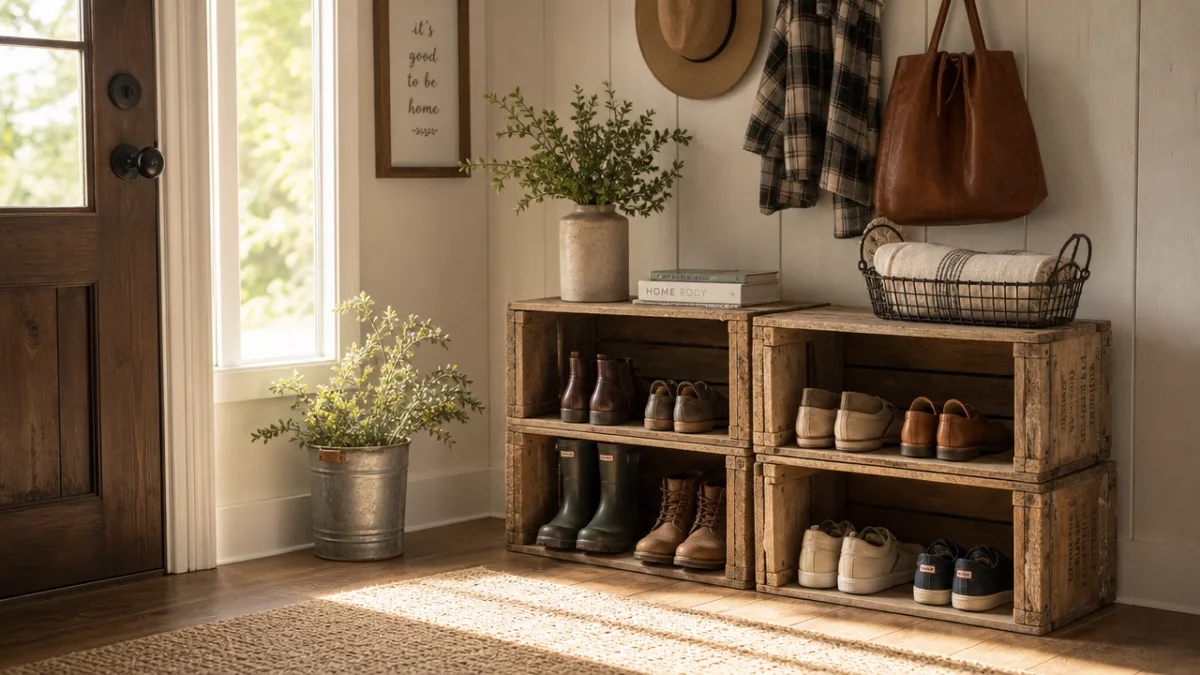
One of the most practical ways to use wooden crates is as flexible, attractive storage throughout the home. In the entryway, a stack of two or three crates mounted on the wall with their open faces pointing outward creates an instant cubby system for shoes, scarves, umbrellas, and everyday essentials. Because each crate has its own compartment, organization becomes intuitive without requiring labels or complex sorting systems. The natural wood grain adds visual warmth to what can otherwise be a utilitarian, overlooked corner of the home.
In children’s bedrooms and playrooms, wooden crates are perhaps the most effective storage solution available. They are the right size for grouping toys by category — one crate for building blocks, another for art supplies, a third for stuffed animals — and their open design makes cleanup fast enough that even young children can manage it independently. Crates can be left freestanding on the floor, stacked in towers, or mounted on walls at a child-friendly height. As children grow and their storage needs change, the crates simply get repurposed elsewhere in the house rather than discarded.
In the bathroom, where storage is often at a premium and aesthetics still matter, wooden crates offer a charming alternative to conventional shelving. A wall-mounted crate beside the sink can hold rolled hand towels, a small plant, and a candle, instantly elevating the space from purely functional to thoughtfully decorated. Beneath a pedestal sink, a larger crate keeps cleaning supplies or extra toilet paper neatly corralled while concealing the plumbing from view. For best results in humid environments, seal the wood with a water-resistant finish and choose crates made from a durable hardwood species.
Wooden Crate Shelving Projects for Every Room
Building shelving from wooden crates is one of the most satisfying DIY projects a homeowner can undertake, requiring only basic tools and a modest investment of time. The simplest approach is to mount individual crates directly to the wall using screws driven through the back panel into wall studs, creating floating shelves with built-in depth and definition. Three or four crates arranged in a staggered pattern on a living room wall create a display feature that feels curated and intentional, a far cry from the impersonal look of mass-produced shelving systems.
For those who prefer not to drill into walls, freestanding crate shelving units offer the same visual appeal with total flexibility. By stacking crates in a grid pattern and securing them to one another with wood glue, L-brackets, or pocket screws, you can construct a bookcase, a room divider, or a kitchen pantry organizer that can be disassembled and moved whenever your needs change. This approach is particularly popular in rental apartments where wall modifications are restricted. Finished with a coat of chalk paint or a light whitewash, a freestanding crate shelf can look remarkably polished and intentional.
In the kitchen, open crate shelving has become a signature element of the farmhouse look. Replacing upper cabinets with rows of wall-mounted crates keeps dishes, mason jars, and pantry staples within easy reach while showcasing the everyday objects that give a kitchen its personality. Mixing crates of different sizes adds visual rhythm and allows for both tall items like cereal boxes and shorter items like spice jars to be stored attractively. Lining the crates with a simple piece of linen or burlap softens the look and protects the wood from spills and grease.
Beyond kitchens and living rooms, crate shelving works beautifully in home offices and craft rooms where organized chaos is the daily reality. A column of crates beside a desk can hold file folders, notebooks, printer paper, and reference books in a system that is immediately legible at a glance. In a craft room, deep crates accommodate rolled fabric, yarn baskets, and large cutting mats while smaller ones keep thread, buttons, and other notions sorted and accessible. The ability to label each crate’s exterior face with a handwritten chalkboard tag adds a personal, artisanal touch that reinforces the farmhouse spirit.
Decorative Farmhouse Decor Ideas with Wooden Crates
Beyond their storage and shelving functions, wooden crates are outstanding vehicles for purely decorative expression within the farmhouse home. A large, weathered crate placed at the foot of a bed and filled with a chunky knit throw, a stack of quilts, and a few decorative pillows creates an inviting vignette that is both beautiful and functional. In the living room, an overturned crate with a tray placed on top functions as a coffee table that can display candles, books, a small succulent arrangement, and other meaningful objects in a way that feels effortlessly curated.
Wooden crates make exceptionally charming planters, both indoors and outdoors. Lined with landscape fabric or a plastic insert to retain soil, a crate can host a herb garden on a kitchen windowsill, a collection of succulents on a porch railing, or a cascade of trailing plants on a front step. The weathered texture of aged wood complements the living green of plants in a way that feels completely natural, and as the wood weathers further over time, the combination only becomes more beautiful. For an especially striking display, use crates of graduated sizes to create a tiered planting arrangement.
During the holiday seasons, wooden crates become indispensable props for seasonal vignettes. In autumn, fill a large crate with pumpkins, gourds, dried corn husks, and sprigs of bittersweet for a porch display that captures the harvest spirit entirely. At Christmas, a crate filled with pine cones, wrapped gifts, a string of warm-white lights, and a few sprigs of evergreen creates a centerpiece that feels genuinely festive without resorting to plastic or mass-produced decorations. The natural material of the crate anchors these seasonal arrangements and keeps them feeling rooted in tradition.
For a more ambitious decorative project, consider transforming a collection of crates into a gallery wall installation. Mount crates at varying depths by using different bracket lengths, allowing some to protrude further from the wall than others. Fill each crate with a different arrangement — one with framed family photographs, another with a trailing plant, a third with a collection of vintage glass bottles, and a fourth with stacked books arranged by color. This kind of layered, dimensional display brings the farmhouse aesthetic to its richest and most personal expression, telling the story of a family and a home rather than simply following a decorating formula.
Furniture and Functional Pieces Built from Wooden Crates
With a little more effort and a few additional materials, wooden crates can be transformed into genuinely functional furniture pieces that anchor a room both practically and aesthetically. A classic beginner project is the crate side table: simply attach four short wooden legs to the base of a large crate using dowels and wood glue, then add a round piece of plywood or a purchased wooden top to create a surface. Sand the whole piece smooth, stain it in your preferred tone, and finish with a durable topcoat. The resulting table has a drawer-like interior accessible through the open side of the crate, providing hidden storage within an elegant, handmade piece.
A more ambitious project is the crate coffee table, which typically involves constructing a frame from two-by-fours and attaching four crates to the frame with their open sides facing up, creating four deep storage compartments beneath a glass or wooden top. This design is particularly popular in families with young children because the compartments can hold remote controls, gaming accessories, coasters, and other living room essentials without the clutter ever being visible when not in use. The size and proportions of a four-crate coffee table are naturally well-suited to most living room sofas, making the finished piece feel purposeful rather than improvised.
Crate ottomans are another wonderfully approachable furniture project with a high impact-to-effort ratio. A single large crate fitted with a cushioned top — made by cutting foam to size and covering it with your choice of fabric — becomes a multifunctional piece that serves as extra seating, a footrest, and interior storage all at once. Add four small casters to the base and the ottoman becomes mobile, able to roll beside a sofa for movie night or slide under a console table when not in use. Finished with a distressed white paint or a warm honey stain, a crate ottoman feels completely at home in a farmhouse-inspired interior.
For outdoor living spaces, wooden crates can be repurposed into garden benches, potting tables, and even compact outdoor bars. A pair of large crates placed parallel to each other with a long plank of weathered wood spanning their tops creates an instant bench that works beautifully on a porch or patio. If the crates are sealed appropriately for outdoor use, they will hold cushions, outdoor games, and garden tools inside their open compartments throughout the warmer months. As interest in outdoor living continues to grow, the ability to furnish a porch or backyard with handmade, character-rich pieces from repurposed crates represents a genuinely exciting creative opportunity.
Tips for Sourcing, Preparing, and Finishing Wooden Crates
Finding the right wooden crates is half the creative battle, and fortunately there are many excellent sources available to today’s DIY decorator. Antique shops, flea markets, and estate sales are the most romantic options, offering genuinely aged crates that have already developed the patina and character that newer crates take years to accumulate. Online marketplaces like eBay, Etsy, and Facebook Marketplace have also made it dramatically easier to source vintage crates from across the country without leaving home. Local farms, orchards, and produce distributors sometimes sell or give away used apple crates, wine crates, and shipping crates that are exactly what a farmhouse project calls for.
For those who prefer a more consistent look or who need a large number of identical crates for a built-in project, unfinished wooden crates purchased new from craft stores or online retailers are a practical and affordable choice. These crates typically come in standard sizes and are made from kiln-dried pine or poplar, making them easy to cut, sand, paint, and stain. To give new crates an aged appearance, there are several effective techniques worth knowing:
- Dry-brushing a diluted white or grey paint over the natural wood and immediately wiping most of it away leaves a subtle, weathered finish that mimics decades of sun exposure.
- Applying a coat of dark walnut stain followed by careful sanding with fine-grit sandpaper along the edges and corners creates a worn, time-softened look that feels authentic.
- Distressing the wood physically before finishing — by striking it with a chain, driving random nail holes, or gouging it with a screwdriver — adds the kind of imperfections that naturally accumulate over a crate’s working life.
- A whitewash solution made from one part white paint and two parts water applied with a brush and then wiped with a cloth gives pine crates the pale, bleached appearance of wood that has spent years outdoors.
- Fuming the wood with ammonia or applying a commercial wood-aging solution will rapidly darken and silver the grain, replicating the effect of outdoor weathering in a fraction of the time.
Regardless of whether your crates are antique or newly purchased and artificially aged, proper finishing is essential for longevity and practicality. Crates used for display or light storage can be sealed with a simple coat of clear wax or matte polyurethane. Those used in kitchens or bathrooms benefit from a more robust waterproof sealant. Outdoor crates should always be finished with an exterior-grade sealer or paint to protect against moisture, UV damage, and insects. Taking the time to prepare and finish your crates properly will ensure that they remain beautiful and structurally sound for years to come, growing more characterful with every passing season.
Storage hardware and accessories can transform a basic crate into something truly special with minimal effort and expense. Adding wrought iron handles to the sides of a crate immediately elevates its visual weight and makes it easier to carry and reposition. Attaching rope handles instead creates a softer, nautical feel that works beautifully in coastal-inflected farmhouse interiors. Lining the interior of a crate with a piece of striped ticking, buffalo check, or floral linen fabric before using it for display softens its utilitarian origins and adds another layer of texture to a vignette. Small details like these are what distinguish a thoughtfully decorated farmhouse interior from one that simply has wooden crates placed around it, and they cost almost nothing to achieve.








What do you think?
It is nice to know your opinion. Leave a comment.