










Tan Denim Upcycled Crossbody Bag with Bling: The Ultimate Guide to Sustainable Style
The Art of Upcycling: Transforming Denim Into Wearable Art
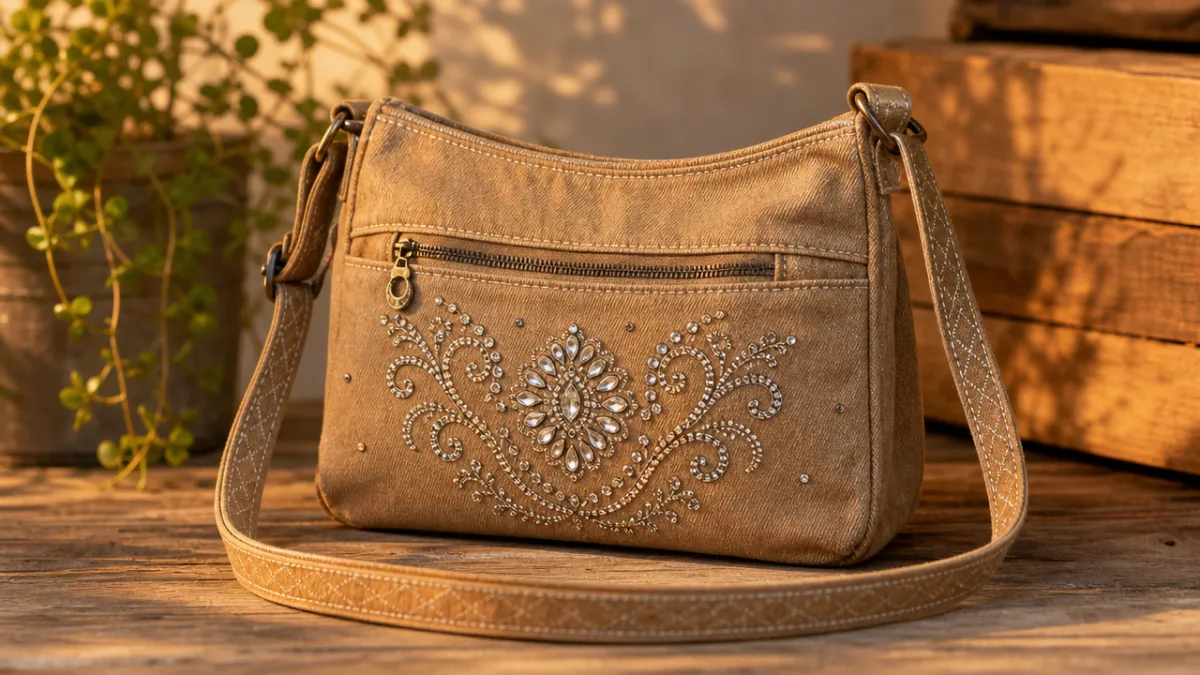
Upcycling has moved far beyond a niche craft hobby into a full-blown fashion movement, and nowhere is this more beautifully demonstrated than in the creation of handmade crossbody bags from repurposed denim. When you take a worn pair of tan or light-wash jeans and reimagine them as a structured, embellished handbag, you are participating in a centuries-old tradition of making something extraordinary from the ordinary. The result is not just a functional accessory — it is a wearable conversation piece with a story woven into every seam and stitch.
The appeal of tan denim as a base material for an upcycled bag is both aesthetic and practical. Tan denim occupies a versatile middle ground between the cool tones of classic blue denim and the warmth of earthy neutrals, making it compatible with a wide range of outfit palettes. The fabric is sturdy, holds its shape well, and takes embellishment beautifully — whether that means rhinestones, studs, embroidery, or all three at once. As a material, denim has already proven its durability by surviving years of everyday wear before being repurposed.
What makes the upcycled crossbody bag concept so compelling is that no two pieces are ever identical. The placement of original pockets, seams, rivets, and worn patches from the source garment each influence the final design in unpredictable and delightful ways. A back pocket might become the perfect exterior compartment. A belt loop might anchor a decorative tassel. The fray on a hem could become intentional fringe trim. This unpredictability is not a limitation — it is the very feature that gives handmade upcycled bags their charm and collectibility.
Choosing the Right Denim and Materials for Your Crossbody Project
Before you cut a single thread, selecting the right denim is the most critical decision in the entire project. For a crossbody bag, you want fabric that is medium to heavyweight — at least 12 ounces per yard — so that the finished bag holds its structure without needing excessive interfacing. Tan or camel-toned denim tends to come from chinos, lighter-wash jeans treated with a dye wash, or specialty denim fabric sold by the yard. Thrift stores are goldmines for this material, offering pre-loved garments whose weave has already been softened by wear.
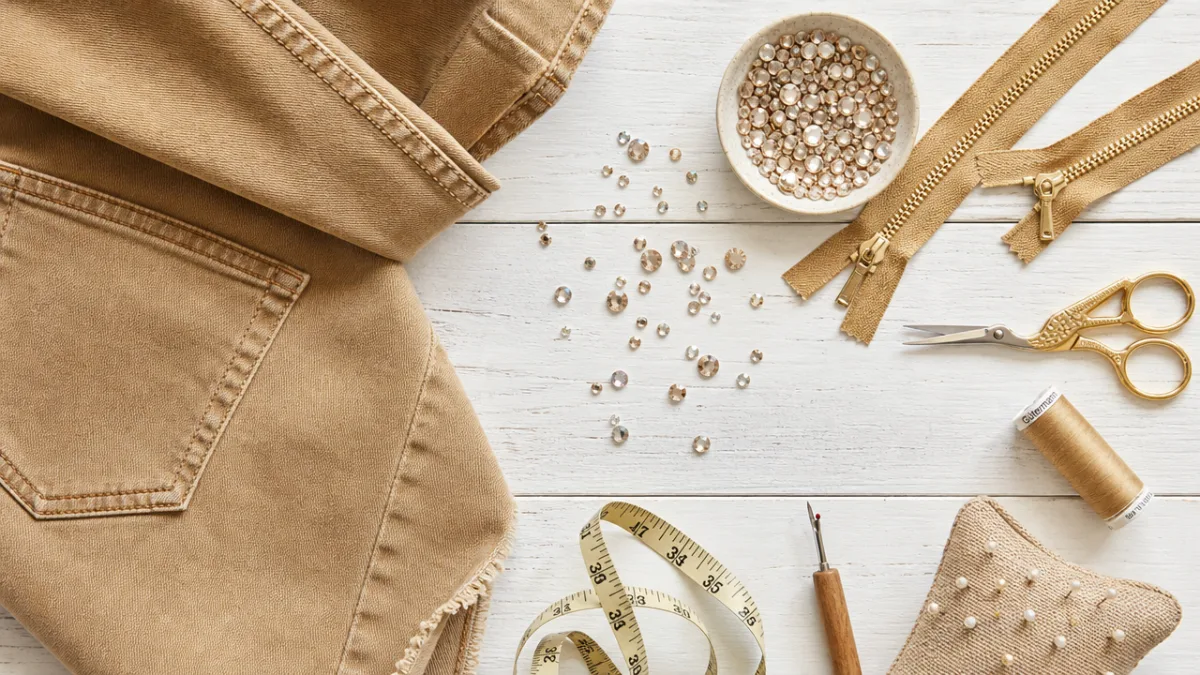
Beyond the denim itself, a well-constructed upcycled crossbody bag requires a thoughtful selection of supporting materials. A good fusible interfacing or canvas lining is essential to give the bag body and prevent it from slouching. A zipper — ideally a metal one in gold or antique brass — adds both function and visual interest along the top closure. Interior lining fabric in a coordinating print or solid color elevates the bag from a rustic craft project to a polished accessory worth carrying into any setting.
For the bling element that makes this particular style stand out, the options are wonderfully abundant. Iron-on rhinestone transfers offer a beginner-friendly entry point, while individually hand-set crystals in various sizes and colors allow for more intricate and custom designs. Flatback acrylic gems, glass crystals, metallic studs, and pearl accents can all be mixed and combined to create a decorative pattern on the bag’s exterior panel. Selecting a cohesive color palette — perhaps warm golds and champagne tones to complement the tan denim — ensures the embellishment looks intentional rather than haphazard.
Step-by-Step Construction: Building Your Upcycled Crossbody Bag
Once your materials are assembled, the construction process begins with deconstruction — carefully cutting and salvaging the best sections of your denim source garment. Use sharp fabric scissors and a seam ripper to separate panels cleanly, preserving any original features like pockets or stitching details you plan to incorporate. Iron each panel flat and fuse your interfacing to the wrong side before doing any cutting for the bag pattern, as this stabilizes the fabric and makes precise cutting much easier.
The basic crossbody bag structure consists of a front panel, a back panel, a gusset strip that runs along the sides and bottom to give the bag depth, and a strap. Many makers also add an interior zippered pocket using a coordinating fabric. Standard beginner-friendly dimensions for a compact crossbody are approximately 9 inches wide by 7 inches tall by 2.5 inches deep, though you can scale this up or down depending on your needs. Trace your pattern pieces onto the interfaced denim and cut carefully, leaving a half-inch seam allowance on all edges.
Assembly follows a logical sequence: first attach any exterior pockets or embellishments to the front panel while it is still flat and easy to work with, then sew the gusset to the front panel, then attach the back panel to the opposite side of the gusset. Set in the zipper along the top opening before closing the bag completely. Finally, attach D-rings at the upper side seams using fabric tabs, then clip your adjustable strap chain or webbing strap into place. Topstitching around all edges with a contrasting or matching thread adds professional polish and reinforces the seams.
Adding the Bling: Embellishment Techniques That Elevate Your Bag
The bling is where personal creative expression takes center stage, and this stage of the process deserves as much thought as the structural construction. Before applying any rhinestones or decorative elements, sketch your design on paper or lightly mark it on the bag panel using tailor’s chalk. Popular embellishment motifs for this style of bag include floral clusters, geometric borders along the seams, monograms, celestial patterns like stars and moons, and abstract scatter patterns that mimic the look of scattered jewels. Whatever design you choose, plan for balance and proportion relative to the bag’s size.
For hand-set crystals, a gem-setting tool or a simple toothpick can be used to apply small dots of E6000 craft adhesive or a dedicated gem glue to the back of each stone before pressing it firmly into place. Work in small sections and allow each area to dry before moving on, as rushing this process often results in stones shifting out of alignment. For larger flat-back gems, a slight twist as you press them down helps spread the adhesive evenly and creates a stronger bond with the denim weave.
Iron-on rhinestone motifs offer a faster alternative for makers who want dramatic results without the painstaking stone-by-stone application. These pre-arranged transfers come in an enormous range of designs and can be applied with a household iron or a heat press in just a few minutes. The key is using sufficient heat and even pressure across the entire motif, then allowing the piece to cool completely before peeling back the transfer sheet. For extra security on a bag that will see regular use, a thin line of fabric glue around the perimeter of the motif after application helps prevent edge stones from catching and lifting over time.
- Rhinestone crystals: Available in clear, aurora borealis, gold, and champagne finishes — ideal for a warm, glamorous look on tan denim.
- Metallic studs: Pyramid or dome studs in antique gold or bronze add an edgy counterpoint to the sparkle of crystals.
- Pearl accents: Half-pearl flatbacks introduce a softer, vintage-inspired dimension when mixed with harder crystal elements.
- Fabric paint: Outlining your gem placements with a fine tip fabric paint pen before setting stones adds depth and a hand-illustrated quality.
- Beaded fringe: A row of seed bead fringe along the bottom edge of the bag adds movement and a bohemian energy that complements the denim base beautifully.
Styling Your Upcycled Denim Crossbody Bag for Every Occasion
One of the most liberating qualities of a tan denim crossbody bag with bling is how effortlessly it transitions across style contexts. In its most casual interpretation, it pairs perfectly with white wide-leg jeans, a simple linen tank, and sandals for a weekend farmers market or a laid-back brunch. The tan denim reads as a neutral in this context while the rhinestone embellishment adds enough visual interest to keep the look feeling considered and put-together without appearing overdressed for a relaxed daytime setting.
For an evening out, the same bag takes on a more elevated character when styled alongside a slip dress, mules, and layered gold jewelry. The bling element, which might read as playful in daylight, catches ambient lighting in restaurant or venue settings in a way that feels genuinely glamorous. This is one of the remarkable qualities of rhinestone and crystal embellishments — their visual weight shifts significantly depending on the light environment, making an embellished denim bag a surprisingly versatile evening accessory when thoughtfully styled.
The crossbody silhouette itself is among the most practical and universally flattering bag shapes available. The hands-free wearing style suits everything from museum visits to music festivals to city commutes. The adjustable strap allows the bag to sit at different heights on the body depending on personal preference and proportional needs. Wearing the bag at hip level creates a relaxed, bohemian effect, while a shorter strap that brings the bag to the waist emphasizes the silhouette in a more structured and fashion-forward way. Either approach works beautifully with the tan denim and bling combination.
The Sustainability Story: Why Upcycled Fashion Matters More Than Ever
Every upcycled bag represents a small but meaningful act of resistance against the culture of fast fashion and disposability that has come to define mainstream clothing consumption. The fashion industry is one of the world’s most resource-intensive and polluting sectors, responsible for enormous volumes of water consumption, chemical runoff, and textile waste annually. When a pair of denim jeans that might have ended up in a landfill is instead transformed into a handcrafted bag that will be treasured and carried for years, the environmental arithmetic improves in a very real and tangible way.
Beyond the environmental case, upcycling supports a broader cultural shift toward valuing craft, skill, and individuality over mass production and uniformity. A handmade upcycled bag carries with it the time, intention, and creativity of its maker in a way that no factory-produced item can replicate. There is a growing consumer appetite for pieces that have a story — that can be explained and contextualized rather than simply consumed and discarded. Upcycled accessories occupy a unique position at the intersection of sustainability and authenticity that resonates deeply with contemporary values around conscious consumption.
The economic dimension of upcycled fashion is also worth considering. For makers who sell their creations, an upcycled crossbody bag with intricate bling embellishment can command prices that reflect the hours of skilled labor invested in its creation, while the raw material costs remain relatively low thanks to thrifted source garments. This creates a viable small-business model for independent makers and artisans operating through platforms like Etsy, Instagram shops, or local craft markets. Buyers, meanwhile, receive a one-of-a-kind piece that often costs less than comparable luxury accessories while supporting an independent creator directly.
- Source thoughtfully: Choose thrift stores, clothing swaps, or your own wardrobe for denim rather than buying new fabric when the goal is sustainability.
- Use what you have: Buttons, zippers, and straps salvaged from other worn-out bags or garments reduce the need to purchase new hardware.
- Choose durable embellishments: Quality rhinestones and proper adhesives extend the life of the bag and prevent the need for early replacement.
- Care for your creation: Spot-clean rather than machine wash, store stuffed with tissue paper to maintain shape, and re-glue any loose stones promptly.
- Share the skill: Teaching a friend or hosting a workshop multiplies the sustainability impact by bringing more makers into the upcycling community.
Tips, Troubleshooting, and Taking Your Skills Further
Every maker encounters challenges along the way, and the upcycled bag journey is no different. One of the most common frustrations for beginners is dealing with the uneven thickness of denim seam intersections when sewing on a standard home machine. The solution is a denim or heavy-duty needle — size 16 or 18 — combined with a longer stitch length of around 3.5mm and a slower sewing speed when approaching bulky seam crossings. A hump jumper tool or a folded piece of denim placed behind the presser foot as you approach a thick area helps the foot feed evenly and prevents skipped stitches.
Rhinestone application problems most commonly involve stones that will not adhere properly or that pop off after a short period of use. This is almost always a surface preparation issue. Before applying any adhesive or iron-on transfer, make absolutely certain the denim surface is clean, free of any fabric softener residue, and completely dry. Lightly roughing the surface of very tightly woven or treated denim with fine sandpaper can also improve adhesive bonding. For iron-on applications, a Teflon pressing cloth between the iron and the transfer sheet protects the stones from direct heat damage while still allowing sufficient heat transfer.
Once you have completed your first upcycled denim crossbody bag, you will likely find yourself looking at every old pair of jeans, denim jacket, or thrifted garment with fresh eyes, imagining what it might become. The skills you develop through this project — precise cutting, machine sewing with heavy fabric, embellishment application, hardware installation — are fully transferable to an enormous range of other upcycling and bag-making projects. From tote bags lined with quilted denim to structured clutches made from jacket pockets, the creative territory available to a confident denim upcycler is essentially limitless. The tan denim crossbody with bling is not just a finished product — it is a gateway into a deeply satisfying and endlessly creative craft practice.








What do you think?
It is nice to know your opinion. Leave a comment.