










Repurposed Timepieces: The Art of Barbara Katona
The Art of Giving Time a Second Life
In the world of contemporary art and design, few concepts capture the imagination quite like the transformation of discarded objects into works of beauty and meaning. Barbara Katona, a Hungarian-born artist with a remarkable eye for hidden potential, has dedicated much of her creative life to doing exactly that — taking old, broken, or forgotten clocks and watches and reimagining them as extraordinary works of wearable and decorative art. Her pieces don’t merely recycle materials; they reinterpret the very nature of time itself, asking viewers to consider what it means when the mechanisms that once measured our hours fall silent and are reborn as something entirely new.
Katona’s work sits at a compelling intersection of craft, philosophy, and sustainability. Each piece she creates carries with it the weight of history — the scratched crystal faces, the worn gear teeth, the faded numerals that once helped someone mark the minutes of their day. By incorporating these elements into jewelry, wall art, and sculptural objects, she preserves a kind of temporal memory while simultaneously releasing these objects from their original function. The result is art that speaks to collectors, to antique lovers, to steampunk enthusiasts, and to anyone who has ever paused to think about the passage of time and what we leave behind.
The broader cultural moment is ripe for this kind of work. As sustainability becomes increasingly central to conversations about design and consumption, artists who work with found and repurposed materials are gaining recognition not just for their skill but for their values. Katona’s timepiece art exemplifies this perfectly — beautiful, thought-provoking, and deeply conscious of the relationship between human creativity and the material world. Her work has been featured across design publications and blogs, celebrated precisely because it manages to be both technically impressive and emotionally resonant at the same time.
Barbara Katona: Artist, Collector, Visionary
Barbara Katona came to her art through a lifelong fascination with old things — a passion that began in childhood and deepened into a serious creative practice over decades. Growing up surrounded by the rich craft traditions of Central Europe, she developed an early sensitivity to the beauty embedded in handmade objects, particularly those that showed the marks of age and use. Clocks and watches, with their intricate interiors and their intimate relationship with human life, became a particular obsession. She began collecting them long before she thought of herself as an artist, drawn to flea markets, estate sales, and antique shops wherever she traveled.
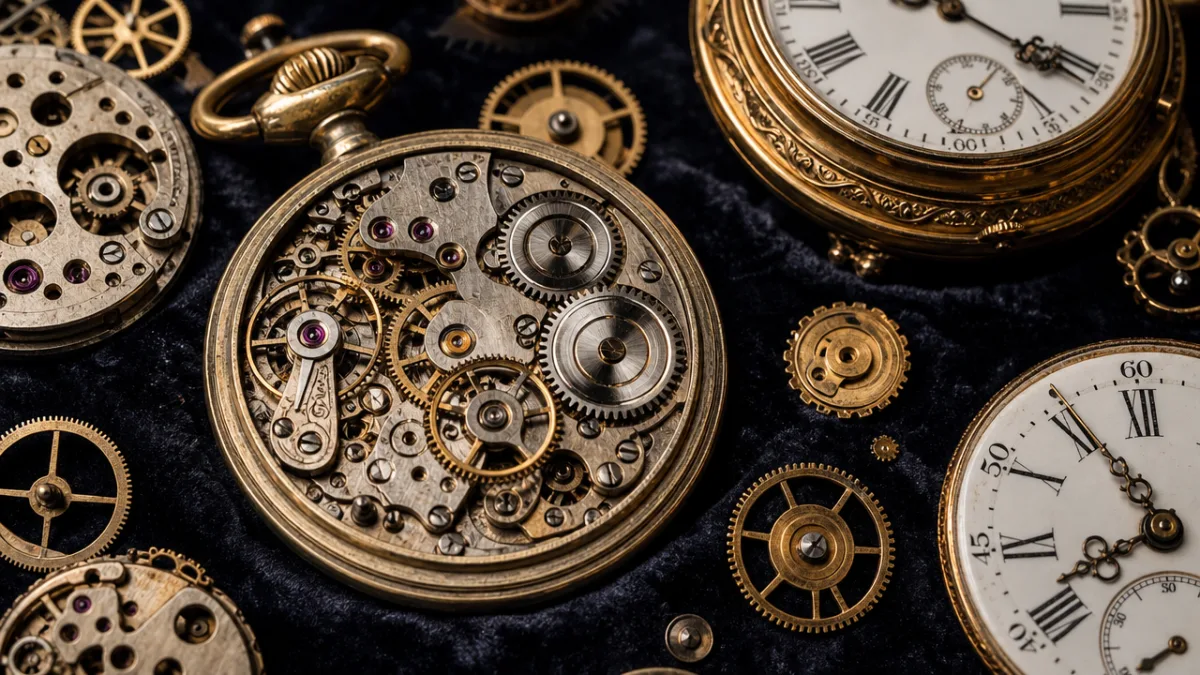
Over time, the collection grew beyond what any home could reasonably accommodate, and Katona faced a choice familiar to many passionate collectors: what do you do with the pieces that are too broken to restore, too worn to display conventionally, yet too beautiful and meaningful to discard? Her answer was to begin incorporating them into her art. What started as a personal creative solution evolved into a signature aesthetic that has come to define her practice. She learned to work with the tiny, precise components of watch movements — the jewel bearings, the hairsprings, the escapement wheels — treating them with the same reverence a jeweler might bring to gemstones.
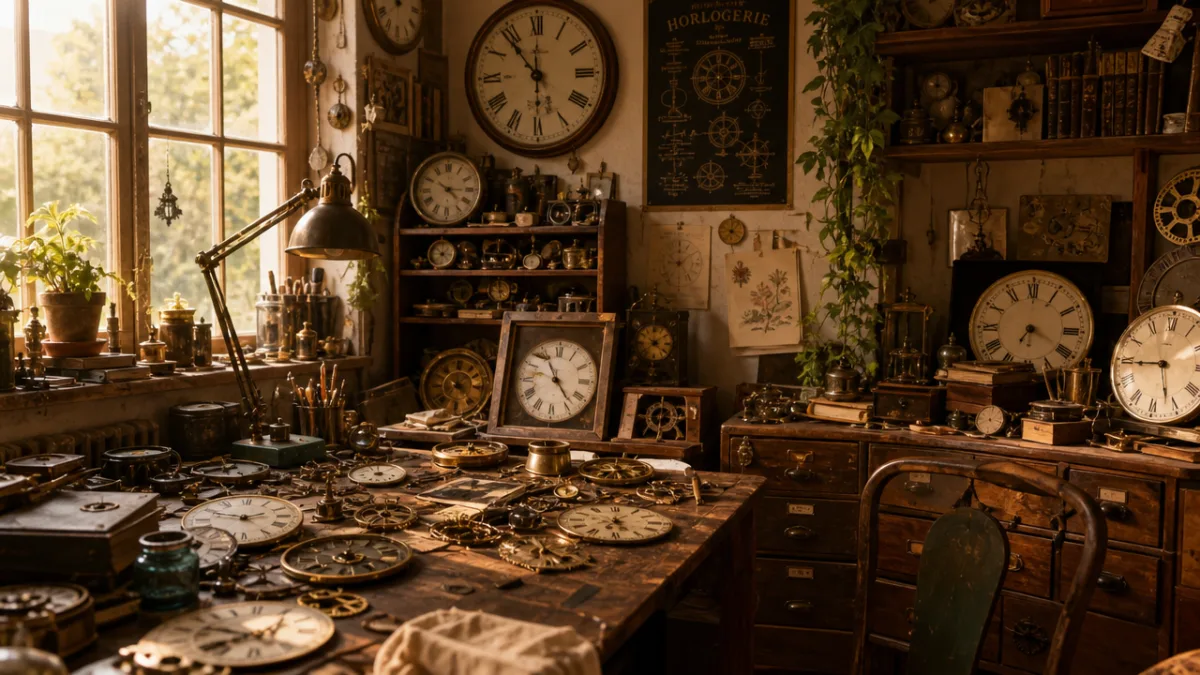
Today, Katona is recognized as one of the more distinctive voices in the field of found-object art, particularly within the niche of horological repurposing. She maintains a studio filled with the organized accumulation of years of collecting: trays of watch faces sorted by era, jars of gears and springs, drawers of clock hands and bezels. Visitors to her studio often describe it as a kind of workshop-museum, where the past feels very much alive and where every object seems to be waiting for its next incarnation. It is a space that perfectly reflects the sensibility of an artist who believes that nothing truly beautiful should ever be wasted.
The Craft Behind the Creation
Creating art from clock and watch components is a technically demanding pursuit that requires patience, precision, and a deep understanding of the materials involved. Watch movements, in particular, are extraordinarily small and delicate — the components within a mechanical watch can number in the hundreds, and many are measured in fractions of a millimeter. Working with these pieces demands the kind of focused, meticulous attention that most people associate with surgery or scientific research rather than artistic creation. Katona has developed her own set of tools and techniques over years of practice, adapting jeweler’s methods and watchmaker’s instruments to serve her creative vision.
The process typically begins with disassembly — carefully taking apart old movements to understand their structure and to separate components that might be used in different pieces. This is followed by cleaning, a critical step that involves removing decades of oil, dust, and oxidation without damaging the delicate parts. Some components are polished to restore their original luster; others are left with their patina intact, because the evidence of age is part of what makes them beautiful. Katona has spoken in interviews about how this early stage of the process feels almost archaeological — a kind of excavation of mechanical history that reveals the craftsmanship of the original makers.
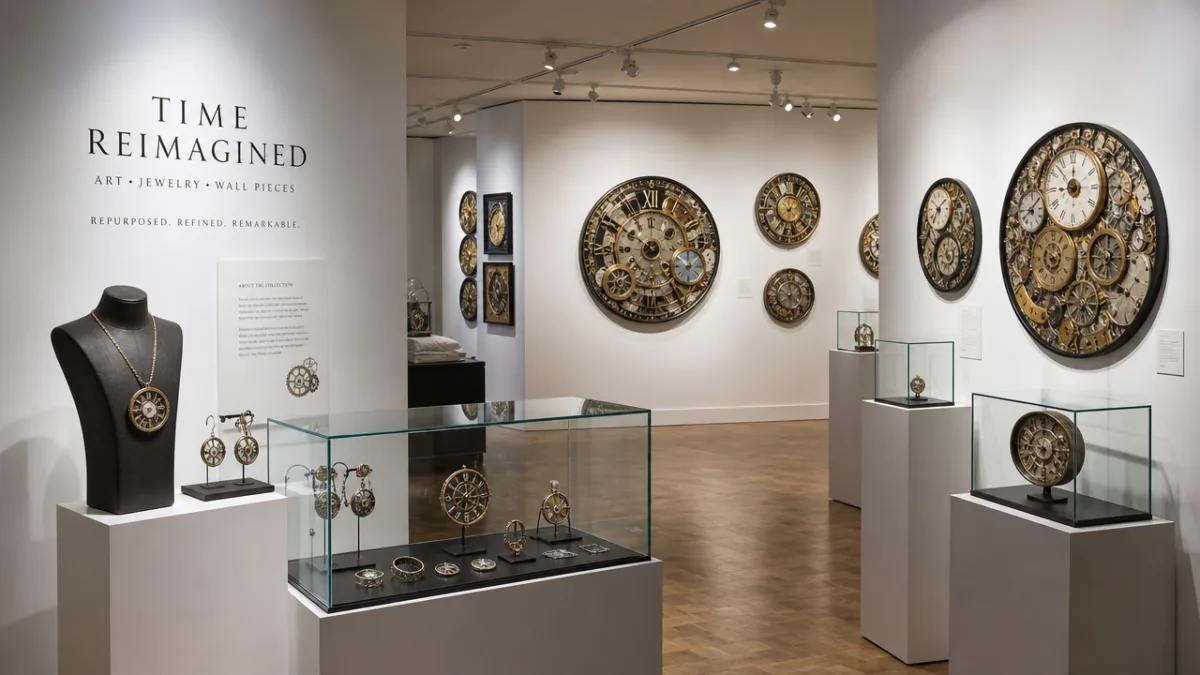
Assembly is where the true artistry emerges. Katona works without predetermined templates, allowing each piece to develop organically from the materials at hand. She might arrange a composition of gears and springs around a central clock face, or embed tiny watch components within resin to create translucent pendants that seem to suspend time in amber. She works across a range of scales, from delicate earrings made from single watch hands to large wall installations incorporating dozens of clock faces arranged in sweeping, mandala-like patterns. In each case, the technical execution must be flawless — these are wearable and displayable objects, after all, and they must be built to last.
Signature Pieces and Collections
Among Katona’s most celebrated creations are her wearable timepiece sculptures — pieces that blur the boundary between jewelry and art object. Her clock-face brooches, for instance, take vintage pocket watch faces and surround them with carefully arranged gear teeth, springs, and decorative elements to create objects that are simultaneously nostalgic and avant-garde. Pinned to a lapel or displayed in a shadow box, they command attention and invite close examination, rewarding the viewer who takes the time to notice the extraordinary detail embedded in every millimeter of their construction. These pieces have found homes with collectors across Europe and North America.
Her wall art installations represent a different scale of ambition. Using larger clock faces — from mantel clocks, wall clocks, and even the occasional grandfather clock movement — Katona creates compositions that cover entire walls with a mosaic of mechanical history. The visual effect is stunning: dozens of faces, each reading a different time, each marked by different hands and different numerals, arranged into patterns that suggest both order and chaos. Some installations are purely aesthetic compositions; others are site-specific works designed to respond to the architecture and history of the space they occupy. A piece installed in a historic building, for example, might incorporate clocks from that building’s own past.
Katona also creates more intimate objects — decorative pieces for the home that bring her aesthetic into everyday spaces without the scale or cost of a major installation. These include:
- Framed compositions of watch movements displayed like botanical specimens behind glass, each labeled with the maker’s name and approximate date of manufacture
- Table sculptures built around antique alarm clocks, their bells and mechanisms exposed and augmented with found objects that echo their original period
- Decorative vessels and containers incorporating clock faces as lids or decorative panels, combining utility with artistic statement
- Mixed-media pieces that combine timepiece components with vintage maps, letters, or photographs, creating layered narratives about specific moments in history
Each of these categories represents a different way of engaging with the same essential material, demonstrating the remarkable versatility of Katona’s approach. What unifies all her work is the quality of the underlying craft and the seriousness with which she treats her source materials. These are not novelty items or casual craft projects — they are considered works of art that happen to be made from the instruments that once measured our days.
The Philosophy of Repurposing and the Meaning of Time
At its deepest level, Katona’s work raises profound questions about time, memory, and value. A clock is, by definition, an object whose purpose is to measure the present moment — always pointing to now, always moving forward. When a clock stops working and is set aside, it becomes something paradoxical: a tool for measuring time that has itself been lost to time. Katona’s repurposing of these objects can be understood as a kind of philosophical intervention, a way of asking what happens to the present moments that were measured by these now-silent instruments. Where did all those counted seconds go? Who lived their lives to the ticking of these particular mechanisms?
There is also a powerful argument about value embedded in her practice. Consumer culture trains us to see broken or outdated objects as worthless — things to be discarded and replaced. Katona’s work explicitly challenges this assumption, demonstrating again and again that materials dismissed as trash can be the foundation of genuine beauty and meaning. In doing so, she participates in a broader conversation about sustainability, craft, and the ethics of consumption that has become increasingly urgent as the environmental costs of our throwaway culture become impossible to ignore. Her studio is, among other things, a standing argument for the value of repair and reuse over replacement.
The steampunk aesthetic movement has also claimed Katona’s work as a touchstone, and it’s easy to see why. Steampunk’s visual language — gears, springs, clock faces, brass fittings, the romance of Victorian machinery — maps almost perfectly onto her material palette. But her work transcends the genre’s sometimes superficial nostalgia by grounding it in genuine craft and genuine historical artifacts. These are not decorative replicas of Victorian mechanisms; they are the actual mechanisms, carrying within them the fingerprints of the craftsmen who made them and the wear marks of the people who depended on them. That authenticity gives her work a weight and resonance that purely stylistic steampunk imagery cannot match.
Influence, Legacy, and the Broader Movement
Barbara Katona’s influence on the repurposed art movement extends well beyond her own studio. Through exhibitions, workshops, and the wide circulation of images of her work on platforms like Pinterest, Instagram, and design blogs, she has introduced thousands of people to the creative possibilities of horological found objects. A community of artists working in similar veins has grown up around the broader aesthetic, and many of them cite Katona’s work as an early and important inspiration. Her practice has helped legitimize what might once have been dismissed as mere hobby craft, elevating it to the status of serious artistic endeavor.
The secondary market for vintage clock and watch components has also been shaped, at least in part, by the growing appreciation for this kind of work. Flea market vendors who once struggled to sell broken or incomplete timepieces now find that artists and crafters are eager customers. Online marketplaces devoted to vintage and antique goods have seen increased interest in non-working clocks and loose watch parts. In this way, Katona and artists like her have created economic value for objects that might otherwise have ended their days in landfills, generating a small but meaningful ecosystem around the appreciation and reuse of discarded timepieces.
For anyone interested in exploring this world, whether as a collector, an aspiring artist, or simply an admirer, the following aspects of the practice are worth understanding:
- Source materials matter enormously — the age, origin, and condition of timepiece components significantly affect both their aesthetic qualities and their historical interest. Pieces from specific eras or manufacturers carry distinct visual signatures worth learning to recognize.
- Technical knowledge enhances creative possibility — understanding how mechanical timepieces work makes it easier to disassemble them without damage and to appreciate the function of different components when placing them in new contexts.
- Scale is a fundamental creative decision — working with watch-sized components versus clock-sized ones involves completely different tools, techniques, and aesthetic considerations, and many artists specialize in one scale or the other.
- Preservation versus transformation is an ongoing tension — there are ethical and aesthetic debates within the community about how much intervention is appropriate, and artists stake out different positions on this question.
These considerations reflect the sophistication of a practice that has matured considerably since its early days as a fringe craft activity. The repurposed timepiece movement now encompasses fine artists, studio jewelers, interior designers, and installation artists, all bringing their own training and sensibilities to a shared material vocabulary.
How to Appreciate and Collect Repurposed Timepiece Art
For those drawn to the world of repurposed timepiece art, developing an informed eye is both a pleasure and a practical necessity. The field ranges from truly exceptional handcrafted work to mass-produced items that mimic the aesthetic without the underlying craft or historical authenticity. Learning to distinguish between them involves paying attention to several key factors: the quality of the materials, the precision of the assembly, the evidence of genuine age in the components used, and the overall coherence of the artistic vision. A piece by an artist like Katona rewards close examination — the more carefully you look, the more you discover.
Provenance and documentation add another layer of value and interest. Katona and artists of her caliber typically provide information about the origins of the materials they use — the approximate age and nationality of the movements, the type of clock or watch they came from, any notable maker’s marks or historical associations. This information transforms a beautiful object into a layered artifact, connecting the viewer to a specific moment in industrial and social history. When acquiring work in this field, asking questions about the source materials is not merely good practice — it is part of the pleasure of ownership, giving you a richer story to share when the piece inevitably draws admiring questions from visitors.
Finally, living with repurposed timepiece art invites a particular kind of mindfulness about time itself. There is something quietly profound about having in your home or on your person an object that once measured the hours of lives now concluded, reimagined by a contemporary artist into a new form that will outlast its original function by generations. Katona’s work, at its best, does not merely decorate a space — it deepens it, adding layers of history, craft, and meaning that accumulate quietly over the years you spend in its presence. That is the particular gift of art made from time: it reminds us, gently and beautifully, that time well spent is never truly lost.








What do you think?
It is nice to know your opinion. Leave a comment.