










Chic Is Sustainability: How Ethical Fashion Became the New Luxury
The Rise of Conscious Style
Fashion is going through a real transformation right now, and at the heart of it is a surprisingly simple idea: true chic isn’t about excess — it’s about intention. For decades, luxury meant accumulating as much as possible, chasing every new trend, and making sure everyone could see your labels. But a growing wave of designers, shoppers, and cultural tastemakers are rewriting those rules. Their argument? The most sophisticated thing you can wear is something made with genuine care — for the planet and for the people who actually made it.
This didn’t happen overnight. It’s been building for a while, driven by a mix of environmental urgency, social media accountability, and a younger generation of consumers who simply won’t let brands off the hook. Fast fashion’s environmental toll — responsible for an estimated 10 percent of global carbon emissions, not to mention staggering water waste — has become impossible to look away from. Once that data made it into everyday conversation, sustainability stopped being a fringe concern and started becoming a real aesthetic and ethical framework for how people think about getting dressed.
What makes this moment so exciting is that sustainability no longer asks fashion lovers to give anything up. Actually, it’s the opposite. The most visually striking collections coming out of independent ateliers and forward-thinking luxury houses right now are built around regenerative materials, slow production, and silhouettes designed to last. The conversation has shifted from “how do we make fashion green” to “how do we make sustainability irresistible” — and it turns out the answer is by making it undeniably chic.
Redefining Luxury Through an Ethical Lens
Luxury has always been about rarity and craftsmanship, but what counts as rare is changing fast. In a world drowning in cheap, disposable clothing, a garment that was made slowly, by skilled hands, from materials that required no toxic chemicals and left the soil better than they found it — that’s genuinely extraordinary. That kind of rarity means something. When you hold a linen dress dyed with plant pigments or a coat woven from recycled wool, you’re holding something that took real effort and expertise to create. That’s what luxury originally meant.
The big fashion houses have caught on. Stella McCartney has championed cruelty-free, sustainable design for years without ever sacrificing runway glamour. Gabriela Hearst sent her debut Chloé collection down the runway with a carbon-neutral footprint, making a very loud statement that sustainability and prestige aren’t opposites. Younger independent labels like Paloma Wool, Veja, and Nanushka have built their entire identities around the intersection of ethical production and genuinely covetable style. These aren’t niche players anymore — they’re setting the agenda for where contemporary fashion wants to go.
The luxury resale market has pushed this reframing further. Platforms like Vestiaire Collective, The RealReal, and Depop have shown that pre-owned clothing isn’t second-best — it’s smart, sustainable, and increasingly stylish. Buying a vintage Hermès scarf or a pre-loved Prada bag is now celebrated as a discerning choice, not a budget compromise. This cultural shift reflects something deeper: ownership is giving way to curation, and volume is giving way to meaning.
The Materials Revolution Driving Sustainable Fashion Forward
One of the most exciting frontiers in sustainable fashion right now is what’s happening in materials science. Designers and scientists are working together to create fabrics that would have seemed like science fiction a decade ago. Mycelium leather — grown from mushroom roots — is now being used by major brands as a real alternative to animal hide, with a texture and durability that can genuinely rival traditional leather. Algae-based dyes, pineapple fiber, and textiles grown from agricultural waste are moving out of experimental labs and into actual collections, bringing a sense of wonder that fast fashion simply can’t manufacture.
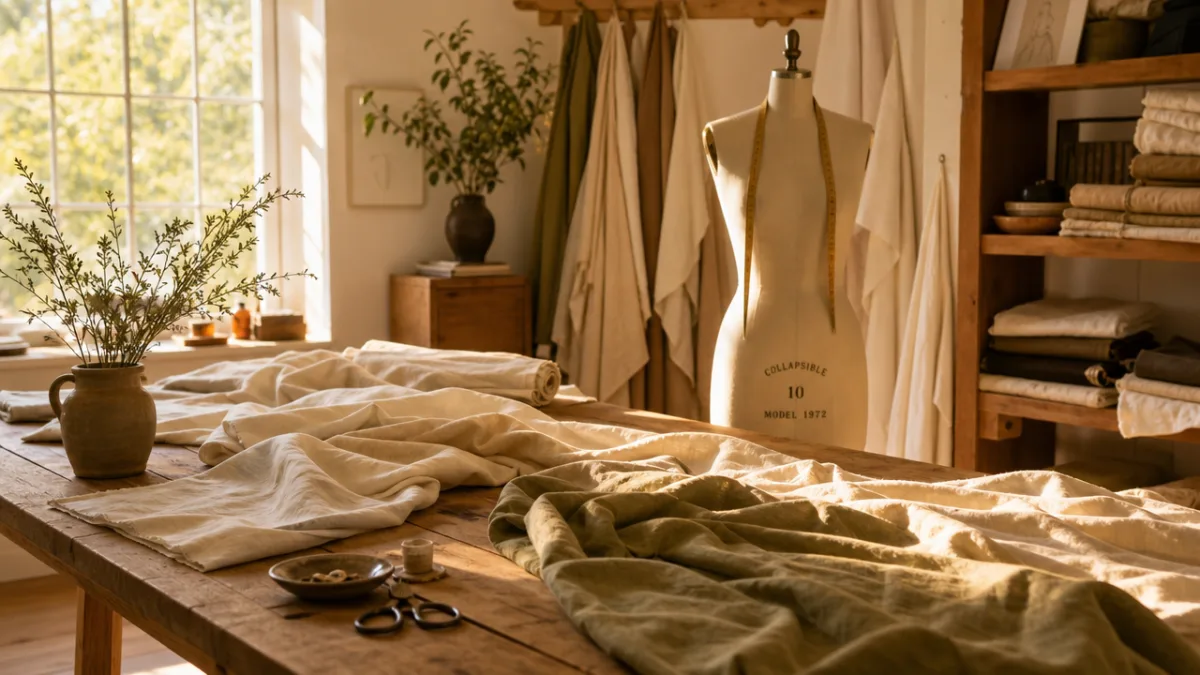
Natural and organic fibers are having a moment too. Linen, long associated with breezy Mediterranean summers, is now celebrated for its minimal water requirements, its biodegradability, and the way it only gets better with age. Organic cotton — grown without pesticides — is becoming a baseline expectation rather than a premium add-on. TENCEL and lyocell fibers, made from sustainably managed wood pulp, offer a silky drape and breathability that rivals conventional synthetics without the microplastic pollution problem. These are materials that feel incredible on your skin and sit lightly on your conscience.
Perhaps most promisingly, the industry is starting to get serious about what happens to a garment at the end of its life. Circularity — designing clothes that can be fully composted, recycled, or repurposed — is moving from concept to actual practice. Brands like Eileen Fisher have established take-back programs that reclaim worn garments, repair them, and resell them. Others are experimenting with mono-material construction, making sure that a garment made from one fiber type can be recycled efficiently without the complicated sorting that mixed fabrics require. The goal is a fashion system that genuinely closes the loop.
Building a Sustainable Wardrobe: A Practical Guide
Understanding the philosophy of sustainable fashion is one thing — actually building a wardrobe that lives up to those values is another. The good news is that shifting toward a more ethical closet doesn’t mean starting from scratch or spending a fortune. It starts with a mindset shift: moving from accumulation to curation, from quantity to quality, from trend-chasing to developing your own personal style. A truly sustainable wardrobe is, above all, one you actually wear — repeatedly, joyfully, and with intention over a long period of time.
There are some concrete steps anyone can take to get started. Begin with an honest audit of what you already own. Most people discover they have far more than they realized, including pieces they’d completely forgotten about. Rediscovering and restyling existing garments is the most sustainable fashion act of all — it creates zero new demand on resources. From there, figure out the real gaps: the pieces that would make everything else in your wardrobe more functional and versatile. Then fill those gaps thoughtfully, prioritizing quality over convenience.
When you do shop for something new, a few key principles can help guide better decisions. Look for natural or innovative sustainable fibers, certifications like GOTS (Global Organic Textile Standard) or Fair Trade, and brands that are genuinely transparent about their supply chains. Think about cost-per-wear: a well-made coat that costs four hundred dollars but lasts fifteen years is far cheaper — and more sustainable — than a fifty-dollar coat you replace every year. The checklist below can help you evaluate any new purchase before you commit:
- Is this made from a natural, recycled, or innovative sustainable material?
- Will I wear this at least thirty times in its lifetime?
- Does the brand disclose how and where this was made?
- Is this a versatile piece that works with multiple existing items in my wardrobe?
- Could this be repaired if damaged, rather than discarded?
- Is there a secondhand version of this available that I could buy instead?

Style Icons and the Cultural Shift Toward Ethical Dressing
Cultural change needs visible champions, and the sustainable fashion movement has found some really compelling ones. Emma Watson spent years advocating for ethical fashion on and off the red carpet, wearing pieces from sustainable labels and using her platform to push supply chain accountability into mainstream conversations. Adwoa Aboah, Livia Firth, and a growing constellation of influencers and stylists are building entire professional identities around the idea that looking exceptional and dressing ethically aren’t just compatible — they’re inseparable.
Social media has played a complicated but important role in all of this. On one hand, platforms like Instagram and TikTok have turbocharged the very trend cycle that fast fashion thrives on. On the other hand, those same platforms have given a megaphone to educators, activists, and aesthetic visionaries who are reframing the whole conversation. Accounts dedicated to outfit repeating, visible mending, thrift flipping, and capsule wardrobes have racked up millions of followers, proving there’s a huge appetite for a different kind of fashion content — one built around creativity and values rather than relentless novelty.
The “outfit repeat” has undergone a particularly meaningful comeback. Where celebrities and influencers were once quietly shamed for wearing the same dress twice, many are now celebrated for it. Repeating an outfit is increasingly read as a sign of confidence, environmental awareness, and genuine personal style — a deliberate rejection of the disposability that defines fast fashion. When a public figure wears the same beautiful piece three different ways across three different events, they’re making a pretty powerful statement about what sophisticated dressing actually looks like.
The Future of Fashion: Where Sustainability and Aesthetics Converge
The question that once dominated industry conversation — can fashion be sustainable without sacrificing style? — has been answered. The more interesting question now is how quickly sustainable practice can become the universal standard rather than the exceptional choice. The momentum is undeniable. Major fashion weeks now include sustainability awards and dedicated platforms for ethical brands. Business schools are teaching circular design principles alongside traditional fashion merchandising. Even the largest fast fashion conglomerates are publishing sustainability pledges, though the gap between stated ambition and actual practice remains significant and deserves a critical eye.
Technology will play a bigger and bigger role in all of this. Digital fashion — clothing that exists only in virtual spaces — is emerging as one genuinely radical response to overconsumption, letting people “wear” new looks in digital contexts without any physical production at all. Blockchain traceability is making it possible for consumers to trace a garment’s journey from raw fiber to finished product, creating a level of supply chain transparency that simply wasn’t possible before. AI-powered design tools are helping brands predict demand more accurately, cutting down on the overproduction that sends millions of unsold garments to landfills every year.
But maybe the most important shift isn’t technological — it’s psychological. A real values change is happening, especially among younger consumers who increasingly see their purchasing decisions as extensions of their identity and ethics. For this generation, wearing a brand that pollutes rivers and underpays workers is as embarrassing as wearing a culturally insensitive slogan. That shift in social currency is more powerful than any regulation or technology, because it changes what people actually want. And when what people want is beautiful, durable, ethically made clothing, the entire industry has no choice but to follow.

Sustainability and chic have always had more in common than the fashion industry wanted to admit. Both are fundamentally about care — care in construction, care in how you choose things, care in how you wear and preserve them over time. The truly elegant wardrobe has never been the biggest one; it’s always been the one put together with the most thought. As that truth becomes more widely understood, fashion isn’t losing something — it’s recovering something. It’s recovering the idea that clothes matter, that how they’re made matters, and that the most stylish choice you can make is one that reflects both your aesthetic sensibility and your deepest values.








What do you think?
It is nice to know your opinion. Leave a comment.