










How to Make Your Own Compost: A Complete Beginner’s Guide
What Is Composting and Why Should You Start?
Composting is one of those habits that sounds like a lot of work until you actually try it — and then you wonder why you waited so long. Whether you have a backyard garden or just a kitchen that generates vegetable scraps, composting can fit into your life. At its heart, it’s simply the natural process of organic stuff breaking down into a rich, dark, crumbly material that gardeners lovingly call “black gold.” Nature has been doing this on its own forever, but when you set up a dedicated system, you can speed things along and actually put that goodness to use.
The environmental argument for composting is hard to ignore. When food scraps and yard waste end up in a landfill, they break down without oxygen and release methane — a greenhouse gas that’s significantly more potent than carbon dioxide in the short term. Diverting that material into a compost pile cuts those emissions while turning what would have been trash into something genuinely useful. The EPA estimates that food waste makes up about 24 percent of what Americans throw away, so even modest changes at the household level add up fast.
And your garden will thank you too. Finished compost feeds beneficial microbes in the soil, helps clay soils drain better, helps sandy soils hold onto water, and delivers nutrients slowly and steadily in a way that no bag of synthetic fertilizer can match. Once you see what it does for your plants, composting stops feeling like an environmental obligation and starts feeling like one of the smartest things you can do for your yard.
Understanding the Science: What Makes a Compost Pile Work
A compost pile might look like a heap of kitchen scraps, but there’s actually a lot going on in there. Tiny microorganisms — bacteria, fungi, and actinomycetes — are doing the heavy lifting, breaking down organic material into simpler compounds. For those microbes to thrive, they need four things: carbon, nitrogen, moisture, and oxygen. Get those four in roughly the right balance, and decomposition takes off, generates heat, and eventually produces finished compost.
You’ll hear composters talk about carbon and nitrogen in terms of a ratio, written as C:N. Carbon-rich materials are called “browns” — think dry leaves, cardboard, straw, and wood chips. Nitrogen-rich materials are “greens” — fresh grass clippings, vegetable peels, coffee grounds, plant trimmings. The sweet spot for active composting is a carbon-to-nitrogen ratio somewhere between 25:1 and 30:1. In practice, that usually means layering about two to three parts browns for every one part greens by volume. It’s more of a feel than a formula, and you’ll get the hang of it quickly.
Moisture and airflow matter just as much. Your pile should feel like a wrung-out sponge — damp enough to keep the microbes happy, but not so soggy that water squeezes out all the air pockets and things turn anaerobic and smelly. Turning the pile regularly brings in fresh oxygen and keeps the aerobic bacteria — the fast, efficient ones — doing their job. A pile that’s well-tended can hit internal temperatures of 130 to 160°F, which is hot enough to kill off weed seeds and most pathogens. Pretty impressive for a pile of yard waste.
Choosing Your Composting Method and Setup
Open Pile Composting
The simplest method is also the oldest: pick a corner of your yard, start piling organic material, and let nature take care of the rest. No equipment needed, no money spent, and you can throw in as much material as you want. The downsides are real — it can look a bit messy, food scraps can attract critters if they aren’t buried under browns, and it tends to move more slowly than a contained system. But if you have the space and the patience, an open pile works just fine.
Bin Composting
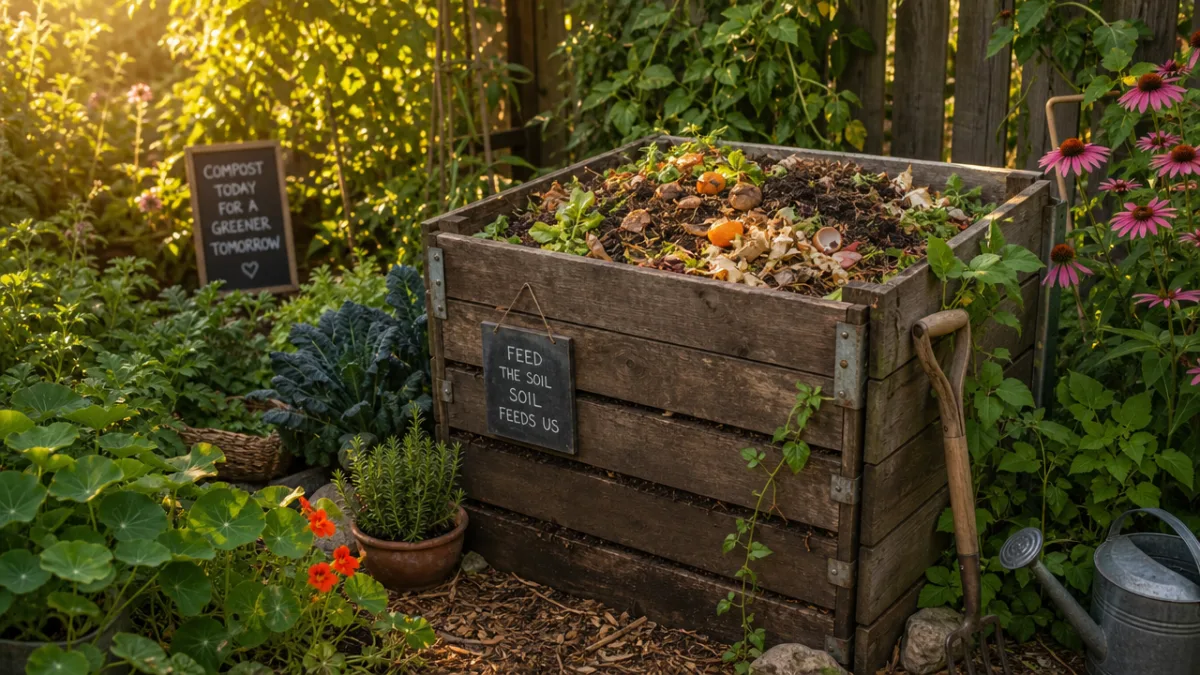
Compost bins come in all shapes and sizes — simple wire hoops, wooden multi-chamber setups, plastic enclosed bins, and spinning tumblers. An enclosed bin holds in heat and moisture, keeps pests out, and looks a lot tidier than a loose pile. You can buy one at any garden center or build your own from wooden pallets, cinder blocks, or hardware cloth. Worth checking with your local government first, though — many municipalities sell bins at a steep discount as part of waste reduction programs, and free or cheap bins come up more often than you’d think.
Worm Bins (Vermicomposting)
If you live in an apartment or don’t have much outdoor space, worm composting might be your best option. A bin of red wiggler worms can live in your kitchen, garage, or basement and quietly convert food scraps into worm castings — one of the most nutrient-dense forms of compost you can get. You do need to pay a bit more attention to moisture and temperature than with a traditional outdoor pile, but the results are fantastic, and honestly, a lot of people end up genuinely fond of their worm colonies.
What to Compost and What to Avoid
Getting a sense of what belongs in your pile is probably the most important thing to nail down early on. The good news is that a wide variety of kitchen and yard waste is fair game, and the more diverse your inputs, the richer and more complex your finished compost tends to be. A mix of different materials brings a wider range of nutrients and microbial life, which ultimately does more for your soil than a pile made of just one or two things.
Here are materials that are generally safe and beneficial to add to a home compost pile:
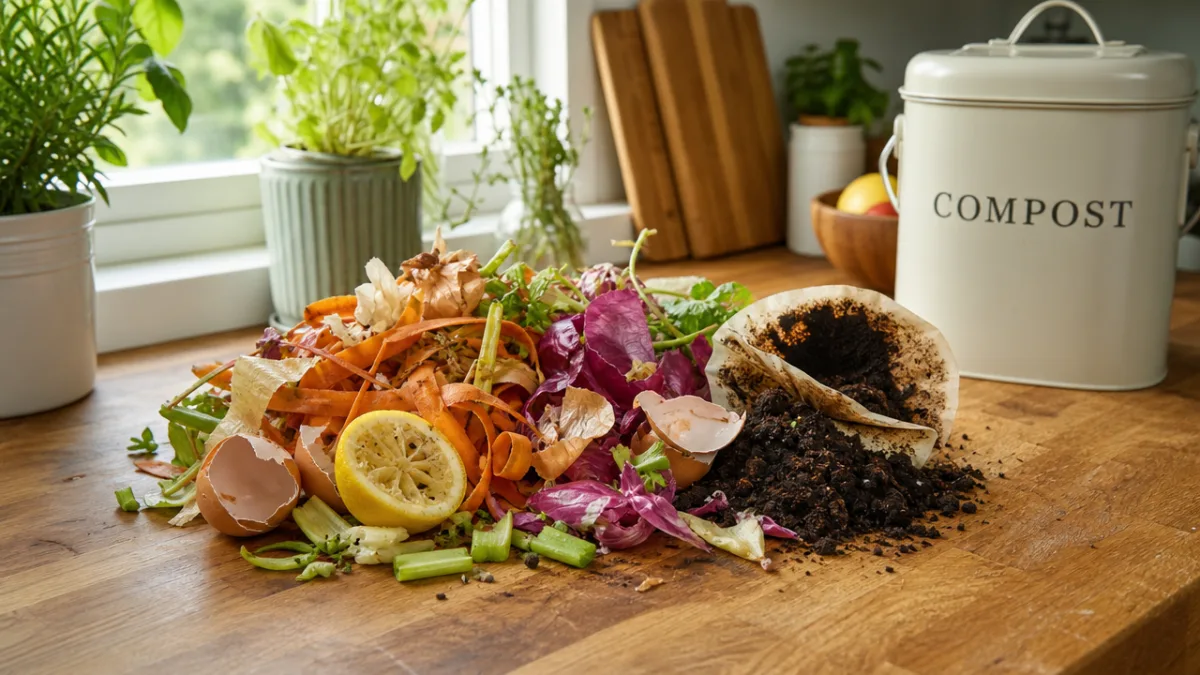
- Fruit and vegetable scraps, including peels, cores, and wilted produce
- Coffee grounds and paper coffee filters
- Tea bags (remove any staples) and loose tea leaves
- Eggshells, which add calcium and help balance pH
- Dry leaves, shredded paper, and cardboard (remove tape and glossy coatings)
- Grass clippings and fresh garden trimmings
- Wood chips, sawdust from untreated wood, and straw
- Hair and nail clippings, which are surprisingly nitrogen-rich
There are also things you’ll want to keep out, at least in a standard backyard setup. Meat, fish, and dairy can technically be composted in specialized systems, but in a typical pile they’ll draw pests and smell terrible before they break down. Cooked food — especially anything oily or saucy — causes similar problems. Diseased plant material can spread pathogens, so leave it out. Dog and cat waste carries harmful bacteria and parasites and should never go into compost you plan to use around food plants. And anything treated with pesticides or herbicides can disrupt the microbial life your pile depends on to function.
How to Build and Maintain Your Compost Pile
Starting Your Pile
Getting your first pile started is easier than it sounds. Pick a spot with partial sun — warm enough to keep microbial activity going, but not so exposed that the pile dries out every few days. If you’re using a bin, set it directly on bare soil so that worms and beneficial organisms can make their way up from the ground over time. Start with a base layer of coarse brown material — broken-up cardboard or wood chips work well — to get good drainage and airflow going from the bottom.
From there, just layer as you go. Alternate greens and browns, keep that rough two-to-one or three-to-one ratio in the back of your mind, and whenever you add kitchen scraps, cover them with a handful of dry leaves or shredded paper to keep smells down and flies away. Give it a light watering if things look dry, and poke it with a pitchfork every now and then to let in some air. You genuinely do not need to be precise about any of this — composting is remarkably forgiving, and even a pile that’s a bit off-balance will eventually give you something usable.
Maintaining and Troubleshooting
Staying on top of your pile doesn’t take much effort, but it makes a real difference. Turning it every week or two is the single most effective thing you can do to speed things up — it moves cooler material from the outside into the warm center and pumps fresh oxygen through the whole pile. A well-maintained pile during warm weather can go from raw materials to finished compost in one to three months. Leave it mostly alone and you’re looking at six months or more, which is fine if you’re not in a hurry.
When something’s off, it’s usually pretty easy to figure out. A smell like ammonia means too much nitrogen — add more browns and give it a turn. A rotten-egg smell means it’s too wet and not getting enough air — turn it and mix in some dry material. If the pile just isn’t warming up at all, it might be too dry, too small, or low on nitrogen. Water it, toss in some fresh greens, and make sure the pile is at least three feet in each direction, since that’s roughly the minimum size needed for heat to build up in the middle.
How to Know When Your Compost Is Ready and How to Use It
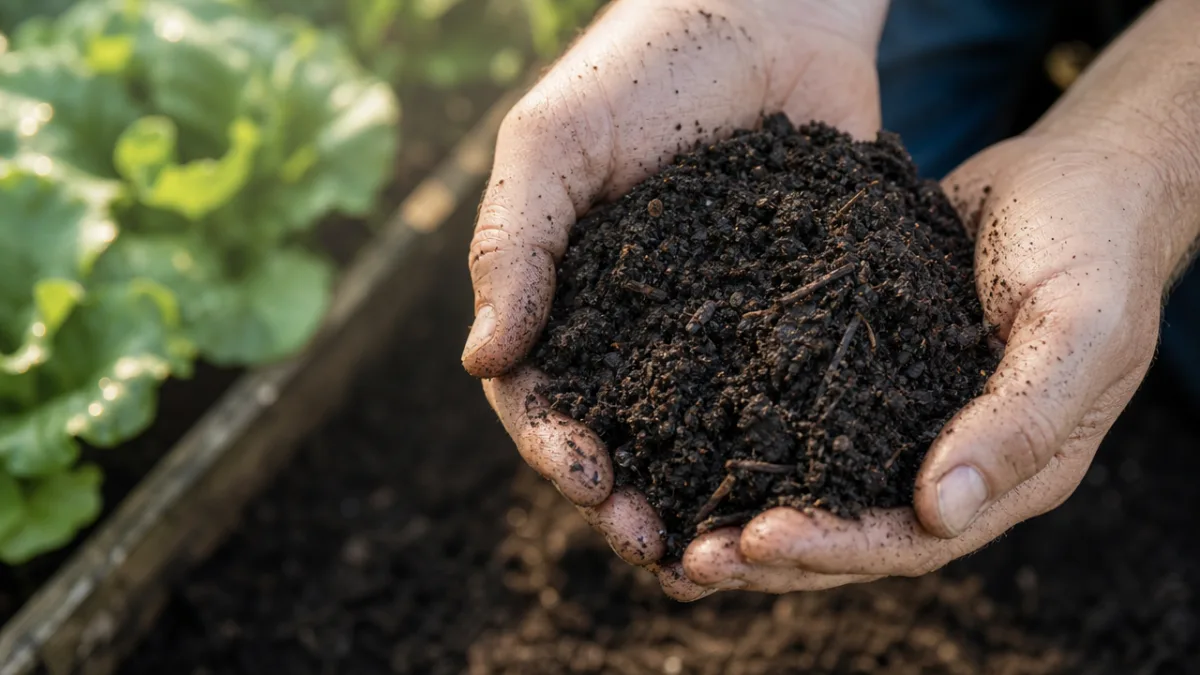
Finished compost looks and smells completely different from what went into it. It’s dark brown to black, crumbly, and has that pleasant earthy smell you get from forest soil after a good rain. If you can still pick out recognizable bits of vegetable or leaves, it needs more time. Some tougher, woodier pieces might hang around longer than the rest — just sift those out and toss them back in for another round.
There are many excellent ways to put finished compost to work in your garden. The most common uses include:
- Soil amendment: Work two to four inches of compost into the top six to eight inches of garden beds before planting to dramatically improve soil structure and fertility.
- Mulching: Apply a one- to two-inch layer of compost around the base of plants to suppress weeds, retain moisture, and slowly release nutrients as it breaks down further.
- Potting mix ingredient: Blend compost with other ingredients like perlite and coir to create rich, well-draining potting soil for containers.
- Lawn top dressing: Spread a thin layer of compost across your lawn in spring or fall to improve soil health below the turf and encourage deeper root growth.
- Compost tea: Steep finished compost in water for 24 to 48 hours to create a liquid fertilizer that can be applied directly to plant roots or as a foliar spray.
One of the best things about getting into a composting rhythm is how naturally it sustains itself. Your garden produces plant material that feeds the pile; the pile feeds the soil; the soil grows a better garden. The scraps that used to fill your trash can disappear into a system that returns their nutrients right back to the earth. After a while, it stops feeling like something you do and starts feeling like just how your household works — a quiet, satisfying loop that connects your kitchen to your garden and back again.
Composting Through the Seasons and Scaling Up
Composting is something you can do year-round, though things do slow down considerably once the cold sets in. In winter, microbial activity drops along with the temperature, and your pile may look completely dormant. That’s totally normal. Keep adding materials, throw a thick layer of straw or leaves over the pile if you’re somewhere with hard winters, and trust that things will pick back up in spring. A lot of experienced composters actually use the slower winter months to stockpile fallen autumn leaves, which they’ll draw on all year long to balance out kitchen scraps.
Spring and summer are when things really get going. Warmer temperatures kick microbial activity into high gear, fresh grass clippings and garden trimmings bring plenty of nitrogen, and an actively managed pile can turn out impressive amounts of finished compost. This is a great time to start a second bin so one can finish and cure while you keep adding fresh material to the other. Serious composters often run two- or three-bin systems, shifting material from bin to bin as it progresses — which means you always have finished compost on hand during the growing season.
As you get more comfortable, you might find yourself wanting to scale up — handling more material, trying different methods, or sharing your surplus with neighbors. And yes, it’s very possible to end up making more compost than your own garden can use, which is honestly a great problem to have. Community gardens, school gardens, and urban farms are usually thrilled to take donated compost off your hands. At its best, composting isn’t just a personal habit — it’s something that ripples outward, turning what most people write off as waste into a resource that everyone can benefit from.








What do you think?
It is nice to know your opinion. Leave a comment.