










Fork Bracelets: The Art of Turning Vintage Silverware into Wearable Treasure
A Brief History of Silverware Jewelry
The tradition of turning silverware into jewelry goes back a lot further than most people realize. Even in the Victorian era, resourceful craftspeople and thrifty households were finding ways to repurpose damaged or mismatched flatware into small decorative objects and personal accessories. When a fork lost a tine or a spoon got bent out of shape, a skilled maker would see raw material where anyone else saw junk — a chance to create something beautiful from something broken. That spirit of creative reinvention shows up across nearly every culture and era in human history.
The modern fork bracelet really started picking up steam in the mid-twentieth century, when antique dealers and craft enthusiasts began experimenting more seriously with vintage silverware as a jewelry medium. The appeal made total sense: the graceful curves of fork tines, the elegant stamped patterns on handles, the warm glow of aged silver — all of it translates beautifully to something worn on the wrist. By the time the handmade jewelry renaissance of the 1970s rolled around, fork bracelets had become a well-loved fixture in the broader craft community.
Today, fork bracelets sit at this genuinely interesting crossroads between fine art, sustainable craft, and personal expression. You’ll find them in upscale boutiques and at weekend street markets, worn by serious antique silver collectors and teenagers who stumbled across them on social media. What’s great about them is how democratic they are — you can make one at home with basic tools, but they can also reach a level of technical refinement that commands real money in artisan jewelry circles. Knowing a little of that history makes every fork bracelet a richer, better story to tell.
Choosing the Right Fork: Materials and Vintage Sourcing
Picking the right fork is honestly the most important decision you’ll make in this whole process, so it’s worth slowing down and thinking it through. Not all forks behave the same way when you start working with them. Sterling silver forks — look for a “925” stamp or the word “sterling” — are the gold standard. They’re soft enough to bend without cracking, hold their shape once you form them, and develop a gorgeous patina over time. Silverplate forks, which are a base metal core with a thin silver coating, are more common and easier on the wallet, but they need a little gentler handling so you don’t wear through to the metal underneath.
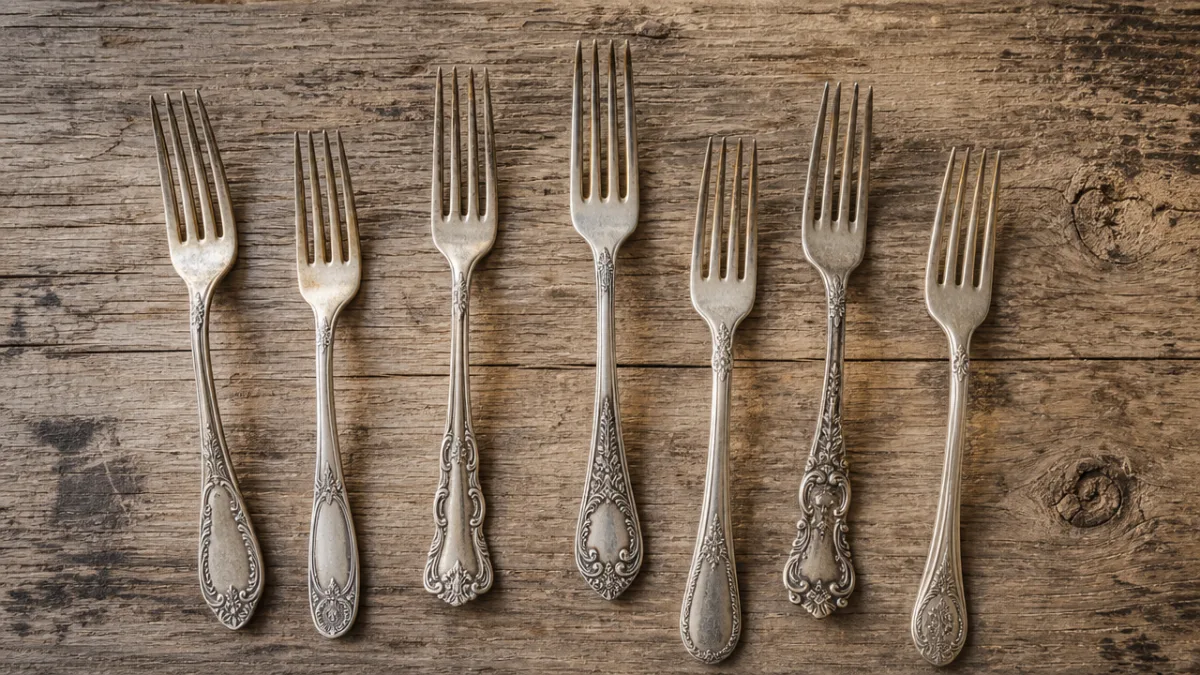
The best places to hunt for forks are estate sales, antique markets, thrift stores, and online auction sites. Estate sales are particularly good because you often get access to full or partial silverware sets from families who no longer need them, usually at pretty reasonable prices. When you’re looking at a fork, pay close attention to the handle pattern — ornate Victorian and Edwardian designs with floral motifs, scrollwork, or monograms tend to make the most visually striking finished bracelets. Also think about the weight and thickness of the metal, since a heavier fork takes more effort to bend but produces sturdier, more substantial jewelry.
Collectors and makers have developed a whole vocabulary around the silverware patterns they love most. Patterns like “Lily,” “Repousse,” “Vintage,” and “Chantilly” from makers like Gorham, Reed and Barton, and Wallace are perennial favorites in the fork bracelet world. When you find a pattern you really love, it’s often worth picking up multiple forks in that design — you can make matching sets, or use the extras to practice different bending techniques before you commit to your nicest piece. Building up a small collection of varied forks also helps you get a feel for how different metals and gauges actually behave when you’re forming them.
Tools and Techniques: Bending and Forming Your Bracelet
One of the things that makes fork bracelet making so accessible for beginners is that you don’t need a lot of specialized equipment to get started. At minimum, you’ll want a bracelet mandrel — a tapered oval or round form you wrap the fork around to get a consistent, wrist-friendly curve. You can find mandrels at jewelry supply shops in wood, steel, or aluminum. You’ll also need a rawhide or plastic mallet, which lets you apply force without scratching up the silver the way a metal hammer would. A bench vise is really helpful for holding the fork handle steady while you work on the tines, and a set of flat-nose and round-nose pliers gives you the fine control you need for smaller details.
The core technique for sterling silver is annealing — gently heating the fork with a torch until it reaches a dull red glow, then quenching it in water. This softens the metal considerably and makes it much more cooperative when you go to bend it. With silverplated forks you can usually skip this step, since they tend to be softer to begin with. Once the metal is ready, you position the fork around the mandrel and use slow, even mallet pressure to coax the handle into a gentle oval curve that will sit comfortably around a wrist. Then you bend the tines inward or outward depending on what you’re going for, creating the distinctive spread silhouette that makes a fork bracelet instantly recognizable.
Once you’ve got the basics down, there’s a whole range of more advanced techniques to explore. Some makers drill small holes through the handle and thread in gemstone beads or wire-wrapped crystals. Others use metal stamps to add initials or short words to the smoother areas of the handle, making each piece feel personal. Texture hammering, patination with liver of sulfur solution, and finishing with progressively finer grits of sandpaper can all dramatically change how a bracelet looks in the end. Each technique gets easier with practice, and honestly, even your early imperfect attempts usually turn out charming and totally wearable.
Design Variations and Creative Possibilities
The classic fork bracelet — tines spread wide, handle curved into a neat oval — is really just a starting point. Makers around the world have come up with dozens of compelling variations that play with proportion, orientation, and the addition of other materials. One popular approach is to cut the tines individually and curl each one into a small spiral or hook, creating a fringe-like edge that catches light beautifully as the wearer moves. Another is to use only the handle, cutting away the tines entirely and adding wirework or chain elements that hang from the bottom edge.
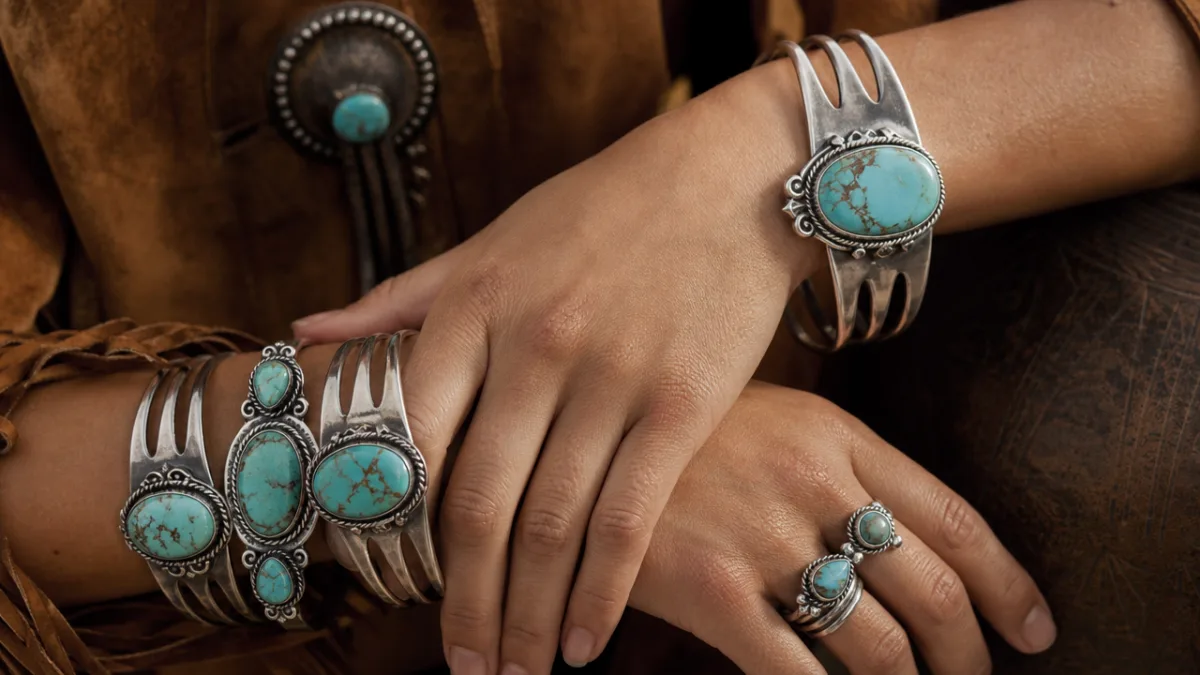
Adding gemstones, crystals, and found objects is where fork bracelets really start to cross over from charming curiosity into genuinely sophisticated jewelry. Wire wrapping — coiling fine-gauge wire around a stone to hold it securely without soldering — pairs especially well with the organic shapes that bent silverware produces. Tumbled turquoise, labradorite, amethyst, and quartz crystal points are all popular choices that complement silver’s cool tones beautifully. Some makers go even further, working in small freshwater pearls, vintage glass beads, or tiny photographs set in resin to create pieces with deeply personal meaning.
Matching sets are another really rich design direction to explore. A bracelet made from a fork handle pairs naturally with a ring from a spoon bowl, or earrings shaped from small sections of silverware handle. When pieces in the same pattern are worked together, the result reads as genuinely fine jewelry rather than a craft novelty. A lot of fork bracelet artists have built entire jewelry lines around a single vintage silverware pattern, developing a recognizable visual identity while still leaving plenty of room to vary the stones, finishes, and sizing. That’s when a simple upcycling project starts feeling like a real design practice.
Sustainability and the Upcycling Movement
Fork bracelets have really found their moment right now, partly because they fit so naturally into the growing desire to consume more thoughtfully. Every fork bracelet is a piece of flatware rescued from the landfill or the back of a forgotten drawer, transformed into something that will be worn, admired, and maybe even passed down someday. This is upcycling at its most satisfying — not just recycling something into an equivalent form, but genuinely elevating it into something more beautiful and meaningful than it was before. The environmental math is pretty appealing too: no new silver mining, no energy-intensive smelting, just skilled hands reimagining what’s already out there.
The handmade and slow fashion movements have embraced fork bracelets as a natural fit for their values. In a marketplace full of mass-produced accessories made in distant factories under murky conditions, a fork bracelet comes with a story you can actually follow. You can often trace the fork to a specific region, era, and manufacturer. You know the hands that shaped it into a bracelet — whether those hands were your own or an artisan whose work you chose to support. That transparency, knowing the full story of something you wear against your skin every day, is something conventional jewelry just can’t offer.
The sustainability case for fork bracelets extends beyond the materials themselves to the whole ecosystem of small-scale craft production they support. When you buy a fork bracelet from an independent maker, you’re usually supporting a solo artisan or tiny studio working entirely outside the industrial supply chain. That keeps money in local economies, preserves traditional metalworking skills that might otherwise fade away, and encourages a more thoughtful relationship between the people who make things and the people who use them. When you think about a whole community of conscious consumers making those choices, the ripple effects add up to something genuinely meaningful.
Wearing, Caring for, and Gifting Fork Bracelets
A well-made fork bracelet is surprisingly durable, and with just a little care it can last for decades — often getting better-looking as it ages. Sterling silver naturally develops a patina over time, a gentle darkening that settles into engraved details and recessed areas, creating depth and visual contrast that actually enhances the antique quality of most fork bracelet designs. Plenty of wearers come to love this natural aging process and choose never to polish their bracelets at all, letting the piece develop its own unique surface story over years of wear. Others love the bright shine of freshly polished silver and maintain their bracelets that way instead. Either approach is perfectly valid.
When you do want to clean one, it’s pretty simple. A paste of baking soda and water, rubbed gently with a soft cloth in the direction of any linear texture, takes off tarnish without scratching. Commercial silver polishing cloths work great for quick touch-ups too. Try to store your silver jewelry away from direct sunlight and humidity when you’re not wearing it, since both speed up tarnishing. A small zip-lock bag with a strip of anti-tarnish paper is an ideal, nearly free solution that keeps pieces looking their best between wearings.
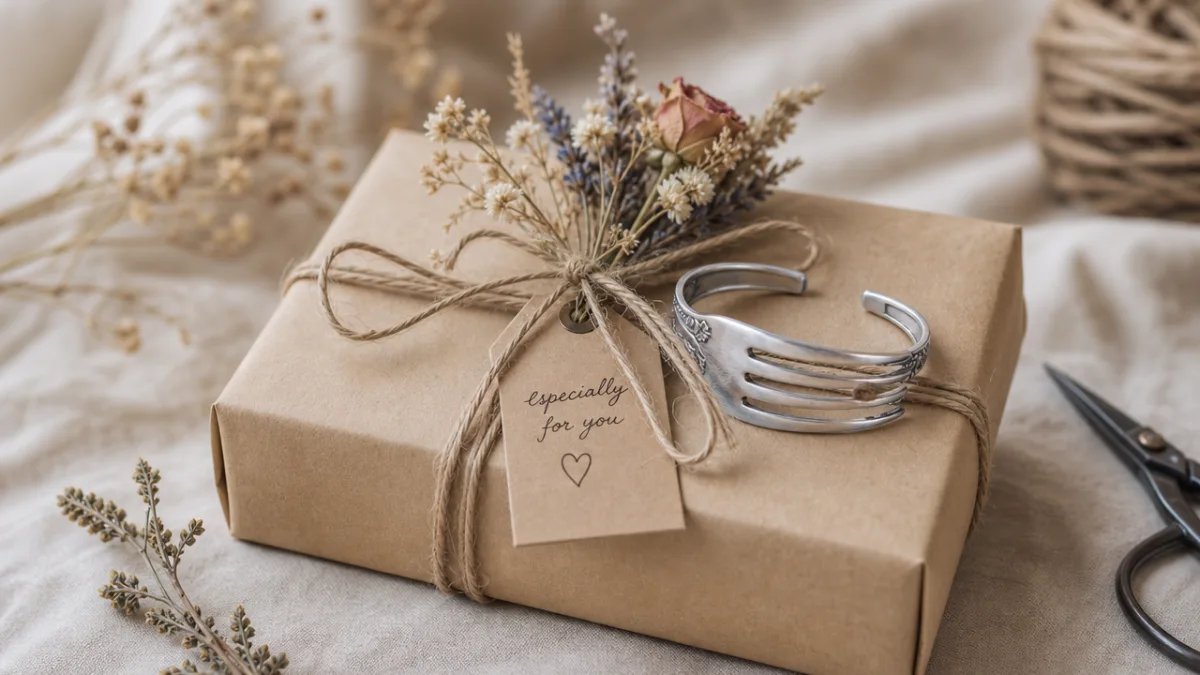
Fork bracelets also make genuinely exceptional gifts for a wide range of people and occasions, and a big part of what makes them special is how easily they can be personalized. You can size a bracelet to fit the recipient’s wrist, choose a fork in a pattern that means something to them, add their birthstone, or stamp in initials, a date, or a meaningful word. The handmade quality communicates care and intention in a way that most purchased gifts simply can’t. For weddings, anniversaries, birthdays, or graduations, a fork bracelet offers something rare in today’s gift culture: an object that is beautiful, sustainable, personal, and completely one of a kind.
- Store your fork bracelet in a cool, dry place away from direct sunlight to minimize tarnishing and protect any added stones or beads from heat damage.
- Remove your bracelet before swimming, showering, or applying lotions and perfumes, as chemicals and prolonged moisture can accelerate tarnish and degrade wire-wrapped stone settings.
- Polish sterling silver gently with a soft cloth or commercial silver polishing cloth every few weeks if you prefer a bright finish, or simply enjoy the developing patina if you favor an aged look.
- Have a jeweler check any wire-wrapped stone settings once a year to ensure stones remain secure, especially on bracelets worn daily.
- When gifting a fork bracelet, include a small card sharing the story of the original fork — its maker, approximate age, and the pattern name — so the recipient can appreciate the full history of their new treasure.
The enduring appeal of fork bracelets comes down to their ability to hold meaning at several levels all at once. They’re technically interesting objects that reward curiosity about metalworking and materials. They’re visually distinctive in a way that tends to invite questions and start conversations. They carry a double history — their original life as an everyday utensil and their second life as something personal and decorative. And they participate in a bigger cultural conversation about creativity, sustainability, and what handmade things are actually worth in a world that defaults so easily to the mass-produced and disposable. Whether you make your own, commission one from an artisan you admire, or stumble across one at an antique market, a fork bracelet is a small but genuine act of imagination — proof that beauty is often just sitting there in the most ordinary places, waiting to be noticed and set free.








What do you think?
It is nice to know your opinion. Leave a comment.