










Black-Eyed Susan: A Beautiful Garden Addition
Introduction to Black-Eyed Susan
If you’ve ever driven past a sunny meadow in late summer and noticed those cheerful golden flowers nodding in the breeze, chances are you were looking at Black-Eyed Susan — Rudbeckia hirta, to give it its proper name. With bright yellow petals fanning out from a rich chocolate-brown center, it’s one of those flowers that just makes you feel good. Gardeners have been falling for it for centuries, and honestly, it’s easy to see why.
Native to central and eastern North America, this wildflower has a history that runs a lot deeper than the backyard garden. Indigenous peoples used it medicinally for everything from colds to infections, and early American settlers quickly adopted it as their own. Maryland made it their official state flower back in 1918 — a long-overdue nod to a plant that had already been charming people for generations.
What really sets Black-Eyed Susan apart, though, is how effortlessly it fits into almost any garden situation. Rocky soil? No problem. Drought? It barely notices. It draws in pollinators like nothing else and comes back reliably year after year without a lot of fussing on your part. Whether you’ve been gardening for decades or you’re just getting started, this is one plant that genuinely delivers.
Varieties and Cultivars Worth Growing
The classic wild form is lovely on its own, but plant breeders have had a field day with Rudbeckia hirta, and the cultivars available today are really something. Whether you have a sprawling border or a single pot on a balcony, there’s a Black-Eyed Susan out there with your name on it. Getting familiar with the options makes it much easier to pick the right one for your space.
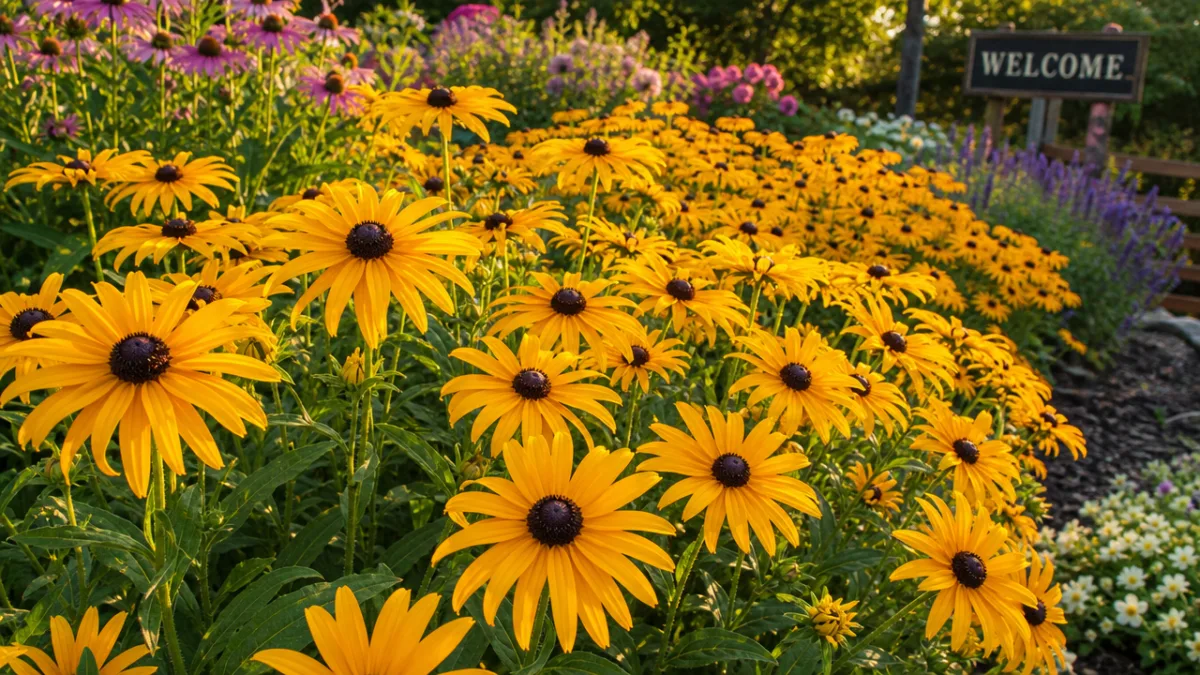
‘Indian Summer’ is a showstopper — blooms up to nine inches across on plants that stand three to four feet tall. If you want a focal point, this is it. ‘Goldsturm,’ technically from the related species Rudbeckia fulgida, is something of a legend in the gardening world, beloved for its tidy habit, disease resistance, and sheer dependability over many years. Then there’s ‘Cherry Brandy,’ which throws the whole yellow-and-brown color scheme out the window in the best possible way, offering blooms in burnt orange, russet, and deep mahogany that look absolutely stunning in a late-season border.
Short on space? Dwarf cultivars like ‘Toto’ and ‘Little Goldstar’ top out at just twelve to fifteen inches, making them perfect for containers, window boxes, or the front of a border. You get all the charm and all the pollinator appeal of the full-sized plants — just in a more manageable package. No matter which variety you go with, those signature sunny blooms and the steady parade of bees and butterflies come standard.
How to Plant Black-Eyed Susan Successfully
Planting Black-Eyed Susan is genuinely one of the more satisfying garden tasks — it’s straightforward, forgiving, and the results are worth it. Whether you’re starting from seed, picking up transplants from the nursery, or dividing a clump from a neighbor’s garden, the basics are the same: understand what the plant wants, set it up right from the start, and it’ll take care of the rest.
Sun is non-negotiable. You want at least six hours of direct light per day, and eight or more will give you the stockiest, most floriferous plants. One thing that surprises a lot of gardeners is that Black-Eyed Susan actually does better in leaner soil than rich, heavily amended beds — too much fertility and you end up with lush, floppy plants that need staking. When you’re preparing the ground, loosen it to about twelve inches and make sure drainage is solid. Wet roots are this plant’s kryptonite.
Starting from seed? Just press them lightly onto the soil surface after your last frost date — they need light to germinate and usually sprout within a week or two. For transplants, dig a hole about twice as wide as the root ball, set the plant at the same depth it was growing in the pot, fill back in with your native soil, and water it in well. Give plants twelve to eighteen inches of breathing room between them, which helps keep powdery mildew from becoming a problem down the road.
Here is a quick planting checklist to keep on hand:
- Choose a site with full sun and well-drained soil
- Loosen soil to at least twelve inches and remove weeds thoroughly
- Amend only if drainage is very poor — avoid over-enriching
- Plant seeds at soil surface or transplants at original depth
- Water deeply at planting, then allow soil to dry slightly between waterings
- Mulch lightly around plants to conserve moisture and suppress weeds
- Space plants twelve to eighteen inches apart for proper airflow
Care, Maintenance, and Seasonal Management
Here’s one of the best things about Black-Eyed Susan: it gives you a lot without asking for much in return. Once it’s settled in after that first growing season, the care routine is pretty minimal — mostly just keeping up with watering when things get really dry, deadheading if you feel like it, and deciding what to do with the plants come fall. That’s about it.
In that first year, water regularly — about an inch a week, including rainfall — to help the roots get established. After that, you can largely step back. Black-Eyed Susan handles drought better than most plants, and overwatering is actually the bigger risk. Soggy soil leads to root rot and fungal problems, so a deep, infrequent watering schedule works much better than a little bit every day. Think prairie conditions, and you’re on the right track.
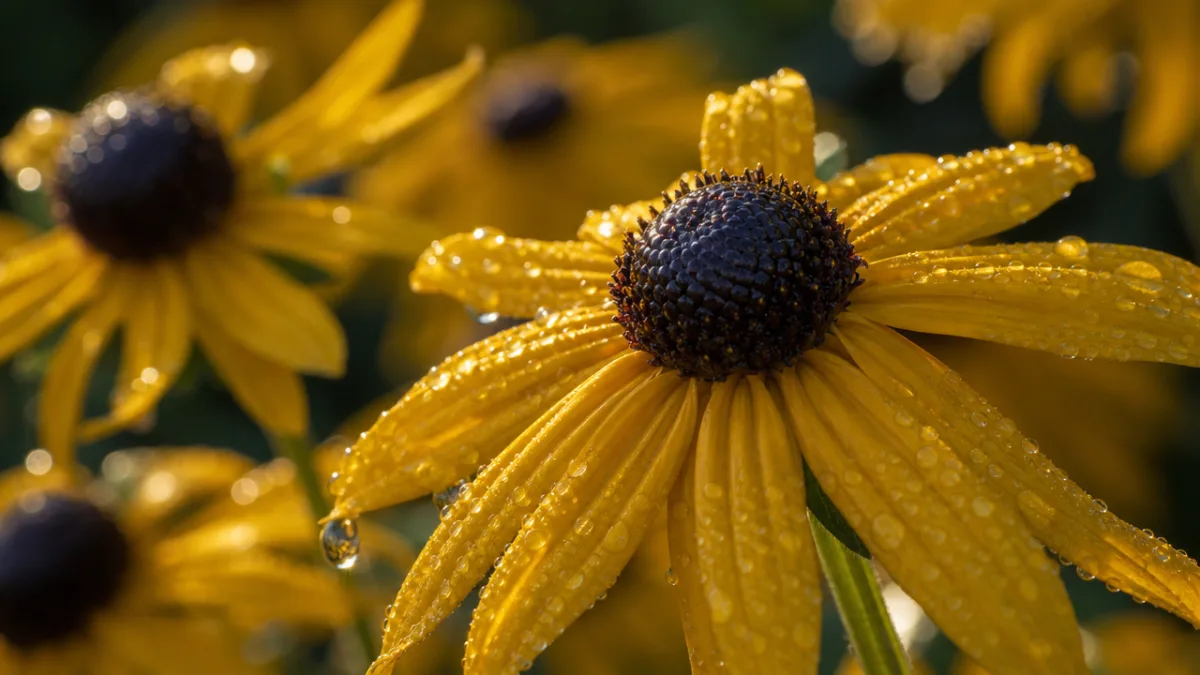
Deadheading — snipping off spent blooms just above the first healthy leaves below the flower — encourages the plant to keep producing new flowers and keeps things looking tidy. But here’s the thing: you don’t have to do it. If you leave the seed heads to mature toward the end of the season, the plants will self-seed around the garden, and the dark, spiky cones become a favorite snack for goldfinches and chickadees through the winter. It’s a perfectly good reason to be a little lazy about the garden cleanup.
In fall and winter, you have two equally valid options for seasonal management:
- Cut back: Trim plants to a few inches above ground level after the first frost to keep the garden looking neat through winter and reduce the risk of disease carryover.
- Leave standing: Allow seed heads and dried stems to remain through winter as a food source for birds and habitat for overwintering beneficial insects, then cut back in early spring before new growth emerges.
Ecological Benefits and Wildlife Value
Growing Black-Eyed Susan is about more than having a pretty garden — though it’s certainly that. This native wildflower plays a real, meaningful role in the ecosystem around your home, supporting the kinds of relationships between plants, insects, and animals that make a garden genuinely alive. Every time you plant one, you’re doing something good beyond the fence line.
The flowers pull in an impressive crowd of pollinators: bumblebees, sweat bees, mining bees, honey bees, butterflies, skippers, beetles, flies — the list goes on. And because Black-Eyed Susan typically blooms from June all the way through October, it’s showing up for pollinators during a long stretch of the season when a lot of other plants have already called it quits. In a world where pollinator habitat keeps shrinking, that kind of consistency really matters.
Once the blooms are done, the seed heads take over. Those dark, cone-shaped structures are irresistible to goldfinches, chickadees, and other small birds that need a reliable food source when insects disappear in the colder months. Leave them standing through winter and your garden essentially becomes a bird feeder — one that looks much more attractive than a plastic tube hanging from a hook.
There’s also the question of specialist insects — native bees that collect pollen almost exclusively from plants in the aster family, which includes Rudbeckia. These species can’t just substitute a non-native ornamental and call it good; they need the real thing. A garden full of showy but non-native plants might look spectacular and still function as an ecological dead end. Adding Black-Eyed Susan to the mix helps change that, one plant at a time.
Designing with Black-Eyed Susan in the Garden
One of the reasons gardeners love Black-Eyed Susan so much is how flexible it is from a design standpoint. It works in formal perennial borders, naturalistic prairie plantings, wildflower meadows, cutting gardens, containers — you name it. The bold yellow blooms, the strong vertical habit, and that seemingly endless flowering season make it genuinely easy to work with, and its native roots mean it plays beautifully with other American wildflowers and grasses.
In a classic perennial border, it’s hard to beat the combination of Black-Eyed Susan with purple coneflower (Echinacea purpurea). The warm yellow against the cool lavender-pink is one of those pairings that just works, every single time. Throw in some airy blue salvia or agastache, a clump of switchgrass or little bluestem, and maybe some tall Joe-Pye weed at the back, and you’ve got a border that hums with insect life from July right through frost — and barely needs you to lift a finger.
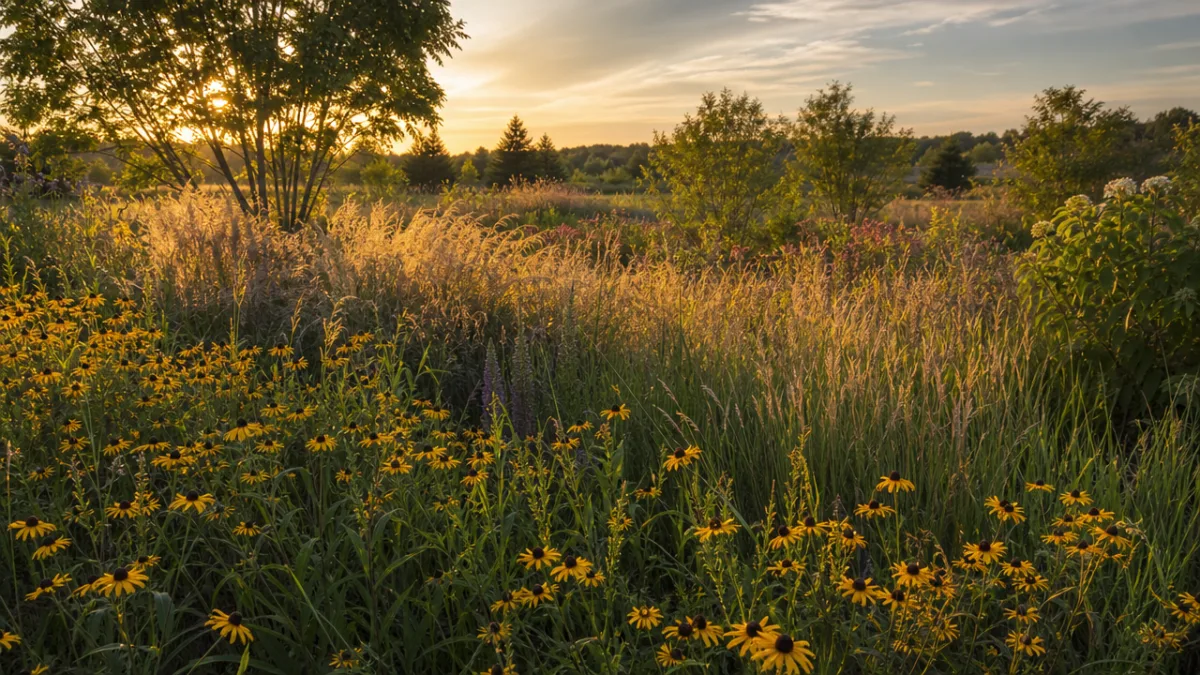
For a looser, more meadow-style approach, direct-seed Black-Eyed Susan into a wildflower mix with other natives and let things develop over a few seasons. The first year takes some patience, but by year two or three a well-placed meadow planting becomes largely self-sustaining and, frankly, gorgeous in a way that formal bedding plants can never quite pull off.
Consider these design combinations for maximum impact:
- Classic Prairie Trio: Black-Eyed Susan with purple coneflower and little bluestem grass for a naturalistic, low-maintenance planting
- Hot Color Border: Pair with red crocosmia, orange helenium, and bronze fennel for a fiery late-summer display
- Pollinator Garden: Combine with anise hyssop, bee balm, mountain mint, and goldenrod to maximize insect activity
- Cut Flower Garden: Plant in rows alongside zinnias, sunflowers, and dahlias for an abundant summer cutting garden
- Container Planting: Use dwarf varieties with blue salvia and trailing verbena for a cheerful patio display
Troubleshooting Common Problems
Black-Eyed Susan is about as easygoing as garden plants get, but it’s not completely problem-free. A few pests and diseases do show up from time to time, and certain environmental stresses can produce symptoms that look more alarming than they actually are. The reassuring news is that most issues are minor, fixable, and rarely a serious threat to a well-established planting.
Powdery mildew is probably the most common complaint — that white, dusty coating that shows up on leaves and stems during humid weather or when plants are too crowded. It looks bad, but it very rarely kills a healthy plant. Good spacing, avoiding evening overhead watering, and removing affected leaves promptly will keep it in check. If you garden in a consistently humid climate, ‘Goldsturm’ is worth seeking out specifically for its improved resistance to this problem.
Aphids occasionally move in, especially on soft new growth in spring. Before reaching for any spray, try hitting the plants with a strong stream of water from the hose — that’s usually enough to knock the colonies off and let the ladybugs and lacewings do their job. Deer are trickier. They’ll happily munch on Black-Eyed Susan if given the chance, so if deer pressure is a real issue in your area, some temporary fencing around young plants or a consistently applied repellent spray can make a big difference.
Root rot from waterlogged soil is the most serious problem you’re likely to encounter, and unlike most issues, it can be fatal fairly quickly once it takes hold. The answer here is almost entirely prevention: plant in well-drained soil, steer clear of low spots where water pools, and don’t overwater even when it’s dry. If drainage in your garden is genuinely poor, raising the bed by six to eight inches will make a dramatic difference and give your Black-Eyed Susans the conditions they need to really flourish.








What do you think?
It is nice to know your opinion. Leave a comment.