










17 Modern Farmhouse Shelves That Transform Ordinary Spaces
The Enduring Appeal of Modern Farmhouse Style
Modern farmhouse design has captured the hearts of homeowners and interior designers alike, offering a perfect marriage between rustic warmth and clean contemporary lines. Unlike purely traditional farmhouse aesthetics that lean heavily into weathered wood and antique charm, the modern farmhouse movement brings a fresh sensibility to familiar materials. The result is a look that feels both timeless and thoroughly current, accessible yet aspirational, simple yet thoughtfully curated.
At the center of this design philosophy sits the humble shelf — a functional necessity elevated to an art form. Farmhouse shelves do more than hold objects; they tell a story about the people who live in a space. They become a canvas for personal expression, a gallery for cherished items, and a practical solution for homes that need to balance beauty with everyday functionality. Whether installed in a kitchen, living room, bathroom, or entryway, the right shelf can anchor an entire room’s aesthetic.
What makes modern farmhouse shelving so compelling is its remarkable versatility. The style accommodates everything from thick, hand-hewn wooden planks mounted on black iron pipe brackets to sleek floating shelves with a faint whitewash finish. This range means that whether you live in a sprawling rural home or a compact urban apartment, you can introduce farmhouse warmth without sacrificing the contemporary edge that makes modern interiors feel fresh and intentional.
Choosing the Right Wood and Finish for Your Farmhouse Shelves
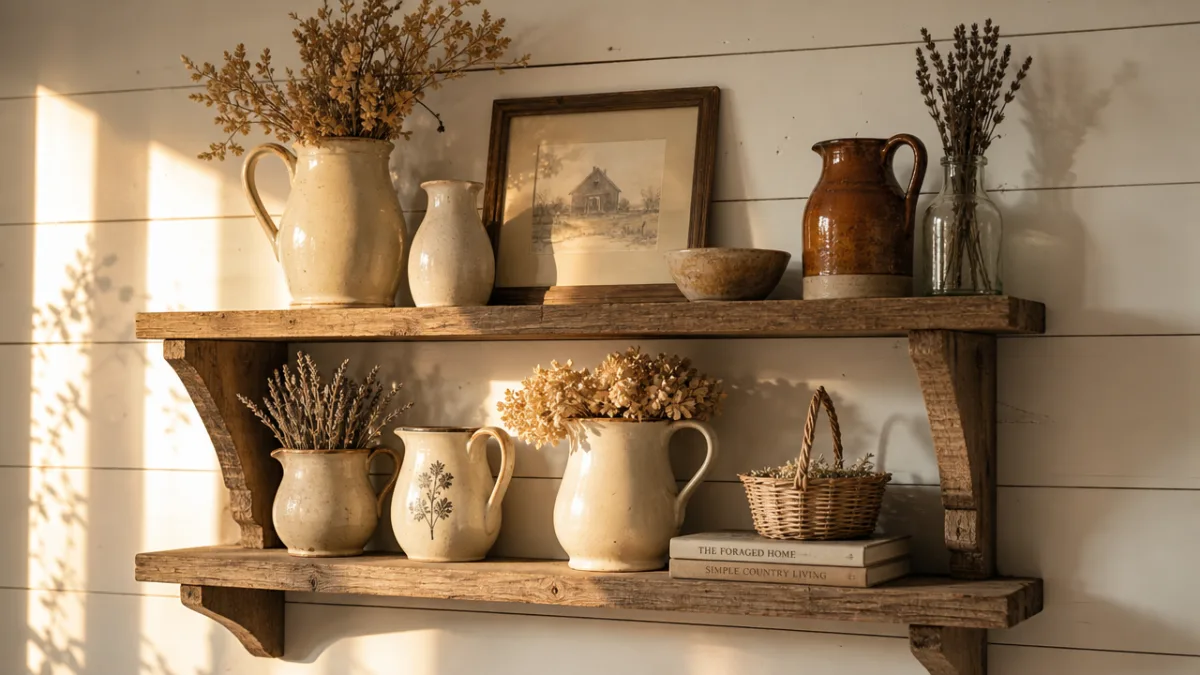
The material you choose for your farmhouse shelves will define the entire look and feel of the installation. Reclaimed wood remains the gold standard for authentic farmhouse appeal — each plank carries a history written in knots, grain variations, and natural imperfections that no factory-made board can replicate. Pine is another beloved option, offering a softer grain that accepts stains beautifully and works especially well when you want a lighter, more Scandinavian-influenced farmhouse feel. White oak and walnut bring a richer, more upscale dimension to the aesthetic.
Finish selection is equally important and often underestimated by first-time DIYers and decorators. A raw, unsealed wood shelf delivers maximum rustic impact but requires more maintenance and is less suitable for kitchens or bathrooms where moisture is a factor. A matte polyurethane or wax finish protects the wood while preserving its natural appearance. Whitewashed or limewashed finishes create that quintessential farmhouse brightness, making spaces feel airier and more light-filled without erasing the wood’s natural texture and character.
Staining opens up a world of possibilities for those who want more control over their shelf’s final color. Warm walnut stains create a cozy, library-like atmosphere ideal for living rooms and home offices. Gray-toned stains lean into the weathered barn wood look that defines so much of coastal and mountain farmhouse design. For the most authentically aged appearance, consider a technique called “fuming,” in which ammonia reacts with the tannins in wood to create a naturally silvered, antique tone that looks like decades of wear have been applied overnight.
Bracket Styles That Define the Modern Farmhouse Look
If the wood is the soul of a farmhouse shelf, the bracket is its backbone — both structurally and visually. The industrial-meets-rustic combination of raw steel or cast iron brackets paired with warm wooden planks has become one of the most recognizable signatures of modern farmhouse design. Pipe brackets, in particular, have surged in popularity. Using actual plumbing pipes and flanges to support shelves creates a look that feels authentically crafted, as though the shelves were improvised from industrial materials at hand rather than purchased from a big-box retailer.
Beyond pipe brackets, the modern farmhouse aesthetic embraces a wide range of metal hardware styles. Simple L-brackets in a matte black finish offer clean geometric lines that complement the organic warmth of natural wood without competing with it. Hairpin legs repurposed as wall-mounted shelf supports bring a mid-century modern edge to the farmhouse palette. Strap brackets — long, flat metal pieces that wrap over the front edge of the shelf — create a distinctive look that suggests vintage industrial storage while keeping the profile low and streamlined.
It is worth noting that bracket color and finish matter enormously. Matte black is the dominant choice in contemporary farmhouse design because it photographs beautifully, pairs with virtually every wood tone, and adds visual contrast without feeling harsh or cold. Brushed nickel and antique bronze offer softer, warmer alternatives that work especially well in spaces with more traditional farmhouse leanings. For a lighter, more refined look, white powder-coated brackets against white walls can make shelves appear almost magically suspended, drawing all attention to the objects displayed upon them.
Kitchen Farmhouse Shelves: Open Storage With Rustic Elegance
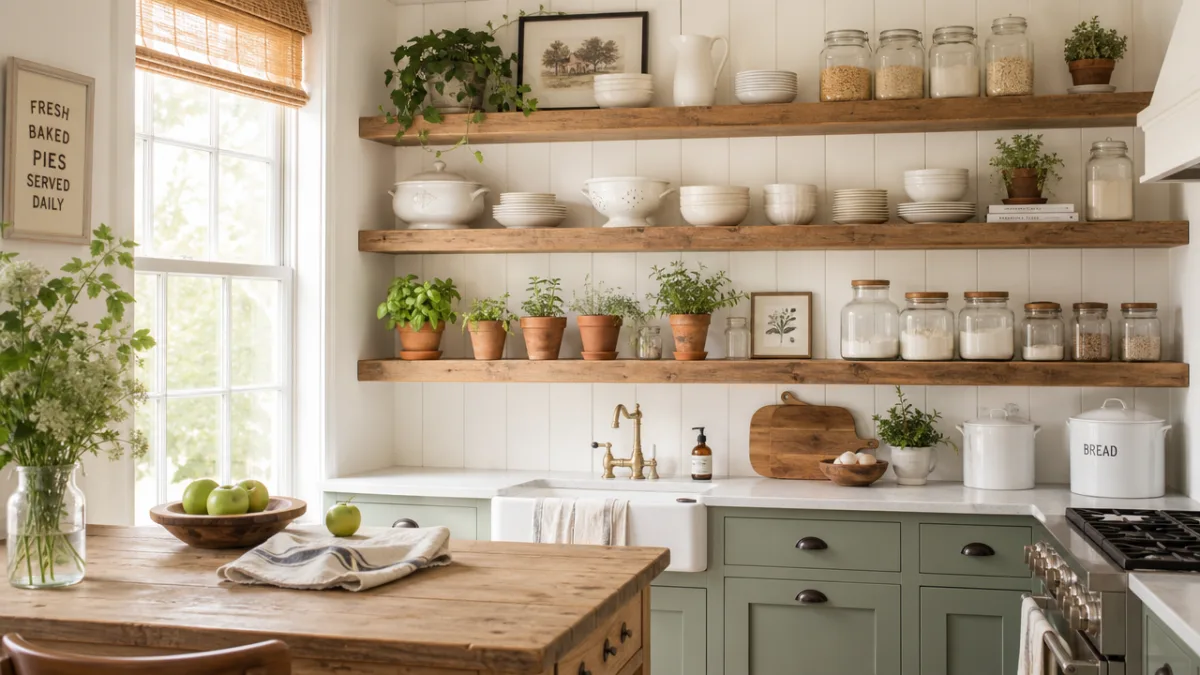
The kitchen is perhaps the most transformative space for farmhouse shelving, where the practical and the beautiful must coexist seamlessly. Open shelving in place of upper cabinets has become a defining feature of farmhouse kitchen design, creating a sense of spaciousness and accessibility that closed cabinetry simply cannot achieve. When shelves are carefully styled with a mix of everyday dishes, glass jars filled with pantry staples, fresh herbs in terracotta pots, and a few decorative pieces, the kitchen becomes a living display rather than a utilitarian workspace.
The arrangement and curation of items on kitchen farmhouse shelves deserves thoughtful planning. Designers often recommend working in odd numbers — groupings of three or five items tend to feel more visually dynamic than even-numbered pairs. Varying the height of objects creates movement and prevents the eye from getting bored. Mixing textures is equally important: smooth white ceramics next to rough woven baskets, gleaming glass beside matte stoneware, metal measuring cups hanging from small hooks beneath the shelf’s edge. These contrasts are what give a well-styled farmhouse shelf its depth and personality.
Practical considerations are just as important as aesthetic ones in the kitchen. Shelves installed near the stove should be finished with a heat and moisture-resistant sealant. The depth of kitchen shelves typically ranges from eight to twelve inches — deep enough to accommodate standard dinner plates stored vertically in a rack, but not so deep that items at the back become inaccessible or forgotten. Installing shelves at two different heights can create a layered look while also accommodating taller items like pitchers, oil bottles, and large canisters that would otherwise crowd a single-tier installation.
Styling Your Kitchen Shelves for Maximum Impact
Achieving that effortlessly curated look on kitchen farmhouse shelves requires a deliberate approach disguised as casualness. Begin by selecting a color palette — most successful farmhouse kitchens work within a narrow range of whites, creams, warm taupes, and natural wood tones, with perhaps one or two accent colors in muted sage green, dusty blue, or terracotta. Every object on the shelf should belong to this palette, creating visual cohesion even amid stylistic variety. Mismatched collections of vintage ironstone, for example, work beautifully together because they share a common white-cream tone despite their different shapes and ages.
Incorporating live or dried plants onto kitchen shelves adds an organic layer that no purely decorative object can match. A small potted rosemary or thyme not only looks beautiful but serves a culinary purpose, reinforcing the idea that a farmhouse kitchen is above all a place of nourishment and life. Dried botanicals — eucalyptus bundles, lavender sprigs, dried citrus slices — bring a similar organic energy without the maintenance demands of live plants and tend to photograph especially well against the warm tones of natural wood shelving.
- Stack white ceramic plates vertically using plate stands or rails for a classic, diner-inspired look that keeps items accessible and visually bold.
- Use glass canisters filled with pasta, grains, or coffee beans to create pantry-style displays that are both functional and visually satisfying.
- Hang small S-hooks from the shelf’s front edge to store mugs, utensils, or small baskets, maximizing vertical space efficiently.
- Group items in triads — a tall bottle, a medium canister, and a small jar — for naturally pleasing, balanced arrangements throughout the shelf.
- Incorporate a chalkboard label on jars and baskets to add that handcrafted, cottage-industry detail that is quintessentially farmhouse in spirit.
Living Room and Entryway Farmhouse Shelves: Making a Statement
In living rooms and entryways, farmhouse shelves take on a more architectural role, functioning as focal points that anchor entire walls. A set of floor-to-ceiling floating shelves flanking a fireplace creates a built-in look that dramatically increases both the storage capacity and the visual drama of the space. Even a single, generously proportioned shelf above a sofa or console table can serve as a room’s organizing element, drawing the eye upward and giving the space a sense of height and intention that bare walls simply cannot provide.
The entryway, often an overlooked transitional space, benefits enormously from a well-placed farmhouse shelf. A simple plank shelf installed just above eye level in an entry hall provides a landing spot for keys, mail, and small everyday essentials while keeping the aesthetic polished. Below the shelf, a row of iron hooks serves a practical purpose while extending the farmhouse visual language downward. A small basket on the shelf corrals items that might otherwise clutter the surface, and a framed print or small mirror leaning against the wall above the shelf layers the arrangement without requiring additional holes in the wall.
For living rooms where the shelves will carry more substantial decorative weight, it is essential to think about the balance between books, art objects, plants, and personal items. Books spine-out in neutral linen or paper covers create a cohesive backdrop against which colorful art objects and personal photographs can shine. Stacking some books horizontally creates platforms for displaying smaller items — a ceramic figurine, a geode, a small framed photograph — that would otherwise get lost on a full-height shelf. This kind of layering gives living room farmhouse shelves their richly personal, collected-over-time quality.
Creating Visual Balance on Decorative Shelves
Visual balance is the invisible architecture that makes a beautifully styled shelf feel right without the viewer necessarily knowing why. Symmetry is the most straightforward approach — matching objects on either end of a shelf create a formal, composed look that suits more traditional farmhouse interiors. Asymmetrical balance is more complex but tends to feel more dynamic and contemporary: a large, tall object on one end balanced by a cluster of smaller objects on the opposite end, with medium-sized pieces bridging the two extremes. This approach rewards careful attention and often improves with time as you add, remove, and rearrange pieces.
Negative space — the intentional absence of objects — is just as important as the items themselves. Overcrowded shelves lose the sense of ease and intentionality that makes farmhouse styling so appealing. Leaving breathing room between groupings allows each curated arrangement to register separately and be appreciated on its own terms. This restraint is perhaps the hardest discipline for enthusiastic decorators to maintain, but it consistently separates shelves that feel designed from those that merely feel full.
DIY Farmhouse Shelves: Building Your Own Character-Filled Pieces
One of the most satisfying aspects of the modern farmhouse movement is its deep DIY tradition. Building your own farmhouse shelves is genuinely achievable for beginners with basic tools, and the rewards go far beyond cost savings. A handmade shelf carries a quality of personal investment that no purchased piece can replicate. The slight imperfection in the wood’s surface, the particular warm tone you achieved with your chosen stain, the satisfaction of having mounted and leveled the brackets yourself — these details become part of the shelf’s story and, by extension, part of your home’s story.
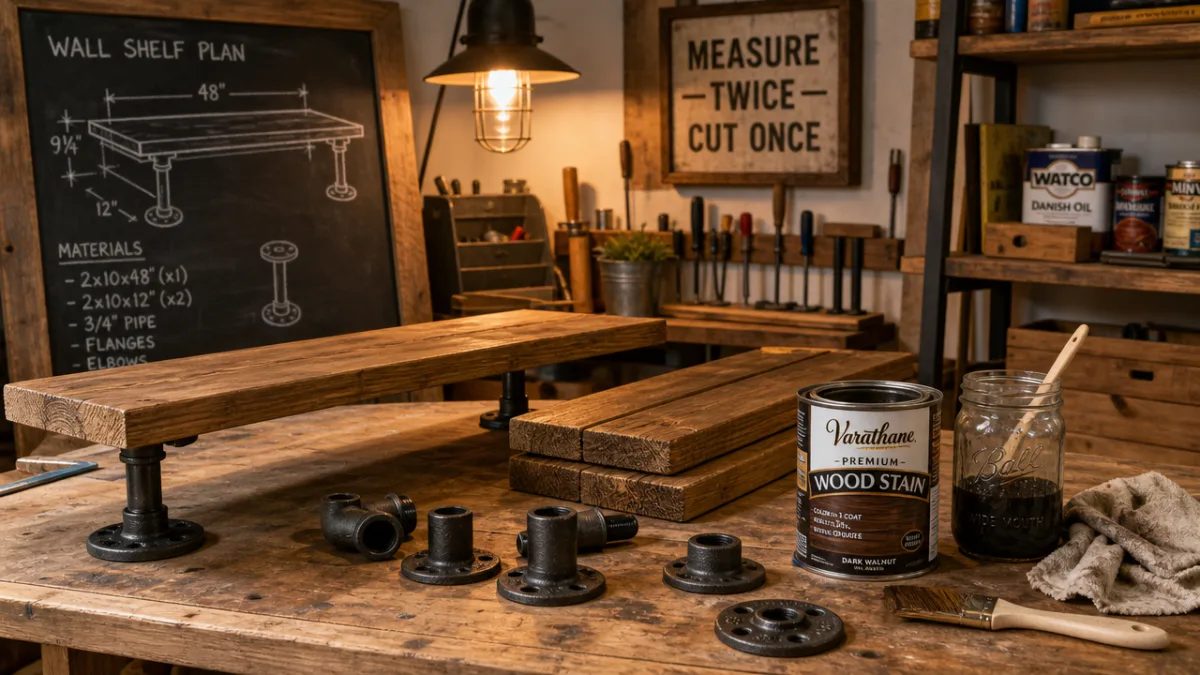
The most beginner-friendly farmhouse shelf project involves purchasing a pre-cut wooden board from a lumber yard or home improvement store, sanding it progressively through finer grits, applying your chosen stain or finish in thin, even coats, and then mounting it using purchased pipe or L-brackets. More ambitious DIYers might source genuine reclaimed wood from architectural salvage dealers, old barns, or demolition sites, accepting (and celebrating) the greater variability in width, thickness, and surface character that comes with truly aged material. Either approach produces results that look far more expensive and considered than the modest investment of time and materials would suggest.
Safety and structural integrity are non-negotiable when building your own shelves, particularly in kitchens and homes with children. Always locate wall studs before mounting brackets, using a reliable stud finder rather than guessing or tapping. For shelves that will carry significant weight — full sets of dishes, heavy books, large ceramic pieces — use lag screws driven directly into studs rather than toggle bolts or drywall anchors alone. The aesthetic investment you make in a beautiful farmhouse shelf deserves the structural foundation to last for years without settling, shifting, or, in worst-case scenarios, catastrophically failing under load.
Essential Tools and Materials for DIY Farmhouse Shelf Projects
Assembling the right toolkit before beginning a shelf project eliminates frustration and ensures professional-quality results. You do not need a workshop full of specialized equipment; a handful of well-chosen, quality tools will serve you across multiple projects and pay for themselves many times over. The most critical investment is a good drill — cordless, with sufficient torque for driving screws into studs — paired with a complete set of drill and driver bits. A reliable level, whether a traditional bubble level or a laser level for longer installations, is equally indispensable.
- A belt or orbital sander significantly reduces the time and effort of preparing raw lumber, allowing you to progress through sanding grits quickly and achieve a smooth, professional surface.
- Painter’s tape protects walls and adjacent surfaces during staining and finishing, keeping the final installation looking clean and precise.
- A stud finder — ideally a magnetic or electronic model with edge-detection capability — takes the guesswork out of locating structural support in your walls.
- Foam rollers or high-quality natural-bristle brushes apply stain and polyurethane finishes more evenly than cheap synthetic brushes, which tend to leave streaks and bristle marks.
- A miter saw or circular saw with a straightedge guide allows you to cut boards cleanly to your exact required dimensions if pre-cut lumber isn’t available in the right size.
Seasonal Styling and Evolving Your Farmhouse Shelf Displays
One of the great joys of farmhouse shelves is their responsiveness to seasonal change and personal evolution. Unlike built-in cabinetry or fixed art installations, open shelves invite rearrangement, replacement, and seasonal refreshment. In autumn, dried corn husks, mini pumpkins, amber glass vessels, and collections of pinecones bring harvest warmth to living room and kitchen shelves. Winter calls for evergreen sprigs, white candles in iron holders, vintage wooden sleds leaned against the wall, and generous bundles of cream-colored wool throws folded neatly on lower shelf rungs.
Spring and summer styling on farmhouse shelves leans into freshness and lightness. Mason jars filled with wildflowers or garden-cut stems, vintage enamelware in white and pale green, linen-covered books, and small terracotta pots of succulents or herbs create an atmosphere that feels genuinely connected to the season outside. Swapping out heavy, dark-toned objects for lighter, more translucent pieces — clear glass, pale ceramics, white-painted wood accessories — can transform the entire mood of a room without a single structural change to the shelves themselves.
Beyond seasonal rotation, your farmhouse shelves should grow and change as your life does. New travels bring back interesting objects. Thrift store and estate sale finds add unexpected character. As your eye develops and your aesthetic sensibility deepens, you will naturally edit out pieces that no longer serve the overall composition and introduce new ones that better reflect where you are. This living, evolving quality is perhaps what most fundamentally distinguishes a truly personal farmhouse shelf from a merely decorative one — it is not a finished product but an ongoing, deeply satisfying creative practice rooted in your home and your life.








What do you think?
It is nice to know your opinion. Leave a comment.