










CAISSE A POMMES: The Timeless Apple Crate and Its Enduring Legacy
A Brief History of the Apple Crate
The apple crate, known in French as the caisse à pommes, is one of the most iconic and enduring pieces of functional wooden packaging ever devised by human ingenuity. Its origins can be traced back to the late nineteenth century, when fruit growers across Europe and North America began seeking reliable, stackable containers that could protect their harvest during transport to distant markets. The simple slatted wooden box became the industry standard almost overnight, celebrated for its durability, breathability, and ease of construction.
In France and across the French-speaking world, the caisse à pommes became deeply embedded in regional agricultural culture, particularly in apple-growing regions such as Normandy, Brittany, and the Loire Valley. Orchardists would commission local carpenters to build thousands of these crates each harvest season, stamping them with the name of the farm or cooperative. SEGPACAP, a well-known name associated with apple crate production, represents precisely this tradition of regional craftsmanship married to agricultural necessity, ensuring that fruit reached its destination in perfect condition.
Over the decades, the design of the caisse à pommes changed very little, which speaks to its near-perfect utility. The open slats allowed air to circulate around the fruit, preventing the buildup of moisture and ethylene gas that would accelerate decay. The robust corners and reinforced edges meant that crates could be stacked several layers high in cool storage cellars or on horse-drawn carts without collapsing. This elegant simplicity made the apple crate not just a piece of packaging but a small marvel of pre-industrial engineering that still commands admiration today.
SEGPACAP and the Tradition of French Apple Packaging
SEGPACAP stands as a representative name in the world of French apple crate production, embodying the values of cooperative agricultural enterprise that have long defined rural France. Organizations like SEGPACAP typically served as collective purchasing and distribution bodies for fruit growers, helping small-scale orchardists access quality packaging materials at reasonable prices. The branded crate became a mark of provenance, assuring buyers at the market or the wholesale depot that the apples inside had been handled with care and packed according to recognized standards.
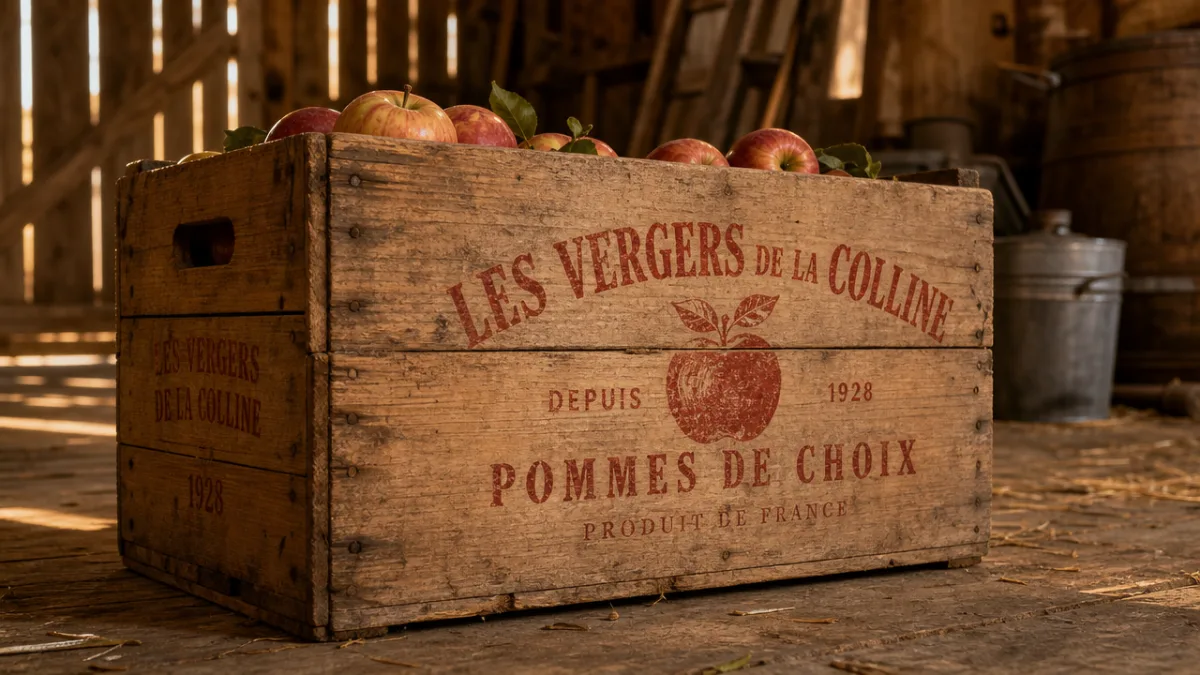
The branding and labeling of apple crates in mid-twentieth century France was an art form in its own right. Bold typographic stamps in black, red, or green ink would identify the cooperative, the region, the variety of apple, and sometimes the year of harvest. These markings, now faded on surviving crates found in antique markets and barn sales, have become sought-after examples of vernacular graphic design. Collectors and interior designers prize the authentic typography precisely because it speaks of a time when visual communication was direct, honest, and deeply rooted in place.
The cooperative model that organizations like SEGPACAP represented also reflected a broader social philosophy in French agricultural life. By pooling resources and standardizing packaging, small farmers could compete more effectively with larger industrial producers. The caisse à pommes bearing a cooperative’s name was therefore not just a container but a statement of collective identity and economic solidarity. This dimension of the apple crate’s history gives it a cultural weight that goes far beyond its practical function, making it a genuine artifact of social history.
The Anatomy of a Traditional Apple Crate
Understanding the construction of a traditional caisse à pommes reveals just how thoughtfully these objects were designed for their purpose. The typical crate was built from thin planks of softwood, most commonly pine or poplar, chosen because these species were lightweight, locally abundant, and easy to work with simple tools. The planks were cut to a consistent thickness of roughly eight to twelve millimeters, thin enough to keep the weight of the empty crate manageable but thick enough to bear the considerable weight of a full load of fruit.
The base and sides of the crate were constructed with deliberate gaps between the slats, typically five to ten millimeters wide. These gaps were not a sign of careless construction but a carefully considered ventilation system. When crates were stacked, the gaps aligned in a way that created continuous channels of airflow through the stack, drawing heat and humidity away from the fruit. This passive ventilation was essential in an era before mechanical refrigeration, and it demonstrates a sophisticated empirical understanding of fruit physiology that had been accumulated over many generations of practical experience.
The corners and end panels of quality crates were reinforced with slightly thicker pieces of wood or with metal staples and wire binding, depending on the manufacturer and the era. The end panels often carried the most information, being stamped or branded with the producer’s details, and were sometimes made of a single wide plank rather than multiple slats to provide a clean, flat surface for marking. The overall dimensions of the crate were standardized within regions to ensure compatibility with transport vehicles, storage shelving, and market display systems, representing an early form of industrial standardization in agricultural supply chains.
From Orchard to Table: The Journey of Apples in a Caisse
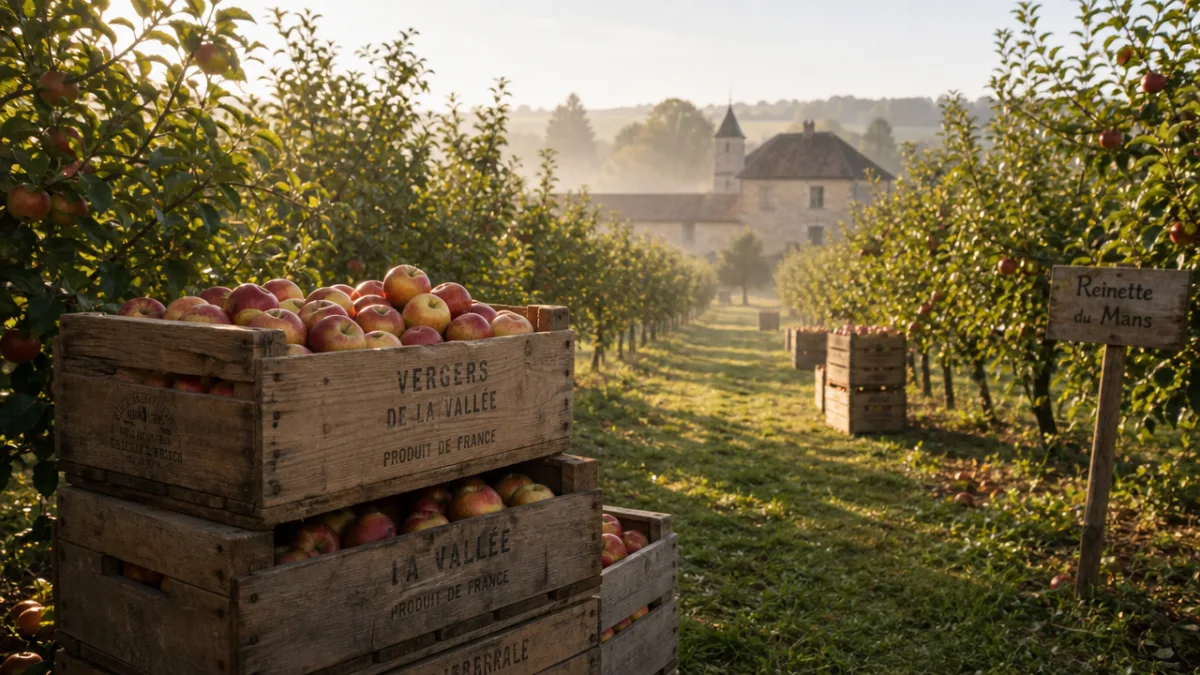
The life of a caisse à pommes began not in a factory but in the orchard, where it arrived empty and ready to receive the season’s harvest. Pickers would move through the rows of trees with the crates placed at intervals on the ground, filling them carefully to avoid bruising the fruit. Experienced harvesters knew instinctively how to lay apples in the crate to maximize the number that could fit without crushing those at the bottom, a skill passed down through generations of seasonal agricultural workers who returned to the same orchards year after year.
Once filled, the crates were transported to a central collection point, where they were inspected, weighed, and sorted by variety and grade. Those destined for immediate sale would be loaded onto trucks or rail wagons and sent to regional markets and wholesale distributors. Those intended for longer storage would be moved to cool cellars or purpose-built storage buildings where temperature and humidity were managed as carefully as possible using the natural properties of the local environment. In this way, a single crate might spend weeks or even months in storage before its contents reached the consumer.
The return journey of the empty crate was almost as important as its outward trip. Quality wooden crates were valuable enough to warrant collection and reuse, and an organized system of deposit and return ensured that most crates made many journeys over their working lives. This inherent reusability made the wooden apple crate one of the most genuinely sustainable forms of packaging ever used at an agricultural scale. When a crate finally became too damaged for further use in the orchard, it would typically be repurposed for storage, converted to a planting container, or broken up for firewood, so that virtually nothing was wasted.
The Apple Crate in Contemporary Design and Decoration
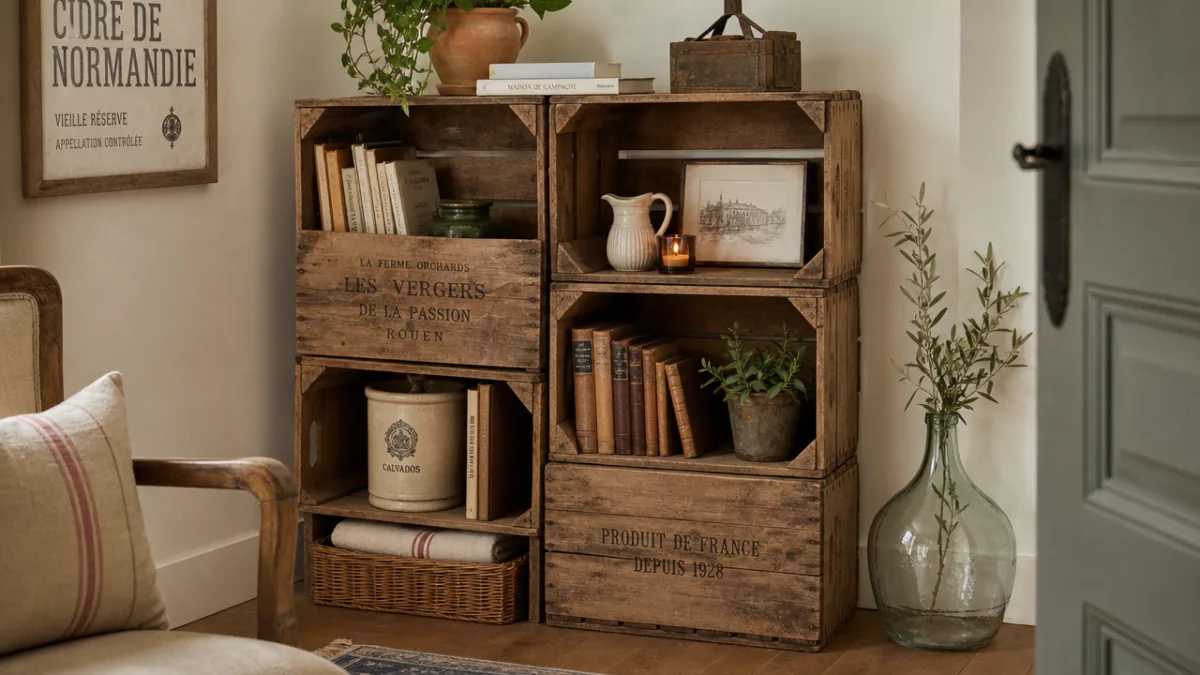
In the twenty-first century, the caisse à pommes has experienced a remarkable second life as an object of interior design and creative repurposing. The rustic aesthetic of aged pine, weathered by decades of use and stamped with the evocative typography of French agricultural cooperatives, fits perfectly within the broad design currents of our time. Whether the style is described as farmhouse, industrial, Scandinavian, or simply vintage, the wooden crate offers warmth, texture, and a sense of authentic history that factory-made furniture simply cannot replicate.
The possibilities for repurposing apple crates in home decoration are practically limitless, and a thriving community of DIY enthusiasts, interior stylists, and furniture makers has explored nearly all of them. Some of the most popular applications include the following uses that have gained widespread appreciation among design-conscious homeowners and apartment dwellers across Europe and beyond:
- Wall-mounted shelving units, either individual crates hung on their sides or entire modular arrangements covering a feature wall
- Freestanding bookcase systems built by stacking crates in alternating orientations and securing them with screws or metal brackets
- Coffee tables and side tables, often with a sheet of glass or reclaimed wood placed on top and small casters fitted to the base
- Planters for herbs, flowers, and small vegetables, lined with burlap or plastic to retain soil while allowing drainage through the slats
- Toy storage and organization systems in children’s bedrooms, where the natural wood adds a calming, tactile quality to the space
- Wine and bottle storage racks, taking advantage of the crate’s original purpose of protecting fragile goods during transport and storage
What makes the apple crate particularly valuable as a design object is its combination of aesthetic appeal and genuine functionality. Unlike purely decorative vintage items, the crate continues to do exactly what it was designed to do: hold things, organize space, and bear weight. The design community’s enthusiasm for these objects also carries an environmental message, celebrating the idea that well-made objects deserve long lives and that the patina of use is something to be treasured rather than hidden.
Collecting and Sourcing Authentic Caisses à Pommes
For those interested in acquiring genuine vintage apple crates, the market is both accessible and surprisingly varied. In France, the most reliable sources remain the brocantes and vide-greniers, the flea markets and garage sales that dot the countryside every weekend throughout spring and summer. Rural markets in apple-growing regions such as Normandy and the Pays de la Loire are particularly productive hunting grounds, as crates from local cooperatives including those marked with names like SEGPACAP surface regularly among the general accumulation of agricultural antiques.
When evaluating a crate for purchase, knowledgeable collectors look for several key qualities that distinguish a genuinely useful and aesthetically pleasing piece from one that is too damaged for practical use. Structural integrity is paramount, as a crate with broken or missing slats, split corner posts, or compromised base boards will not serve well as furniture or shelving. At the same time, some degree of wear and weathering is desirable, since this is precisely what gives the object its character. The ideal crate is one that is structurally sound but visibly aged, with clear evidence of its working life in the orchard.
Online marketplaces have expanded access to vintage apple crates considerably, with sellers in France, Belgium, and the Netherlands regularly listing authentic examples alongside reproduction crates made to resemble vintage originals. Buyers should be attentive to the difference between genuine antique crates, which will show consistent aging across all surfaces including the interior, and reproduction pieces, which may have artificially distressed exteriors over fresh, pale wood inside. Genuine crates will also typically show the characteristic smell of aged pine and the specific tannin deposits left by years of contact with fruit, details that are difficult to fake convincingly.
Sustainability, Legacy, and the Future of the Caisse à Pommes
The story of the caisse à pommes offers some genuinely instructive lessons for contemporary thinking about sustainable packaging and circular economy principles. Long before these concepts acquired their current theoretical frameworks, the wooden apple crate embodied them in practice. It was made from a renewable material using simple processes with low energy requirements, designed for repeated use across many years, easily repaired when damaged, and ultimately fully biodegradable at the end of its working life. This is a performance record that very few modern packaging solutions can match.
The transition away from wooden crates toward plastic bins and cardboard boxes that occurred in European agriculture from the 1960s onward was driven by economics and convenience rather than by any improvement in the fundamental performance of the packaging. Plastic bins are cheaper to manufacture at scale, easier to clean, and compatible with mechanized handling systems, but they come with significant environmental costs in their production and end-of-life management. The growing awareness of these costs has prompted some producers and policymakers to look again at traditional wooden packaging as part of a more sustainable agricultural supply chain.
In a broader cultural sense, the enduring appeal of objects like the SEGPACAP caisse à pommes reflects a deep human need to remain connected to the processes by which food is grown, harvested, and brought to the table. In an age of anonymous supply chains and hermetically sealed packaging, the rough-hewn wooden crate stamped with a cooperative’s name speaks of specific places, specific seasons, and the specific labor of people who worked in specific orchards. This kind of legibility and connection is something that no amount of marketing can manufacture, and it is perhaps the most enduring quality of the humble apple crate.








What do you think?
It is nice to know your opinion. Leave a comment.