










DIY Tire Garden Ideas: Colorful Recycled Planters for Small Gardens & Outdoor Decor
Why Recycled Tire Planters Are a Brilliant Gardening Choice
Old tires are one of the most abundant and challenging forms of waste on the planet, with billions sitting in landfills or piling up in backyards around the world. Rather than contributing to this environmental problem, creative gardeners have discovered that used tires can be transformed into vibrant, durable, and eye-catching planters that breathe new life into outdoor spaces. The movement toward upcycled garden decor is not just a trend — it is a genuinely meaningful way to reduce waste while beautifying your home and community at the same time.
From a purely practical standpoint, tire planters offer a set of advantages that many traditional garden containers simply cannot match. Rubber is extraordinarily resilient against weather extremes, resisting cracking in freezing winters and warping in intense summer heat. Unlike wooden planters that rot over time or ceramic pots that shatter when dropped, a tire planter can last for many years with minimal maintenance. The thick rubber walls also help insulate plant roots from temperature fluctuations, creating a more stable growing environment that many plants — especially flowers and herbs — genuinely thrive in.
Perhaps the most exciting aspect of tire gardening is the sheer creativity it invites. You are not working with a finished, polished product that dictates how it should be used. Instead, you are starting with a raw, humble material and making it entirely your own. Whether you want a neat stack of tiers creating a vertical herb garden, a single brightly painted planter for your porch, or an elaborate sculptural arrangement shaped like an animal or decorative feature, tires give you the freedom to experiment without the fear of expensive mistakes. The cost of entry is essentially zero, making this one of the most accessible forms of garden artistry available to anyone.
Essential Tools and Materials for Your Tire Garden Project
Before you dive into cutting, painting, and planting, it is important to gather the right tools and materials to make the process both safe and enjoyable. Having everything prepared in advance saves time, prevents frustration mid-project, and ensures you achieve the clean, polished results that make these planters look genuinely impressive rather than makeshift. A little preparation goes a long way when working with a material as tough and unconventional as rubber tires.
The most challenging part of many tire projects is cutting the rubber, which is significantly tougher than it looks. A sharp utility knife or a jigsaw fitted with a heavy-duty blade designed for rubber or thick materials is your best option. Cutting tires requires patience and firm, deliberate strokes — rushing the process leads to jagged edges and unnecessary effort. Always wear protective gloves and safety glasses during this stage, as rubber can produce small debris and the cutting tools involved are genuinely sharp. Work on a stable surface, and if possible, ask a helper to hold the tire steady while you cut.
Beyond cutting tools, your materials list should include the following essentials for a complete and polished result:
- Exterior-grade spray paint or latex paint in your chosen colors — bright, bold shades like red, yellow, turquoise, and cobalt blue tend to look stunning outdoors and hold up well against UV exposure.
- A wire brush or sandpaper for scuffing the tire surface before painting, which dramatically improves paint adhesion and prevents peeling.
- Landscape fabric or burlap to line the inside of the tire and prevent soil from washing through drainage gaps.
- Quality potting mix suited to whatever plants you intend to grow — a general-purpose blend works well for most flowers and herbs.
- Drainage material such as gravel or broken pottery pieces to layer at the bottom and prevent waterlogging.
- Optional embellishments like rope, mosaic tiles, stencils, or reflective paint for decorative finishing touches.
Do not overlook the importance of sourcing tires responsibly and safely. Many auto shops, tire dealerships, and garages are happy to give away used tires for free — they often pay disposal fees, so a gardener willing to take tires off their hands is a welcome solution. When selecting tires, avoid those that are visibly contaminated with oil or chemical residue beyond normal road wear, and consider researching the ongoing debate around tire leaching to make an informed personal decision about which plants you grow in tire containers, particularly if growing edible crops.

Step-by-Step Guide to Creating Your First Tire Planter
Making your first tire planter is a genuinely satisfying experience, and the process is more straightforward than most people expect. Once you have your materials assembled and your workspace set up, the project can be completed in an afternoon, with time allowed for paint to dry overnight before you begin filling and planting. Working methodically through each step ensures a clean, attractive result that you will be proud to display in your garden or on your patio.
Begin by thoroughly cleaning the tire using a stiff brush and soapy water to remove road grime, dirt, and any surface contaminants. Rinse completely and allow the tire to dry in the sun for several hours — painting over a damp surface will cause the paint to bubble and peel prematurely, undoing all your hard work. Once dry, use sandpaper or a wire brush to lightly scuff the exterior surface of the tire. This step is critical because smooth rubber has very little natural texture for paint to grip onto, and skipping it is the most common reason tire paint jobs fail within the first season.
With your tire prepped, follow this sequence to bring your planter to life:
- Apply a primer coat specifically formulated for rubber or plastic surfaces. This creates the ideal base for your decorative paint layers and significantly extends the life of the finished project.
- Once the primer is dry, apply your first color coat using spray paint for even coverage, or a brush for more textured, artistic effects. Two thin coats are always better than one heavy coat.
- Add any decorative stenciling, patterns, or hand-painted designs while the base coat is fully cured. Geometric patterns, floral motifs, and folk art styles all look spectacular on tire planters.
- Seal the painted surface with an exterior clear coat or varnish to protect against rain, UV fading, and general wear. This step is especially worthwhile if you live in a region with intense sun or heavy rainfall.
- Position the tire in its desired location — remember that once filled with soil, it will become very heavy, so placement first saves significant effort later.
- Line the inside with landscape fabric, add a base layer of gravel for drainage, then fill with your potting mix to within a few inches of the rim.
- Plant your chosen flowers, herbs, or trailing plants, water gently, and enjoy the results.
If you want to create a stacked tire planter — one of the most popular and visually striking designs — the process is essentially the same for each individual tire, but placement and stability become more important. Stack tires in a pyramid arrangement, with the widest base on the bottom, and ensure each layer is level before adding the next. You can use a length of rebar or a wooden post driven through the center of all tires to anchor the structure and prevent it from toppling in windy conditions. Stacked planters work beautifully for growing strawberries, succulents, or a mixed herb garden with different varieties at each level.
Creative Designs and Decorating Ideas to Inspire Your Garden
One of the most joyful aspects of tire garden projects is discovering just how many creative directions you can take with this humble material. Far from being limited to a simple painted circle sitting on the ground, tire planters can become genuine works of outdoor art that reflect your personal style, complement your home’s exterior color palette, and transform even the smallest outdoor area into something visually compelling and full of character. The gardening community has developed an astounding range of techniques and styles over the years, and drawing inspiration from them is a wonderful starting point for your own designs.
The animal-shaped tire planter is one of the most beloved styles in the DIY garden world, and for very good reason — it transforms a practical growing container into a whimsical sculptural feature that children and adults alike find delightful. Swans, peacocks, and elephants are particularly popular forms achieved by cutting and reshaping sections of the tire, then folding or inverting the rubber to create wings, necks, tails, or ears. These creations are then painted in vibrant naturalistic colors or fantastical hues, filled with trailing flowers like petunias or lobelia, and placed as focal points in garden beds. A single well-made tire swan planter can elevate an entire garden’s visual appeal instantly.
Beyond animal forms, consider these inventive tire garden design ideas that range from simple to more ambitious:
- Vertical tire wall gardens, where tires are mounted on a fence or wall in a grid pattern, each painted a different color and planted with herbs or compact flowering plants — a perfect solution for urban spaces with no ground area to spare.
- Tire sandboxes or water features for children’s garden areas, where the durable rubber acts as a natural boundary that holds up to years of active play.
- Painted tire stepping stones arranged as a colorful garden path, particularly charming when each tire is planted with low, spreading ground cover like creeping thyme or moss that softens the edges.
- Tire ottomans and garden seats created by stacking two or three tires, filling them with compacted soil or sand for rigidity, and topping with a cushion or a round of cut wood for a rustic, functional garden seat.
- Painted tire borders along flower beds or vegetable garden edges, laid flat or half-buried to create a tidy, colorful boundary that also discourages foot traffic near tender plants.
Color coordination is one of the most powerful tools at your disposal when designing a tire garden display. Rather than painting each tire a completely different color with no connection between them, consider working within a cohesive palette that ties the whole garden together. Mediterranean-inspired schemes using terracotta, warm yellow, and cobalt blue create a wonderfully sunny atmosphere. A tropical palette of lime green, hot pink, and orange feels exuberant and lush. For something more sophisticated, a monochromatic arrangement using three shades of the same color — say, pale sage, mid-green, and deep forest — creates a refined, intentional look that feels every bit as stylish as expensive commercial planters.

Best Plants for Tire Planters: Flowers, Herbs, and Beyond
Choosing the right plants for your tire planters is just as important as the design and construction work that goes into creating them. The good news is that tires are remarkably versatile containers that can support a wide range of plant species, from bold flowering annuals to compact perennial herbs and even small vegetables. Understanding the specific conditions that tire planters create — particularly their heat retention properties — helps you select plants that will genuinely thrive rather than merely survive in their rubber home.
Because the dark rubber of most tires absorbs heat readily, tire planters tend to warm up faster in spring and retain heat longer into the evening than traditional ceramic or plastic containers. This is genuinely beneficial for heat-loving plants and can give warm-season crops a head start in cooler climates. However, it is worth noting that in regions with very intense summer sun, this same heat retention can cause soil to dry out more rapidly, meaning your plants may need more frequent watering than they would in a lighter-colored pot. Painting tires in lighter colors can moderate this effect to some degree, making white, cream, or pale-colored planters a practical choice as well as an aesthetic one in hot climates.
For purely ornamental tire planters, the following flower varieties consistently deliver spectacular results:
- Petunias in trailing varieties cascade beautifully over tire rims, offering continuous blooms from late spring through the first frost in a huge range of colors from pure white to deep purple and vibrant coral.
- Marigolds are practically made for tire planters — their bold orange and yellow tones complement the artistic aesthetic perfectly, they are heat-tolerant, and they have the added benefit of deterring many common garden pests.
- Geraniums bring reliable, long-lasting color and a classic cottage garden feel, thriving in the warm conditions that tire planters naturally provide.
- Nasturtiums are among the easiest annuals to grow and produce a constant supply of cheerful blooms in fiery tones of red, orange, and yellow, with the bonus that both leaves and flowers are edible and delicious in salads.
- Portulaca, also known as moss rose, is perfect for the hottest, driest tire planters, producing jewel-toned flowers that open in sunshine and close at night, creating a living color display.
For gardeners interested in growing food in their tire planters, herbs are an ideal starting point. Compact, productive, and generally heat-tolerant, herbs like basil, thyme, oregano, chives, and parsley adapt beautifully to container life and benefit from the warm root zone that tire planters create. A collection of painted tires planted with a kitchen herb garden near the back door is both practical and genuinely attractive, providing fresh flavors for cooking while adding color and fragrance to the outdoor space. Mint is particularly well-suited to tire planters because its naturally invasive spreading habit is contained by the rubber walls without any additional effort on your part.
Arranging and Displaying Your Tire Planters for Maximum Impact
Even the most beautifully crafted tire planter benefits enormously from thoughtful placement and arrangement. How you position and group your planters in relation to each other, to your home’s architecture, and to the rest of your garden determines whether the finished display feels intentional and designed or simply scattered and random. Taking time to plan your arrangement before committing to permanent placement — by using photographs, rough sketches, or simply moving empty tires around until the composition feels right — makes a significant difference to the final visual impact.
Odd numbers almost always create more visually pleasing arrangements than even numbers in garden design, and tire planters follow this principle beautifully. A grouping of three tire planters of varying heights — achieved through stacking different numbers of tires — creates a natural sense of rhythm and movement that leads the eye gently across the display. Five planters arranged in a loose cluster work on a larger scale, perhaps anchoring a corner of the garden or framing a seating area. The key is to vary the heights and sizes while maintaining a consistent visual thread through shared colors, a common paint palette, or similar plant choices that unify the whole composition.
Think carefully about the backdrop against which your tire planters will be seen. A plain fence, garden wall, or the exterior of a shed or garage provides an ideal neutral canvas that allows brightly colored tire planters to pop and command attention. If your background is already visually busy — brick walls, patterned fencing, or an existing mural — choosing a more restrained, cohesive color palette for your tire planters prevents the overall picture from becoming overwhelming. Conversely, a garden that feels a little plain and uninspiring can be completely transformed by a bold, vibrant tire planter display that introduces pattern, color, and personality in one confident stroke.
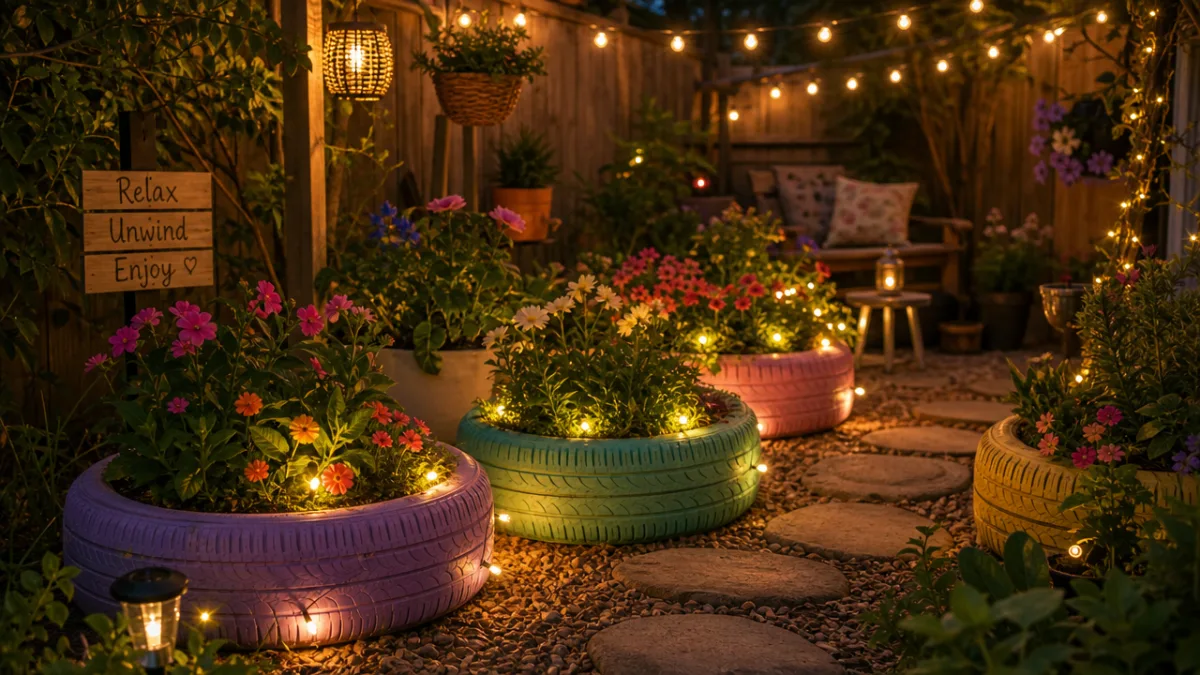
Lighting deserves special consideration, particularly if you enjoy spending time in your garden during evenings. Tire planters positioned near outdoor lighting fixtures, solar garden lights, or string lights take on a completely different character after dark, with the textures and colors of both the painted rubber and the plants catching the light in beautiful and unexpected ways. Reflective or metallic paints on tire planters interact especially wonderfully with evening light, creating a subtle shimmer that makes the garden feel magical and inviting long after the sun has set. This dimension of tire garden design is often overlooked but rewards the extra thought with genuinely beautiful results that extend your enjoyment of the garden into all hours of the day.
Maintaining Your Tire Garden: Keeping It Beautiful Season After Season
One of the greatest advantages of tire planters is their inherent durability, but like all garden features, they benefit from regular care and maintenance to keep them looking their very best year after year. The good news is that tire garden maintenance is neither complicated nor particularly time-consuming — a little attention at the right moments through the gardening season goes a long way toward preserving both the structural integrity of your planters and the health of the plants growing within them. Building a simple maintenance routine into your garden schedule ensures that your creative investment continues to reward you with beauty and color for many seasons to come.
Paint is the aspect of tire planters most likely to require refreshing over time. Despite the best preparation and sealing, exterior paint on rubber surfaces will eventually fade, chip, or peel, particularly in gardens that experience significant temperature swings, heavy rainfall, or intense UV exposure. Rather than viewing this as a problem, consider it an opportunity — repainting your tire planters each spring gives you the chance to refresh your color palette, try new designs, and keep the display feeling current and lively. A quick sand of any peeling areas, a fresh coat of paint, and a new layer of protective sealant can make a tired-looking planter look brand new within a single afternoon of work.
Soil health within tire planters needs attention each season to keep plants performing at their best. Unlike in-ground beds, container soil becomes depleted of nutrients relatively quickly as plants feed and as watering flushes minerals through the drainage layer. Each spring, refresh the top few inches of potting mix with fresh compost or a quality potting blend, and incorporate a slow-release fertilizer granule designed for container gardening. Throughout the growing season, supplement with a liquid fertilizer every two to three weeks for flowering plants, which are particularly hungry feeders. This modest investment in soil nutrition will produce a noticeably more abundant and vibrant display than neglected, depleted soil would ever deliver, and your tire planters will become a source of genuine pride and pleasure in your outdoor space season after season.








What do you think?
It is nice to know your opinion. Leave a comment.