










7 Easy Ways to Go Global with Your Home Interiors
Your home is more than just four walls and a roof — it is a canvas that can tell the story of the world. Bringing global influences into your interior design is one of the most exciting and personally meaningful ways to transform a living space. Whether you have traveled extensively or simply dream of distant places, weaving international aesthetics into your décor creates rooms that feel rich, layered, and alive. The beauty of this approach is that it does not require a complete overhaul or an enormous budget. Small, thoughtful additions can shift the entire atmosphere of a room in remarkable ways.
Global design has been growing in popularity precisely because modern homeowners are increasingly drawn to authenticity and storytelling over mass-produced sameness. When you bring a hand-woven Moroccan rug into your living room or hang a piece of Japanese indigo-dyed textile on your wall, you are not just decorating — you are curating a sense of place and culture. These objects carry histories, craftsmanship traditions, and aesthetic philosophies that factory-made goods simply cannot replicate. This is why globally inspired interiors tend to feel so distinctly personal and layered, even when assembled gradually over time.
The seven approaches outlined in this article are practical, accessible, and suitable for a wide range of budgets and design sensibilities. From incorporating textiles and ceramics to playing with color palettes and furniture silhouettes, each method offers a different entry point into the world of global interior design. The goal is not to create a pastiche or a theme park version of another culture, but to thoughtfully integrate design traditions from around the world in a way that feels cohesive, respectful, and genuinely beautiful.
1. Start with Textiles That Tell a Story
Textiles are arguably the single most powerful tool for introducing global character into a home. A well-chosen rug, throw, cushion cover, or wall hanging can instantly shift the mood and cultural resonance of an entire room. The global textile tradition is extraordinarily diverse — from the bold geometric patterns of Berber weaving in North Africa to the intricate silk brocades of India, the block-printed cottons of Rajasthan, and the earthy linen weaves of Scandinavia. Each tradition brings with it not just a distinctive visual vocabulary but also a particular texture, weight, and warmth that adds sensory depth to a space.
When selecting textiles for a global-inspired interior, it helps to think about layering rather than matching. A Turkish kilim on the floor, paired with Guatemalan-inspired cushion covers on the sofa and a simple Belgian linen throw, creates a layered, well-traveled aesthetic that feels collected rather than coordinated. The key is to choose pieces that share a tonal or color harmony even if their patterns differ dramatically. Warm ochres, terracottas, and deep navies tend to travel well across many different textile traditions and can serve as unifying threads in a layered global scheme.
It is also worth exploring the booming market for ethically sourced and artisan-made textiles, many of which are now available online directly from cooperatives and independent makers around the world. Purchasing from these sources not only brings exceptional quality and authenticity into your home but also supports traditional craft communities whose skills have been passed down through generations. Organizations such as fair-trade cooperatives and design collectives that work directly with weavers in places like Ghana, Peru, or Vietnam have made it easier than ever to access beautifully made goods that carry real cultural provenance.
- Moroccan Berber rugs for living rooms and hallways
- Indian block-print cotton for curtains and cushion covers
- Japanese indigo textiles for wall art or table runners
- West African kente or mudcloth for bold accent pieces
- Scandinavian linen weaves for understated, tactile layering
2. Embrace Global Ceramics and Pottery
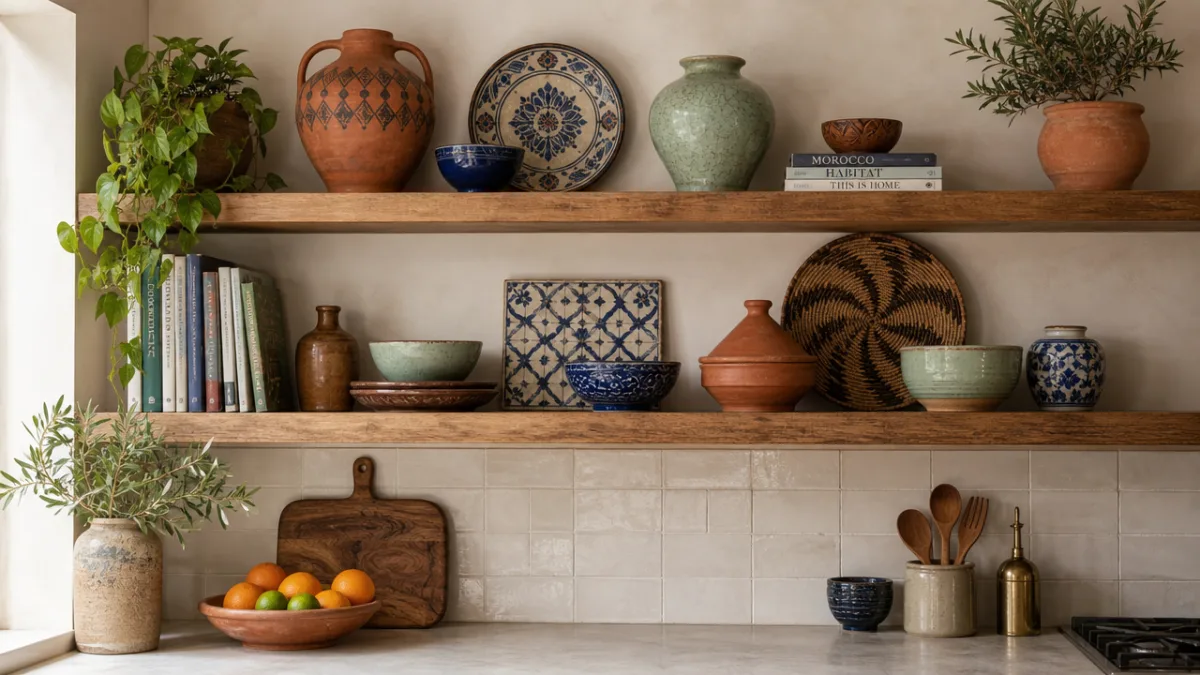
Ceramics are among the oldest and most universal forms of human craft, and every culture on earth has developed its own distinctive tradition of working with clay. This universality makes ceramics one of the most approachable and versatile tools for introducing global influences into your home. A collection of handmade vessels, bowls, and tiles from different traditions can be displayed together on open shelving, a mantelpiece, or a kitchen counter in a way that feels curated and intentional without appearing contrived. The variations in glaze, form, and surface texture tell the story of different hands, different soils, and different firing techniques.
Consider the extraordinary range that global ceramics traditions encompass. Portuguese azulejo tiles, with their brilliant cobalt-blue geometric patterns, can be used as a splashback in a kitchen or bathroom for an instant sense of Iberian flair. Japanese wabi-sabi-influenced stoneware, with its deliberately imperfect forms and subtle earthy glazes, brings a meditative calm to dining tables and kitchen shelves. Mexican Talavera pottery explodes with color and folkloric energy, making it perfect for bright accent pieces in a garden room or sun-drenched kitchen. Each tradition has its own logic and beauty, and combining them thoughtfully creates a home that feels genuinely worldly.
You do not need to amass a large collection to make ceramics work as a global design element. Even a single striking piece — a tall Moroccan vase with a hand-painted geometric pattern, or a South Korean celadon bowl with its distinctive pale green glaze — can serve as a focal point that anchors a shelf or table and sparks conversation. Start with one or two pieces from traditions you are genuinely drawn to, and allow the collection to grow organically over time as you travel, discover new makers, or simply find objects that resonate with you at markets and independent shops.
3. Play with Global Color Palettes
Color is one of the most immediate and emotionally resonant ways to evoke a sense of place, and different parts of the world have developed extraordinarily distinctive color cultures rooted in their natural landscapes, pigment traditions, and architectural histories. The dusty pinks, burnt oranges, and warm whites of a Moroccan riad; the vivid turquoises and saffron yellows of Mexican architecture; the deep, inky navies and forest greens of Scandinavian interiors; the rich jewel tones of Indian haveli décor — each of these palettes carries a powerful sense of geographic and cultural identity that can be translated into your home with paint, soft furnishings, and accessories.
When incorporating a globally inspired color palette into your home, it helps to identify the specific region or aesthetic that genuinely excites you and then research the colors that are most characteristic of that tradition. This research phase can be genuinely pleasurable — explore travel photography, design books, and the Instagram feeds of designers who specialize in the aesthetic you are drawn to. Once you have identified your palette, think about how to introduce it strategically. A deep teal on a single accent wall can evoke the Aegean without overwhelming a room. Terracotta-painted lower walls combined with warm white above instantly call to mind the sun-baked architecture of southern Spain or Mexico.
The beauty of using global color palettes is that they tend to be rooted in natural pigments and earthy tones that age beautifully and pair easily with natural materials like wood, stone, rattan, and linen. This means that a globally inspired color scheme will often feel more timeless than a palette derived from contemporary trend forecasting. Colors drawn from the natural world — the ochres of African landscapes, the soft greiges of Japanese minimalism, the deep indigos of West African textile traditions — tend to have a longevity and warmth that keeps interiors feeling relevant and beautiful for years.
- Research the color traditions of the region that inspires you most
- Identify one or two anchor colors to build your palette around
- Introduce color through walls, large furniture, and soft furnishings first
- Layer with smaller accents in complementary tones from the same tradition
- Balance bold color with natural neutrals to prevent visual overwhelm
4. Source Furniture with International Provenance
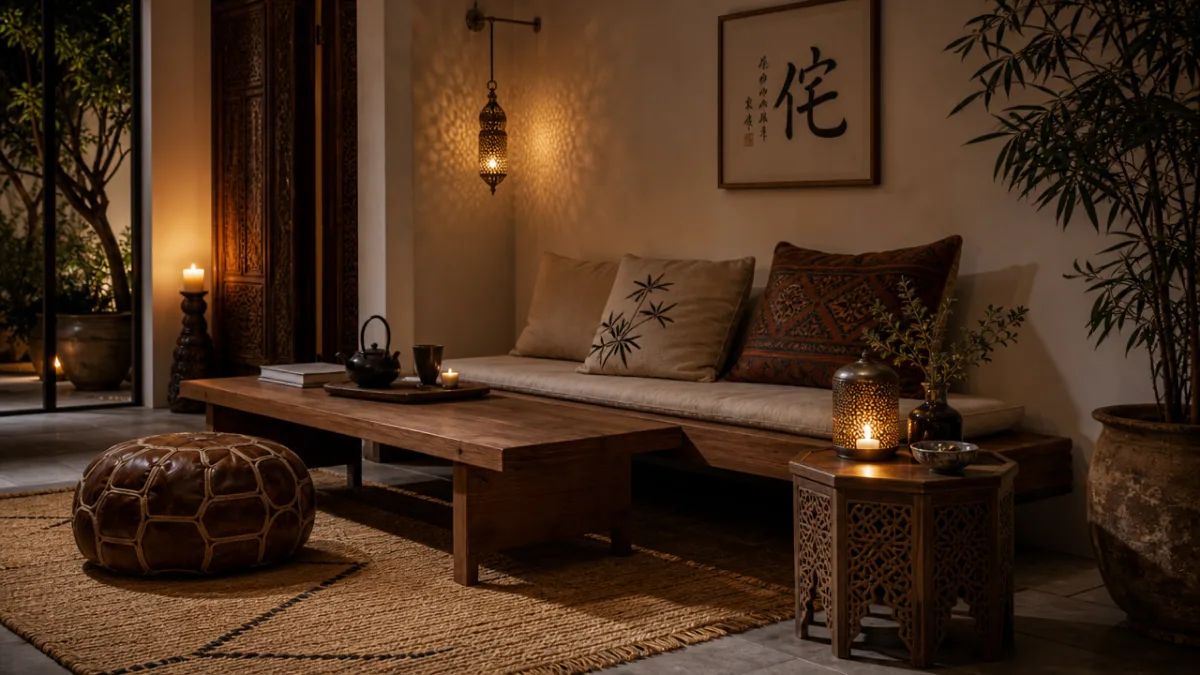
Furniture silhouettes and construction traditions vary enormously around the world, and introducing pieces with genuine international provenance — or pieces inspired by distinct global making traditions — is one of the most transformative ways to shift the character of a room. The low, platform-style beds of Japanese interiors create a sense of grounded calm and spatial generosity. The carved wooden furniture of Moroccan and Syrian artisans, with its intricate geometric inlay work, brings extraordinary craftsmanship and pattern into a living room or dining space. The clean, functional lines of Scandinavian mid-century design speak to a philosophy of democratic beauty and quality materials.
Antique markets, estate sales, and specialist importers can all be valuable sources for furniture with genuine global character. Many cities have dealers who specialize in pieces from specific regions — Indian furniture importers, for example, often stock beautifully worn wooden pieces such as carved doorways repurposed as headboards, or antique teak tables and chairs from Gujarat or Rajasthan. In the same way, dealers specializing in East Asian antiques may offer Korean chests, Chinese scholar’s tables, or Japanese tansu storage chests that bring a profound sense of restraint and elegance to a contemporary interior when used selectively.
It is important, when incorporating globally sourced furniture, to integrate pieces rather than simply accumulating them. A single carved Syrian side table placed alongside a contemporary sofa creates a compelling conversation between traditions. A Japanese low wooden bench used as a coffee table in an otherwise pared-back modern living room becomes a quiet focal point that grounds the whole space. The goal is to let each globally sourced piece breathe and be seen, rather than crowding a room with so many different influences that none of them can land with impact.
5. Introduce Pattern through Global Graphic Traditions
Pattern is one of the most immediately expressive elements of interior design, and the world’s graphic traditions are extraordinarily diverse and rich. Geometric patterns from Islamic art and architecture — the complex star polygons, interlocking hexagons, and arabesques found in Moroccan zellige tilework and Persian carpet design — have a mathematical precision and visual dynamism that is unlike anything produced in the Western tradition. West African adinkra symbols, Indian paisley motifs, Mexican huichol beadwork patterns, and the bold graphic prints of mid-century Scandinavian textile design all offer equally compelling visual languages that can enrich a home interior.
Wallpaper is one of the most effective ways to introduce global pattern at scale. A single feature wall covered in a hand-block-printed wallpaper inspired by Indian or Japanese graphic traditions can transform the entire character of a room without requiring any structural changes. Many contemporary wallpaper designers now draw directly on global graphic traditions, producing collections that range from Chinoiserie-inspired botanicals to geometric patterns influenced by Central Asian kilim weaving. These wallpapers are designed to work harmoniously with contemporary furnishings, making it easier than ever to achieve a globally inspired look without wholesale commitment to a single aesthetic.
For those who prefer a more restrained approach, pattern can be introduced through smaller surfaces and objects — tiled fireplace surrounds, patterned ceramic lamp bases, printed cushion covers, or a single boldly patterned piece of framed textile art. Even a collection of small patterned objects — a set of hand-painted tiles used as coasters, a stack of printed notebooks from a museum gift shop, or a series of framed vintage travel posters — can begin to introduce the layered, pattern-rich quality that characterizes globally inspired interiors without committing to large-scale changes.
6. Bring in Natural Materials Rooted in Global Craft Traditions
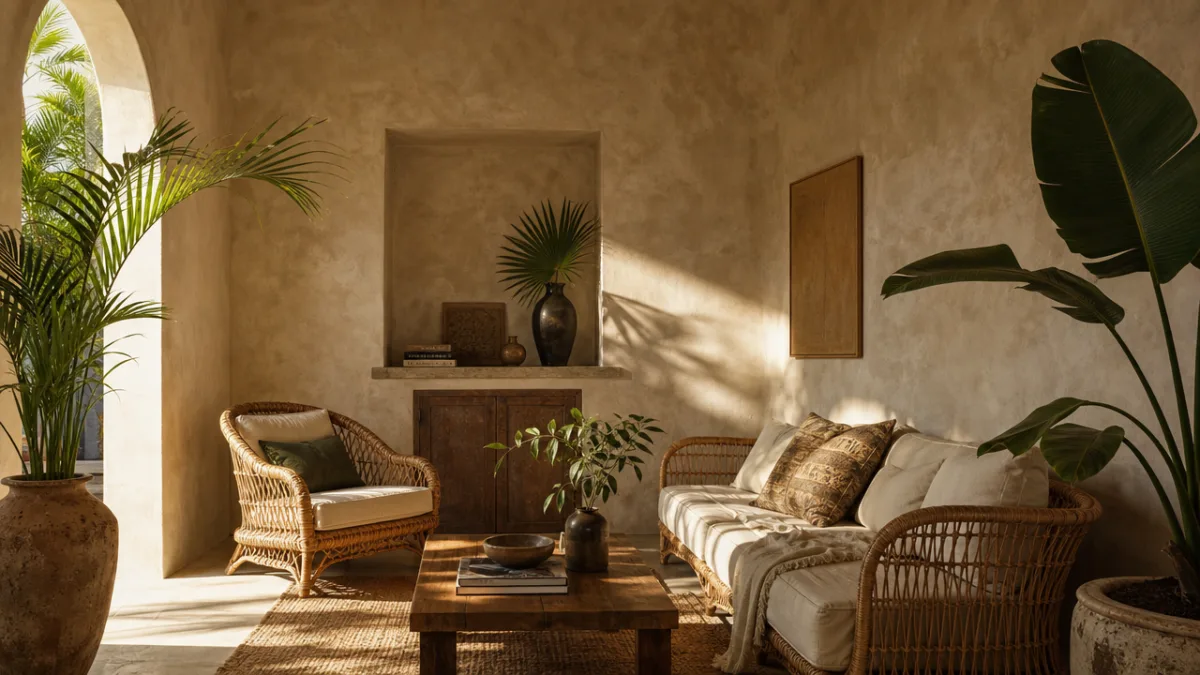
Many of the world’s most compelling design traditions are fundamentally rooted in the use of natural materials — bamboo in Japanese and Southeast Asian design, rattan and wicker in tropical Asian and colonial-era interiors, tadelakt lime plaster in Moroccan architecture, whitewashed stone in Mediterranean homes, and hand-adzed timber in Scandinavian vernacular design. These materials carry within them the climate, landscape, and ingenuity of the cultures that developed them, and introducing them into a contemporary home brings not just visual richness but a genuine sense of material honesty and connection to the natural world.
Rattan and bamboo furniture, for example, have enjoyed a significant resurgence in recent years, partly driven by growing interest in sustainable materials and partly by a broader revival of interest in mid-century tropical modernism. A rattan armchair or bamboo shelving unit brings warmth, texture, and a distinctly relaxed international quality to any room, whether placed in a contemporary Scandi-style living space or a maximalist, pattern-rich environment. Similarly, hand-plastered walls finished in traditional lime plaster techniques — whether the smooth, polished Moroccan tadelakt or the rougher, more textural Italian intonaco — bring an extraordinary depth and warmth to interior surfaces that painted walls simply cannot match.
Stone is another material with powerful global connotations. The use of locally quarried travertine in Italian interiors, hand-cut sandstone in Indian architecture, or the smooth grey granite of Scandinavian landscapes has generated some of the most distinctive and beloved interior aesthetics in the world. Introducing stone surfaces — whether through a marble-topped table, a sandstone-effect tile floor, or a travertine lamp base — immediately anchors a space in a sense of geological and geographic permanence that feels both timeless and deeply connected to the wider world.
7. Curate Art and Objects That Reflect a Life Well Traveled
Perhaps the most personal and meaningful way to bring global influences into your home is through the deliberate curation of art and objects that tell the story of your own encounters with the wider world. This does not mean creating a cluttered display of souvenirs — it means selecting a small number of genuinely significant pieces and displaying them in a way that honors their origins and allows them to be properly seen and appreciated. A hand-painted miniature from a market in Jaipur, a carved wooden mask from a West African cooperative, a framed piece of Japanese calligraphy, or a vintage map of a city you love — each of these objects, thoughtfully placed, can become a window into another world.
The art you choose for your walls is one of the most powerful signals of your aesthetic sensibilities and the breadth of your cultural references. Many contemporary artists working today draw on their own multicultural backgrounds to produce work that blends visual traditions in genuinely original ways. Seeking out these artists — whether through gallery visits, art fairs, online platforms, or directly through artists’ own websites — is a wonderful way to bring genuine global artistry into your home while supporting creators whose work deserves wider recognition. It also means that the art on your walls tells a more complex and interesting story than a print of a famous Western painting.
The final principle for successfully curating a globally inspired home is restraint and intentionality. The most beautifully decorated globally influenced interiors are not those that cram every surface with objects from every corner of the world — they are the ones in which each object has been chosen with care, positioned with thought, and allowed to speak clearly. A single Haitian metal sculpture on a white wall, a pair of Korean celadon vases on a mantelpiece, or an Ethiopian woven basket used as a fruit bowl — these individual objects, placed with confidence and surrounded by enough negative space to be properly seen, can define the character of an entire home and express a genuinely cosmopolitan sensibility that no amount of mass-produced global-themed merchandise could ever replicate.








What do you think?
It is nice to know your opinion. Leave a comment.