










30 Creative and Useful Trash to Treasure Projects: Transforming Waste Into Wonder
The Art of Upcycling: Why Trash to Treasure Projects Matter
We live in a world that throws away a staggering amount of perfectly usable stuff, and upcycling has become one of the most satisfying ways to push back against that. Instead of hauling discarded items to the curb, creative people everywhere are proving that one person’s trash really can become another person’s treasure. All it takes is a bit of imagination, a few basic tools, and the willingness to look at a broken pallet or a dusty old jar and see something worth saving. What started as a niche hobby has quietly grown into a full-blown lifestyle movement.
There’s also something deeply personal about these projects that goes beyond just helping the planet. Holding a finished piece and knowing exactly where it came from — that beat-up dresser someone left on the curb, those wine bottles sitting in the recycling bin, the pallet you spotted behind a hardware store — is genuinely satisfying in a way that buying something new never quite is. Along the way, you end up sharpening your problem-solving skills, developing an eye for what works visually, and building real confidence in your own ability to make something from nothing. It’s creativity in its most accessible, no-gatekeeping form.
And then there’s the money side of things, which is hard to ignore. Handmade home décor and furniture built from repurposed materials can cost a tiny fraction of what you’d spend at a store. A set of floating shelves from reclaimed wood might run you the price of a few screws and a can of stain, while the retail equivalent could easily cost hundreds of dollars. Multiply that across a whole home and the savings add up fast. Whether you’re working with a tight budget or just appreciate getting more value out of what you already have, upcycling makes a lot of practical sense.
Furniture Transformations: Giving Old Pieces New Life
Old furniture is honestly one of the best raw materials an upcycler can find. Dressers, chairs, tables, bookshelves — people get rid of them constantly, and most of the time these pieces are structurally completely fine. They just need a little attention. A coat of chalk paint, some updated hardware, and maybe a fun stencil design can turn a sad thrift-store dresser into the focal point of an entire bedroom. Once you start thinking about combining pieces or using them for entirely different purposes than they were intended for, the possibilities really do get exciting.
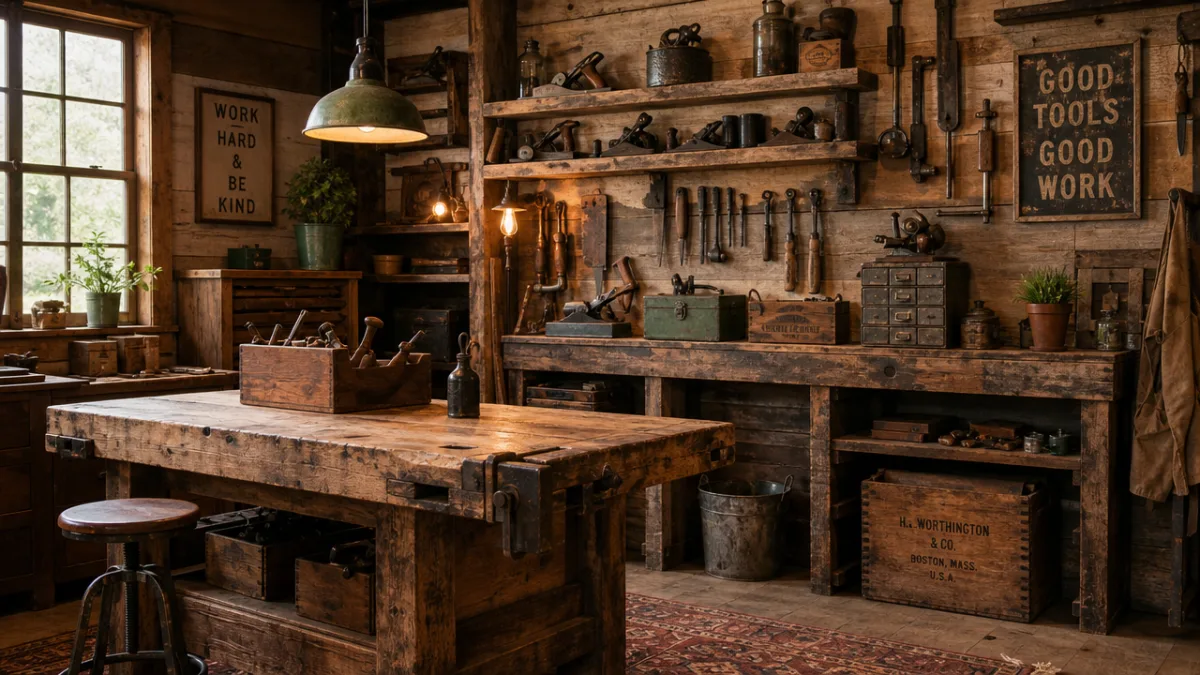
Wooden pallets have practically become the mascot of the upcycling world, and honestly, they’ve earned it. They’re easy to find, surprisingly sturdy, and incredibly versatile. From pallet wood alone you can build garden planters, rustic coffee tables, wall-mounted shelves, headboards, outdoor seating, and even full garden fences. There’s also a warmth and texture to weathered pallet wood that expensive new lumber just can’t replicate. Sand it smooth, stain it, paint it, or leave it raw — it works beautifully across styles from industrial-chic to farmhouse cozy.
Old wooden ladders are another underrated starting point. A solid vintage ladder can become a bathroom towel rack, a living room blanket holder, a quirky bookshelf, or a plant stand tucked into a sunny corner. The great thing is that the ladder’s structure basically does the design work for you — each rung naturally becomes a shelf or hanging point, and the overall shape has a visual appeal that fits a surprisingly wide range of interior styles. A bit of wire brushing to remove any rust, a coat of paint or varnish, and a few added hooks, and you’ve turned something destined for the skip into a genuinely useful and eye-catching piece.
Glass and Bottle Projects: Turning Containers Into Décor
Glass bottles and jars are some of the most enjoyable things to upcycle, partly because they need so little prep work and respond so well to even the simplest techniques. Wine bottles, mason jars, olive jars, old perfume bottles — all of them can become candle holders, vases, pendant lights, terrariums, or storage containers. Glass has this wonderful relationship with light that means even something as simple as a row of candle-filled wine bottles on a windowsill can feel warm and intentional rather than thrown together.
Painting and frosting glass opens up a whole other world of options. Chalk paint sticks well to glass and can be sealed so it lasts, while a can of frosting spray creates a lovely etched look without any specialist skills involved. Painted mason jars are brilliant as bathroom organizers, pencil holders, herb planters, or flower vases. Group a few together in colors that complement each other and they look like a curated set rather than repurposed jars. Wrapping them in twine, ribbon, lace, or decoupage paper adds even more character and lets you customize each one to suit your space.
If you’re willing to invest in a basic glass cutter, the possibilities really multiply. Wine bottles can be scored and separated cleanly to make drinking glasses, tumblers, or decorative bowls. The bottom sections of thick bottles make particularly nice candle holders or succulent planters — the rounded base gives them a naturally stable, finished-looking form. Etching a design into cut glass with an etching cream kit produces results that honestly look professional, the kind of thing you’d spot in a boutique home décor shop. These pieces also make exceptional gifts, because they’re both personal and genuinely beautiful.
Tin Can and Metal Upcycling: Industrial Charm on a Budget
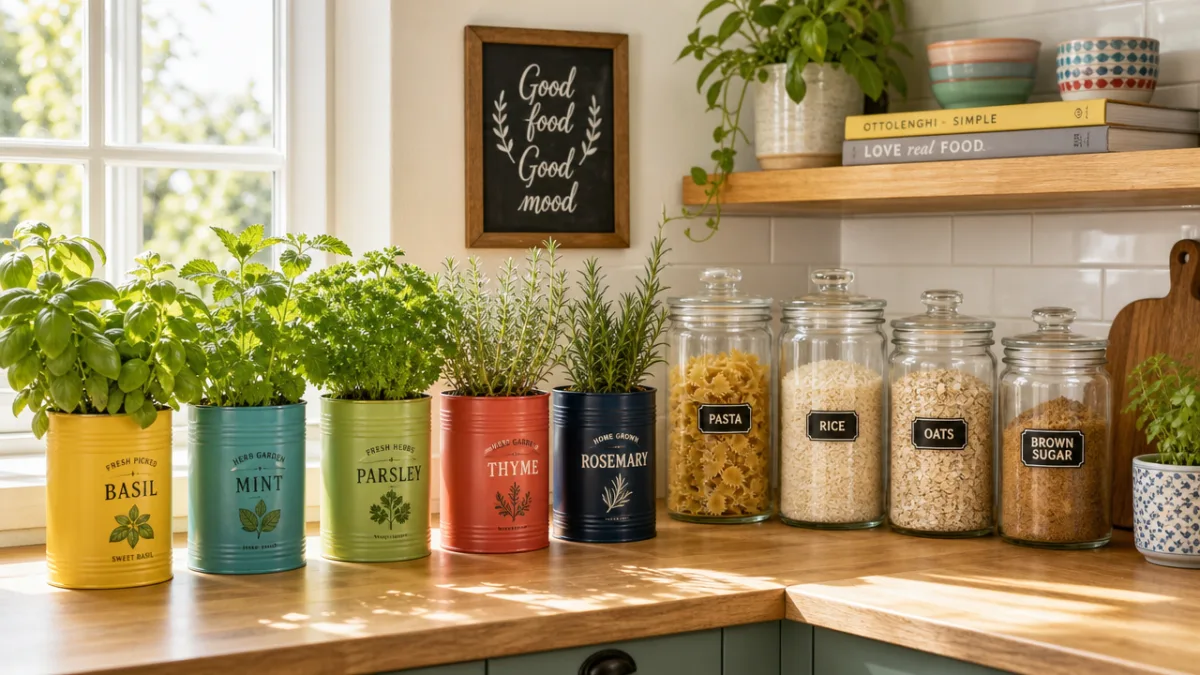
Tin cans are probably the most frequently discarded household item that most people never think twice about, which is a shame because they’re actually really solid upcycling material. Clean and dry them out, and they’re already halfway to becoming something useful. Hammer a pattern of nail holes into the metal, drop a tea light inside, and you’ve got a lantern. Line a few up on a kitchen windowsill as herb planters, use them as pencil holders, or stand a single stem in each one as a casual vase. Paint them in chalk paint and rough them up slightly for a vintage finish, and a row of them outdoors adds real charm to a patio or balcony.
For anyone with a bit more ambition, tin cans can be cut, shaped, and combined into more complex projects. Wind chimes made from cans of different sizes produce a surprisingly pleasant sound and look great hanging from a porch or pergola. Larger tins — the kind used in commercial kitchens or sold as holiday popcorn tins — can be turned into small side tables by fitting them with a plywood or reclaimed wood top. And sometimes the most interesting approach is to skip the paint entirely and embrace the corrugated texture and natural sheen of bare metal, which suits industrial and modern spaces particularly well.
Old colanders, baking tins, and kitchen utensils are worth a second look too. A vintage colander with its ready-made pattern of holes is practically begging to become a hanging pendant light — those holes throw gorgeous patterned shadows across walls and ceilings when there’s a bulb inside. Baking tins make excellent wall-mounted organizers for a garage or craft room. Old cheese graters can become quirky little lanterns or light diffusers. The trick with found metal objects is to lean into what they originally were, so the transformation feels clever rather than arbitrary — like you and the object were in on the joke together.
Textile and Fabric Upcycling: Breathe New Life Into Old Clothes
Old clothes and fabric are one of the most overlooked upcycling resources out there. A pile of worn-out jeans, faded curtains, or outgrown kids’ clothing might seem like a straightforward trip to the donation bin, but with a little thought these textiles can become genuinely useful, beautiful things for your home. Denim is a particularly great material to work with — it’s tough, it’s flexible, and it has that familiar look that works in so many settings. Cut it into strips and weave it into a storage basket, piece it together into a patchwork cushion cover, or use it to make a sturdy protective cover for a journal. Anything made from denim is going to last.
T-shirt yarn has taken off as one of the most popular textile upcycling techniques in recent years, and once you try it, it’s easy to see why. You cut old cotton t-shirts into long, continuous spiraling strips, stretch them slightly so the edges curl inward, and suddenly you have a soft, colorful yarn-like material you can crochet, weave, or use for macramé. People use it to make doorstep mats, bath rugs, storage baskets, wall hangings — all from shirts that would otherwise have ended up in landfill. No specialist equipment needed, and the results are both good-looking and actually functional in daily life.
Fabric scraps too small for most things find their ideal purpose in patchwork and quilting. Even the tiniest interesting remnants can be combined into striking designs for cushion covers, wall hangings, pot holders, or full quilts. The whole point of patchwork is that the visual coherence comes from how you arrange colors and patterns, not from using matching materials — which makes it one of the most forgiving crafts around. And a finished patchwork quilt made from pieces of family clothing carries a kind of emotional weight, a sense of personal history, that nothing you could buy off a shelf ever could.
Garden and Outdoor Upcycling: Creativity Beyond the Back Door
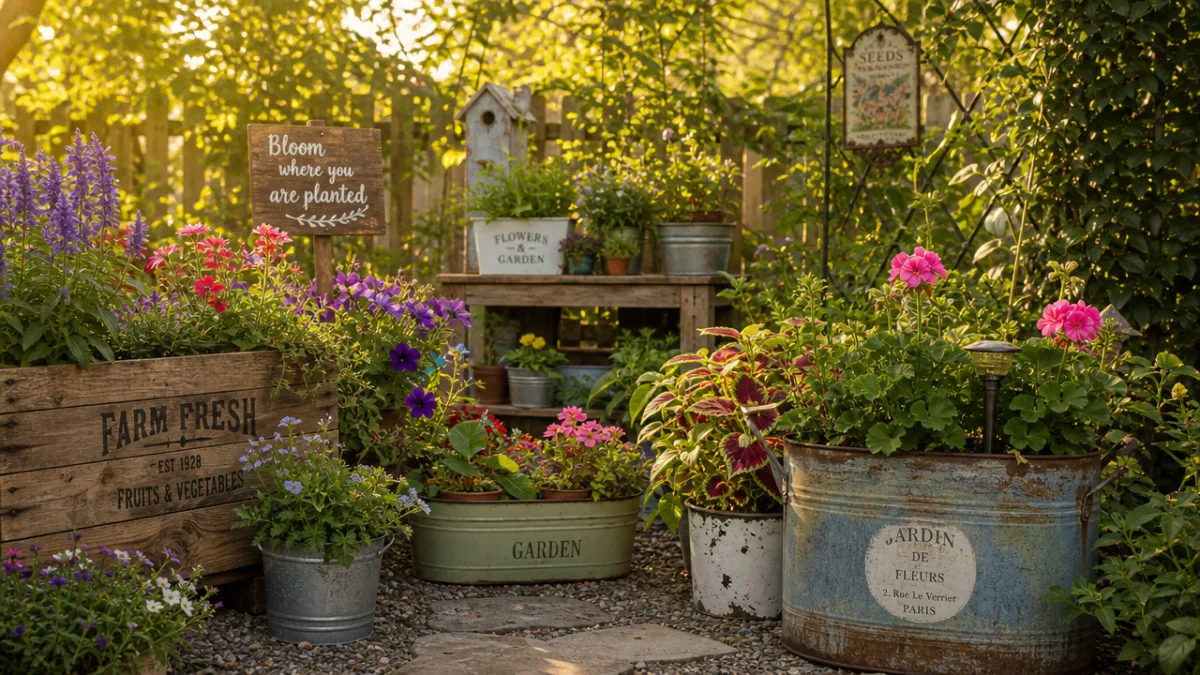
The garden is probably the most forgiving place to experiment with upcycling, because the outdoor environment makes weathering and imperfection feel right at home rather than out of place. Old colanders, rubber boots, bathtubs, wheelbarrows, and even broken crockery can all become planters, and there’s something undeniably charming about unexpected containers paired with lush greenery or bright blooms. A cracked terracotta pot, broken just right and tipped on its side, can become a “spilled” succulent arrangement — a little living sculpture that looks like it took real planning even though it started as something broken.
Wooden items headed for the skip are especially rich with outdoor possibilities. Old window frames mounted on a fence or wall can become a potting station, a backdrop for hanging plants, or a frame for a vertical herb garden. Broken fence panels cut down to size make perfectly good raised vegetable beds. A single wooden door laid flat on supports at a comfortable working height becomes a charming potting bench almost instantly. Even really battered, weathered wood gains something beautiful outdoors over time, as moss and lichen move in and start to blur the line between the man-made object and the garden growing around it.
Water features are the most ambitious category of garden upcycling, but they’re also some of the most spectacular. Old Belfast sinks make superb small ponds or wildlife water features. A cracked ceramic birdbath, sealed up with waterproof sealant, is perfectly serviceable again. Glass bottles arranged neck-down in the soil create a colorful bottle border that catches and scatters sunlight on a summer morning in the most magical way. And broken mosaic tile pieces can become stepping stones, decorative borders, or the surface of a garden table — turning shards that seemed like nothing but a mess into something genuinely enchanting. The garden rewards this kind of thinking more richly than anywhere else in the home.
Getting Started: Practical Tips for Your Upcycling Journey
Starting out can feel a bit overwhelming when there are so many directions you could go. The most useful piece of advice is to start with what you already have rather than hunting for the “perfect” project. Walk through your home, your garage, and your recycling bin with fresh eyes and ask yourself what each thing could become with a little time and creativity. That habit of pausing before you throw something out is really the core skill of upcycling, and it develops surprisingly fast once you start practicing it intentionally.
Having a basic toolkit on hand will make almost every project smoother and more enjoyable. Here are the essentials worth gathering before you dive in, since they’ll serve you across dozens of different projects:
- Chalk paint in a few neutral shades plus one or two accent colors, along with a good quality wax for sealing painted surfaces against wear and moisture.
- A cordless drill with a variety of drill bits for wood, metal, and masonry — this will genuinely be the single most useful tool you own for upcycling projects.
- Sandpaper in multiple grits, from coarse for stripping and shaping to fine for smoothing and preparing surfaces before paint.
- A good selection of brushes for both painting and applying adhesives like decoupage medium or wood glue.
- Strong craft glue, epoxy adhesive for bonding non-porous surfaces, and a hot glue gun for quick fabric and lightweight material work.
- Basic safety gear: gloves, eye protection, and a dust mask for sanding and working with chemicals.
Finding materials is genuinely easier than most beginners expect. Local buy-nothing groups on social media are constantly full of people giving away furniture, fabric, garden items, and all kinds of household goods — often things in great condition that people just don’t have space for. Charity shops and thrift stores offer pre-sorted items at very low prices. In most places it’s perfectly legal to sort through skips and curbside collections in residential neighborhoods, and the quality of what you’ll find there is often surprisingly good. Joining an online upcycling community connects you with experienced crafters who are happy to share sourcing tips, tutorials, and encouragement, and it turns what might feel like a solo hobby into something genuinely social — a creative practice that enriches both your home and, honestly, your day-to-day life.








What do you think?
It is nice to know your opinion. Leave a comment.