










18+ Creative Hand Painted Bookcase Ideas to Transform Your Space
Why Hand Painted Bookcases Are Having a Major Moment
We’re living in a world full of flat-pack furniture and interiors that all start to look the same, which is exactly why hand painted bookcases have become such a big deal. Whether you’ve scored a find at a charity shop or you’re staring down a solid wood piece that’s been in the family for years, a thoughtfully painted finish can completely change the feel of a piece — and honestly, the whole room along with it. The DIY home decor revival has made this more achievable than ever, with tutorials, paint options, and techniques available to anyone willing to get their hands a little colorful.
But what makes a hand painted bookcase special goes deeper than just picking a nice color. It’s about telling a story — turning something you use every day into something that actually reflects who you are. A bookcase painted with botanical motifs, bold geometric shapes, or a beautiful ombre fade becomes a natural focal point that anchors a room and gets people talking. Unlike anything that rolled off a factory line, a hand painted piece has that warmth and slight imperfection that you just can’t fake. It feels human in a way that no digital design tool can replicate.
From confident color blocking to intricate freehand illustrations, the range of what you can do on a bookcase is genuinely impressive. Designers and enthusiastic amateurs have both figured out that a bookcase is the ideal canvas — large enough to make a real visual statement, but contained enough that it doesn’t take over the room. And as open shelving continues to dominate interior trends, the back panel in particular has become a beloved spot for creativity, giving people a gallery-like backdrop for their books and treasured objects.
Essential Supplies and Preparation Tips for Painted Bookcases
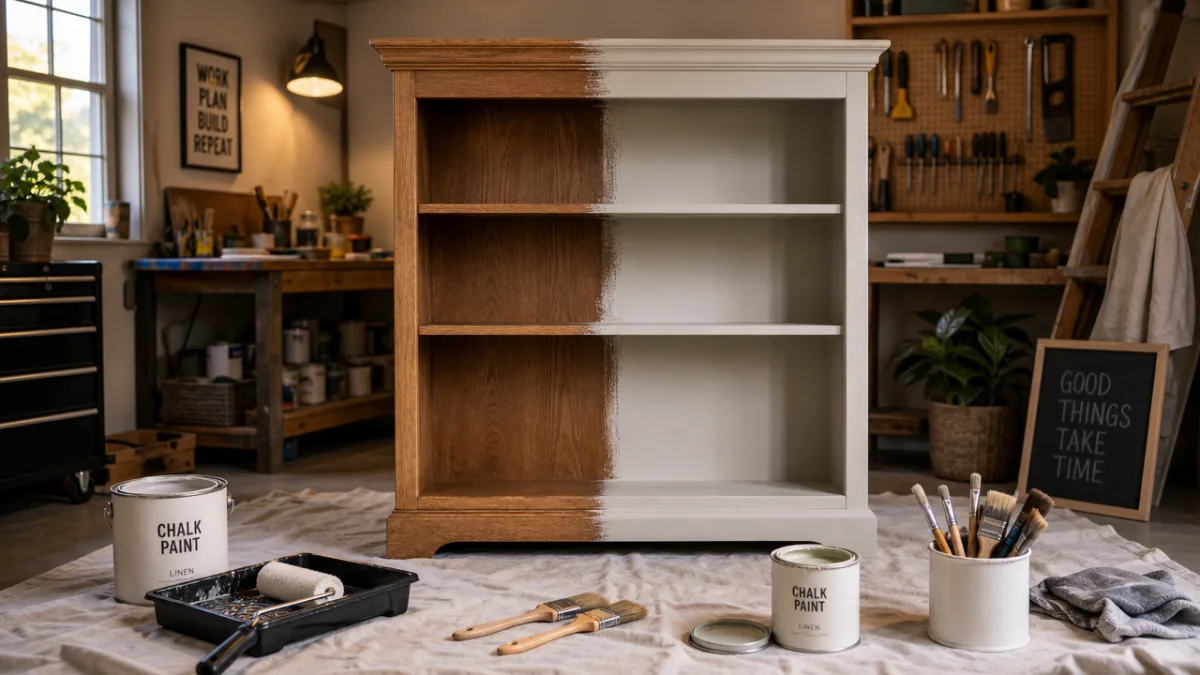
Before you even think about picking up a brush, good preparation is what separates a project that looks polished from one that peels six months later. The most gorgeous color in the world won’t save you if the surface underneath wasn’t properly cleaned, sanded, and primed. Start by taking off any hardware — handles, hinges, all of it — then give the whole piece a thorough clean with a degreaser or sugar soap to get rid of dust, grime, and any old polish. This step is especially important with older or second-hand pieces, which may have years of wax or oil-based product built up on the surface, both of which can seriously interfere with paint adhesion.
Paint choice matters more than people often realize. Chalk paint has become a go-to for bookcase projects because it sticks well, gives a lovely matte finish, and usually doesn’t need much sanding beforehand. That said, if you want something more durable or easier to wipe down — particularly for a piece that gets heavy use — a furniture-grade eggshell or satin paint is worth the investment. Planning to add detailed illustrations or freehand patterns? Layering artist-grade acrylics over a solid base coat will give you the best control and the most vibrant results.
Don’t overlook your tools, either. A range of brush sizes lets you move quickly across large flat panels while still managing tight corners and fine detail work. Foam rollers are brilliant for getting a smooth, streak-free finish on back panels, and fine liner brushes are non-negotiable for any decorative work. Some other supplies worth having ready before you start:
- Painter’s tape for clean geometric lines and color blocking
- Sandpaper in multiple grits (120 and 220) for surface preparation and between-coat sanding
- A good quality primer suited to your chosen topcoat
- Chalk or a pencil for lightly sketching designs before committing with paint
- A clear topcoat sealer or wax to protect the finished surface
- Drop cloths or newspaper to protect your workspace
Stunning Color Concepts for Every Interior Style
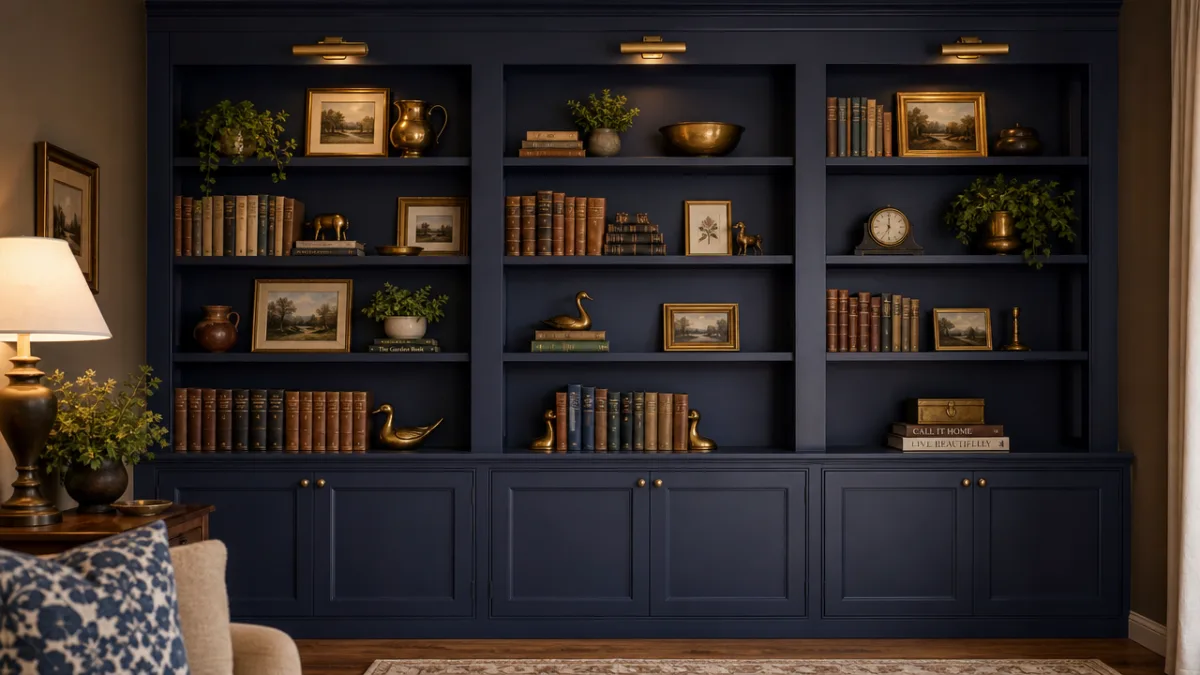
Color choice is probably the single most transformative decision you’ll make for your bookcase — and it should always start with the room you’re working with, not a color you simply love in isolation. If you have a calm, neutral, Scandinavian-leaning space, try painting just the back panels in a deep forest green or inky navy while keeping the frame white or natural wood. The contrast is striking without being aggressive, and it has a way of making everything displayed on the shelves look more considered and intentional. This technique is sometimes called color drenching the interior, and it works beautifully.
Prefer something lighter and softer? A full bookcase in dusty pink, warm cream, or pale sage can work wonders in a bedroom or reading corner where you want things to feel restful rather than dramatic. Pair it with natural linen, wicker baskets, and a few sprigs of dried botanicals and you’ve got something that feels effortlessly put-together without trying too hard. Terracotta and burnt orange are also having a real moment right now, bringing an earthy warmth that plays brilliantly against rattan, jute, and aged brass hardware.
If you’re feeling bolder, there’s real fun to be had using multiple colors on a single bookcase. Color blocking each shelf in a different complementary shade is a playful, high-impact move that suits eclectic or maximalist interiors surprisingly well. Painting the outer frame in a contrasting color to the back panel creates an almost window-like depth that adds genuine architectural interest. A few more ideas worth considering:
- Ombre gradients blending from a pale hue at the top shelf to a deep saturated shade at the bottom
- Alternating shelves in two complementary tones for a rhythmic, graphic effect
- A single dramatic back panel color behind an otherwise natural or white frame
- Metallic accents painted onto edges and inner surfaces for a luxurious finish
Hand Painted Patterns and Artistic Techniques to Try
Once you move beyond solid color and into painted patterns, a bookcase project becomes something closer to actual art. Geometric designs are a great starting point for beginners — you just use painter’s tape to mask off shapes like triangles, chevrons, diamonds, or hexagons, apply the contrasting paint, and peel to reveal a clean, graphic result that looks far more skilled than it actually is. Play with the scale of the shapes and the contrast between colors and you can get anything from a subtle textural effect to a full-on statement piece.
For anyone with a steadier hand and a love of organic shapes, botanical and floral illustrations painted on the back panels can be genuinely breathtaking. Loose, impressionistic leaves and stems in varying greens and whites against a dark background have this lush, immersive quality that feels like a garden brought indoors. What gives it the edge over printed wallpaper or contact paper is exactly the handmade quality — the slight variation, the visible brushwork. Building up layers and letting each one dry before adding detail is the trick to getting real depth and richness.
Marbling is another technique that looks extraordinary once you’ve got the hang of it. A combination of wet paint, a fine feather or small brush, and a loose, swirling motion creates the illusion of veined marble stone across a back panel or shelf surface. And that’s not all — there are plenty of other directions you can take things:
- Stenciling for consistent, repeatable patterns such as damask, Moroccan tiles, or Art Deco fan shapes
- Decoupage combined with paint for a mixed-media textural effect
- Sponge texturing to create a soft, cloudy finish reminiscent of Venetian plaster
- Freehand lettering or typography along shelves or back panels for a literary theme
- Abstract expressionist brushwork for a bold, gallery-worthy aesthetic

Styling Your Hand Painted Bookcase for Maximum Impact
Finishing the paint is only halfway there. How you style and arrange what actually goes on the shelves has just as much influence on the final result. When you’re working with a boldly painted piece — especially one with dark or saturated colors — balance the visual weight by keeping things fairly light and spacious on the shelves themselves. Resist the urge to fill every inch. Instead, group books and objects in clusters of different heights, leaving deliberate gaps so the painted surface can actually be seen and appreciated rather than hidden behind clutter.
What you choose to display should work with the painted palette, not fight against it. A deep jewel-toned back panel looks incredible anchored by warm metallic objects — brass candlesticks, gold-edged frames, copper vessels — that pick up and reflect the richness of the color. Trailing houseplants, small succulents, or a vase of dried pampas grass bring in organic softness and reinforce a botanical painted design in the best possible way. Even your books are part of the composition: grouping them by spine color creates harmonious bands of tone that turn the whole shelf into something visually intentional.
Lighting is the element most people forget about, and it genuinely makes a huge difference. Peel-and-stick LED strip lights along the top inner edge of each shelf cast a warm downward glow that highlights both the painted surface and whatever you’ve arranged in front of it, turning an ordinary bookcase into something that feels almost theatrical at night. Small battery-operated spotlights aimed at a particularly beautiful back panel detail can give the whole thing a museum-quality feel. The combination of soft lighting, thoughtful styling, and a beautifully painted surface is really what creates that hard-to-define quality — a space that feels both carefully designed and genuinely personal.
Budget Considerations and Finding the Perfect Bookcase to Paint
One of the best things about this trend is that it genuinely works at almost any budget. Some of the most impressive finished pieces started life as something pretty rough — a battered flat-pack rescued from someone’s kerb on collection day, a tired heirloom that had seen better days, or a cheap shelving unit that cost next to nothing. The main thing to check before you commit to a piece is structural integrity: are the shelves stable, is the back panel intact, and are there any major areas of damage that can’t be fixed with filler and sandpaper? If the answer is yes, you’ve got yourself a project.
Charity shops, flea markets, estate sales, and second-hand marketplaces are absolutely the places to look for solid wood bookcases at genuinely low prices. Older pieces in particular tend to be made from real wood rather than the MDF and particleboard that dominates modern flat-pack furniture, which means they take paint beautifully and will hold up for years after a makeover. When you’re assessing a second-hand piece, prioritize one with a flat, smooth back panel for the easiest decorative painting surface, and give it a gentle press from the sides to check it’s square and stable with no wobble.
On the paint side, a full bookcase project typically needs between one and two liters of your base color, plus smaller amounts of any accent or decorative colors. Most craft and DIY stores sell sample-sized pots of furniture paint, which are perfect for testing a color on a hidden area before committing — and they’re often just the right amount for detailed decorative work too. For a typical medium-sized bookcase, a rough budget breakdown might look something like this:
- Second-hand bookcase sourced from a charity shop or marketplace: very low cost, often under twenty pounds or dollars
- Primer and base paint in your main color: moderate cost for a quality furniture-grade product
- Decorative paints in accent colors or artist-grade acrylics for pattern work: small quantities required, relatively affordable
- Brushes, rollers, and painter’s tape: a modest one-time investment that will serve multiple future projects
- Protective topcoat or finishing wax: an important final step to ensure durability
Inspiring Ideas to Spark Your Creativity
Sometimes the hardest part of any creative project is simply deciding where to start, and with this many directions available to you, it can feel genuinely paralyzing. A helpful trick is to start with the room rather than the bookcase, noticing what colors, patterns, or motifs already exist in the space and thinking about how the bookcase could echo or complement them. A room with botanical wallpaper, for instance, might inspire a bookcase painted in a coordinating deep green with hand-painted leaf details that tie the two together and make the whole room feel intentional rather than accidental.
Looking to art movements, architecture, or global design traditions is another route to surprisingly original results. A bookcase that nods to Bauhaus design — bold geometric blocks in black, white, red, and yellow — would make a powerful statement in a home office or study. A Japanese-inspired piece in a pale, muted palette with delicate brushwork evoking cherry blossoms or flowing water would suit a calm, meditative bedroom perfectly. Moroccan-inspired geometric tile patterns in terracotta, cobalt, and gold could turn a bookcase into something that feels like it belongs in an entirely different world.
It’s also worth reminding yourself that a hand painted bookcase doesn’t have to be permanent. Chalk and furniture paints can be painted over without too much fuss, which means you’re free to experiment, change your mind, and let the piece evolve as your tastes do. A lot of seasoned furniture painters talk about their pieces as ongoing creative projects that shift with the seasons or with new sources of inspiration. Once you take that pressure off yourself, the whole thing becomes less daunting and a lot more fun — and that playfulness and genuine enjoyment tends to come through in the finished piece in a way that’s impossible to manufacture.








What do you think?
It is nice to know your opinion. Leave a comment.