










16 Surprising Ways to Recycle Old Toys Into Something Awesome
Why Repurposing Old Toys Is a Brilliant Idea
If you have kids, you know how it goes — toys multiply, get outgrown, and eventually end up forgotten in a bin or buried in the back of a closet. Instead of tossing them in the trash and adding to an already serious plastic waste problem, what if you turned them into something completely new? It saves money, sparks creativity, and honestly, it’s just a lot more satisfying than hauling bags to the curb.
The environmental side of this is real and worth paying attention to. Millions of plastic toys get thrown away every year, and because so many are made from mixed materials, they can’t just go in your recycling bin. When you find a creative second life for them instead, you’re actively cutting down on plastic pollution — and ending up with something unique that you couldn’t buy in any store. Good for your budget, good for your home, and good for the planet.
There’s also something genuinely meaningful about the sentimental angle here. A lot of these toys carry real memories — a favorite action figure, a set of building blocks, a plastic tea set that hosted about a thousand imaginary parties. Turning them into something functional or decorative feels a lot better than just throwing that history away. The ideas ahead cover everything from quick, beginner-friendly crafts to more involved DIY projects, so no matter your skill level, there’s something here worth trying.
Turning Old Toys Into Stunning Home Décor
One of the most popular ways to give old toys a second life is to work them right into your home décor — and the results can be genuinely impressive. Grab a can of spray paint and suddenly a pile of mismatched plastic animals, dinosaurs, or little figures becomes something totally cohesive and stylish. Painting them all in the same metallic gold or matte white instantly takes them from “random toy box castoffs” to a polished shelf display that looks completely intentional. They’re great on bookshelves, mantles, or side tables.
Shadow boxes are another fantastic option if you want something that feels more like actual art. Arrange a mix of tiny figures, toy soldiers, or small figurines inside a deep frame against a bold background, and you’ve got wall art that also happens to be a great conversation starter. You can group them by color, by era, by character type — whatever feels right to you. These work especially well in kids’ rooms, home offices, or any space that leans a little eclectic and personality-forward.
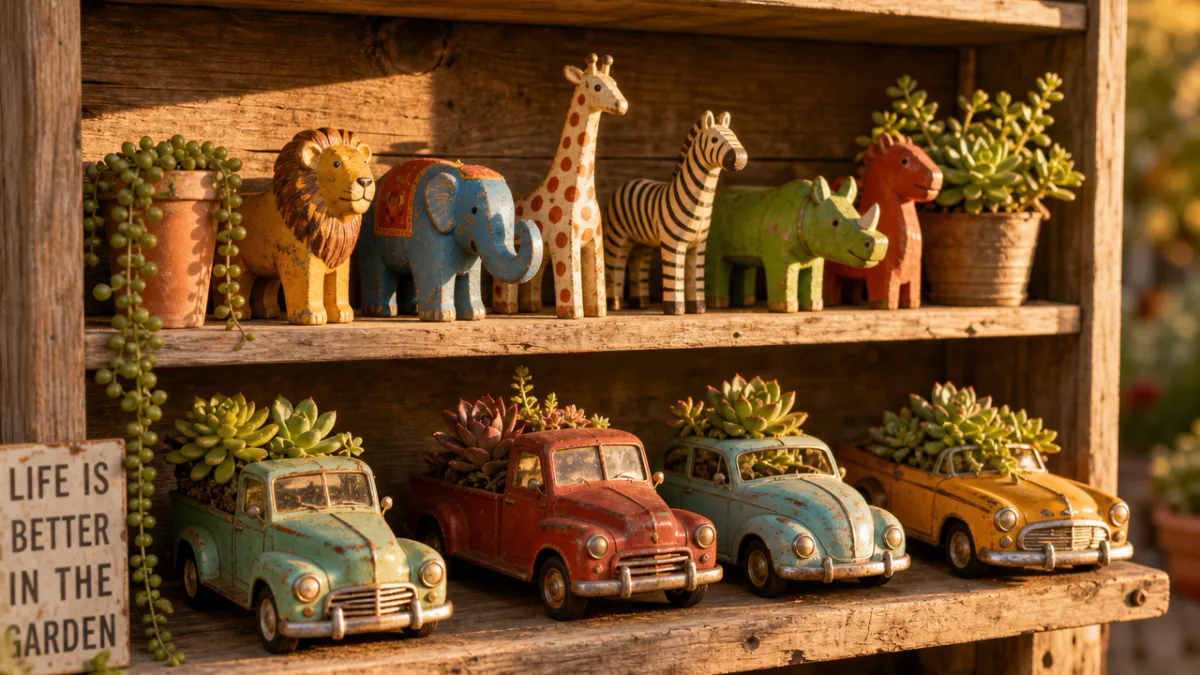
Old toy cars, trains, and trucks make surprisingly charming little planters for succulents and cacti. Hollow out the interior if you need to, toss in some drainage material and soil, and tuck a tiny plant into the truck bed or train car. Line a few up on a windowsill and they look genuinely adorable — not tacky, just playful in the best way. They also make a really sweet personalized gift for anyone who loves plants and has a sense of humor about their décor.
Creative Storage Solutions Using Old Toy Parts
Storage might be the most practically satisfying category of the bunch. Large plastic building sets, toy bins, and even old ride-on vehicles can be cleaned up and put back to work as organizers all around your house. That big, colorful dump truck that used to haul toy blocks across the living room floor? It can just as easily haul craft supplies, library books, or rolled-up magazines. The same bright colors that made these things appealing to kids make them eye-catching as functional storage pieces, too.
Toy chests and kids’ storage units can also transition into new roles as children grow up. A solid wooden toy chest is really just a blanket chest or a storage bench in disguise, and with a fresh coat of paint and some new hardware, it fits right in a teenage bedroom, mudroom, or living room. A lot of parents are genuinely surprised by how well-made these pieces are — they were built to survive years of rough handling, which means they hold up beautifully for long-term repurposing.
Individual toy pieces can pull their weight as small-scale organizers too. The compartmentalized trays from board games are perfect for sorting desk drawers, jewelry, sewing notions, or small hardware like screws and nails. Hollow building bricks can hold paper clips, USB drives, or other small desk items. Even the cardboard inserts from board game boxes — often designed with surprisingly clever divider systems — work well as drawer organizers in the kitchen, bathroom, or home office.
- Use large toy bins as laundry sorters or craft supply containers in a studio or hobby room.
- Repurpose compartmentalized game trays as jewelry organizers, sorting tiny earrings, rings, and bracelets neatly.
- Transform a vintage toy chest into a stylish entryway bench with hidden blanket or shoe storage beneath the lid.
- Stack interlocking building bricks to create a modular desk organizer that holds pens, scissors, and small tools.
- Use toy trucks or wagons as mobile storage for garden tools, cleaning supplies, or children’s outdoor toys.
Toy-Based Garden and Outdoor Projects
The garden might be the most forgiving place to repurpose old toys, because a little weathering and imperfection only add to the charm. Toys that have gone sun-faded or picked up a few cracks over the years tend to look surprisingly at home tucked into a garden bed, nestled beside a flower pot, or peeking out from behind some shrubs. That worn, weathered look can actually give them a kind of vintage quality that works really well outdoors.
Large plastic vehicles — dump trucks, wagons, old toddler ride-ons — make wonderfully roomy and whimsical garden planters. Fill them with potting soil and plant trailing flowers, herbs, or ornamental grasses, and you’ve got a display that pretty much everyone who walks by will smile at. These toys were built to be durable, so they often hold up well outside. Just drill a few drainage holes in the bottom so water doesn’t pool, and you’re good to go. Painted or left to weather naturally, they add a ton of personality to a garden.
Old toys can also work as plant markers in the garden. Plastic dinosaurs or animals stuck into the soil beside vegetable rows or herb beds are charming, easy to spot, and — bonus — they get kids interested in gardening who might otherwise not care at all. Write the plant name on with chalk or paint, and suddenly your vegetable patch has a whole lot more personality. This works especially well in family gardens or school garden plots where getting kids engaged is half the battle.
Beyond planters and markers, toy parts can become garden art. Plastic action figures set in concrete make a quirky garden border. Toy wheels, gears, and mechanical bits can be arranged into a kinetic sculpture that spins in the breeze. Even a bunch of colorful toy balls hung in a net from a tree branch creates a playful, vibrant mobile that adds movement and color all season long.
Educational and Creative Projects for Families
Repurposing old toys is also just a genuinely great excuse to do something hands-on with your kids. When children help transform their old things into something new and useful, it gives them real ownership over the creative process — and it introduces them to sustainability in a way that actually sticks, because they can see and touch the result. Kids who go through this kind of project tend to become more thoughtful about what they own and what they throw away, which is a pretty valuable lesson.
One particularly fun family project is making a mosaic from broken or worn-out plastic toy parts. Small, brightly colored pieces arranged and glued onto a backing board create a colorful, tactile panel that you can actually display in your home. It builds fine motor skills, gets kids thinking about color and composition, and the finished piece is something the whole family can feel proud of. Older kids can handle more complex cutting and planning, while younger ones are perfectly happy sorting pieces by color and placing them where they want.
Toy parts are also great raw material for building your own board games, puzzles, or imaginative play sets. Action figures, game pieces, dice, and spinner components from broken or incomplete games can combine into something totally new, with homemade rules and hand-drawn boards. It gets kids thinking creatively, working through math when they design scoring systems, and collaborating when the whole family play-tests it together. The result is a game with your family’s own history baked right into it — which makes it a lot more meaningful than anything off a store shelf.
- Sort old toy parts by color, material, and size before beginning any project to make the creative process smoother and more efficient.
- Use child-safe adhesives and non-toxic paints whenever children are involved in the repurposing process to ensure everyone’s safety.
- Document the transformation with photographs so children can look back proudly on their creative contributions and the journey from old toy to new treasure.
- Visit thrift stores and charity shops to supplement your own collection of old toys with interesting finds that expand your creative possibilities.
- Share your finished projects on community craft platforms or local social media groups to inspire others and build a community around sustainable creativity.
Repurposing Toys for Art, Jewelry, and Wearable Crafts
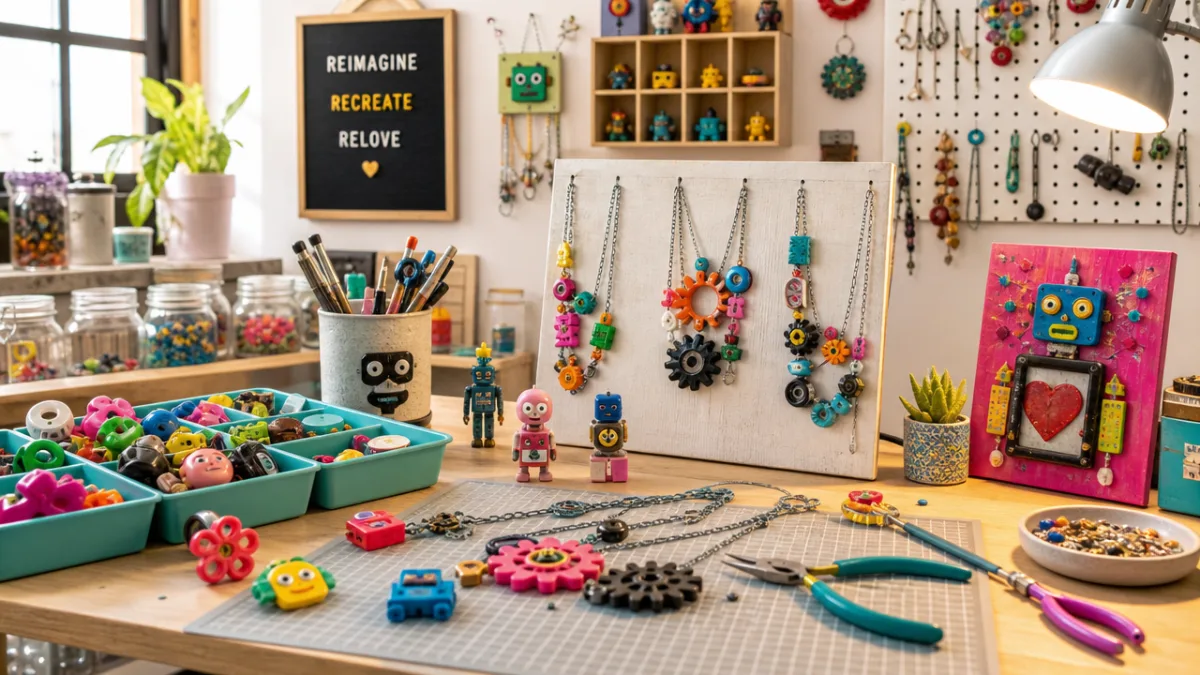
The wearable art world has fully embraced old toys as material, and honestly, it makes total sense. Small plastic figures, toy charms, and game pieces have that bold, graphic quality that translates perfectly into statement jewelry. A tiny plastic dinosaur painted in metallic gold and fitted with an earring back? Instant conversation piece, completely unique, and surprisingly wearable. Small figures can also become novelty brooches with a simple pin back, or pendants on a chain that people will actually stop and ask you about.
Toys work great for functional accessories beyond jewelry too — keychains, bag charms, hair accessories. A small rubber or plastic figure on a keychain ring becomes an instantly personalized accessory you can spot immediately in a crowded bag. Toy parts with interesting shapes, like gears, wheels, or geometric building pieces, can be worked into hair clips, headbands, or decorative pins. The best part is that these things are genuinely one of a kind — they’ve got the nostalgia of childhood and the charm of something handmade in a way that nothing mass-produced can replicate.
For anyone with more ambitious artistic goals, old toys are incredible material for assemblage sculpture. Assemblage has a rich history in fine art — it’s the practice of creating three-dimensional works from found and repurposed objects — and toys are particularly powerful material for it, given their vivid colors, recognizable forms, and the cultural weight they carry. Artists arrange toy parts and figurines into layered compositions that can be funny, political, deeply nostalgic, or completely abstract. These pieces work as freestanding sculptures or mounted in shadow boxes as wall art, turning the everyday stuff of childhood into something that genuinely makes people think.
Donating, Swapping, and Community-Based Toy Repurposing
Not every old toy needs to become a craft project to find a meaningful second life. Sometimes the simplest option is also the best one: donate it. Gently used toys given to families, children’s shelters, or community organizations go directly to kids who will actually play with them — which is about as good a second life as a toy can have. Before you commit to any DIY project, it’s worth asking honestly whether a toy might do more good in a child’s hands than in your shadow box.
Toy swap events — organized through schools, neighborhood groups, or community centers — are another great option that’s been growing in popularity as people become more aware of plastic waste. The idea is simple: bring toys your kids have outgrown, take home things other families no longer need. You walk away with something new without spending money, and nothing goes to landfill. There’s also a nice social side to these events — they tend to bring together families who share the same values around sustainability and thoughtful consumption.
Community art and craft programs, especially those focused on kids, are often thrilled to receive donations of old toys and toy parts as creative raw materials. Schools, after-school programs, maker spaces, and community centers frequently work with tight budgets, and a box of old toys can go a long way. Directing your unwanted stuff toward those programs means you’re supporting creative education, cutting down on waste, and helping build the kind of community infrastructure that gives young people real skills and a sense of belonging. It’s one of the most generous things you can do with an old toy — and it costs you nothing but a trip to drop it off.








What do you think?
It is nice to know your opinion. Leave a comment.