










10 Easy DIY Dog Toys You Can Make in Just 10 Minutes
Why Making Your Own Dog Toys Is Worth Every Minute
If you’ve ever spent good money on a dog toy only to watch your pup walk right past it and start chewing on an empty water bottle, you already get it: dogs couldn’t care less about price tags. What actually gets them excited is texture, smell, something interesting to interact with. Homemade toys speak directly to those instincts — and the best part is you can probably make them right now with stuff you already have lying around the house.
The cost savings are nice, obviously, but the real win is customization. You know your dog better than any toy company ever will. You know if they’re a destroyer who demolishes anything new in thirty seconds, or the type who carries a favorite toy around gently for months. You know if they’re obsessed with tug, or if fetch is their whole personality. When you make the toy yourself, you get to build exactly what your dog actually wants — the right size, the right material, the right level of toughness.
There’s also something genuinely fun about making something with your hands and then watching your dog lose their mind over it. A braided fleece tug toy that took you eight minutes and cost nothing is somehow more satisfying than anything you’d pull off a pet store shelf. These projects are also great to do with kids — it’s a sneaky way to get them involved in pet care while teaching a little creativity along the way. No special skills needed, no craft store run required. Let’s get into it.
Gathering Your Materials: What You Probably Already Own
The material list for these toys basically reads like a tour of your recycling bin and junk drawer. Old T-shirts are probably the most versatile thing you can use — they’re soft, durable, easy to cut into strips, and most of us have a pile of worn-out ones we’re not sure what to do with. Fleece is another great option, and since it doesn’t fray when you cut it, you can skip any kind of hemming and just get straight to the fun part.
Beyond that, you’ll want to keep an eye out for tennis balls, cotton rope, old socks, empty plastic bottles, cardboard tubes from paper towels or toilet paper rolls, and a few rubber bands. A pair of scissors and about ten minutes is genuinely all you need to make any toy on this list. For the puzzle-style options, a little peanut butter or a handful of kibble can transform a simple household object into something that keeps your dog occupied way longer than you’d expect.
One quick word on safety before you dive in: always keep an eye on your dog with any new toy — homemade or bought — until you know how they handle it. If your dog is the kind of aggressive chewer who breaks things down and swallows the pieces, skip anything made from thin plastic bottles or loosely tied fabric and stick with tightly braided options. A little common sense here goes a long way, and the whole point is for your dog to have fun, not end up at the vet.
The Classic Braided Fleece Tug Toy
This one is the starter project that turns people into DIY dog toy converts. Once you’ve made it, you’ll genuinely wonder why you ever paid for a tug toy. Cut three strips of fleece about two inches wide and at least twenty-four inches long — the length really does matter here, because longer strips mean more braid and a sturdier finished toy. Knot all three together tightly at one end, braid them all the way down as firmly as you can, then finish with another tight knot at the bottom.
What you end up with is a dense, flexible rope that most dogs absolutely go nuts for. Fleece has just the right amount of give to make tugging feel satisfying, but it’s tough enough that it won’t fall apart in the first session. It’s also soft enough to be gentle on puppies who are still teething or dogs with more sensitive mouths. Cut everything from one old shirt for a single-color toy, or grab three different shirts and braid a colorful version that honestly looks pretty polished for something that cost you nothing.
If you want to level it up, try braiding six strips instead of three, split into two groups and interwoven for a thicker, beefier toy. You can also braid a tennis ball into the middle before you tie off the bottom — suddenly you’ve got a tug-and-fetch hybrid that dogs with a mix of play styles find endlessly entertaining. The added bulk also makes it easier to throw with a bit of accuracy, which is a nice bonus for you.
Sock and Tennis Ball Toys: Simple But Incredibly Effective
If braiding feels like too much right now, this is your toy. It might be the simplest thing on this entire list, and it works embarrassingly well. Drop a tennis ball into the toe of a long sock — tube socks and knee-highs are perfect — and tie a knot in the sock just above the ball. Done. Seriously, that’s the whole project. Your dog now has a toy that bounces, swings, and has satisfying fabric to chew and tug on, all in one.
The knot above the ball doubles as a handle for you during tug, and it makes the toy easy to throw in a looping arc that dogs find satisfying to track and catch. The sock also gives the ball a little grip, which helps dogs actually pick it up off hard floors without the frustrating skidding-around problem. Got a sock with a hole in it? Even better — it’s already broken in, the stretch makes it easier to tie off, and your dog will love having something that smells like you.
For a more involved version, layer two or three socks over the same tennis ball, each knotted at a different spot along the length. You get multiple textures and a lumpy, interesting shape that gives serious chewers more to work with before they get through to the ball. You can also tuck a few treats or a smear of peanut butter inside the sock before knotting it up, which turns a simple toss toy into a nose-and-reward puzzle your dog will be way more invested in.
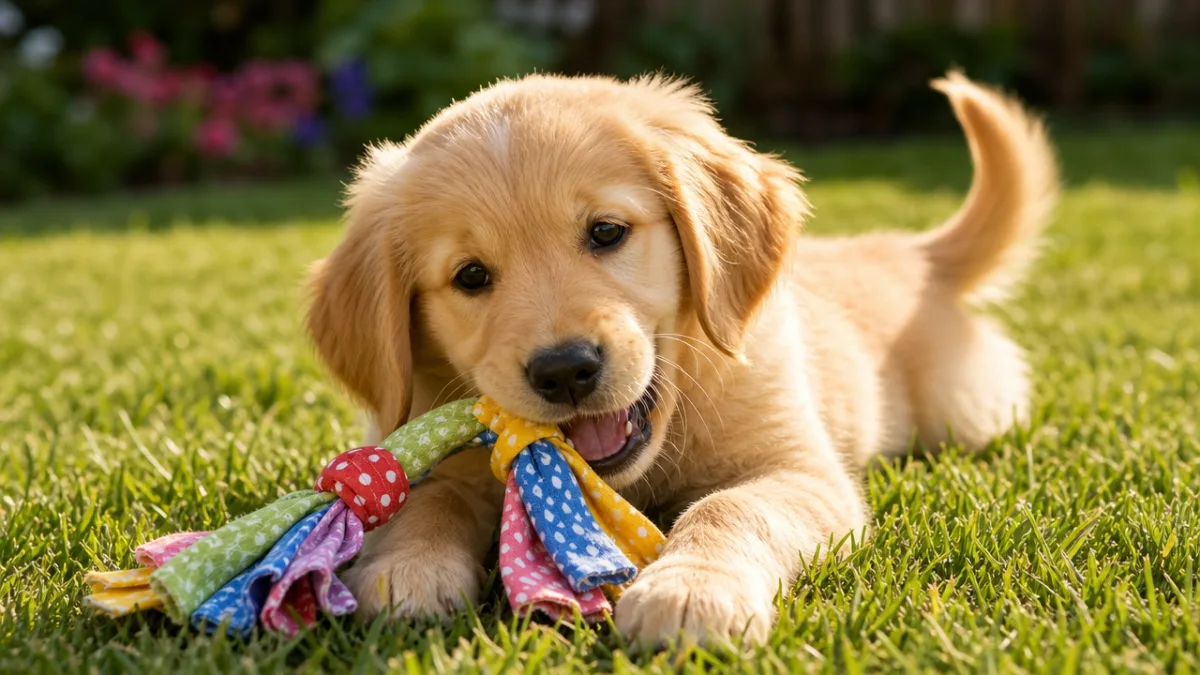
Puzzle and Enrichment Toys: Feed Their Brain, Not Just Their Energy
Physical exercise matters, but mental stimulation is just as important for dogs and honestly gets overlooked a lot. A dog that gets a good brain workout tends to be calmer and less destructive, because they’re not sitting around bored with too much pent-up energy looking for an outlet. Puzzle toys are great for this, and the homemade versions work just as well as the fancy plastic ones from pet boutiques. The easiest one to start with is the muffin tin puzzle: drop some treats or kibble into the cups of a regular muffin tin and cover each cup with a tennis ball. Your dog has to figure out how to move the balls to get to the food. Simple, cheap, and very effective.
The snuffle mat takes a little more time but pays off for months. Cut fleece into strips about an inch wide and six to eight inches long, then tie them through the holes of a rubber sink mat or a piece of pegboard until the whole surface is covered in fluffy, shaggy knots. Scatter kibble or treats in there and watch your dog go to work. They’ll use their nose to sniff out every last piece, which engages their natural foraging instincts in a way that most dogs find deeply satisfying. Fifteen to twenty minutes of snuffle mat time can leave a dog as tired as a solid walk.
For something you can throw together in about three minutes, try the cardboard tube puzzle. Fold the ends of a few toilet paper or paper towel rolls shut, tuck some treats inside each one before closing them up, and stand them upright in a shoebox or small cardboard tray. Let your dog figure out how to get into them. Some dogs will nose them out methodically, others will go at them with both paws. Either way it’s hilarious to watch, and rotating the treats you use keeps your dog trying different approaches each time instead of just falling back on the same trick.
Knotted Rope Toys and Water Bottle Crinkle Toys
Natural cotton rope is one of the best toy materials out there for dogs, and a basic knotted rope toy is something you can make in under ten minutes flat. Cut a length of rope — anywhere from eighteen to thirty inches depending on your dog’s size — and tie big, firm overhand knots at several spots along the length. The bumpy, uneven texture that creates is something most dogs can’t resist, and the knots give them different grip points for chewing and tugging. Finish with a large loop knot at each end so you’ve got handles for tug games.
The water bottle crinkle toy is another near-instant project that costs basically nothing and gets a wild reaction from most dogs. Slip an empty plastic bottle inside a long sock or a sleeve of fabric cut from an old T-shirt, tie off both ends, and you’re done. The crinkling, crackling sound when they bite down taps into their prey drive in a playful way, and the soft outer fabric keeps it gentle on their gums while still letting them feel the satisfying give of the bottle inside. Once your dog has fully collapsed the bottle and the crinkle noise is gone, just swap in a fresh one — instant toy revival.
If you want to build something with a few different play options in one, thread a length of rope through the center of a tennis ball and tie big knots on both sides to keep the ball from sliding around. You get the texture and give of the rope on either side, plus the bounce and chewability of the ball in the middle. Dogs who cycle through tugging, chewing, and fetching in the same play session will keep coming back to a toy like this, and since it’s so quick and cheap to make, you can easily keep a few on rotation to keep things from getting stale.
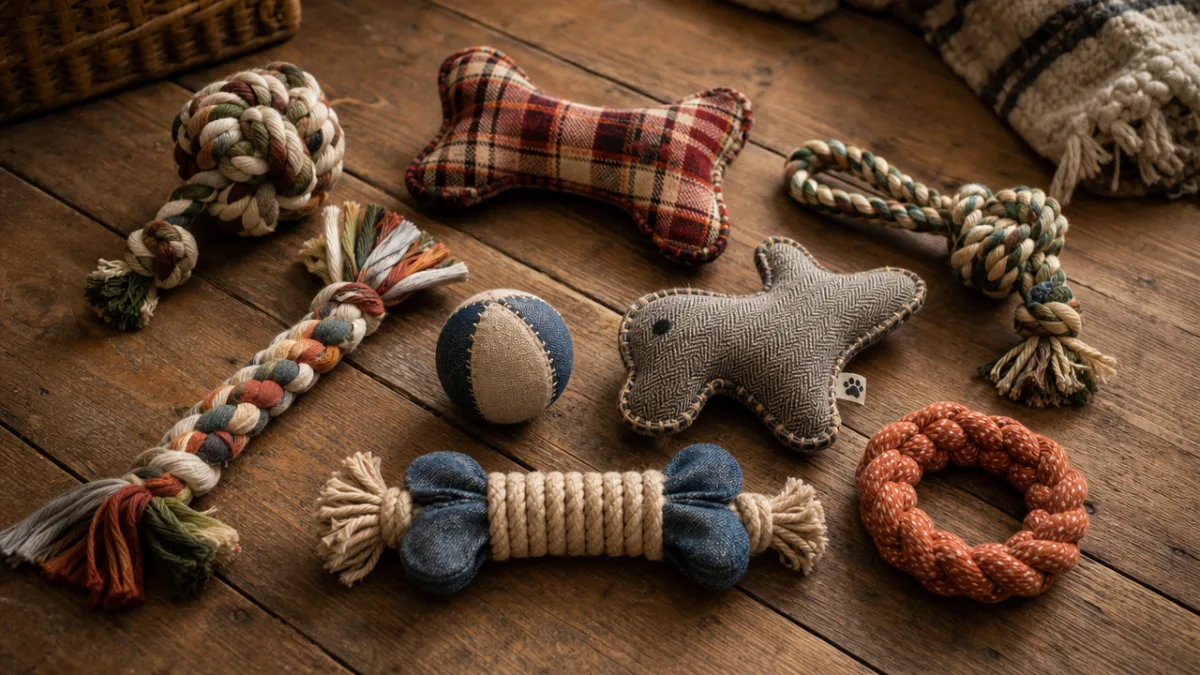
Tips for Making Toys Last Longer and Keeping Playtime Safe
How long a toy lasts has a lot to do with how it’s used and looked after. For fabric toys, tossing them in the washing machine on a gentle cycle every week or two keeps them fresh and clears out the bacteria that builds up from saliva. Rope toys can go in the wash too, but let them air dry completely before giving them back to your dog — you don’t want mold growing inside all those thick fibers. A clean, fresh-smelling toy is also more appealing to your dog, so it’s a win on both ends.
Rotating toys is probably the single most effective way to keep your dog interested in a small collection of things. Instead of leaving every toy out all the time, keep two or three available and swap different ones in every few days. Dogs get genuinely excited when a toy they haven’t seen in a while comes back out — almost like it’s brand new. It also makes it easy to notice which toys your dog actually loves versus which ones have been ignored, so you can retire or reinvent the ones that aren’t getting any attention.
And before each play session, give homemade toys a quick once-over. Loose threads, split seams, or chunks of material that have been chewed free should get dealt with right away — retie it, reinforce it, or just retire it and make a new one. A new toy takes ten minutes, which is a much better trade-off than a vet visit. The whole point of this is to build a little rotation of fun, safe, enriching toys that keep your dog happy and your wallet intact — and with any of the options here, that’s genuinely very easy to do.








What do you think?
It is nice to know your opinion. Leave a comment.