










Easy Hand Crafts to Brighten Your Day
The Joy of Making Things by Hand
There’s something about making something with your own hands that just feels good in a way that’s hard to explain. Hand crafts have been woven into human culture for thousands of years — bringing people together, giving individuals a sense of purpose, and offering a creative outlet that’s genuinely their own. In a world that’s constantly buzzing with notifications and screen time, sitting down to actually make something physical is a surprisingly powerful antidote.
Whether you’ve been crafting for years or the last time you picked up scissors was to hack through some gift wrap, easy hand crafts are genuinely accessible to almost anyone. The best beginner projects don’t ask much of you — minimal tools, cheap materials, and zero prior experience required. A little patience and a willingness to try things out is really all you need to end up with something that feels personal and, honestly, pretty impressive.
And the benefits go well beyond whatever you end up making. Research in occupational therapy and positive psychology has shown pretty consistently that repetitive hand activities — think knitting, painting, weaving — can reduce stress, sharpen focus, and lift your mood. It’s a bit like meditation, except at the end you have something beautiful to show for it rather than just a calmer nervous system.
Getting Started: Tools and Materials You Already Have
A lot of people assume you need a dedicated craft room and a sizable budget before you can get started. You really don’t. Some of the most satisfying projects come together entirely from stuff that’s already floating around your house. Take a quick look through your kitchen drawers, bathroom cabinets, and that one junk drawer we all have — you might be surprised by what’s in there waiting to be turned into something.
Old magazines and newspapers are perfect for decoupage and paper crafts. Glass jars become painted vases or lanterns. Rubber bands and paint can transform a plain t-shirt into tie-dye. Cardboard tubes from paper towel rolls make surprisingly good sculptural materials. And buttons, ribbons, and fabric scraps from old sewing projects? All fair game. Even a handful of dried leaves or pressed flowers picked up on a walk can be the start of something genuinely beautiful.
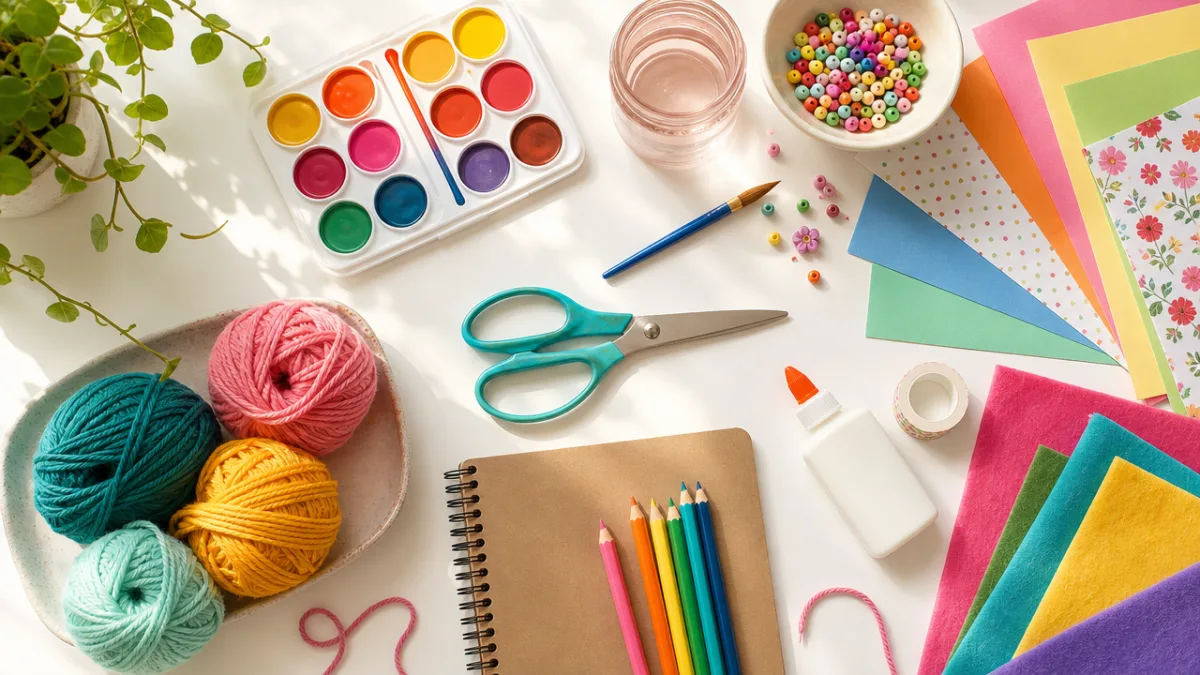
As for tools, the list is refreshingly short. A good pair of scissors, a hot glue gun (seriously one of the most useful things you can own), some basic acrylic paints and brushes, white craft glue, and a ruler will get you through the vast majority of beginner projects. You can always add more to your toolkit as you figure out what kinds of crafts you actually love — but there’s no reason to spend a lot before you even know what excites you.
- Scissors (ideally a separate pair for fabric and paper)
- Hot glue gun and extra glue sticks
- Acrylic paints in primary colors plus white and black
- Paintbrushes in a variety of sizes
- Craft wire and floral wire for three-dimensional projects
- Washi tape in various patterns for quick decorative accents
- A self-healing cutting mat to protect your work surface
Paper Crafts: Simple, Beautiful, and Endlessly Versatile
Paper might just be the most democratic craft material there is. It’s cheap, it’s everywhere, it comes in endless colors and textures, and you can turn it into a truly astonishing range of things. From delicate origami cranes to bold paper-cut wall art, what you can do with a single flat sheet is kind of remarkable. Paper crafts are also wonderfully low-stakes — if something goes wrong, starting over costs you pennies and a few minutes.
Decoupage is one of the most popular entry points into paper crafting, and for good reason. The basic idea is simple: you layer cut or torn pieces of paper onto a surface, then seal everything with a varnish or glue mixture. Old glass bottles, wooden frames, ceramic pots, even pieces of furniture can be completely transformed using nothing more than torn magazine pages, craft glue, and a brush. Depending on the papers you choose and the surface you work on, the results can look rustic and eclectic or clean and graphic — it’s really up to you.
Paper quilling is another one worth trying. All you need are strips of paper, a quilling tool or a toothpick, and some glue. You roll, coil, and shape thin strips into patterns, and what you end up with can be genuinely intricate — greeting cards, framed artwork, even small three-dimensional sculptures. The finished pieces often look like they required a lot more skill than they did, which makes quilling one of those crafts that delivers an outsized sense of accomplishment for a relatively short learning curve.
Easy Paper Craft Ideas to Try This Weekend
If you want something to dive into right now, paper flowers are a fantastic place to start. Tissue paper, crepe paper, or even coffee filters can be layered, gathered in the center, and shaped into blooms that look surprisingly realistic from a few feet away. Each flower takes about fifteen minutes, and when you’re done you can use them to decorate gifts, string them into garlands, or fill a vase with something that never needs water.
Origami is another one that’s hard to beat. It’s the traditional Japanese art of paper folding, it ranges from beginner-friendly cranes to jaw-dropping modular sculptures, and it requires exactly one thing: a square piece of paper. That’s it. No glue, no scissors, no supplies to buy. There are countless free tutorials online for every skill level, and there’s something genuinely meditative about the focus required to get a fold just right.
Fabric and Fiber Arts: Cozy Crafts with Lasting Results
Fabric and fiber crafts hold a special place in the crafting world because what you make is actually useful. Knit a scarf, sew a tote bag, crochet a dishcloth — and you end up with something you wear, carry, or use every day rather than something that just sits on a shelf. That practical dimension makes the whole process feel even more worthwhile, and it means handmade fiber pieces are genuinely some of the most thoughtful gifts you can give someone.
If you’ve never sewn a stitch in your life, no-sew fabric projects are a perfect gateway. Fabric glue, iron-on hemming tape, and basic knotting techniques let you make cushion covers, tote bags, bandanas, and simple garments without touching a needle. Tie-dye is another brilliant no-sew option that’s had a huge cultural comeback in recent years — all you need are rubber bands, dye, and some plastic wrap to turn a plain white t-shirt into a one-of-a-kind piece of wearable art.
Macramé has also made a serious comeback, and honestly it deserves the attention. By working with basic square knots and spiral half-hitch knots, you can create wall hangings, plant hangers, and table runners using natural cotton rope — no prior experience needed. The finished pieces have a warm, bohemian look that works in a wide range of spaces, and the rhythmic, repetitive nature of the knotting is genuinely relaxing in a way that’s hard to describe until you’ve tried it.
A Beginner’s Guide to Simple Sewing Projects
If you do want to try actual sewing, start with a sachet bag. It’s just two small squares of fabric, a needle, thread, and some dried lavender or potpourri for the filling. The running stitch you use to sew the sides together is the most basic stitch in all of sewing, and it takes about five minutes to get the hang of. The finished bag is lovely, it smells wonderful, and it makes a genuinely sweet handmade gift.
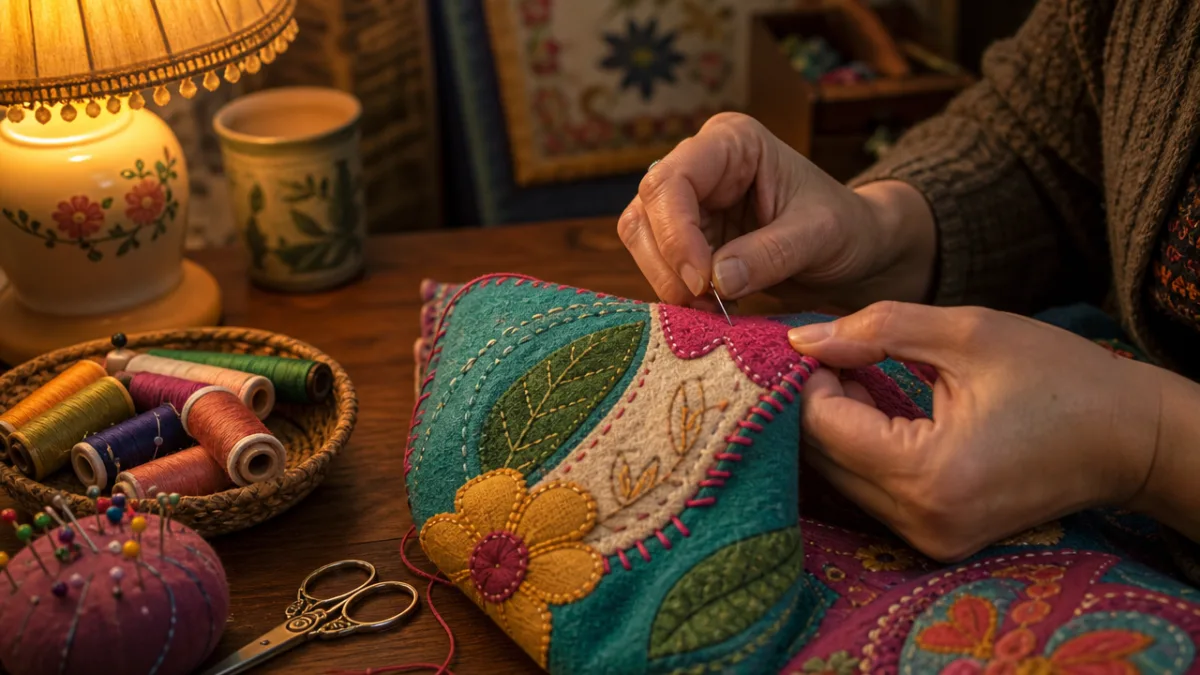
Craft felt is also worth a mention for anyone just starting out with hand sewing. Because felt doesn’t fray, you never have to worry about hemming your edges — you just cut and go. With a needle, some thread, a bit of polyfill stuffing, and basic craft felt, you can make ornaments, bookmarks, keychains, and small stuffed animals using just a few simple stitches. There are loads of free printable felt patterns online too, so you don’t even have to draw your own shapes.
Nature-Inspired Crafts: Bringing the Outdoors Inside
Some of the most beautiful crafts you can make cost almost nothing because they start outside. Pine cones, driftwood, dried flowers, pebbles, shells, pressed leaves, twigs, seeds — all of it can be turned into something stunning with very little effort. Nature crafts also have a nice rhythm to them, since what’s available shifts with the seasons, giving your creative practice a natural connection to the world outside your door.
Pressed flower art is a timeless one. You collect fresh flowers and leaves, press them flat between the pages of a heavy book for a week or two, and then arrange and glue them onto paper, card, or canvas. The results — botanical artworks, greeting cards, bookmarks, framed pieces — have a delicate, luminous quality that’s genuinely hard to achieve any other way. And the collecting and pressing part is its own quiet, lovely activity that makes you slow down and actually look at what’s growing around you.
Stone painting is another craft that’s as easy as it sounds and more satisfying than you’d expect. Smooth pebbles from a beach or garden, a few acrylic paints, and a sealant spray are all you need. Painted stones can become garden markers, paperweights, or decorative displays, or you can leave them around public spaces for strangers to find as part of the global kindness rocks movement. There’s something particularly nice about working on a small scale and finishing a piece in a single afternoon.
Seasonal Nature Craft Ideas Throughout the Year
Spring is a great time to make flower crowns. Fresh or dried blooms and a bit of floral wire are all you need, and you can have a finished, wearable piece in about half an hour. Pressed spring flower cards make thoughtful homemade stationery for birthdays and celebrations, and seedling pots decorated with painted pebbles or decoupaged paper are a charming addition to any windowsill.
Autumn is honestly the richest season for nature crafters — falling leaves, acorns, pine cones, dried seed heads, and gourds all show up at once. Leaf printing is a personal favorite: brush paint directly onto a leaf, press it onto paper or fabric, and you get a gorgeous botanical print that captures every vein and detail. Dried autumn leaves pressed between sheets of wax paper with a warm iron create beautiful translucent decorations that glow when you hang them in a window to catch that low, golden autumn light.
Sharing Your Crafts: Community, Gifting, and Creative Pride
One of the best parts of hand crafting is getting to share what you’ve made. A handmade gift carries a meaning that nothing off a shelf can really match — it tells the person receiving it that you thought about them enough to give them your time and attention. Whether it’s a knitted pair of socks, a hand-painted card, a macramé plant hanger, or a pressed flower bookmark slipped inside a novel, handmade gifts tend to be remembered long after store-bought ones have been forgotten.
The crafting community is also one of the most welcoming you’ll find anywhere, online or in person. Pinterest, Instagram, and YouTube have made craft knowledge more accessible than ever, with free tutorials for nearly any technique imaginable just a search away. Local craft circles, community center workshops, and library craft nights are wonderful ways to learn alongside other people, share materials and ideas, and build friendships around a shared love of making things.
As you get more comfortable, you might start thinking about selling your work — at a local craft fair, a farmers market, or through an online shop. There’s a real and growing appetite among buyers for handmade goods that come with a story and a human touch, and plenty of crafters have built meaningful small businesses out of skills that started as a personal hobby. But even if selling never interests you, handing something you made to another person and watching their face light up is a reward that genuinely doesn’t get old.
- Start small: choose one project and finish it before moving on to the next
- Join an online community or local group to stay motivated and inspired
- Keep a craft journal to document your projects, materials used, and lessons learned
- Gift your creations generously — sharing your work amplifies its meaning
- Revisit seasonal crafts annually to mark the passing of time with intention
- Allow yourself to experiment and make mistakes without judgment
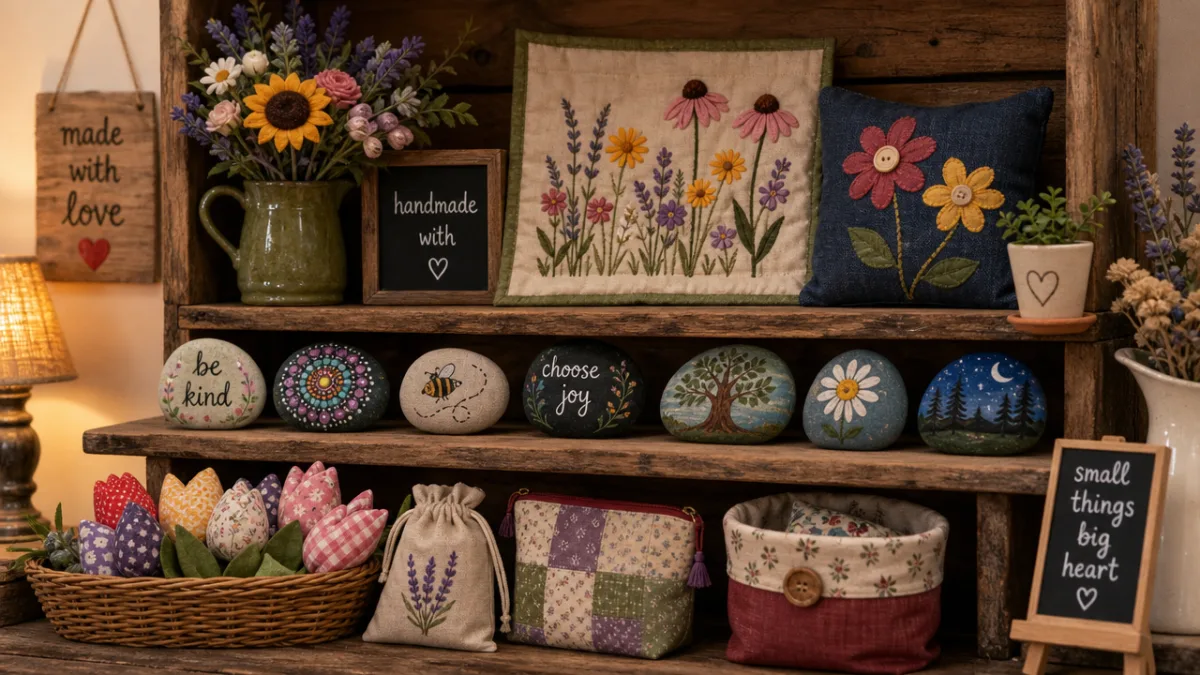
The most important thing to hold onto as you start or deepen a hand craft practice is this: the process is the point. Something that turns out a little lopsided, a little different from what you pictured, or just not quite right is not a failure — it’s proof that a real person was learning and trying and figuring things out. The imperfections in handmade work aren’t flaws to be embarrassed about; they’re signatures. They’re evidence that real hands and real effort went into every stitch, fold, brushstroke, and knot. And that humanity is exactly what makes hand crafts so enduringly beautiful, and so very worth making.








What do you think?
It is nice to know your opinion. Leave a comment.