










Building the Ultimate Home Theater: A Complete Guide to Design, Technology, and Ambiance
The Vision: Planning Your Dream Home Theater Space
Every extraordinary home theater begins with a compelling vision. Before purchasing a single piece of equipment or lifting a paintbrush, the most successful home theater projects start with detailed planning that accounts for the room’s dimensions, the family’s viewing habits, and the overall aesthetic goals. A well-planned space balances technical performance with visual appeal, creating an environment where both functionality and beauty coexist in perfect harmony. Taking the time to draft a comprehensive plan will save countless hours of frustration and thousands of dollars in costly mistakes down the road.
Room selection is arguably the most critical decision in the entire home theater process. Basements are traditionally favored because they offer natural sound isolation from the rest of the house, minimal ambient light intrusion, and typically rectangular floor plans that lend themselves well to speaker placement and screen positioning. However, dedicated rooms on upper floors can work beautifully with the right acoustic treatments and blackout window solutions. The key is choosing a space that can be controlled — both acoustically and visually — to deliver the immersive experience you’re dreaming of creating.
Once you’ve selected your room, the planning phase should include a detailed layout sketch that maps out seating positions, the screen or projection wall, speaker locations, equipment rack placement, and traffic flow. Consider how many people will typically use the space — a two-seat couples retreat requires an entirely different configuration than a family room designed to host ten people for movie nights. Every decision about layout cascades into decisions about sight lines, speaker angles, and the overall shape of the viewing experience. Getting these fundamentals right from the start creates a strong foundation for everything that follows.
Budgeting deserves its own serious consideration during the planning phase. Home theater projects have a well-known tendency to expand beyond initial estimates as enthusiasts discover new possibilities and upgrades along the way. Establishing firm budget categories for display technology, audio equipment, seating, acoustic treatments, lighting, and construction costs gives the project discipline and direction. Many experienced builders recommend allocating roughly equal portions of the budget to audio and video, with additional funds reserved for the room itself — because even the best equipment will underperform in a poorly treated space.
Acoustic Design: The Science Behind Exceptional Sound
Acoustics represent the single most underestimated element in home theater design, yet they may be the most important factor in determining how good your system ultimately sounds. Sound waves behave in predictable but complex ways as they interact with walls, floors, ceilings, and furnishings. Untreated rooms create a cascade of acoustic problems including flutter echo, standing waves, and modal resonance that can make even a world-class speaker system sound muddy, harsh, and fatiguing. Understanding these challenges is the first step toward solving them effectively.
Bass frequency management is the cornerstone of good room acoustics. Low frequencies — those below roughly 200 Hz — behave very differently than mid and high frequencies because their long wavelengths interact powerfully with room boundaries. This interaction creates bass modes, sometimes called room modes or standing waves, which cause dramatic peaks and nulls in bass response at different positions in the room. Corner bass traps, which are thick panels of acoustic foam or rigid fiberglass installed where walls meet the floor, ceiling, and each other, are the primary tool for taming these problematic low frequencies and creating smoother, more accurate bass reproduction throughout the seating area.
Mid and high-frequency acoustic control requires a thoughtful balance between absorption and diffusion. Pure absorption — achieved through fabric-wrapped acoustic panels, thick curtains, carpeting, and upholstered seating — removes energy from the room but can create an unnaturally dead, anechoic quality if overdone. Diffusion, achieved through purpose-built diffuser panels or architecturally through bookshelves, irregular wall surfaces, and decorative elements, scatters reflected sound energy in multiple directions rather than eliminating it entirely. The goal is a room that sounds lively and natural without suffering from the harsh echoes and colorations that plague untreated spaces.
Professional acoustic design software tools like CARA, Room EQ Wizard, and various manufacturer-provided utilities allow enthusiasts to model their room’s acoustic behavior before committing to specific treatment strategies. Many home theater builders also hire acoustic consultants for at least an initial consultation, which can prevent expensive missteps and reveal solutions that wouldn’t be apparent to an untrained observer. The investment in proper acoustic design invariably returns greater sonic dividends than spending the same amount on equipment upgrades, making it one of the highest-value areas in any home theater project.
Display Technology: Choosing Between Projection and Flat Panel
The centerpiece of any home theater is its display, and modern enthusiasts are fortunate to have access to two mature and impressive technology families: large-format flat panel televisions and dedicated projection systems. Each approach carries distinct advantages and limitations, and the right choice depends heavily on the specific room environment, the desired screen size, ambient light conditions, and the content the system will primarily display. Understanding the strengths and weaknesses of both options empowers buyers to make decisions aligned with their actual priorities rather than marketing hype.
Large flat panel displays — particularly modern OLED and high-end LCD televisions — offer extraordinary picture quality with perfect black levels, stunning color accuracy, and extremely high peak brightness that makes them resilient to ambient light. An 85-inch or 98-inch OLED television delivers a genuinely cinematic image that rivals what you’d see in a premium commercial cinema auditorium. These panels require no special installation considerations beyond wall mounting or stand placement, and they’re ready to display excellent images immediately without calibration-intensive setup. However, panel sizes are limited by manufacturing constraints and price escalates steeply beyond 85 inches, making enormous screen sizes economically impractical for most buyers.
Projection systems allow screen sizes that dwarf even the largest flat panels, with 120-inch to 150-inch screens being entirely reasonable and economical choices for dedicated theater rooms. Modern 4K laser projectors from manufacturers like Sony, JVC, and Epson deliver genuinely breathtaking images with exceptional detail, rich color, and, in the best cases, impressive contrast ratios achieved through dynamic iris mechanisms or advanced optical designs. The tradeoff is that projectors require carefully controlled ambient light to perform at their best — even modest amounts of light washing across a projector screen dramatically reduces perceived contrast and color saturation, which is why blackout curtains and careful lighting design are essential companions to any projection installation.
Screen selection for projection systems deserves nearly as much attention as projector selection itself. Screen material, gain, aspect ratio, and size all interact with the projector’s characteristics to determine the final image quality. High-gain screens amplify apparent brightness but narrow the viewing cone, potentially creating hot spots visible from off-axis seats. Acoustically transparent screens, which allow speakers to be placed directly behind them, enable perfect center channel alignment with the image but require specific speaker selection to work properly. The best projection systems treat the projector and screen as an integrated system designed together rather than two independent components assembled separately.
Audio Systems: Crafting Immersive Surround Sound
A home theater’s audio system is what transforms movie watching from a passive visual experience into something that surrounds, engulfs, and emotionally amplifies everything happening on screen. Modern object-based audio formats like Dolby Atmos and DTS:X have brought a new dimension to home theater sound by adding height channels that allow sound designers to place sonic elements precisely in three-dimensional space around the listener. The thunderous rumble of an approaching storm, the delicate ambiance of rainfall on a rooftop, or the heart-stopping whoosh of a spacecraft overhead — these sensations are only possible when the audio system has both the channel count and the quality to render them faithfully.
Speaker selection and placement follow established principles that experienced home theater designers have refined over decades. The front left, center, and right speakers carry the majority of the soundtrack information and deserve the greatest investment in quality, as they anchor dialogue, music, and principal sound effects to the screen. Surround speakers placed at the sides and rear of the seating area create the environmental context that envelops listeners in the sonic space of each scene. Overhead or upward-firing Atmos speakers add the height dimension that makes modern object-based audio formats so dramatically effective. Choosing speakers that share consistent sonic characteristics across all positions — ideally from the same manufacturer’s coordinated system — ensures seamless movement of sound elements as they travel around the listening space.
The subwoofer, or preferably multiple subwoofers, handles the low-frequency effects that give action sequences their physical impact and allow musical soundtracks to breathe with full weight and authority. A single high-quality subwoofer can produce impressive results, but using two or four subwoofers distributed symmetrically around the room dramatically smooths bass response throughout the seating area by averaging out the peaks and nulls created by room modes. This multi-subwoofer approach, well-supported by research from acoustic scientists like Dr. Floyd Toole, is one of the most impactful improvements an enthusiast can make to an existing system without replacing any of the main speakers.
AV receivers and pre-amplifiers provide the processing intelligence that sits at the heart of the audio system, managing audio decoding, room correction, input switching, and amplification. Modern AV receivers from manufacturers like Denon, Marantz, Yamaha, and Anthem incorporate sophisticated room correction software — Audyssey, YPAO, and Anthem Room Correction being the most prominent examples — that measures the acoustic behavior of the room and applies precisely calculated equalization and delay corrections to optimize performance for the specific listening environment. These automated correction systems won’t substitute for proper acoustic treatment, but they provide a meaningful performance benefit that makes the system sound significantly better than uncorrected audio.
Interior Design and Lighting: Transforming a Room into a Theater
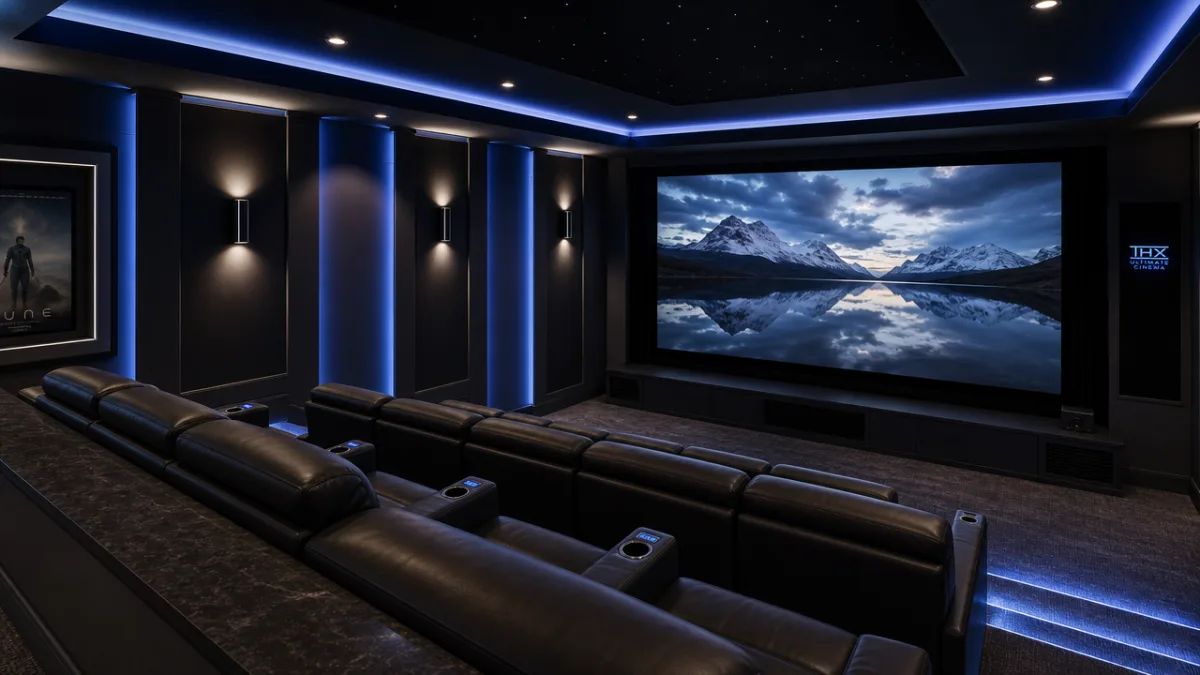
The visual environment of a home theater profoundly shapes the experience of everyone who uses the space, influencing not just aesthetic enjoyment but also practical factors like screen visibility and eye fatigue during long viewing sessions. Thoughtful interior design creates a space that feels deliberately crafted for its purpose — somewhere that signals to your brain that something special is about to happen when you walk through the door. The best home theater interiors blend functional requirements with personal style to create spaces that are simultaneously practical, beautiful, and deeply personal expressions of their owners’ tastes.
Color selection for walls, ceilings, and flooring has significant practical implications beyond pure aesthetics. Dark, low-reflectance colors on walls and ceilings minimize light reflection that can wash out a projected or displayed image, improve perceived contrast, and reduce visual distractions in the peripheral vision of viewers focused on the screen. Medium to dark grays, deep navy blues, rich burgundies, and near-black charcoals are all popular choices that balance practicality with visual warmth. The floor treatment — typically carpet for both acoustic and aesthetic reasons — should similarly avoid highly reflective surfaces that could bounce light back toward the screen.
Acoustic panels, which are functional necessities, present outstanding opportunities for creative expression within the theater’s design language. Fabric-wrapped panels can be upholstered in virtually any color or texture, turning acoustic treatment into a designed interior element rather than an afterthought. Many builders create elaborate false walls with integrated acoustic fabric panels, creating the impression of a genuine commercial cinema auditorium. Others incorporate artistic imagery, starfield ceiling effects, movie memorabilia, and themed decorative elements that reinforce the theater’s role as a dedicated entertainment sanctuary separate from the rest of the home.
Lighting design in a home theater must serve multiple distinct modes of operation gracefully. During active viewing, the room needs to be dark enough to maximize screen contrast while retaining subtle ambient illumination that prevents complete darkness — total blackness around a bright screen is visually fatiguing and makes focusing on the image more difficult. During intermissions and social use, the room needs practical illumination for movement and conversation. LED strip lighting integrated into stepped platforms, cove lighting along wall perimeters, and individually controlled sconces on side walls, all managed through a programmable lighting controller or smart home system, allow the room to transition smoothly between these different operational states at the touch of a button or through automated scene triggers.
Seating, Comfort, and the Complete Experience
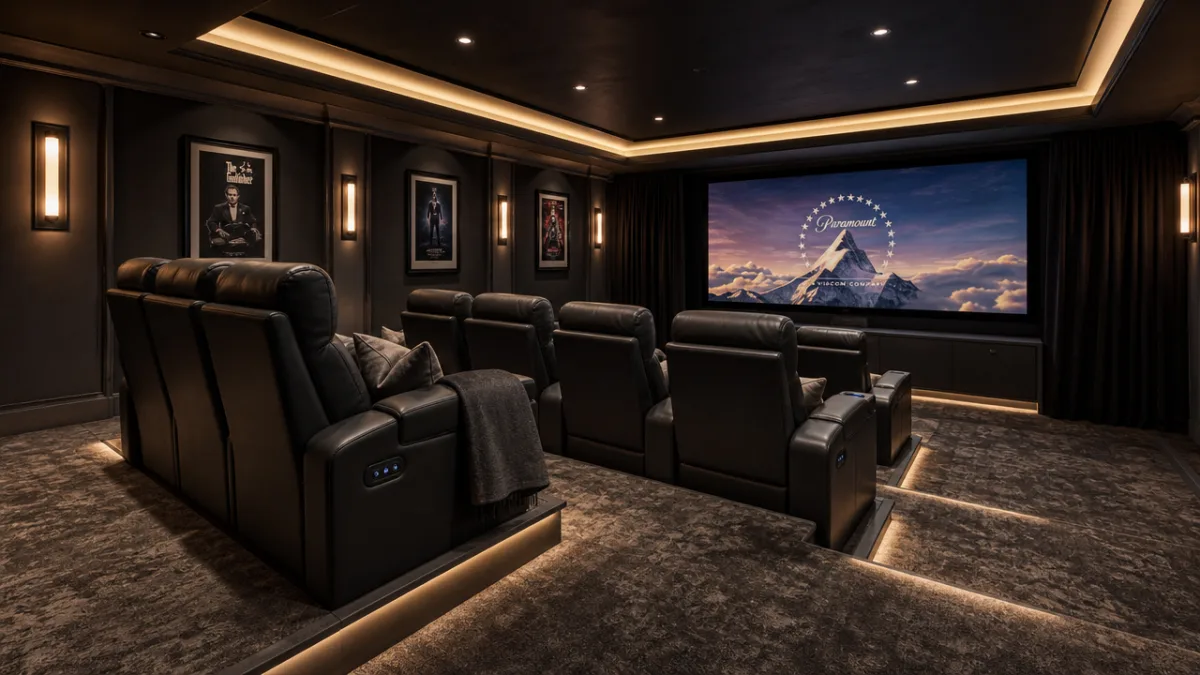
All the technical excellence in the world means nothing if the people experiencing your home theater aren’t comfortable during the hours they spend there. Seating selection is a deeply personal decision that balances ergonomics, capacity, aesthetic compatibility with the room’s design, and practical considerations like maintenance and durability. Dedicated home theater seating has evolved dramatically over the past two decades, with major manufacturers like Seatcraft, Palliser, Octane, and Valencia offering an extraordinary range of options from straightforward reclining chairs to elaborate power recliners with heated seats, massagers, tray tables, and integrated lighting that would be entirely at home in the finest commercial premiere theater.
Tiered or stadium seating arrangements, where rear rows sit on raised platforms above front rows, solve the fundamental sightline problem that plagues flat-floor home theaters with more than one row of seating. Even a modest 8-inch riser for the second row dramatically improves visibility for rear viewers and creates the authentic cinema atmosphere that makes the space feel genuinely special. Building proper risers requires careful structural planning — they must be strong enough to safely support the weight of fully occupied recliners, and their dimensions must account for the depth of the seating, the walking space in front of each row, and the vertical relationship between rows that ensures clear sightlines to the full screen from all positions.
Beyond the primary seating, thoughtful amenities transform a technically excellent theater into a complete entertainment experience. A dedicated wet bar, mini-refrigerator, or popcorn machine near the entrance eliminates the need to pause films for refreshment runs. Properly designed acoustic isolation — mass-loaded vinyl in walls, resilient channel decoupling between studs and drywall, solid-core doors with appropriate seals — keeps theater sound from disturbing the rest of the household and prevents household noises from penetrating the viewing environment. Cable management, equipment rack ventilation, and network infrastructure for streaming services are the unglamorous but essential technical details that determine whether daily use of the theater is effortless or frustrating.
The finished home theater represents the culmination of months of planning, research, labor, and investment. When every element comes together — when the acoustic treatment creates a perfectly balanced sound field, when the projector throws a crisp 4K image across a perfectly tensioned 130-inch screen, when the Atmos audio system places sound precisely overhead during a tense cinematic sequence, and when the lighting dims automatically as the credits begin to roll — the result is something genuinely extraordinary. Home theaters built with care and knowledge deliver an entertainment experience that rivals or exceeds what’s available commercially, in the comfort and privacy of home, shared with the people who matter most. That combination of technical achievement and personal meaning is what makes the journey worth every moment.
- Planning and budgeting: Establish clear goals, room dimensions, layout sketches, and tiered budget categories before purchasing any equipment or beginning construction.
- Acoustic treatment: Invest in corner bass traps, broadband absorption panels, and diffusers to control the room’s sound behavior before relying on electronic correction.
- Display technology: Choose between large-format flat panel or projection based on room light control capabilities, desired screen size, and total budget.
- Audio system: Prioritize front speaker quality, use multiple subwoofers for smoother bass response, and apply room correction software after acoustic treatment is complete.
- Interior design: Select dark, low-reflectance surfaces, integrate acoustic panels as designed elements, and build a flexible multi-scene lighting control system.
- Seating and comfort: Consider tiered riser platforms for multi-row arrangements, invest in quality dedicated theater seating, and don’t overlook practical amenities that support extended viewing sessions.








What do you think?
It is nice to know your opinion. Leave a comment.