










21 DIY Wood Yard Art Ideas to Decorate Your Garden on a Budget
Why Wood Yard Art Is the Perfect Garden Upgrade
There is something deeply satisfying about walking into a garden that tells a story, and wood yard art has a unique ability to do exactly that. Unlike mass-produced plastic decorations or expensive stone sculptures, handcrafted wooden pieces carry personality, warmth, and a sense of intentionality that transforms an ordinary outdoor space into something genuinely special. Whether your garden is a sprawling backyard or a modest urban patio, the right wooden accent can anchor the entire aesthetic and make your space feel complete.
One of the most compelling reasons to choose wood as your medium for yard art is its natural compatibility with garden environments. Wood blends seamlessly with soil, foliage, stone pathways, and flowering beds in ways that synthetic materials simply cannot replicate. The organic grain patterns, the way sunlight plays across a carved surface, the gentle weathering that occurs over seasons — all of these qualities give wooden yard art a living quality that evolves alongside your garden, making it feel like a natural extension of the landscape rather than an afterthought placed upon it.
Budget-conscious gardeners will also appreciate that wood is one of the most accessible and affordable crafting materials available. Reclaimed lumber from old pallets, fallen branches from your own yard, salvaged fence boards, and discounted timber from hardware stores can all become the raw material for stunning garden features. You do not need an extensive workshop or professional woodworking experience to get started. Many of the most charming wood yard art projects require little more than basic hand tools, outdoor paint, and a clear afternoon.
The Appeal of Handmade Over Store-Bought
Handmade yard art carries an authenticity that store-bought pieces can rarely match. When you craft something with your own hands, every imperfection becomes part of the charm, every brushstroke tells a story, and every finished piece reflects your personal vision for your outdoor space. Visitors to your garden will sense the effort and care embedded in each creation, which elevates the entire atmosphere of your yard and makes it a genuinely inviting place to spend time.
There is also a deeply rewarding psychological dimension to DIY garden projects. Completing a creative project outdoors, working with natural materials, and then watching your creation weather and age gracefully in the garden connects you to both the craft and the natural world in meaningful ways. Studies in environmental psychology have consistently shown that creative outdoor activities reduce stress and improve mood, meaning your wood yard art hobby is not just beautifying your garden — it is actively contributing to your own wellbeing.
Essential Tools and Materials to Get Started
Before diving into specific project ideas, it helps to understand the foundational toolkit that will serve you across most wood yard art endeavors. You do not need to invest in expensive power tools immediately, though they can certainly speed up your work. A solid set of hand tools — including a handsaw, a hammer, a cordless drill, sandpaper in multiple grits, and a set of wood chisels — will allow you to tackle the majority of beginner and intermediate projects with confidence and precision. As your skills grow, you can gradually expand your collection to include tools like a jigsaw, scroll saw, or router.
Material selection is equally important and offers a wonderful opportunity to be resourceful. Pallet wood is an incredibly popular choice among DIY yard artists because it is widely available, often free or very inexpensive, and comes pre-cut into workable sizes. Cedar and redwood are premium choices for outdoor projects because of their natural resistance to moisture, insects, and decay, making them ideal for pieces that will remain outdoors year-round. Pine is affordable and easy to work with, though it benefits from thorough sealing and painting to withstand the elements effectively.
Finishing materials deserve just as much attention as your wood selection. Exterior-grade paint and primer are essential for any piece that will be exposed to rain, sun, and temperature fluctuations. Outdoor polyurethane varnish and wood sealers add an additional protective layer that dramatically extends the life of your creations. For a more rustic, natural look, linseed oil or tung oil can be rubbed directly into unfinished wood to nourish and protect it while preserving the organic texture and grain that makes wood so visually appealing in garden settings.
Choosing the Right Wood for Outdoor Conditions
Not all wood performs equally well when exposed to the outdoors, and choosing the wrong type can mean your beautiful creation deteriorates within a single season. Hardwoods like oak, teak, and black locust offer exceptional durability and can last decades outdoors with minimal treatment, though they can be more challenging to work with due to their density. Softwoods like pine and spruce are more workable and widely available, but require diligent sealing to prevent rot and warping when exposed to moisture repeatedly over time.
Reclaimed and salvaged wood adds an irreplaceable character to yard art projects and is an environmentally responsible choice that repurposes material that might otherwise end up in a landfill. Old barn wood, weathered fence boards, and discarded shipping pallets all bring with them a patina and texture that would take years to develop artificially. Before using reclaimed wood, inspect it carefully for signs of rot, pest damage, or chemical treatment, as some older treated wood can contain compounds that are harmful to garden plants and soil ecosystems.
Whimsical Animal and Nature-Inspired Wood Cutouts
Animal silhouette cutouts are among the most beloved and recognizable forms of wood yard art, and for good reason. A family of wooden deer emerging from behind a garden shrub, a fox peeking out from beneath a rose bush, or a trio of wooden flamingos standing beside a garden pond creates an immediate sense of whimsy and delight that appeals to visitors of all ages. These cutouts are typically made by sketching or tracing a silhouette onto a flat board and cutting it out with a jigsaw, then painting and sealing before installation in the garden.
The variety of animals and nature-inspired designs available is virtually limitless, allowing you to tailor your yard art to suit your personal aesthetic and the mood of your garden. Cottage gardens pair beautifully with hedgehogs, rabbits, and songbirds, while woodland-themed yards might feature owls, deer, or bears. Coastal or tropical garden aesthetics lend themselves perfectly to pelicans, sea turtles, and herons. You can find free silhouette templates online or create your own original designs, giving you complete control over the scale, style, and personality of each piece.
For those who want to add an extra layer of artistry to their cutouts, consider incorporating painted details, wood-burned texture lines, or even three-dimensional elements like wire antlers, rope tails, or painted pebble eyes. Layering flat cut pieces at different depths creates a sense of perspective and dimension that makes the art pop in the garden landscape. Mounting cutouts on stakes of varying heights allows you to create dynamic groupings that change appearance as you move through the garden, adding a theatrical quality to your outdoor space.
Creating Oversized Flower and Plant Sculptures
Oversized wooden flower sculptures are a spectacular way to introduce bold color and graphic impact into garden spaces that might otherwise lack visual drama. Giant wooden sunflowers, daisies, and tulips can be cut from thick plywood, layered to create depth in the petals, and painted in vivid colors that remain vibrant throughout the growing season even when your actual garden flowers are between bloom cycles. These sculptures serve as reliable, year-round focal points that anchor garden beds and create a sense of design intentionality.
The construction process for oversized flower art is more accessible than it might appear. Start by drawing petal templates on paper, then transfer them to plywood and cut out multiple copies. Layering petals at slightly different angles and attaching them to a central disc creates a naturalistic, three-dimensional bloom effect. A sturdy wooden dowel or steel rebar center stake holds the flower upright in the soil. Sand all edges smooth, apply several coats of exterior primer and paint, and finish with a clear UV-resistant varnish to protect against fading from prolonged sun exposure.
Decorative Signs, Markers, and Functional Art
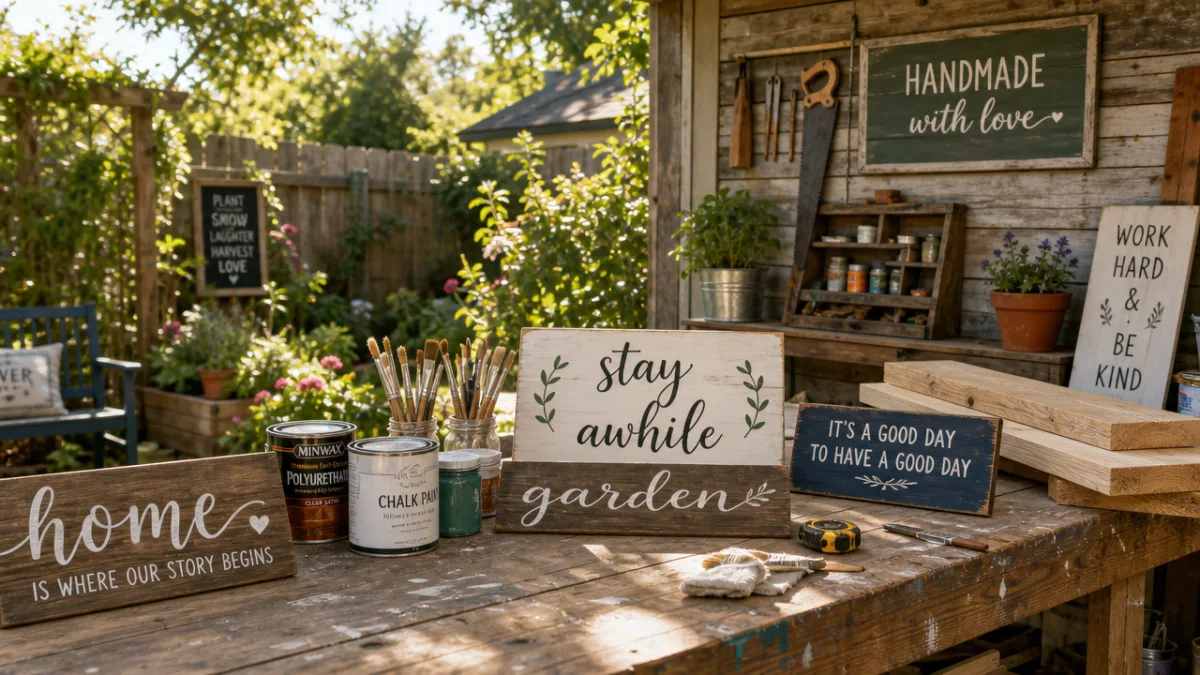
Wooden signs occupy a wonderful intersection between functional garden tools and decorative art. Plant markers crafted from painted or wood-burned stakes help you identify herbs, vegetables, and flowers while adding a charming, personalized touch to kitchen garden beds. Directional signs carved with witty phrases like “The Garden Is My Happy Place” or “Follow the Path” create narrative flow through your yard and encourage visitors to explore. Welcome signs hung near garden gates set the tone for the entire outdoor space before guests have even taken their first step inside.
The craft of wood burning, or pyrography, opens up particularly beautiful possibilities for garden sign-making. A wood-burning pen allows you to etch intricate botanical designs, lettering, and decorative borders directly into the wood surface with remarkable precision and permanence. The burned marks are naturally weather-resistant and develop a gorgeous dark contrast against the natural wood tone that only deepens and enriches with age. Even beginners can achieve professional-looking results with a basic wood-burning kit and a little practice on scrap wood before committing to a finished piece.
Functional wooden art extends beyond signage to include garden elements like planter boxes, birdhouses, butterfly houses, and decorative trellises. A hand-painted birdhouse mounted on a fence post is simultaneously a welcoming habitat for local wildlife and a striking decorative element. A trellis fashioned from natural branches or painted lumber not only supports climbing plants but frames them beautifully, turning the plants themselves into living components of the overall artistic composition. These functional pieces demonstrate that garden art does not need to be purely ornamental to be deeply beautiful.
Personalized Family Name and Address Markers
Personalized wooden name boards and house number markers combine practical necessity with creative self-expression in a way that immediately elevates a home’s curb appeal. Cutting house numbers from thick plywood or carving them into a solid slab of cedar and mounting them beside your front path creates a welcoming first impression that no off-the-shelf metal number plate can replicate. Adding botanical motifs, your family name, or a small carved design alongside the numbers turns a functional item into a genuine piece of outdoor art that reflects the personality of the people who live there.
Family name signs installed at garden entrances or mounted on fence posts serve as warm, personal greetings that make your property feel uniquely yours. Reclaimed barn wood backgrounds with hand-painted or carved lettering strike a balance between rustic charm and legibility that works beautifully in a wide range of garden styles. For a more modern aesthetic, consider using clean-edged pine boards painted in dark colors with crisp white lettering, or staining wood in deep charcoal tones and using a router to carve raised letters that cast elegant shadows in raking sunlight.
Upcycled and Repurposed Wood Art Projects
The upcycling movement has found one of its most creative expressions in DIY wood yard art, where discarded materials are given new life and purpose in garden spaces. Old wooden ladders become vertical plant displays, their rungs supporting cascading flower pots at multiple heights. Wagon wheel frames salvaged from antique stores become rustic garden centerpieces or decorative wall art for outdoor living spaces. The creative repurposing of old furniture, architectural salvage, and construction offcuts not only reduces waste but often produces yard art with far more visual interest than anything crafted from new materials.
Pallet wood projects deserve special mention as a gateway into upcycled yard art for beginners. A single standard wooden pallet can yield enough material for a full planter box, a decorative garden sign, several plant markers, and multiple decorative stakes — essentially an entire coordinated garden art collection from one free or very inexpensive material source. Pallet wood’s slightly rough, weathered texture gives finished pieces an immediately appealing rustic character that fits naturally into most garden aesthetics without requiring any artificial distressing or aging treatments.
Tree stumps and large fallen branches represent another abundant source of natural yard art material that many gardeners overlook. A cross-section of a thick log, sanded smooth and sealed with polyurethane, becomes a beautiful stepping stone, table surface, or sculptural garden accent. Branches arranged and mounted in geometric patterns create modern, nature-inspired wall art for outdoor fences or pergola posts. Driftwood collected from beaches or riverbanks can be assembled into sculptural installations that capture the natural beauty of the material with minimal intervention, allowing the shape and texture of the wood itself to be the art.
Mosaic and Mixed-Media Wood Art
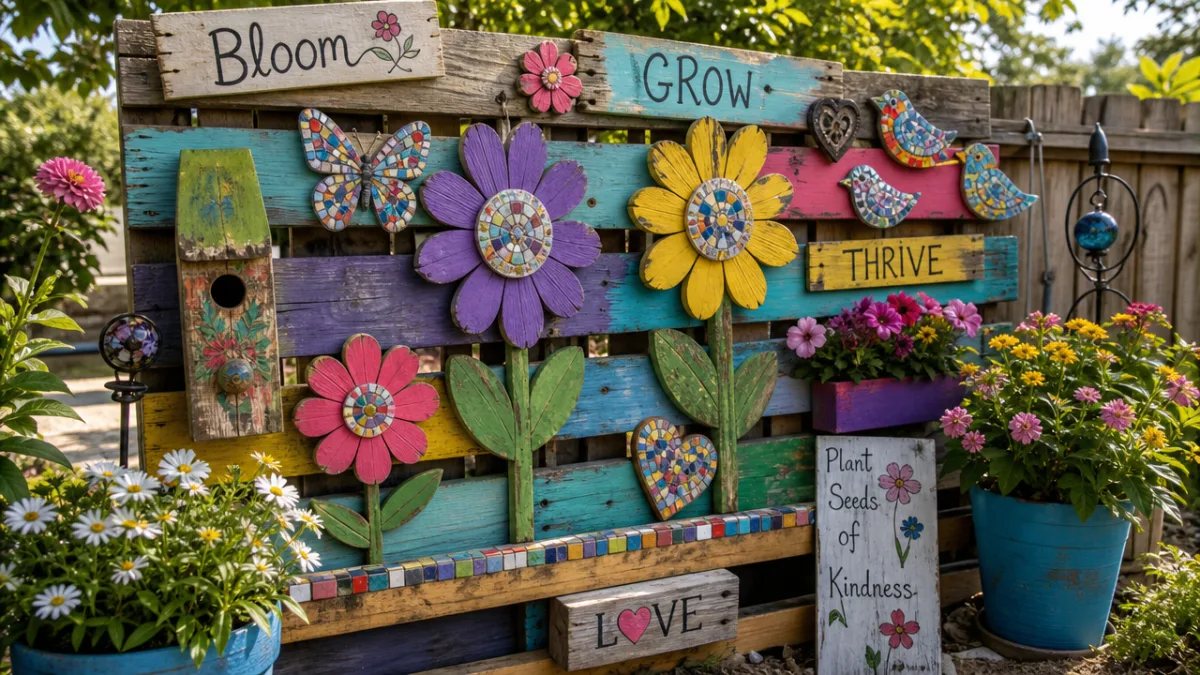
Combining wood with other materials opens up a vast range of artistic possibilities that push DIY yard art beyond simple painted cutouts into genuinely sophisticated creative territory. Wood mosaic panels, in which small tiles of different wood species or painted wood pieces are arranged into patterns and images, create stunning focal points for garden walls and fences. The natural color variation between different wood types — the pale cream of pine, the rich amber of cedar, the deep brown of walnut — provides a ready-made palette that requires no paint to be visually striking.
Incorporating metal, glass, stone, and ceramic elements into wooden yard art creates multi-sensory pieces that catch light, reflect surroundings, and interact with the garden environment in dynamic ways. Embedding mirror fragments or colored glass pieces into a wooden frame creates a garden feature that changes appearance throughout the day as light angles shift. Attaching metal garden tools, old keys, vintage cutlery, or salvaged hardware to a wooden backing transforms collected objects into meaningful assemblage art that tells a story about place, time, and memory in a way that purely decorative pieces cannot.
Weatherproofing and Long-Term Care for Your Wood Yard Art
The longevity of your wood yard art depends almost entirely on the quality of preparation and finishing you apply before placing pieces in the garden. Raw, untreated wood exposed to outdoor conditions will begin to degrade within a single season, developing cracks, splits, and rot that compromise both the structural integrity and visual appeal of your creations. Investing time in proper surface preparation — thorough sanding, filling of cracks with exterior wood filler, application of primer, and multiple coats of quality exterior paint or sealant — will pay dividends in years of continued beauty from your handcrafted pieces.
The base of any wooden stake or post that will be inserted directly into soil deserves particular attention, as ground contact combined with moisture creates the most aggressive conditions for wood decay. Treating the bottom section of stakes with wood preservative, wrapping them in tar paper, or even charring them lightly with a torch before installation are all effective strategies for extending the life of in-ground wooden yard art. For larger pieces, using a concrete footing or metal post anchor to keep the wood itself elevated slightly above soil level dramatically reduces moisture exposure and associated decay.
An annual maintenance routine will keep your wood yard art looking its best for many years. At the beginning of each spring, inspect all outdoor wooden pieces for signs of paint peeling, cracking, fading, or early rot. Sand back any compromised areas, apply touch-up paint or sealant as needed, and check that any mounting hardware or stakes remain secure. Bringing smaller, more delicate pieces indoors for winter storage in climates with harsh freezing temperatures is a simple precaution that can add many years to the lifespan of your most cherished creations.
Seasonal Updates and Rotating Your Garden Art Display
One of the great advantages of DIY wood yard art over permanent garden features is the flexibility to rotate, update, and refresh your display with the seasons. Creating interchangeable panels or signs that can be swapped out to reflect spring blooms, summer abundance, autumn harvests, and winter festivities keeps your garden looking intentional and seasonally appropriate throughout the year. A collection of seasonal wooden cutouts stored in a dry shed between uses represents an ongoing creative investment that grows more satisfying with each year and each new piece added to the collection.
Seasonal repainting is another wonderful opportunity to refresh the look of existing pieces without the effort of creating entirely new ones. A wooden sunflower sculpture painted in vivid yellows for summer can be repainted in copper and burgundy for autumn, then given a coat of icy blue and white for a winter wonderland look. This kind of creative flexibility means your initial investment in a well-crafted wooden base pays creative dividends across multiple seasons and years, making wood yard art one of the most cost-effective and creatively satisfying ways to keep your garden feeling fresh and alive throughout every season of the year.
- Inspect and touch up paint and sealant every spring before the main growing season begins to catch any winter damage early.
- Store delicate or highly painted pieces under cover or indoors during harsh winter months to prevent freeze-thaw paint cracking.
- Rotate your art display seasonally to keep the garden looking fresh and to give yourself ongoing creative projects throughout the year.
- Keep a small kit of matching exterior paints, primer, and brush-on sealant specifically for quick yard art touch-ups and repairs.
- Photograph your garden art installations each season to track how pieces weather and age, and to maintain a visual record of your creative progress over time.
Whether you are brand new to woodworking or a seasoned crafter looking for fresh garden inspiration, DIY wood yard art offers an endlessly rewarding creative path that connects craft, nature, and personal expression in one beautifully practical pursuit. The garden you create with your own hands, decorated with art made from your own imagination and effort, becomes a genuinely personal place — a reflection of who you are, what you love, and how you choose to inhabit your corner of the natural world. Start with one simple project, let your confidence and skills grow naturally, and watch your garden transform into the beautiful, story-filled outdoor space you have always imagined it could be.








What do you think?
It is nice to know your opinion. Leave a comment.