










From Tea to Décor: 25 Gorgeous Projects to Upcycle Old Teacups
The Art of Giving Old Teacups a Second Life
There is something undeniably magical about a vintage teacup. Whether passed down through generations, discovered at a flea market, or simply too chipped to use for its original purpose, old teacups carry a quiet elegance that deserves to be celebrated rather than discarded. The growing movement toward sustainable living has inspired crafters, decorators, and DIY enthusiasts around the world to look at these delicate vessels in a completely new way, transforming them into stunning decorative and functional objects for the home.
Upcycling teacups is not merely a trend — it is a philosophy. When you repurpose a teacup, you are preserving its story while writing a new chapter for it. A floral porcelain cup that once graced a grandmother’s table can become a candle holder glowing warmly on a modern mantelpiece. A mismatched set picked up for a few dollars at a thrift store can be reimagined as a whimsical garden planter that draws admiring glances from every visitor. The possibilities are as varied as the cups themselves.
Beyond their aesthetic appeal, teacup upcycling projects are also remarkably accessible. Most require minimal tools, modest budgets, and no prior crafting experience. Whether you are a seasoned DIYer looking for your next creative challenge or a complete beginner wanting to dip a toe into the world of handmade décor, there is a teacup project perfectly suited to your skill level and style. This article explores 25 of the most beautiful, creative, and achievable ways to transform old teacups into treasures worth keeping and gifting.
Why Vintage Teacups Are the Perfect Upcycling Material
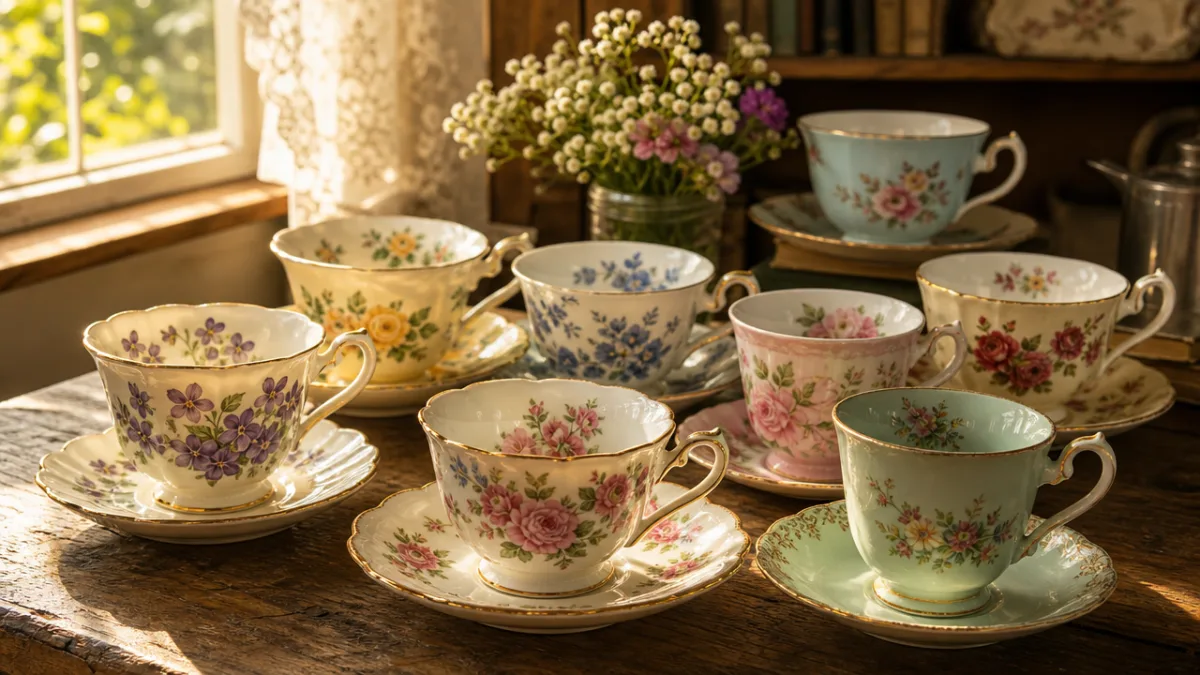
Vintage teacups are among the most widely available thrift-store finds in the world, making them an ideal starting point for upcyclers. Their compact size, refined shapes, and often intricate patterns provide an instant decorative foundation that takes considerable effort to replicate from scratch. Unlike furniture or larger antiques, teacups are easy to transport, store, and work with — no garage or workshop required. A kitchen table and a few basic supplies are all the space most projects demand.
Their material properties also make teacups uniquely versatile. Porcelain and bone china are heat-resistant enough to safely hold candles. Their smooth surfaces accept paint, decoupage, and adhesives readily. The cup-and-saucer pairing creates natural layered compositions that lend themselves to tiered displays. And because no two vintage teacups are identical, every project you create will be genuinely one of a kind — a handcrafted original that carries personal meaning and artistic distinction.
There is also a deeply satisfying environmental dimension to this type of crafting. Every teacup repurposed is one fewer item sent to landfill, and one fewer new product manufactured from raw materials. In a world increasingly aware of the environmental cost of consumer culture, choosing to upcycle is a small but meaningful act of sustainability. It connects you to a longer tradition of mending, making do, and finding beauty in what already exists — values that feel more relevant and urgent today than ever before.
Teacup Candle Projects: Light and Warmth in Miniature
One of the most popular and beloved ways to upcycle a teacup is to transform it into a candle. Teacup candles have surged in popularity as gifts and home accents over the past decade, and it is easy to understand why. The combination of the cup’s decorative exterior with the soft, flickering warmth of candlelight creates an effect that is simultaneously cozy and sophisticated. These make wonderful gifts for housewarmings, holidays, birthdays, and weddings, and they are simple enough to produce in batches once you have gathered your materials.
Making a teacup candle requires just a few straightforward supplies: soy wax flakes or paraffin wax, a pre-tabbed candle wick, fragrance oil or essential oils of your choice, and a thermometer for monitoring wax temperature. Begin by securing the wick to the bottom center of the teacup using a small dab of melted wax or a wick sticker. Melt your wax to the recommended temperature, add fragrance, and pour slowly into the cup. Allow the candle to cure for at least 24 hours before trimming the wick and lighting. The result is a beautifully functional piece of décor that fills a room with both ambience and fragrance.
Beyond the basic pour, there are dozens of creative variations to explore. Layered candles using wax in two or three contrasting colors create a striped effect that is visible through translucent porcelain. Botanical candles embed dried flowers, herbs, or citrus slices into the wax surface for a natural, artisanal look. Marbled candles use swirled pigment for an effect that echoes the painted patterns found on many vintage cups. You can even match the candle’s scent to the cup’s design — a floral cup might hold a rose and jasmine candle, while a cup with a botanical print could be filled with eucalyptus and mint.
Tips for Achieving Perfect Teacup Candles Every Time
Successful teacup candles depend on a few key technical details that are worth understanding before you begin. Wax shrinks slightly as it cools, which often creates a small sinkhole in the center of your candle. This is completely normal and easy to remedy by performing a second pour once the first layer has partially set. Keeping a small reserve of melted wax in a pouring jug allows you to top up the candle and achieve a perfectly flat, smooth surface. This second pour is a step many beginners skip, and it makes a noticeable difference in the finished result.
Fragrance load is another important consideration. Most waxes can safely hold between 6 and 10 percent fragrance oil by weight. Exceeding this ratio does not make a stronger-smelling candle — instead, it causes the excess oil to pool on the surface or seep through the sides of the candle, which can create a fire hazard. Always weigh your fragrance oil rather than measuring by volume, and consult the specific recommendations for the type of wax you are using. Using a kitchen scale for all measurements will significantly improve your consistency and results.
Finally, pay attention to wick sizing. The diameter of the teacup’s opening determines which wick size is appropriate. Too thin a wick will tunnel down the center of the candle, leaving walls of unburned wax around the edges. Too thick a wick will cause the flame to burn too hot, potentially cracking the porcelain or producing excessive soot. Wick size charts are freely available from most candle supply companies, and experimenting with two or three sizes in test cups before committing to a full batch is always a wise approach for new candle makers.
Teacup Planters: Bringing the Garden Indoors
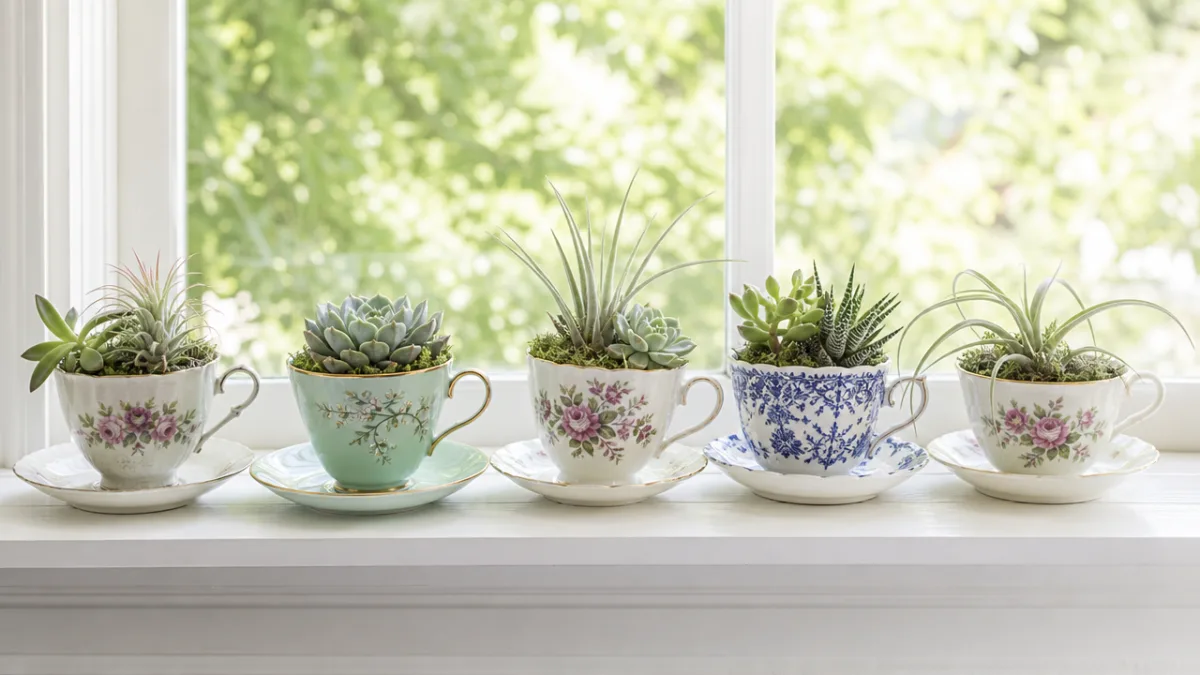
Teacup planters have become one of the most photographed and shared DIY projects across social media platforms, and their appeal is unmistakable. The contrast between delicate porcelain and living green plants creates a visual tension that is endlessly charming. Succulents are the most popular choice for teacup planters because their shallow root systems are perfectly suited to the limited depth of a cup, and their sculptural, geometric forms complement the curves of vintage porcelain beautifully. A single succulent planted in a gold-rimmed teacup and placed on a windowsill is a complete, polished décor moment requiring no additional styling.
To create a teacup planter, you will need to address the issue of drainage, since most teacups lack holes in the base. The simplest approach is to layer the bottom of the cup with small pebbles or activated charcoal before adding potting mix. This creates a reservoir for excess water and helps prevent root rot, which is the primary cause of death for plants in containers without drainage. Some crafters prefer to carefully drill a drainage hole using a diamond-tipped drill bit and a steady hand, which provides the most reliable long-term solution for plants that require well-draining soil.
The variety of plants that work well in teacup containers extends well beyond succulents. Air plants, or tillandsias, require no soil at all and can simply be nestled into a cup on a bed of decorative moss. Small ferns thrive in the slightly humid microclimate created by deep cups. Miniature African violets, with their velvety leaves and jewel-toned flowers, echo the ornate aesthetics of Victorian teaware perfectly. Herbs such as thyme, chives, and compact varieties of basil can live happily in a sunny teacup on a kitchen windowsill, combining the practical and the beautiful in a single small vessel.
Creative Arrangements and Display Ideas for Teacup Planters
Individual teacup planters are delightful, but groupings and arrangements elevate them to truly statement-making displays. A collection of mismatched teacups in varying sizes, patterns, and colors, each planted with a different succulent variety, creates a richly layered tabletop garden that rewards close inspection. Arranging them at varying heights by placing some cups on overturned saucers or small wooden blocks adds dimension and visual interest. The mix-and-match quality of gathered vintage teaware gives these arrangements a collected, personal quality that feels far more meaningful than anything purchased pre-made.
Teacup planters also translate beautifully to outdoor settings. Nestled among the flowers in a garden border, hanging from a shepherd’s hook, or arranged along a fence rail, planted teacups add a whimsical, storybook quality to outdoor spaces. Outdoors, drainage becomes even more important, so ensuring adequate gravel layers or drilled holes is essential. Using weather-resistant plants such as sedums, sempervivums, or portulacas will help your outdoor teacup garden survive sun and rain through multiple seasons without requiring constant attention or replacement.
For those who enjoy seasonal decorating, teacup planters offer a wonderful opportunity to rotate plants and arrangements throughout the year. Spring might bring miniature primroses and violas in pastel-colored cups. Summer could feature trailing nasturtiums spilling over the cup’s rim in shades of orange and gold. Autumn arrangements of small ornamental cabbages or kale in deep jewel-toned cups make striking harvest-season centerpieces. And in winter, a teacup planted with a tiny conifer dusted with fake snow and placed on a saucer filled with silver baubles creates a miniature Christmas scene of considerable charm.
Decorative Display and Storage Projects
Not every teacup upcycling project needs to involve plants or candles. Some of the most elegant and practical repurposing ideas treat teacups as decorative containers in their own right, using their inherent beauty to organize and display small objects throughout the home. A teacup filled with paper clips, rubber bands, and push pins becomes the most elegant desk organizer imaginable. A set of matching cups on a bathroom shelf holds cotton balls, hair pins, and small bottles of perfume with effortless grace. In the kitchen, a large teacup makes a charming holder for wooden spoons, whisks, and spatulas near the stove.
Jewelry storage is another area where teacups truly shine. Their shallow, smooth interiors are ideal for holding rings, earrings, brooches, and delicate necklaces without tangling or scratching. A trio of vintage teacups arranged on a dressing table, each dedicated to a different type of jewelry, creates a storage solution that doubles as a beautiful display. Some crafters line the interior of the cup with a small square of velvet fabric cut from a jewelry roll, adding a luxurious touch that elevates even the most ordinary cup into something that feels genuinely precious and considered.
Teacup shadow boxes represent a more ambitious but deeply rewarding decorative project. By removing the handle from a teacup and mounting the cup cut-side-out onto a wooden shadow box frame, you create a dimensional wall piece with a unique cup-shaped compartment. Filled with tiny dried flowers, a miniature figurine, a watch face, or a preserved butterfly, these shadow box pieces carry the quiet intensity of a museum exhibit in miniature. They work beautifully grouped in clusters on gallery walls, mixing teacup shadow boxes with framed botanical prints and small oil paintings for a layered, eclectic display.
Teacup Lamps and Lighting Accents
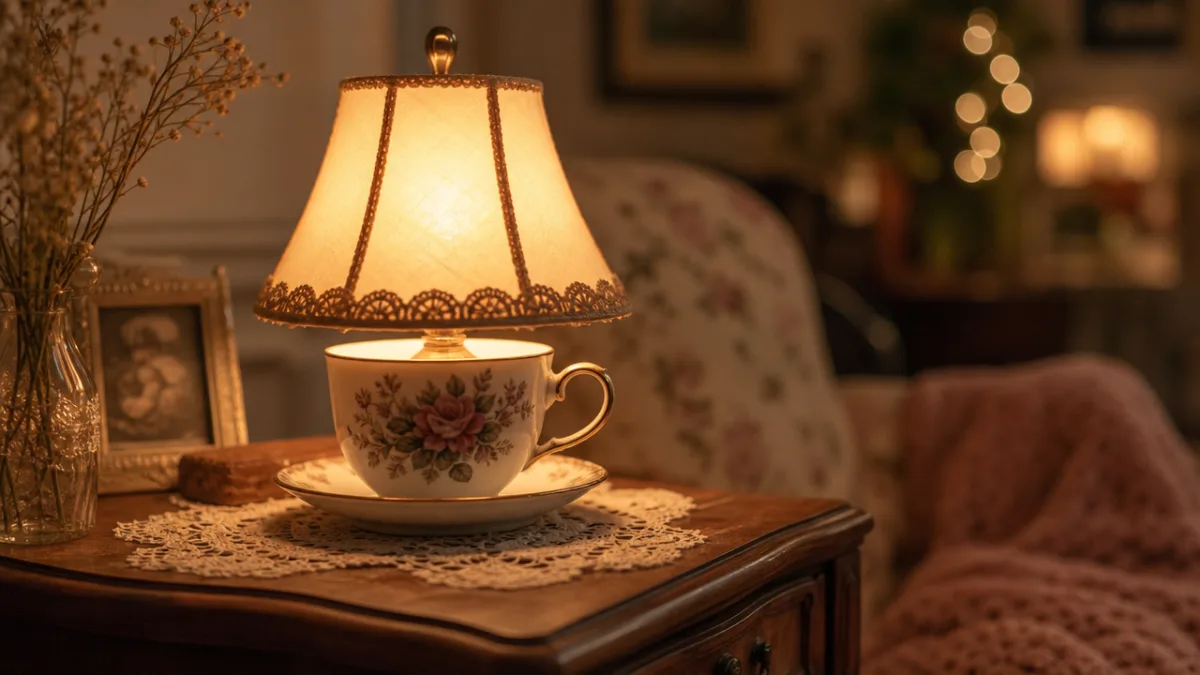
For those willing to work with basic electrical components, a teacup lamp is one of the most spectacular upcycling projects available. Stacking three or four teacups of graduating sizes on a central rod, with saucers between each cup, creates a tiered lamp base of extraordinary charm and individuality. Lamp-making kits that include the central threaded rod, fittings, and a bulb socket are widely available from craft suppliers and hardware stores, and instructions are straightforward enough for a confident beginner to follow safely. The resulting lamp, topped with a small drum shade in a coordinating fabric, is a functional piece of art that becomes a genuine conversation piece in any room.
Smaller-scale lighting projects are equally appealing and require no electrical knowledge at all. Battery-operated fairy lights, which have become widely available and inexpensive, can be coiled inside a teacup and allowed to spill over the rim and down the saucer. When turned on, the cup glows from within, illuminating the translucency of fine porcelain and casting delicate patterned shadows across surrounding surfaces. A cluster of three or five such glowing teacups arranged along a mantelpiece or bookshelf creates a magical ambient lighting effect that is perfect for evening entertaining or simply for making a room feel more alive and welcoming.
Outdoor string light installations featuring teacups are another idea gaining traction among garden decorators. By drilling a small hole in the base of each cup and threading a bulb from an outdoor string light through the hole so that the cup hangs upside down as a shade, you can create a whimsical outdoor lighting installation for a patio, pergola, or garden party. The cups diffuse and color the light beautifully, and their gentle swaying in a breeze adds movement and life to an outdoor space after dark. Using cups with matching or coordinating patterns creates a cohesive look, while a deliberately mismatched selection gives a more festive, eclectic feel.
Gift Projects and Special Occasion Ideas
Upcycled teacup projects make some of the most thoughtful, personal, and beautifully presented gifts it is possible to give. Unlike mass-produced items, a handmade teacup gift carries visible evidence of time, care, and intention — qualities that are deeply meaningful to the recipient regardless of the occasion. A teacup candle wrapped in kraft paper and tied with a ribbon, presented alongside a small bag of the maker’s favorite tea, is a gift that communicates warmth, creativity, and generosity in equal measure. It costs very little in monetary terms but carries enormous personal value.
Wedding favors represent one of the most exciting applications for teacup upcycling on a larger scale. Mismatched vintage teacups, each filled with a small succulent or a hand-poured candle, make wedding favors of remarkable charm and individuality. No two guests receive exactly the same gift, and the vintage aesthetic ties beautifully into rustic, boho, garden, or vintage wedding themes. The teacups can be sourced in bulk from charity shops and estate sales over several months, making them economical as well as distinctive. Attaching a small handwritten card to each cup’s handle with a piece of twine completes the presentation with a personal touch.
Beyond weddings, teacup gifts are appropriate for an extraordinary range of occasions. A teacup herb planter makes a perfect housewarming gift for a new homeowner. A teacup soy candle in a grandmother’s signature fragrance — perhaps lily of the valley or lavender — is a deeply sentimental Mother’s Day or birthday present. A painted teacup pencil holder is a charming teacher’s gift at the end of the school year. And a set of three matching teacup shadow boxes, each containing a small photograph or memento, creates a custom anniversary gift of genuine emotional resonance that no store-bought item could replicate.
Getting Started: Essential Supplies and Tips for Teacup Upcycling
Beginning your teacup upcycling journey requires very little in the way of investment or preparation. The first step is simply to start collecting cups. Charity shops, thrift stores, estate sales, and online marketplaces are all excellent sources, and teacups are typically among the least expensive items available in these venues. Do not worry about acquiring matching sets — in fact, the most interesting collections are often deliberately mismatched, combining different eras, styles, and color palettes into a curated assortment that reflects personal taste. Chips and cracks need not be disqualifying; for many projects, a small imperfection is entirely inconsequential.
Beyond the cups themselves, a well-stocked basic toolkit will enable you to tackle the majority of projects described in this article. The following supplies cover most bases across candle, planting, and decorative projects:
- Soy wax flakes and pre-tabbed candle wicks in a range of sizes for candle making
- A selection of fragrance oils or essential oils suited to candle and wax applications
- Cactus and succulent potting mix, horticultural grit, and decorative pebbles for planters
- A diamond-tipped drill bit for creating drainage holes in porcelain
- Strong two-part epoxy or E6000 adhesive for structural bonding
- Acrylic paints and paintbrushes for decorative painting projects
- Battery-operated fairy lights and LED tea lights for lighting projects
- Ribbon, twine, kraft paper, and gift tags for presenting finished pieces as gifts
The most important thing to remember as you begin is that imperfection is part of the charm. Teacup upcycling is not a discipline that demands precision engineering or years of artistic training. It asks only for curiosity, a willingness to experiment, and an eye for what is beautiful. Your first teacup candle may have a slightly uneven surface. Your first planter may lose a succulent to overwatering. These are not failures — they are the entirely normal steps of learning a new craft, and each one teaches you something that makes the next attempt better. The joy is in the making as much as in the having, and that joy, like a good cup of tea, is always worth pursuing.








What do you think?
It is nice to know your opinion. Leave a comment.