










DIY Dish Soap That Cuts ALL Grease: The Complete Guide to Homemade Cleaning Power
Why Make Your Own Dish Soap?
Store-bought dish soaps line every grocery store aisle, so why would anyone bother making their own? The answer lies in what those commercial products actually contain. Most conventional dish soaps are packed with synthetic surfactants, artificial fragrances, dyes, preservatives, and a host of chemical compounds that many people would rather not have touching their hands every single day. When you make your own dish soap at home, you know exactly what goes into it and exactly what touches your skin and your family’s dishes.
Beyond the ingredient transparency, homemade dish soap can be surprisingly economical. The raw ingredients — castile soap, washing soda, essential oils, and a few other pantry staples — cost relatively little when purchased in bulk and last through many batches. Over the course of a year, a household that washes dishes by hand regularly can save a meaningful amount of money while also reducing the number of plastic bottles it sends to the landfill. That combination of savings and sustainability is genuinely hard to beat.
There is also the matter of effectiveness. Many people assume that natural or homemade cleaning products simply cannot compete with commercial formulas, especially when it comes to cutting through stubborn grease. That assumption is wrong. With the right combination of ingredients, a homemade dish soap can dissolve baked-on food, lift oils from pans, and leave glassware sparkling — all without a drop of synthetic chemical. Understanding why this works requires a brief look at the science of grease and soap.
The Problem with Commercial Formulas
Many commercial dish soaps rely heavily on sodium lauryl sulfate and sodium laureth sulfate, both of which are powerful synthetic detergents. While they do an excellent job of removing grease, they can strip natural oils from your skin, leading to dryness, cracking, and irritation with frequent use. People who wash dishes multiple times a day often notice this effect acutely. Switching to a gentler homemade alternative allows the skin to retain more of its natural moisture barrier, which matters a great deal for long-term hand health.
Artificial fragrances are another concern. The word “fragrance” on a product label can legally represent dozens or even hundreds of individual chemicals that manufacturers are not required to disclose. For people with sensitivities, allergies, or conditions like eczema, these hidden compounds can trigger significant reactions. When you make your own soap and scent it with pure essential oils, you control the fragrance entirely, choosing oils that are both pleasant and beneficial rather than mysterious and potentially irritating.
Finally, there is the environmental footprint to consider. Conventional dish soaps often contain compounds that do not biodegrade readily, meaning they can persist in waterways and affect aquatic ecosystems. Homemade formulas built on plant-based ingredients are far more likely to break down quickly and harmlessly. For households trying to reduce their environmental impact, the dish sink is actually a surprisingly important place to make a change.
Understanding the Science of Grease Cutting
To make a dish soap that truly cuts grease, it helps to understand what grease actually is and why it is so stubborn. Grease and oils are hydrophobic substances, meaning they repel water rather than mixing with it. When you pour plain water over a greasy pan, the water beads up and slides off, leaving the oil behind. This is why water alone is essentially useless against the film left by cooking fats, salad dressings, or meat juices. You need a substance that can bridge the gap between water and oil.
That bridging substance is a surfactant, short for surface-active agent. Surfactant molecules have a dual nature: one end of the molecule is attracted to water (hydrophilic), and the other end is attracted to oil (hydrophobic). When surfactants contact a greasy surface in the presence of water, the oil-loving ends attach to the grease while the water-loving ends orient toward the surrounding water. This action causes the grease to lift off the surface and become suspended in tiny droplets called micelles, which can then be rinsed away. Castile soap, the foundation of most DIY dish soap recipes, contains natural surfactants derived from plant oils that work in exactly this way.
The effectiveness of any dish soap depends heavily on the concentration and type of surfactants it contains, as well as supporting ingredients that boost performance. Washing soda, for instance, raises the pH of the solution, making it more alkaline and therefore more effective at breaking down fatty acids. Baking soda adds mild abrasiveness and further alkalinity. White vinegar contributes acidity that can cut through mineral deposits and soap scum, though it must be used carefully in combination with other ingredients. Together, these components create a formula that attacks grease from multiple chemical angles simultaneously.
Key Ingredients and Their Roles
Castile soap is the backbone of any good DIY dish soap recipe. Made from saponified plant oils — traditionally olive oil, though many modern versions include coconut, hemp, or jojoba — castile soap is a true soap in the chemical sense, meaning it creates micelles that lift and suspend grease. Liquid castile soap, such as the kind sold by well-known brands in health food stores, is convenient and widely available. It is gentle enough for sensitive skin but strong enough to handle everyday kitchen cleaning tasks.
Washing soda, also known as sodium carbonate, is a powerhouse ingredient that significantly boosts grease-cutting ability. Unlike baking soda, which is sodium bicarbonate and relatively mild, washing soda is more strongly alkaline and much more effective at breaking down the fatty acid chains in cooking grease. A small amount added to a dish soap formula can dramatically increase its effectiveness on baked-on foods and oily residues. It is inexpensive, widely available in the laundry aisle of most grocery stores, and perfectly safe when used as directed.
Essential oils serve multiple purposes in a DIY dish soap formula. Beyond providing a pleasant scent that makes dishwashing a more sensory experience, certain essential oils contribute antimicrobial properties that enhance the cleaning action. Tea tree oil is one of the most well-documented natural antimicrobials, shown in numerous studies to inhibit the growth of bacteria and fungi on surfaces. Lemon and orange essential oils contain d-limonene, a naturally occurring compound that is an excellent degreaser in its own right. Lavender adds a calming fragrance and some antibacterial benefit as well.
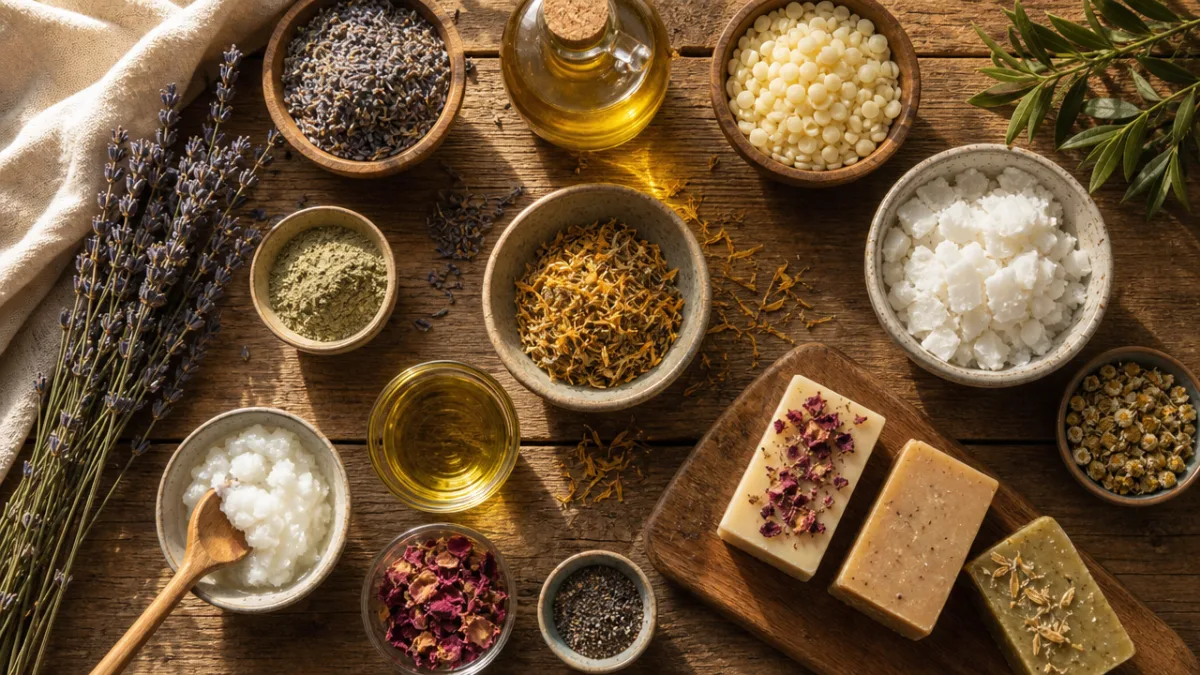
The Master DIY Grease-Cutting Dish Soap Recipe
This recipe has been refined through extensive testing to maximize grease-cutting power while remaining gentle on skin and environmentally responsible. It produces approximately sixteen ounces of dish soap, enough for an average household to use for several weeks of regular dishwashing. The ingredients are all readily available online or at health food stores and grocery stores, and the preparation takes less than ten minutes from start to finish. No special equipment is required beyond a measuring cup, a funnel, and a clean bottle for storage.
Before mixing, it is important to gather everything you need and prepare your workspace. Use a clean glass or BPA-free plastic bottle with a tight-fitting lid or a pump dispenser. Glass is preferable because it does not react with essential oils and is easier to sanitize, but food-grade plastic works perfectly well. Rinse and dry your container thoroughly before use. Label your finished product clearly, especially if you have children in the home, and store it away from direct sunlight, which can degrade essential oils over time and reduce the soap’s effectiveness.
One note on soap-making chemistry: do not combine washing soda with undiluted white vinegar in a single formula. The two react and neutralize each other, which is exactly the opposite of what you want. If you wish to use both in your cleaning routine, either use them in separate applications or keep the washing soda in the dish soap and use diluted vinegar as a separate rinse. This seemingly small detail is something many online recipes get wrong, and it explains why some homemade dish soaps disappoint users who expected better grease-cutting results.
Step-by-Step Instructions
Start by measuring your ingredients carefully. Precision matters somewhat in soap-making, even for a simple liquid formula like this one. Using too much washing soda can make the soap feel harsh, while using too little will result in a formula that lacks the grease-cutting punch this recipe promises. Similarly, the essential oil quantities below are chosen to provide effective antimicrobial action and pleasant fragrance without overwhelming the finished product or causing skin sensitization.
- 1 cup liquid castile soap — the foundation of the formula, providing natural surfactants
- 1/4 cup water — distilled water is preferable to tap water, which can introduce minerals that reduce effectiveness
- 1 tablespoon washing soda — dissolved in the warm water before adding other ingredients
- 1 teaspoon vegetable glycerin — a humectant that keeps the soap from drying out your hands
- 20 drops tea tree essential oil — for antimicrobial action
- 15 drops lemon or orange essential oil — for degreasing and fresh scent
- 10 drops lavender essential oil — optional, for additional antimicrobial benefit and fragrance
To prepare the soap, warm the distilled water slightly — not boiling, just warm enough to dissolve the washing soda easily. Stir the washing soda into the warm water until it is completely dissolved and the liquid is clear. Allow this to cool for a few minutes, then add the vegetable glycerin and stir to combine. Next, pour the castile soap into your storage bottle first, then add the washing soda solution gently. Adding the castile soap first reduces the amount of foaming that occurs during mixing. Finally, add your essential oils, cap the bottle, and turn it gently a few times to combine everything without creating excessive bubbles.
Tips for Maximum Effectiveness
Even the best dish soap performs better with a little technique behind it. One of the most common mistakes people make when handwashing dishes is using water that is too cool. Hot water plays a critical role in grease removal because heat causes fats to melt and become liquid, which makes them far more susceptible to the action of surfactants. Before you begin washing, run the tap until the water is genuinely hot — not warm, but hot enough that you need to be careful. Your DIY soap will perform dramatically better in truly hot water than in lukewarm water.
Pre-soaking is another technique that makes a significant difference, especially for heavily soiled pans and baked-on food. Rather than scrubbing immediately, squirt a small amount of your homemade dish soap directly onto the soiled area, add a splash of hot water, and let the pan sit for five to ten minutes. During this time, the surfactants in the castile soap begin working on the grease even without any mechanical action from you. When you return to scrub, you will find that the food lifts away with a fraction of the effort it would have taken immediately.
The amount of soap you use also affects performance. More soap does not automatically mean cleaner dishes — in fact, using too much can make rinsing difficult and leave a residue. A good guideline is to use just enough soap to produce a moderate amount of lather in your wash water. For a full sink of dishes, one to two tablespoons of soap in the water is usually plenty. For spot-treating a single greasy pan, a squeeze about the size of a dime applied directly is sufficient. Start conservatively and adjust based on how soiled your dishes are.
Troubleshooting Common Issues
If your homemade dish soap seems thin or watery, there are a few possible explanations. The castile soap concentration may be lower than ideal, or the washing soda may not have fully dissolved before being added to the mixture. Try warming the finished soap slightly and shaking it gently to see if the consistency improves. If the problem persists, you can add a small amount of additional castile soap — a tablespoon at a time — until you reach a consistency you prefer. Some people also add a teaspoon of xanthan gum, a natural thickener, to give their soap a more gel-like texture.
If the soap seems to separate or cloud over time, this is normal and does not indicate a problem with the formula. Natural ingredients, particularly essential oils and glycerin, can stratify slightly when they sit. Simply turn the bottle gently before each use to recombine everything. Avoid shaking vigorously, which introduces air and creates excessive foam that can be difficult to control. The soap remains fully effective even when it looks slightly separated, so do not be alarmed by a change in appearance as the batch ages.
Occasionally, people find that their DIY dish soap leaves a slight film on glassware, particularly if they have hard water. Hard water contains calcium and magnesium ions that react with soap to form a mild soap scum. The solution is simple: keep a small spray bottle of diluted white vinegar near the sink and give glasses a quick spritz and rinse after washing. The vinegar dissolves any mineral deposits and soap residue instantly, leaving glassware perfectly clear. This two-step approach is actually more effective for crystal-clear glassware than any single-product formula.
Variations and Customizations
One of the greatest pleasures of making your own dish soap is the freedom to customize it for your household’s specific needs and preferences. The base recipe given above is an excellent starting point, but it is far from the only configuration that works. Different essential oil combinations produce dramatically different scents and slightly different functional profiles, and adjusting the ratio of castile soap to washing soda changes the balance between gentleness and grease-cutting power. Do not hesitate to experiment once you have made a batch or two and feel comfortable with the process.
For households that deal with particularly heavy-duty grease — think home mechanics washing their hands, households that cook a lot of fried food, or people who clean professional kitchen equipment — a stronger version of the formula may be desirable. Increasing the washing soda by an additional half tablespoon and adding a few drops of pure d-limonene (orange terpene, available from specialty cleaning supply stores) creates a noticeably more aggressive degreaser. This version may be slightly more drying on the skin with prolonged exposure, so increasing the glycerin to a full tablespoon helps offset that effect.
Conversely, for people with very sensitive skin, eczema, or contact dermatitis, a gentler variation omits the washing soda entirely and relies solely on the castile soap and glycerin, perhaps with the addition of a tablespoon of aloe vera gel, which is extremely soothing to irritated skin. This gentler formula will not cut through heavy grease as efficiently, but for households that primarily deal with lightly soiled dishes — salads, light meals, minimal cooking — it can be perfectly adequate while being exceptionally kind to fragile skin.
Seasonal and Aromatic Variations
Changing your essential oil blend with the seasons is a delightful way to keep dishwashing fresh and enjoyable throughout the year. In the warmer months, citrus-forward blends using lemon, grapefruit, and sweet orange essential oils feel bright and energizing. In fall and winter, warming combinations of clove bud, cinnamon bark, and orange create something that smells almost like mulled cider — a genuinely cozy experience for a chilly evening spent at the sink. Peppermint and eucalyptus make an invigorating spring blend that also has impressive antimicrobial properties.
For households that enjoy a spa-like experience, blending lavender, bergamot, and a touch of ylang-ylang creates a sophisticated floral scent that makes even the most mundane kitchen tasks feel a bit more luxurious. Bergamot, which is the citrus used to flavor Earl Grey tea, has a uniquely refined fragrance that combines citrus brightness with a subtle floral depth. It also contributes some antibacterial action, making it both beautiful and functional as a dish soap ingredient. Using high-quality, pure essential oils rather than synthetic fragrance oils makes a noticeable difference in how a homemade soap smells and performs.
You might also consider making a scent-free version for households where fragrance sensitivities are a concern, or for use on baby bottles and feeding equipment where you want absolutely no aromatic compounds present. Simply omit all essential oils from the recipe. The resulting soap will be completely unscented, effective, and gentle — ideal for the most sensitive applications. Some people even prefer the clean, neutral smell of unscented soap for everyday use, finding the absence of fragrance a refreshing change from the overwhelming perfume of commercial products.
Storage, Shelf Life, and Sustainability
Properly stored, a batch of DIY dish soap made with the recipe above will remain effective for approximately four to six weeks. The limiting factor is usually the essential oils, which can begin to oxidize and lose their potency over time, especially if exposed to sunlight or heat. Storing your soap in a dark-colored glass bottle in a cool cabinet extends its useful life noticeably. If you notice the scent fading significantly or the formula developing an unusual odor, it is time to make a fresh batch rather than continuing to use the old one.
Making soap in smaller batches more frequently is actually preferable to making large quantities that sit unused. This keeps your soap at peak freshness and effectiveness, ensures the essential oils remain potent, and gives you the opportunity to experiment with different formulas and scents without committing to a huge supply of any single variation. A batch of sixteen ounces takes less than ten minutes to prepare, so there is little advantage in making much larger quantities. Think of it as a small, pleasant regular kitchen ritual rather than a major production effort.
The sustainability benefits of this approach extend well beyond avoiding synthetic chemicals. By reusing the same glass bottle repeatedly, you eliminate a significant source of single-use plastic waste from your household. By purchasing ingredients like castile soap and washing soda in bulk, you further reduce packaging waste. And because the ingredients in this formula are all biodegradable and plant-derived, the water that drains from your sink carries nothing harmful into the municipal water system or local waterways. When all these factors are added together, the environmental case for homemade dish soap is compelling and genuinely significant.
Building a Broader Natural Cleaning Routine
Once you have made your first batch of DIY dish soap and experienced how well it works, it is natural to start thinking about other areas of your home where you could apply the same philosophy. The same ingredients that make this dish soap effective — castile soap, washing soda, baking soda, essential oils, and white vinegar — form the foundation of an entire natural cleaning system. All-purpose sprays, bathroom scrubs, floor cleaners, and laundry boosters can all be made from these same core ingredients, creating a unified, simple, and cost-effective cleaning toolkit.
Starting with dish soap is actually an ideal entry point into natural cleaning because it is simple, quick, immediately useful, and provides very fast feedback on results. You wash dishes every day, so you will know within hours whether your formula is working. This immediate feedback loop is encouraging and helps build confidence in natural cleaning approaches more broadly. Many people who begin with dish soap end up gradually replacing every commercial cleaning product in their home over the course of several months, discovering that the natural alternatives work just as well or better in most cases.
The broader movement toward natural, homemade cleaning products is not just a lifestyle trend — it represents a meaningful shift in how households interact with the chemical industry and with their own domestic environments. When you make your own dish soap, you reclaim a small but genuine measure of control over what substances enter your home, touch your family, and return to the environment through your drains. That sense of agency, combined with the practical benefits of effectiveness, economy, and gentleness, is ultimately what keeps people coming back to the kitchen counter to mix up another batch of their favorite DIY grease-cutting dish soap.








What do you think?
It is nice to know your opinion. Leave a comment.